


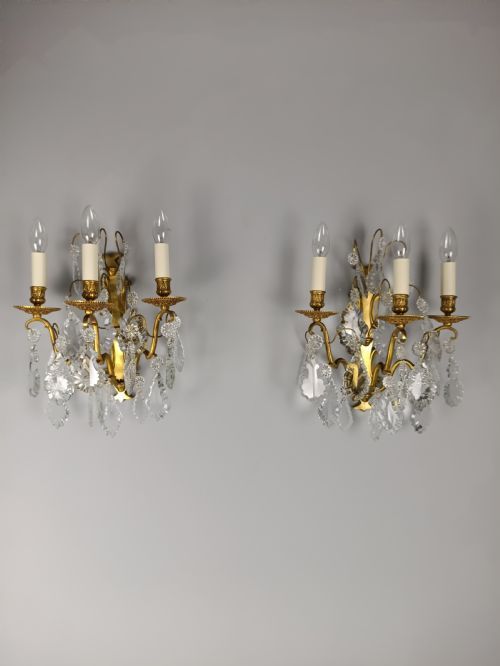


Pair Crystal Wall Lights
Pair crystal wall lights bring a dramatic play of reflected light to a room, utilising faceted drops suspended from gilded and brass frames.
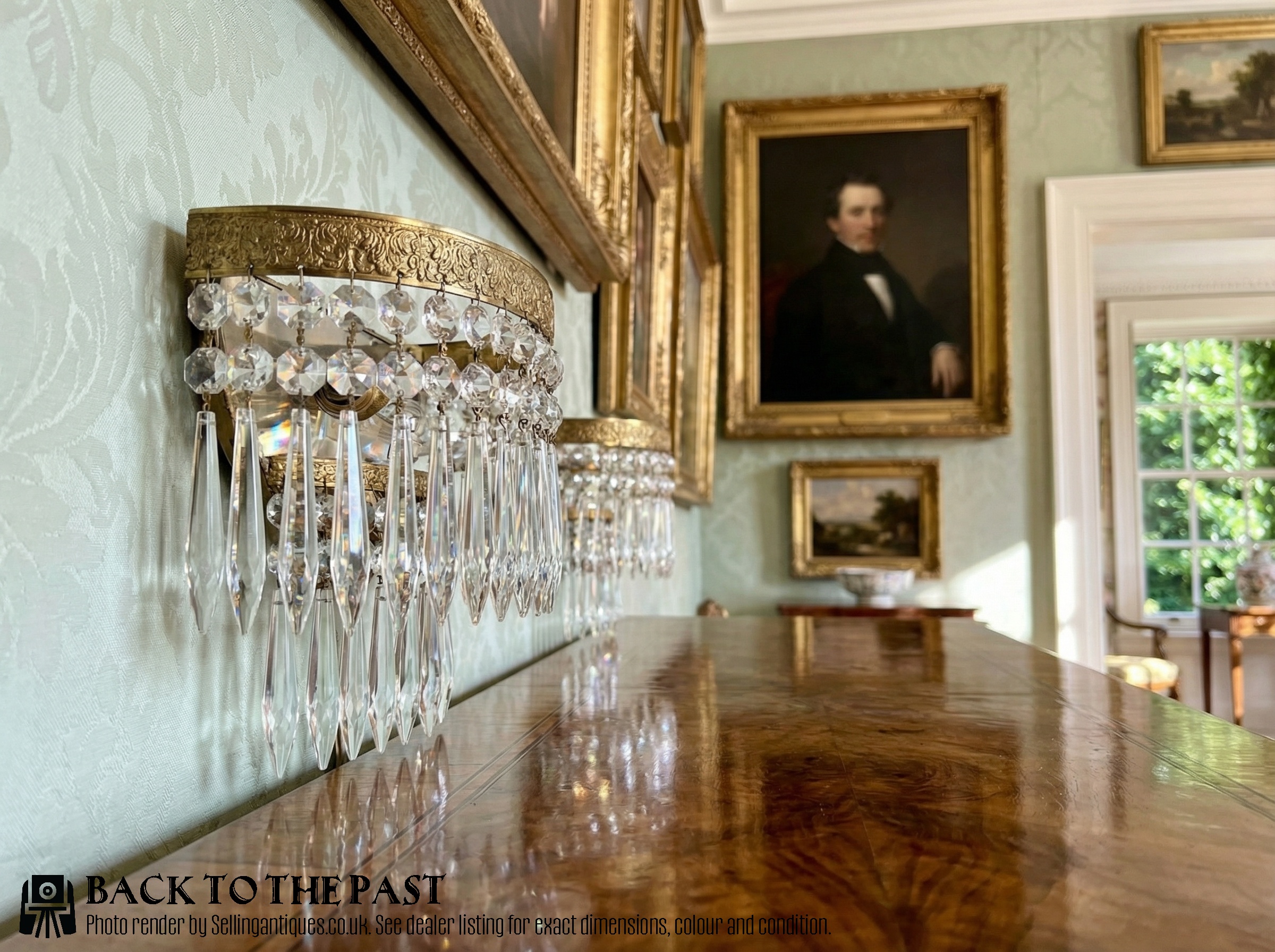
Pair Crystal Wall Lights
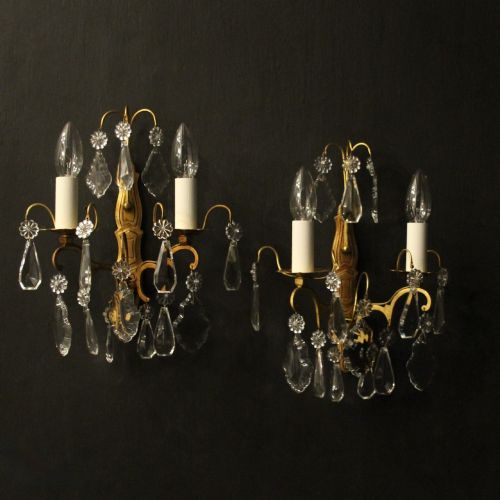
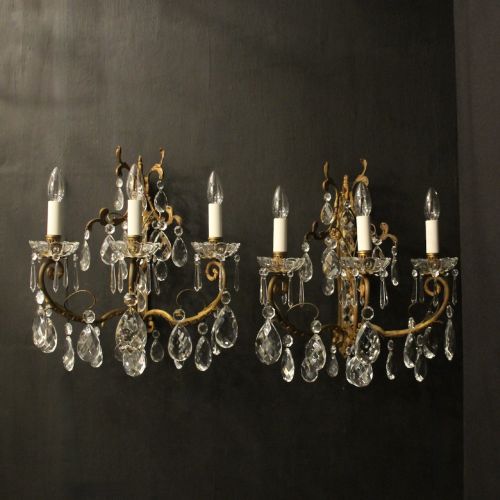
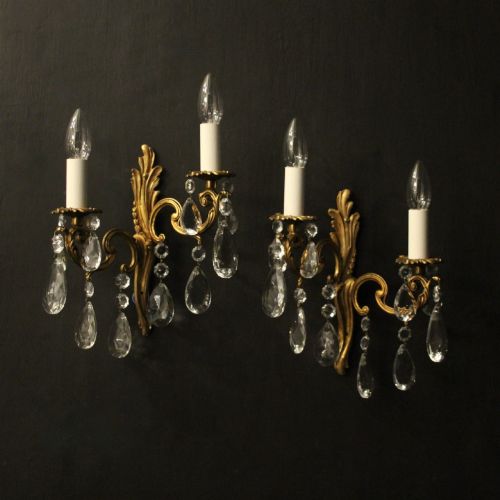
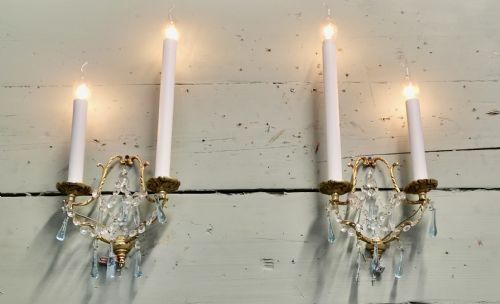
The version most commonly met on this page is the French twin or triple arm wall light, heavily adorned with cut glass drops and tent configurations. Alongside these French works, Italian Florentine giltwood pieces and Swedish glass lustres appear regularly in the listings.
Materials and construction
The structural framework relies on cast brass, gilt bronze, or ormolu, providing a rigid armature to support multiple candle arms. Frames are occasionally fashioned from carved giltwood or painted toleware depending on the regional style.
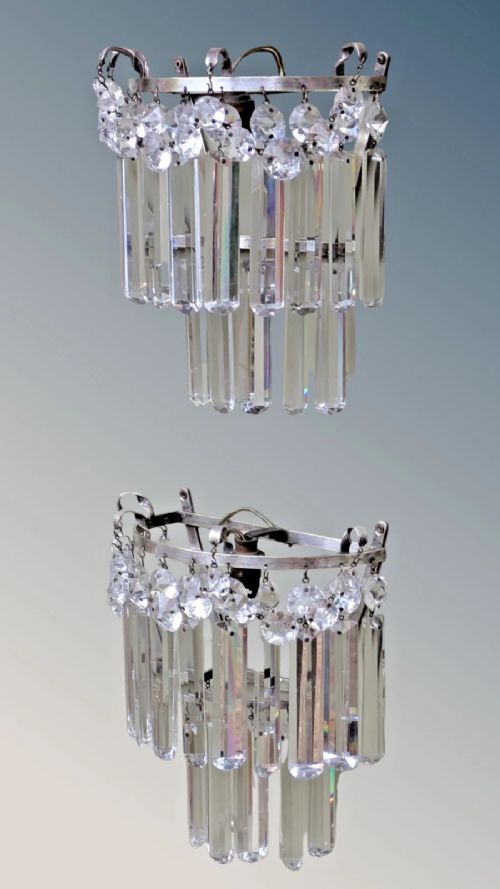
Pendants, beads, and tent sections utilise cut crystal and glass, shaped to refract candlelight and early electricity. These elements hang from the metal chassis using fine wire loops, allowing movement and maximum light dispersion.
Pair Crystal Wall Lights Retail Price Guide 2026
Typical asking prices for pair crystal wall lights among the pieces listed under this phrase on Sellingantiques today, from the lower quarter to the upper quarter. They describe what is for sale here now, not the wider market.
A selection of these glittering wall lights comes complete with charming porcelain cherubs peering out from behind the crystal drops.
Factors determining quality
The caliber of a fixture rests on the depth of hand-cutting on the crystal drops and the crispness of the bronze or brass casting. Superior examples display sharp facets that catch the light cleanly, alongside finely chased metalwork on the backplates and arms.
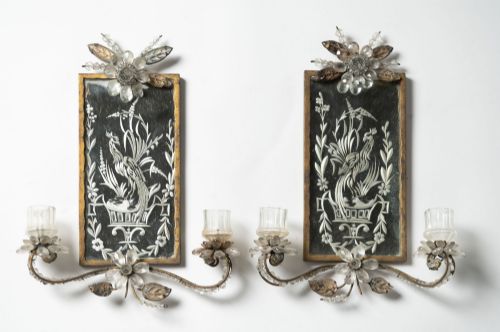
Proportion and harmony between the metal armature and the glass components define the better specimens. Pieces that integrate mirror backs or elaborate cascading beadwork demonstrate advanced manufacturing from established workshops.
Maison Baguès·F. & C. Osler·Baccarat
The Pair Crystal Wall Lights Glossary
- Girandole
- An ornamental wall bracket designed to hold multiple candles or lamps, frequently incorporating a mirror backplate to multiply the illumination. These fixtures combine functional lighting with decorative sculptural frames.
- Bag light
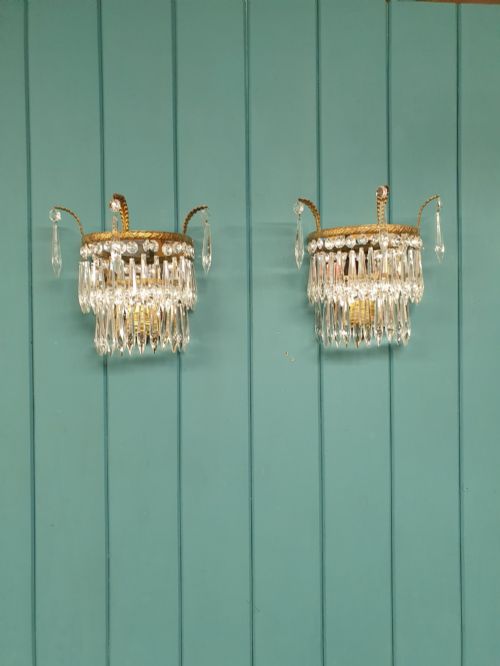
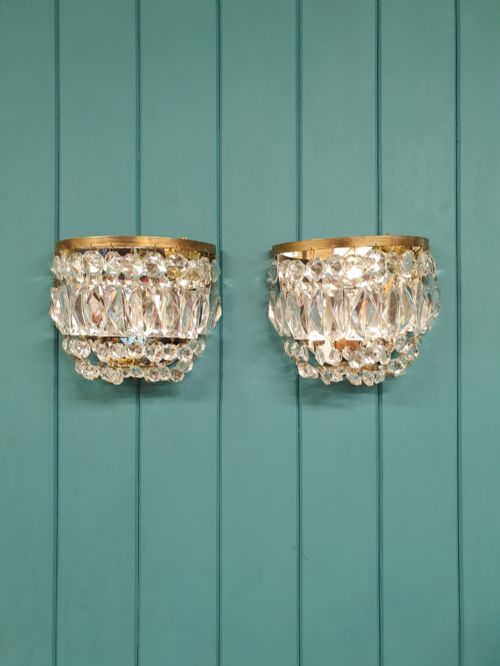
- A wall sconce featuring a gathering of crystal drops shaped like a small pouch or bag beneath the main ring. This design directs the eye downward through a dense cascade of facets.
- Tent and fall
- An arrangement where strings of crystal beads form an upper triangular tent above the arms, dropping down to a central pendant. It is a signature feature of neoclassical lighting design.
- Lustre
- A glass pendant or hanging prism attached to a lighting fixture to enhance light reflection. Antique examples often feature hand-cut edges and distinct optical clarity.
- Ormolu
- Gilded bronze produced by applying a mercury and gold amalgam to a bronze base, then heating to drive off the mercury. This technique yields a durable, deep golden finish seen on better-quality mounts.
Pair Crystal Wall Lights: Frequently Asked Questions
How do I wire antique wall lights for modern use?
Most period fixtures require professional rewiring to meet contemporary electrical safety standards while preserving the original metal channels.
Qualified electricians can run modern flex through the existing brass or bronze arms without altering the exterior appearance of the sconce.
Where should pair crystal wall lights be hung?
These fixtures are traditionally positioned on either side of a fireplace, a large mirror, or a heavy piece of furniture to create balanced illumination.
Placement height generally aligns at eye level to ensure the crystal drops catch ambient room light effectively.
How do I distinguish Edwardian pieces from 1920s designs?
Edwardian fixtures often lean toward restrained brass work and simpler drop configurations, drawing on earlier eighteenth-century revivals.
Pieces from the 1920s and 1930s frequently exhibit bolder French or Italian styling, incorporating richer gilding and more elaborate crystal tent structures.
How do I clean antique crystal drops safely?
Drops should be removed individually and washed by hand in warm soapy water using a mild cloth to protect the historic glass surface.
Harsh chemical cleaners must be avoided to prevent damage to the gilt finish on the surrounding brass or bronze frames.