
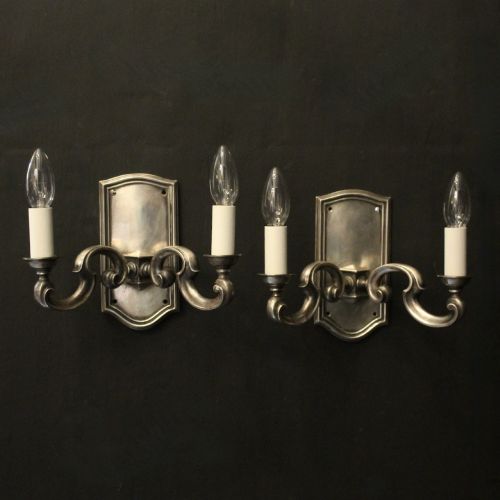
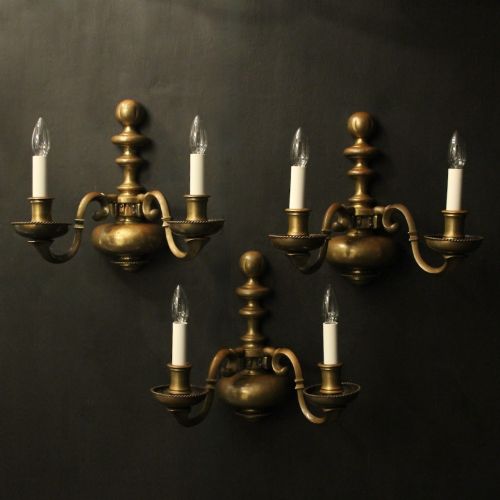
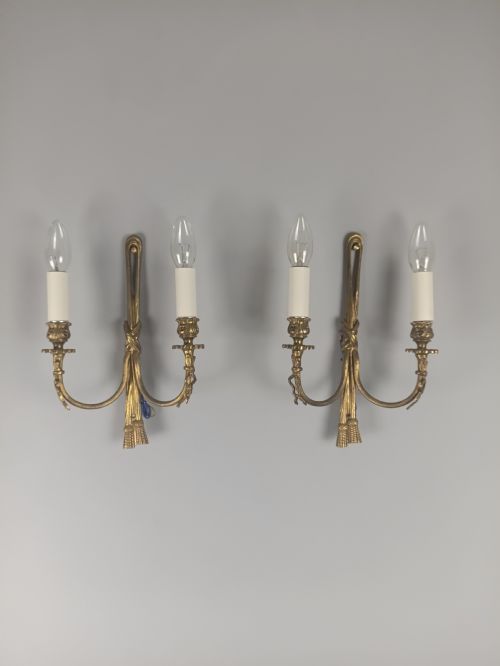
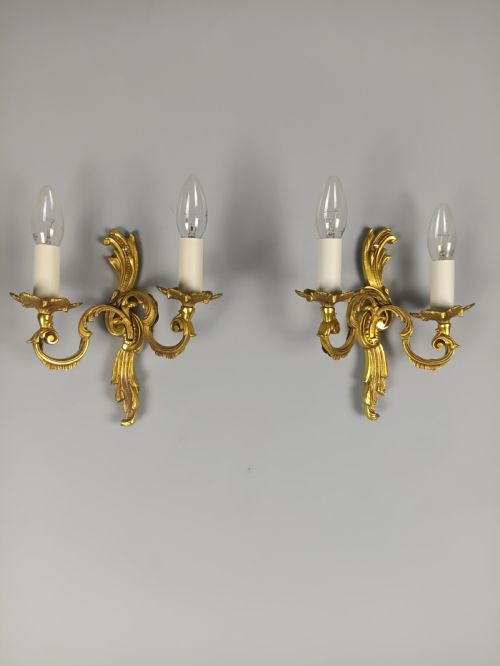



Twin Branch Wall Sconces
Twin branch wall sconces provide balanced illumination using two arms projecting from a single wall-mounted backplate.

Twin Branch Wall Sconces
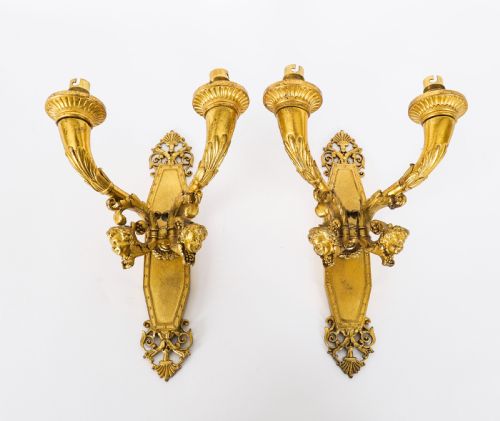
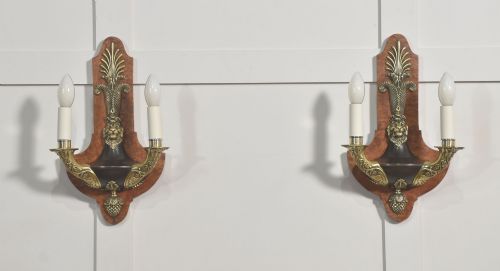
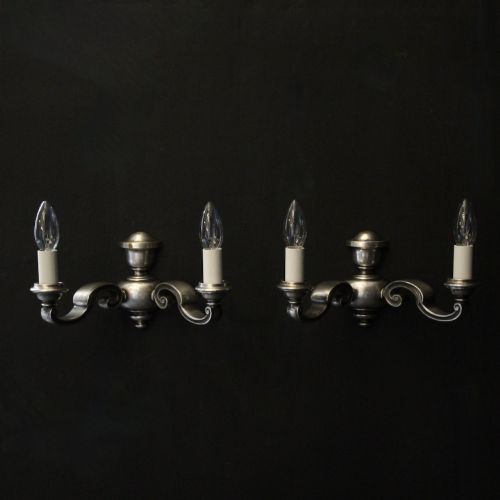
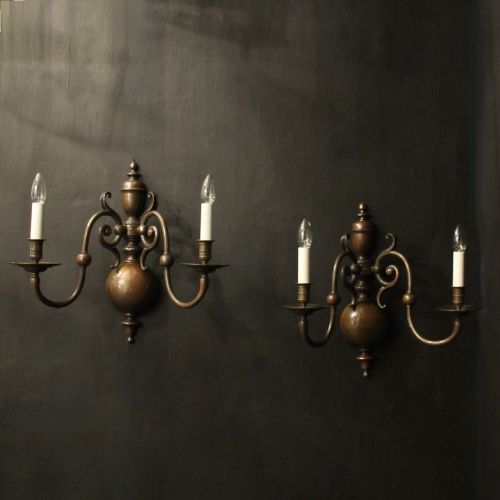
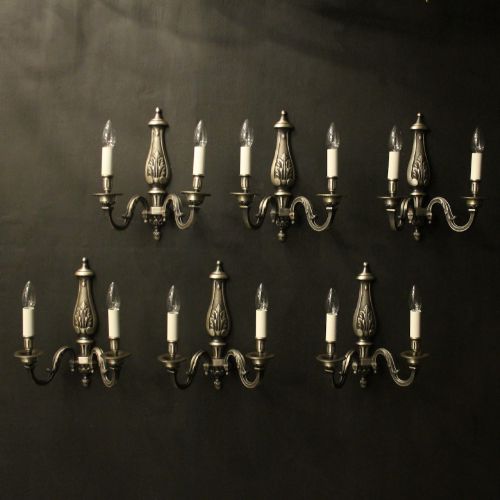
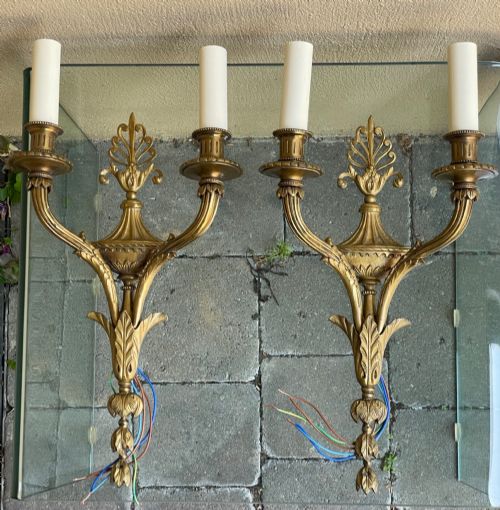
Twin branch wall sconces are wall-mounted lighting fixtures designed to hold two candles or electrical fittings on branching arms. When you search for twin branch wall sconces, you encounter pairs and sets originating from various European workshops across the nineteenth and early twentieth centuries.
The selections span distinct historical revivals, with French Louis revival, Neoclassical, and Edwardian brass iterations appearing frequently. These pieces function as both practical lighting and decorative architectural hardware for interiors.
Materials and construction
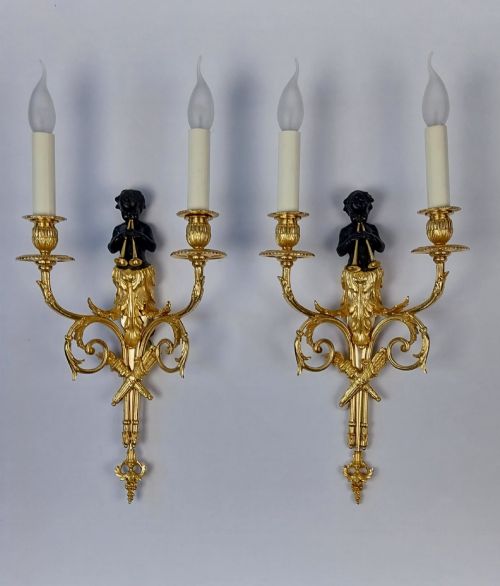
The physical build relies heavily on cast metals such as bronze, brass, and ormolu, often finished with surface gilding or silver plating. Workshops also utilised carved wood, particularly giltwood, alongside cut glass and porcelain components to build the backplates and arms.
Casting, chasing, and hand-gilding defined the production of metal examples, while wood pieces required traditional carving and gesso application. Many surviving fixtures show evidence of conversion from candle use to electricity during subsequent decades.
Twin Branch Wall Sconces Retail Price Guide 2026
Typical asking prices for twin branch wall sconces among the pieces listed under this phrase on Sellingantiques today, from the lower quarter to the upper quarter. They describe what is for sale here now, not the wider market.
Materials in these listings include bronze, brass, ormolu, silver plate, glass, giltwood, and porcelain.
Assessing quality
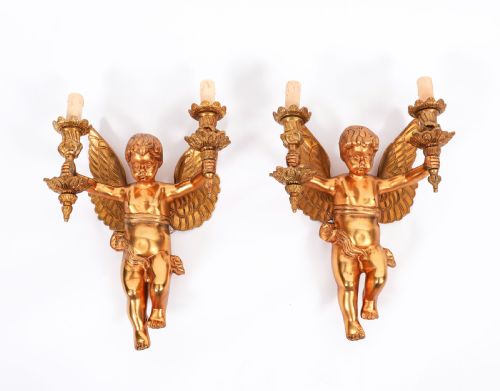
Quality rests in the crispness of the metal casting and the depth of the chasing work on the arms and backplates. Superior examples exhibit finely detailed relief work on motifs like ribbons, cherubs, and acanthus leaves rather than soft, blurred edges.
The integrity of the original surface finish, whether fire gilding, silver plating, or polychrome paint, marks the difference between standard production and finer commissions. Weight and the structural rigidity of the twin branches also indicate the standard of manufacture.
Baccarat·F. & C. Osler
The Twin Branch Wall Sconces Glossary
- Ormolu
- Gilt bronze produced by applying a finely ground high-carat gold mercury amalgam to a bronze object. This technique creates a durable golden finish characteristic of French decorative metalwork.
- Girandole
- An ornamental branched wall light or sconce, often incorporating mirrors or reflective backplates to amplify the illumination from candles. The term frequently applies to decorative French and Italian wall fixtures.
- Appliqué
- A French term used interchangeably with wall sconce or wall light, denoting a decorative lighting fixture mounted directly onto a wall surface. They typically feature matching backplates and multiple branching arms.
- Giltwood
- Timber, commonly carved gesso-coated wood, covered with thin gold leaf or metal leaf. It provides a lightweight yet opulent alternative to solid cast bronze for wall fixtures.
Twin Branch Wall Sconces: Frequently Asked Questions
How do I wire antique wall sconces?
Most antique metal wall sconces require professional rewiring to meet modern safety standards while preserving the original backplate and candle tubes. An electrician can thread modern flex through the existing hollow arms.
Ensure the mounting bracket accommodates the weight of heavy bronze or cast brass fixtures securely to the wall stud.
Can I use candles instead of electricity?
Many older wall sconces were originally built for wax candles before later conversion to electricity. You can use standard taper candles if the drip pans and nozzle diameters match historical dimensions.
Check that any combustible wall surfaces nearby are adequately protected from open flames.
How do I clean gilt bronze sconces?
Dust gilt bronze and ormolu gently with a dry, soft microfibre cloth to prevent the accumulation of grit. Avoid chemical polishes, abrasive cloths, or water, as harsh substances strip away the delicate gold leaf layer.
Professional conservation is recommended for deeply tarnished or structurally compromised metalwork.
How do I date a pair of wall sconces?
Dating relies on stylistic clues such as the symmetry of French Rococo or the crisp geometry of Edwardian brass designs. Examining the casting seams, screw types, and backplate construction reveals the manufacturing period.
Archival comparisons with documented nineteenth and twentieth-century design patterns help narrow down the exact decade of origin.