
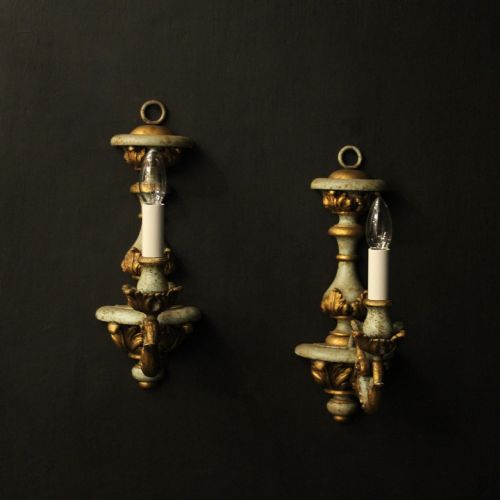
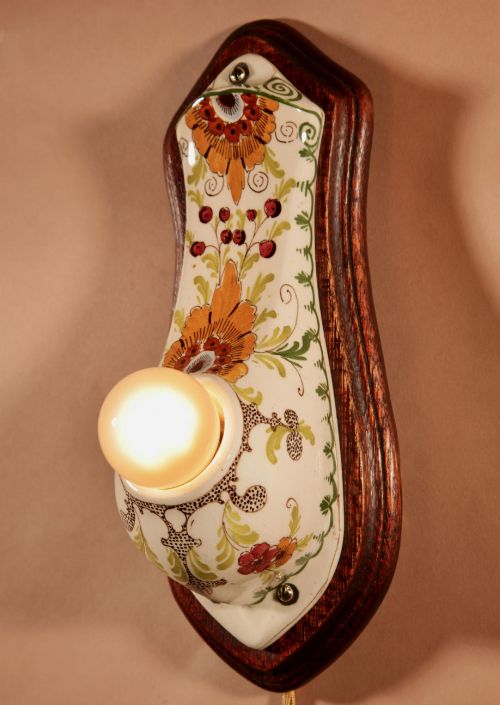


Polychrome Wall Lights
Polychrome wall lights bring together painted colour and gilded metal or carved wood to brighten a room with period character.

Polychrome Wall Lights
Polychrome wall lights combine painted finishes with carved wood, giltwood, metal, or gesso to illuminate interior spaces. You will regularly encounter Italian and French pieces originating from the nineteenth century through the 1930s.
The selection ranges from single arm fixtures to pairs and larger sets featuring twin or triple arms. Many examples display floral motifs, fruit carvings, or traditional provincial and baroque styles.
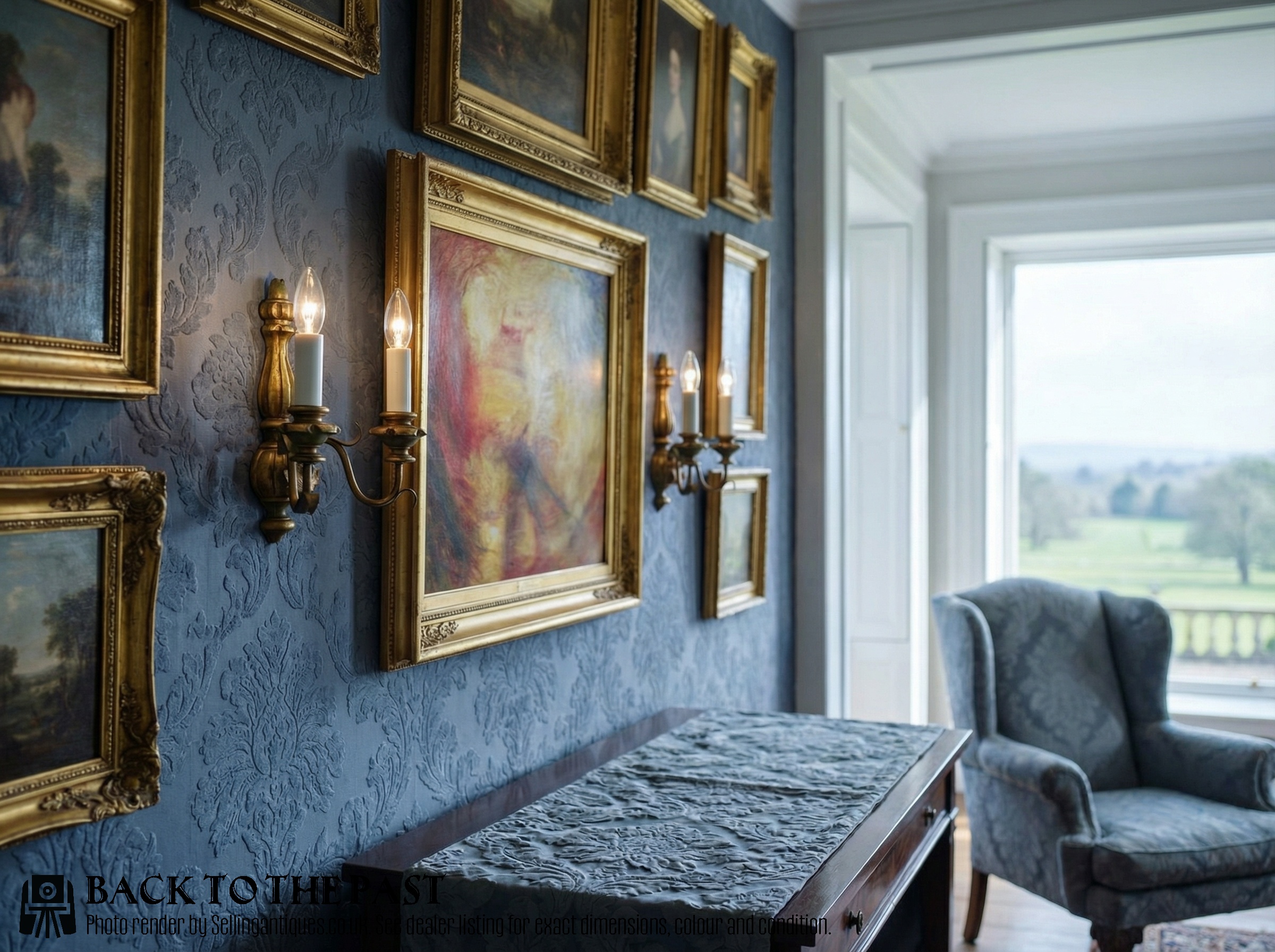
Materials and construction
Maker workshops shaped these fixtures from carved wood, wrought iron, toleware, and cast iron. Artisans then applied gesso as a base for subsequent layers of paint and gold leaf or silver gilt.
The painted surfaces often incorporate polychrome pigments alongside giltwood details. Ceramic elements and porcelain feature in specific continental designs from the early twentieth century.
Polychrome Wall Lights Retail Price Guide 2026
Typical asking prices for polychrome wall lights among the pieces listed under this phrase on Sellingantiques today, from the lower quarter to the upper quarter. They describe what is for sale here now, not the wider market.
Listings feature pieces spanning the nineteenth century through the 1930s, constructed from carved wood, gesso, iron, and toleware.
Assessing quality
The sophistication of the hand-carved wooden elements and the depth of the gesso preparation separate standard examples from finer work. Crisp detail in fruit or floral carvings indicates superior craftsmanship.
The preservation of original paint and gold leaf layers determines the integrity of an antique fixture. Richly layered polychrome finishes retain more visual character than simplified repainted surfaces.
Von Schierholz
The Polychrome Wall Lights Glossary
- Polychrome
- The decoration of objects in a variety of painted colours. This multi-coloured surface treatment defines the appearance of these lights.
- Giltwood
- Wood that has been coated with gold leaf or a gold-coloured finish. It frequently appears alongside painted details on continental wall sconces.
- Toleware
- Painted or lacquered sheet metal items produced in various European centres. These tinplate fixtures often take floral or foliage forms.
- Gesso
- A plaster-like mixture applied to wood surfaces as a preparation for paint or gold leaf. It allows artisans to model fine decorative relief details.
- Girandole
- An ornamental branched wall light or sconce holding candles or electrical fittings. Many feature reflective carved wooden backs.
Polychrome Wall Lights: Frequently Asked Questions
How do I clean antique polychrome wall lights?
Dust the surfaces gently with a dry soft brush to protect the delicate painted and gilded layers. Avoid liquid cleaners that can damage historic paintwork.
Check wiring connections periodically if the fixture has been adapted for electricity. Professional maintenance ensures the structural safety of older wooden arms.
Were these wall lights originally electrified?
Most antique wall lights and sconces from the nineteenth and early twentieth centuries were originally designed for candles. They were subsequently adapted for electrical wiring during later periods.
Rewired examples retain their historic wooden or metal frames while accommodating modern domestic lighting needs.
What rooms suit French provincial wall lights?
French provincial fixtures complement traditional living spaces, dining rooms, and hallways with softer architectural details. Their painted finishes match neutral walls and natural wood furniture.
Pairing matching sets across a room creates balanced illumination and consistent period style.
How do I date an antique wall sconce?
Examine the base materials, such as wrought iron, carved wood, or cast iron, alongside the style of the paint application. Art Nouveau and Art Deco pieces display distinct curving motifs characteristic of the early twentieth century.
Earlier nineteenth-century examples often lean towards Italian baroque or neoclassical forms with heavier gesso and giltwood construction.