

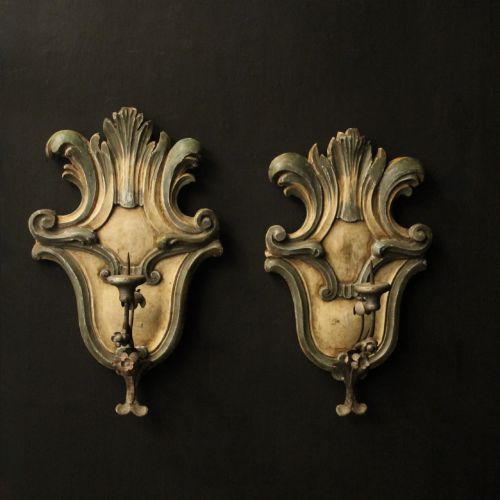
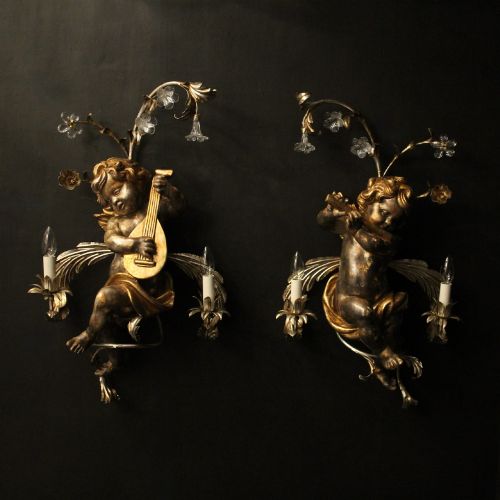
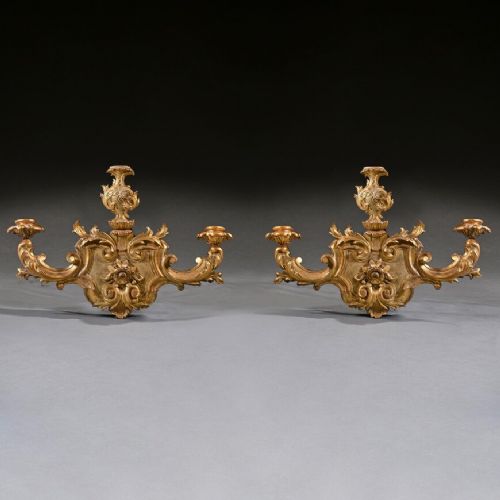
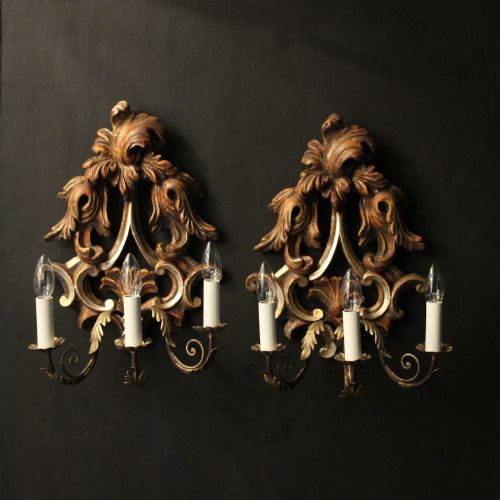
Italian Wall Sconces
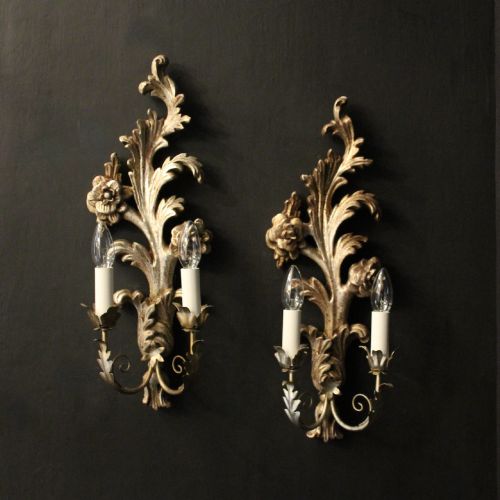
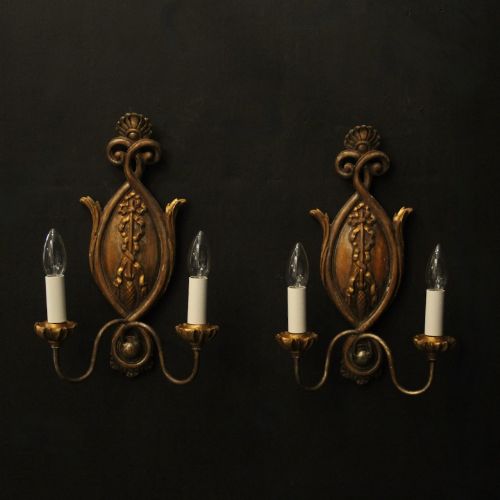
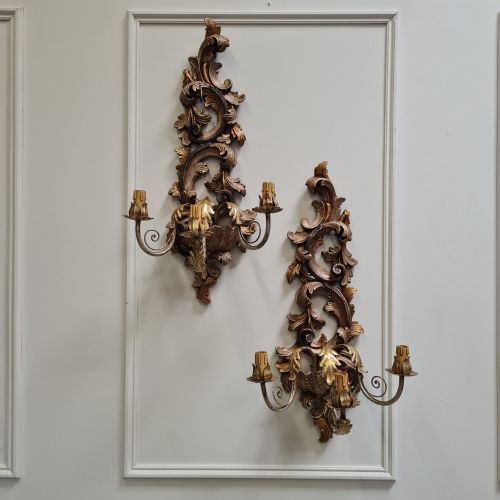
Italian wall sconces bring sculptural presence to a room, combining carved wood, metal and gilt surface to hold candle or electric light.
Italian Wall Sconces
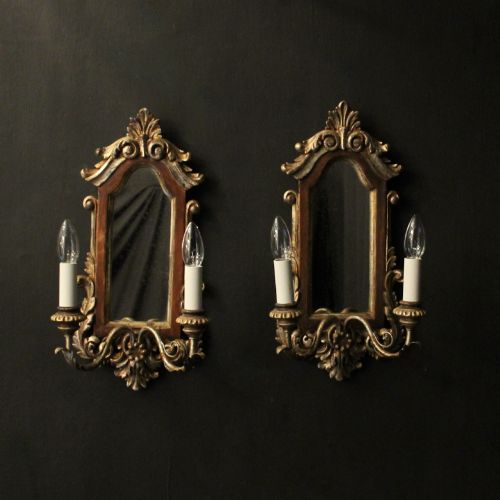
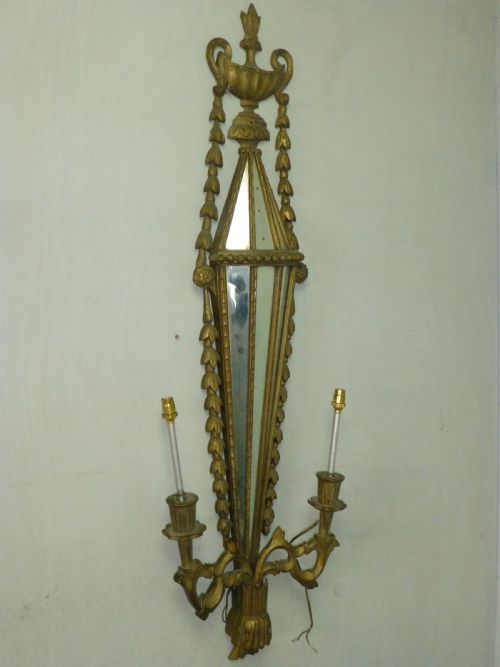
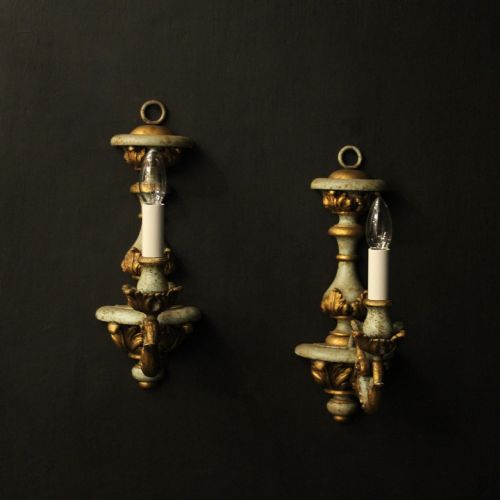
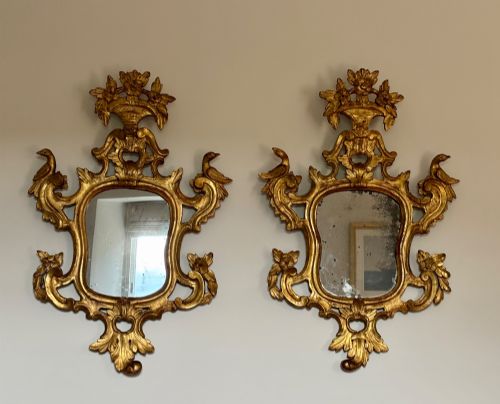
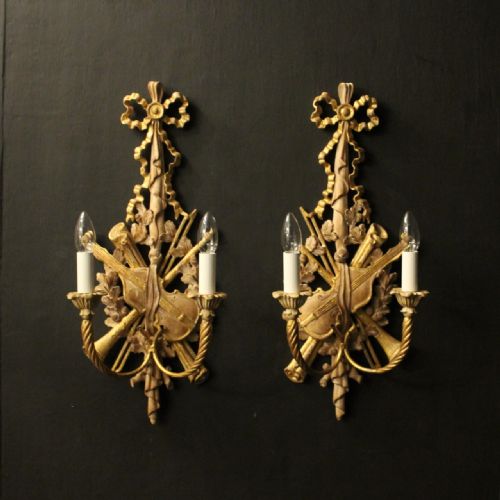
Italian wall sconces encompass carved wooden brackets, gilded girandoles with mirrored plates, and multi-armed branch fixtures designed for interior illumination. These pieces emerge across periods from the seventeenth century through to the early decades of the twentieth century, reflecting shifting tastes in domestic lighting.
The twentieth-century examples, particularly from the nineteen-twenties and thirties, appear frequently on this page alongside nineteenth-century works and older eighteenth-century Venetian mirrors with candle arms. Surviving items range from single-arm brackets to grand triple and quadruple branch fittings executed in regional idioms.
Makers and workshops from centres such as Florence produced characteristic giltwood leaf and scroll designs that dominate the available inventory. Buyers encounter both candle-holders and converted electric sconces that retain their original architectural character on the wall.
Materials and technique
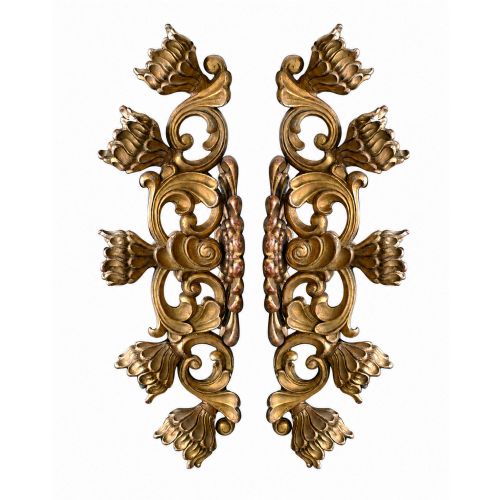
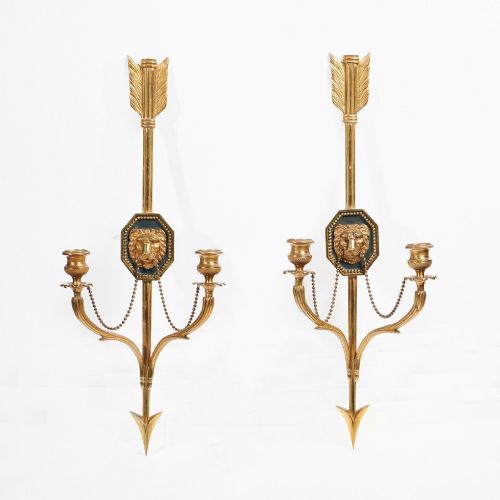
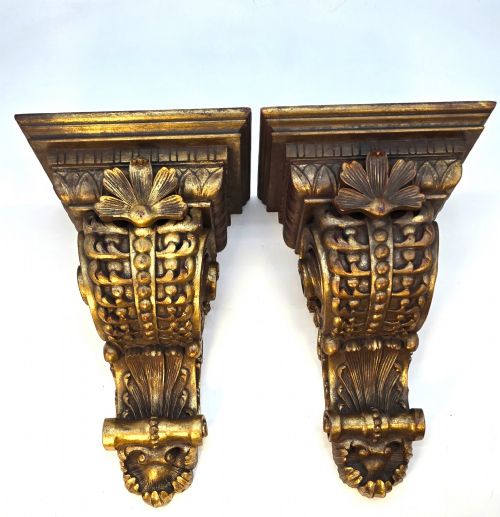
Craftsmen built these fixtures primarily from carved wood, gesso and giltwood, applying gold leaf and silver leaf over prepared wooden bases. Ormolu, brass and cast metal also form the structure of many nineteenth-century pieces, incorporating detailed motifs like cherubs and scrolling acanthus leaves.
Polychrome finishes and ebonised details appear on select wooden and carved brackets, providing contrast to the prevailing gilding. Murano glass elements and foxed mirror plates complement the reflective metal surfaces in girandole and cartouche mirror forms.
Italian Wall Sconces Retail Price Guide 2026
Typical asking prices for italian wall sconces among the pieces listed under this phrase on Sellingantiques today, from the lower quarter to the upper quarter. They describe what is for sale here now, not the wider market.
Listings span periods from the seventeenth century through to nineteen-thirty, with nineteen-twenty and nineteen-thirty items forming a significant portion of the wood and giltwood wall lights.
Assessing quality
Depth of hand-carving and the crispness of gesso detail distinguish finer examples from standard production, particularly in the rendering of figures such as cherubs and foliate scrolls. The integrity of the original gilding surface and the depth of the leaf application dictate the visual richness of the piece under light.
Proportion and balance across multi-armed arrangements determine the architectural success of a wall light, separating ambitious workshop output from simpler utilitarian pieces. Original components, including matching branch arms and period mirror plates, elevate the integrity of surviving pairs.
The Italian Wall Sconces Glossary
- Giltwood
- Wood that has been coated with fine gold leaf or gold powder. This surface treatment is foundational to Florentine and Baroque decorative woodwork.
- Girandole
- A branched wall light fitted with a mirror backplate. The reflective glass multiplies the illumination cast by the candles.
- Gesso
- A plaster mix applied to wood surfaces as a base for gilding. It allows craftsmen to model sharp relief details before applying gold leaf.
- Ormolu
- Gilded bronze or metal furniture mounts and light fittings. This technique was widely utilised during the nineteenth century in the French Empire style.
- Cartouche
- An ornamental tablet or panel frame, often with scrolled edges. Eighteenth-century mirrors frequently employ this central shape.
Italian Wall Sconces: Frequently Asked Questions
What is a girandole mirror?
A girandole is a wall mirror that incorporates one or more candle arms projecting from the lower frame. The reflective glass surface helps to amplify the light within a room.
These pieces function as both decorative mirrors and practical light sources, appearing frequently in eighteenth and nineteenth-century Italian designs.
Were these sconces electrified later?
Many surviving wall lights from the nineteenth and twentieth centuries have been adapted for electricity to suit modern domestic use. Wiring is typically channelled through the backplate or arms without altering the primary carved structure.
Buyers find both unadapted candle fixtures and pre-wired examples across the inventory, allowing a choice between historical lighting methods and modern convenience.
What distinguishes Florentine sconces?
Florentine sconces are characterised by elaborate carved wood and giltwood leaf motifs, scrollwork and twin or triple-arm configurations. These pieces date largely from the early twentieth century revival as well as the nineteenth century.
Their distinctive regional style relies heavily on gold and silver leaf finishes over gesso and carved wooden frames.