

Vintage Candle Sconces
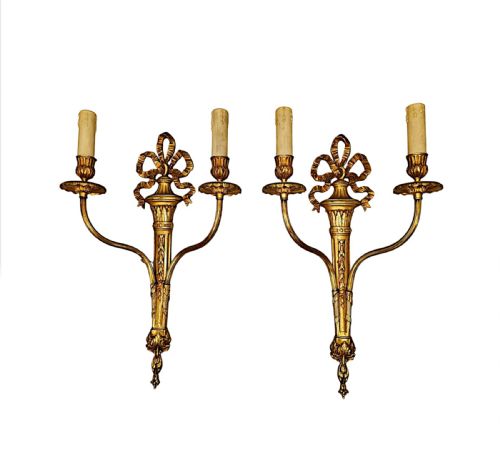
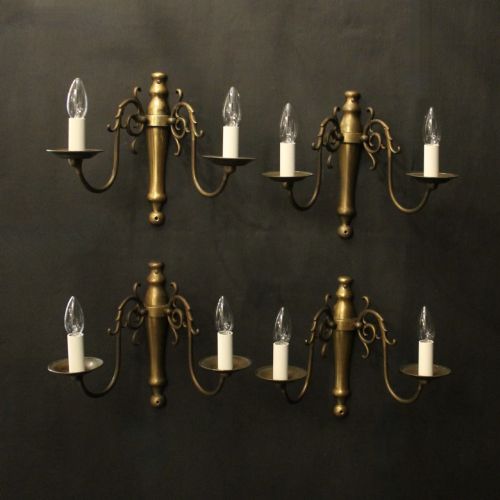
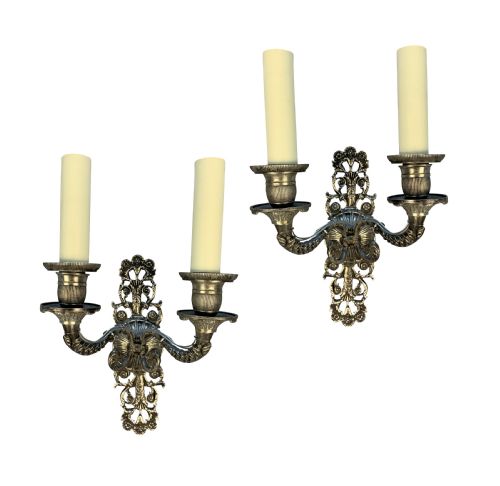
These vintage candle sconces bring architectural light to panelled walls, cast in brass, bronze, and giltwood from the Victorian era through the mid-twentieth century.
Vintage Candle Sconces
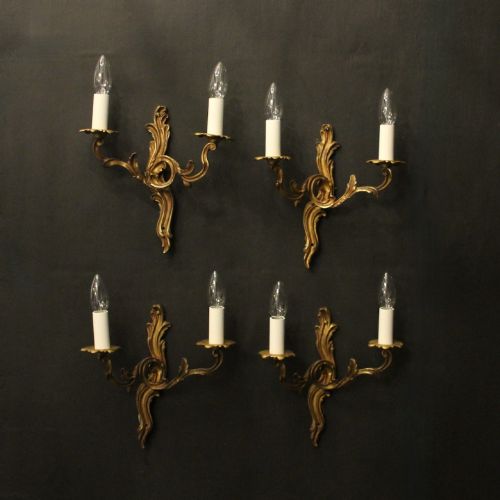
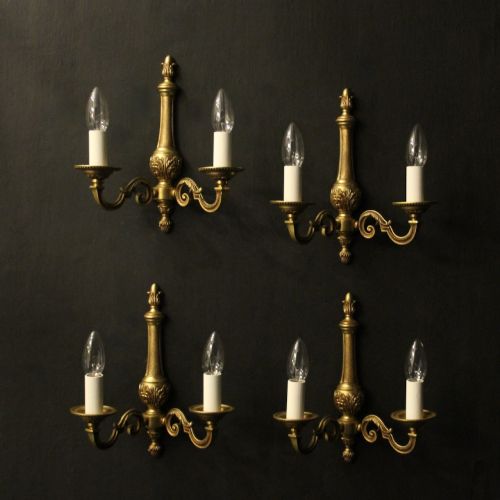
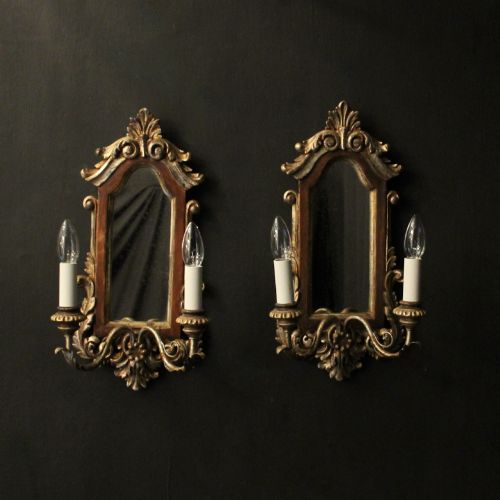
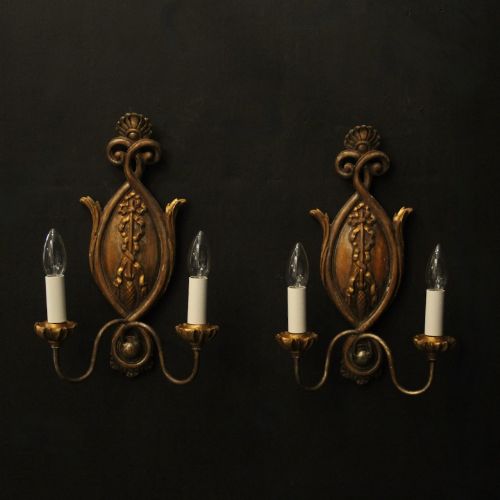
When you search for vintage candle sconces, you encounter wall-mounted lighting fixtures designed to hold candles or adapt to electricity. The selection spans French Rococo and Empire styles, English brass designs, and Italian giltwood girandoles.
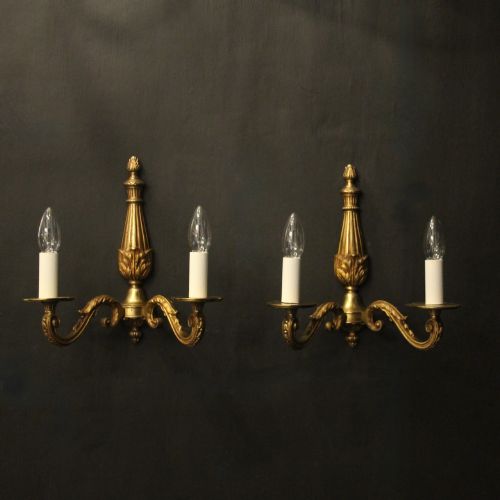
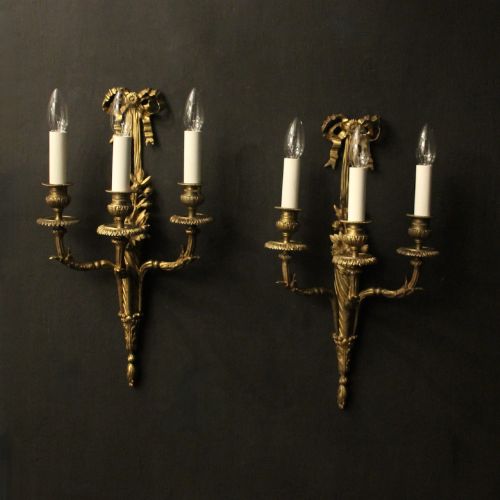
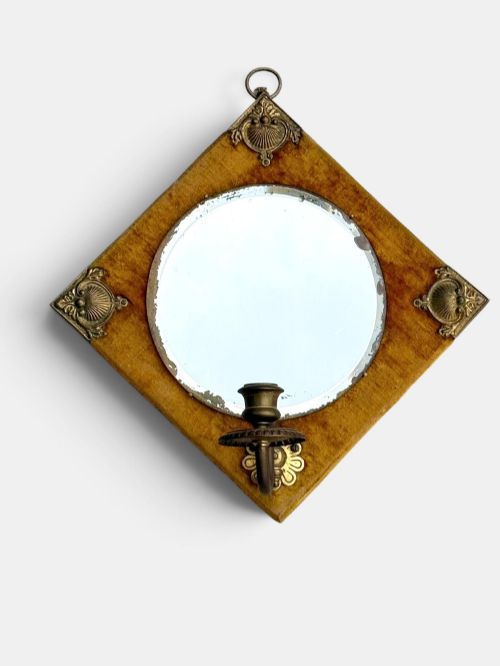
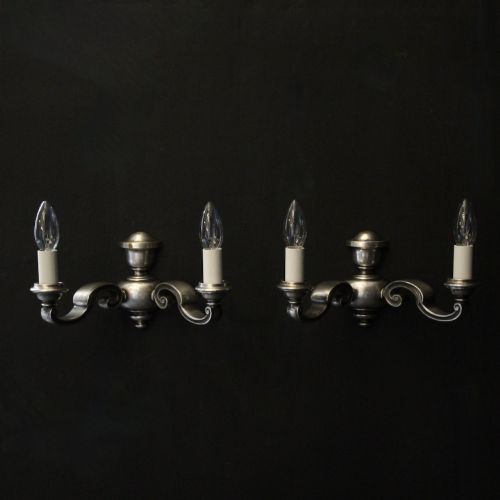
Most examples date from the nineteenth century up through the nineteen-fifties, taking the form of twin-arm wall lights, single sconces, and mirror-backed fixtures. Brass and gilded bronze constructions dominate the pieces seen here, often originating from French workshops or English makers.
Buyers find pairs and larger sets intended for flanking mirrors, fireplaces, or doorways. The configurations range from simple single-arm holders to triple-arm crystal pieces and half lanterns.
How they were made
Foundries cast brass, bronze, and ormolu into intricate arms and backplates, employing techniques like fire gilding to deposit gold on bronze surfaces. Many pieces combine metal components with carved wood, glass crystals, or pottery elements.
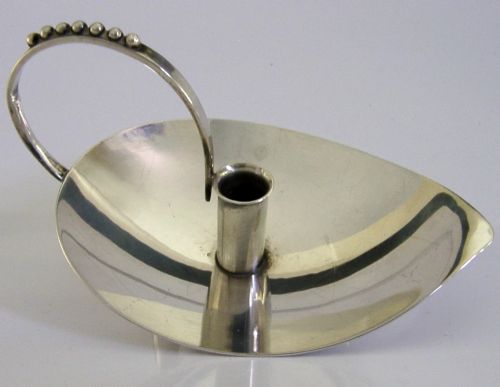
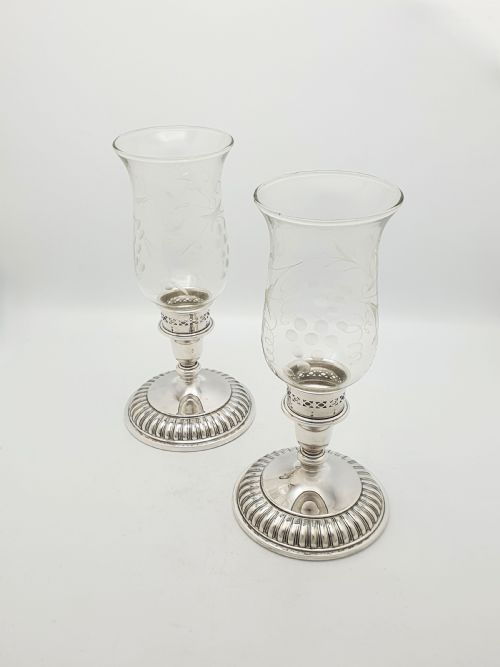
Silver plating and sterling silver appear on chambersticks and wall lights from English and Canadian makers. Wood carvers shaped Florentine giltwood frames and backplates, while glassmakers formed hurricane shades and convex mirrors.
Vintage Candle Sconces Retail Price Guide 2026
Typical asking prices for vintage candle sconces among the pieces listed under this phrase on Sellingantiques today, from the lower quarter to the upper quarter. They describe what is for sale here now, not the wider market.
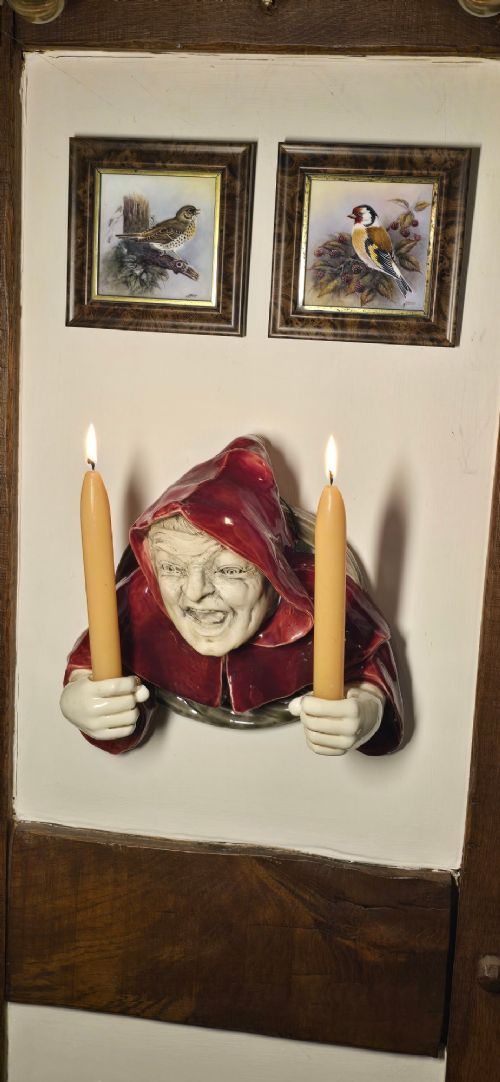
A pottery monk from nineteen-ten stands ready to hold your candles in silent, earthenware devotion.
What varies in quality
The refinement of the casting and chasing distinguishes finer pieces from ordinary production. Crisp detail in the acanthus leaves, ribbons, and cast figures separates superior French ormolu and gilt bronze from simpler brass stampings.
The integrity of the gilding and the weight of the metal determine the presence of a sconce. Original mercury gilding or deep fire gilding retains a warm lustre that thin modern plating lacks, while robust bronze arms support candles securely without sagging.
GEOFFREY BELLAM·Birks·Villeroy & Boch·Maison Baguès
The Vintage Candle Sconces Glossary
- Ormolu
- Gilded bronze, where finely ground gold is amalgamated with mercury and applied to cast bronze before heating. This French technique produces a durable, rich metallic finish.
- Girandole
- A branched wall light or sconce featuring a reflective mirror backplate. The glass multiplies the candlelight within the room.
- Giltwood
- Wood, typically carved gesso over timber, coated with gold leaf or metallic paint. Florentine makers utilised this finish extensively.
- Chamberstick
- A portable candlestick fitted with a shallow pan and a finger ring for carrying. Sterling silver examples often bear hallmarks dating their production.
- Applique
- A wall-mounted lighting fixture or decorative bracket. The term frequently appears in descriptions of French Empire and Rococo pieces.
Vintage Candle Sconces: Frequently Asked Questions
How do I wire vintage sconces?
Many wall lights arrive ready for electrical adaptation by a qualified professional, whilst others retain their original configuration for candles.
Consult an electrician to determine whether existing sockets and internal channels accommodate modern wiring safely.
Are these sconces meant for candles or electricity?
The inventory includes both pure candle holders and electrified wall lights from various decades.
Check the descriptions and backplate details to confirm if a piece holds tapers or accommodates electrical fittings.
How do I clean gilded brass and bronze?
Dust surfaces gently with a soft, dry brush to preserve delicate gilt and ormolu layers.
Avoid abrasive polishes or chemical cleaners that strip away historic gold leaf or patination.
How do I date a pair of sconces?
Examine the casting quality, fastening screws, and stylistic motifs to place a piece within periods like the Victorian era or mid-century.
Silver components often feature hallmarks, while French bronzes rely on regional casting styles and mounting techniques.