

Ornate Wall Sconces
Ornate wall sconces bring layered illumination and carved depth to a room, drawing the eye with their sculptural silhouettes and gilded surfaces.
Ornate Wall Sconces
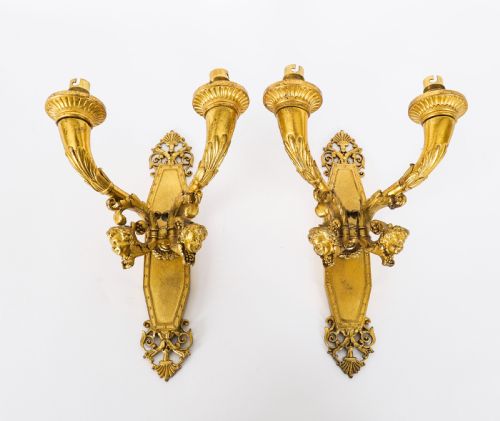
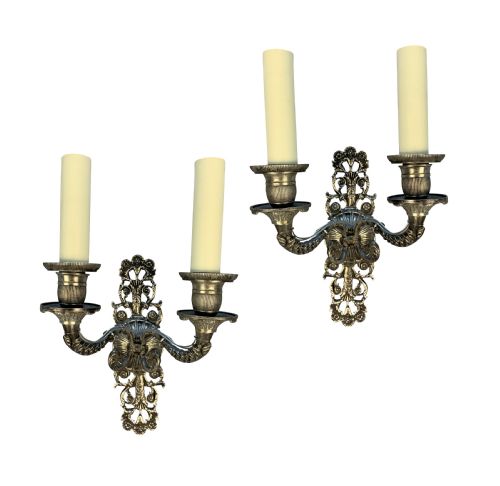
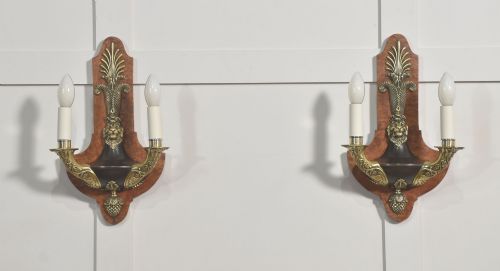
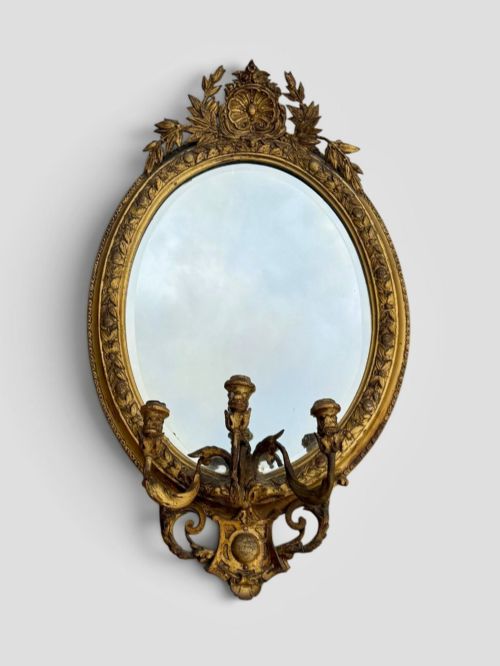
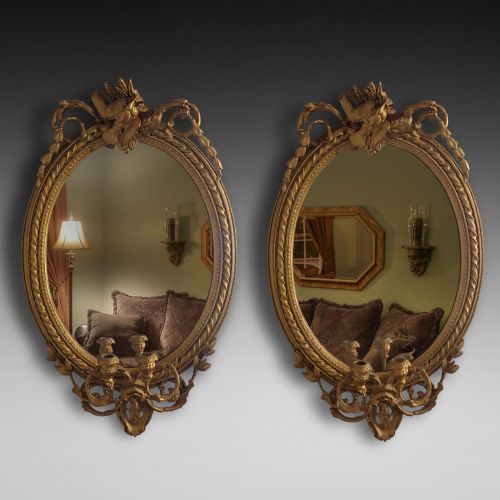
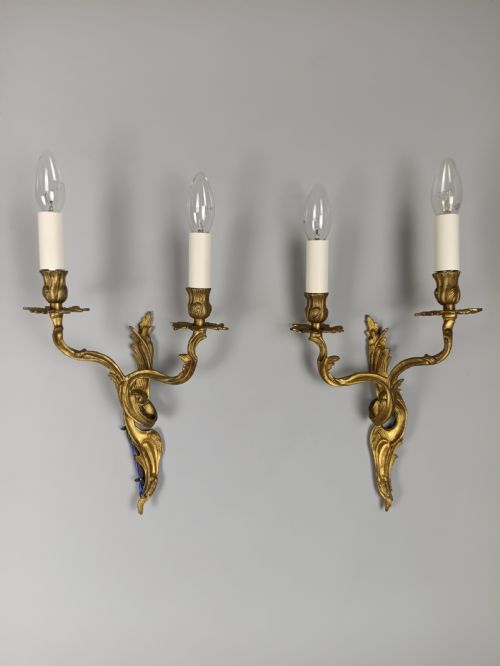
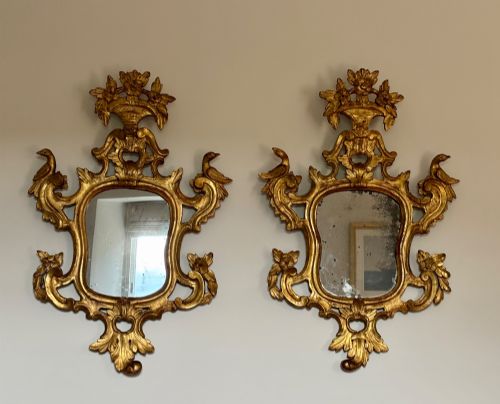
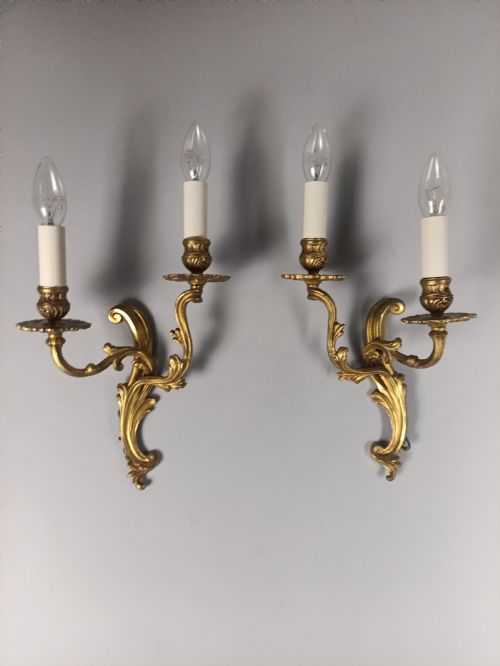
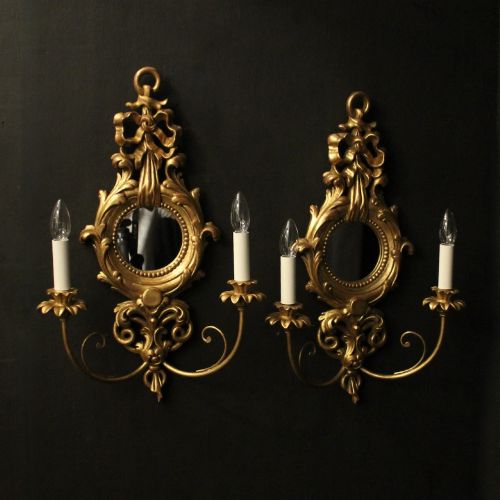
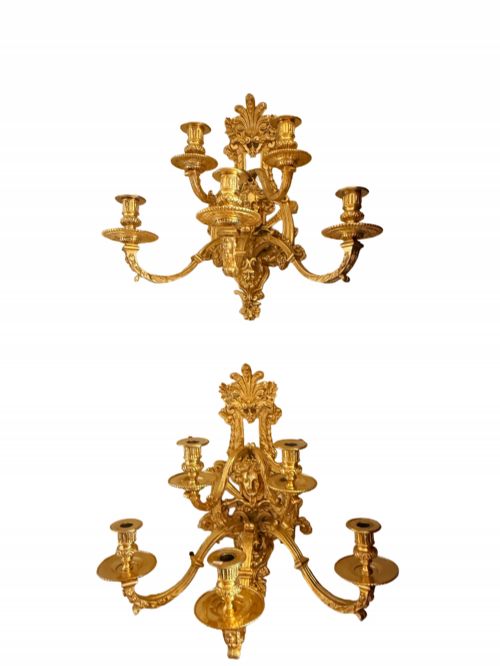
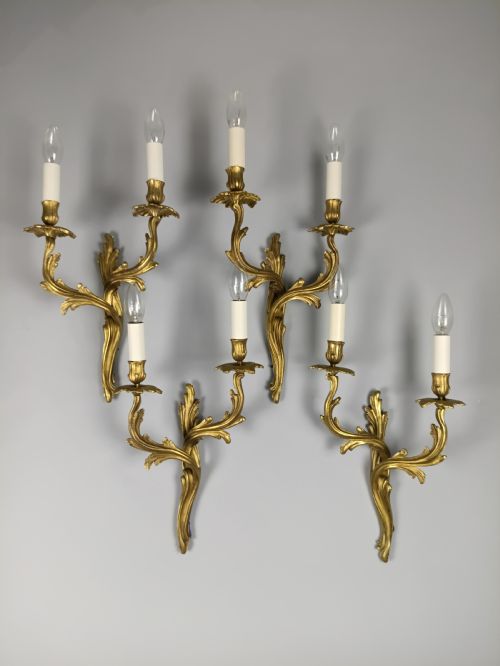
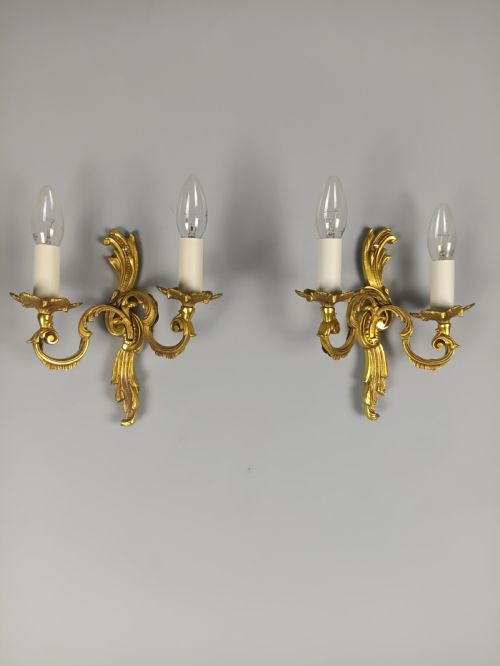
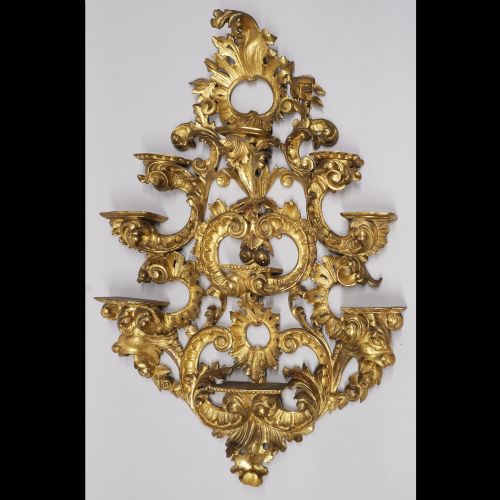
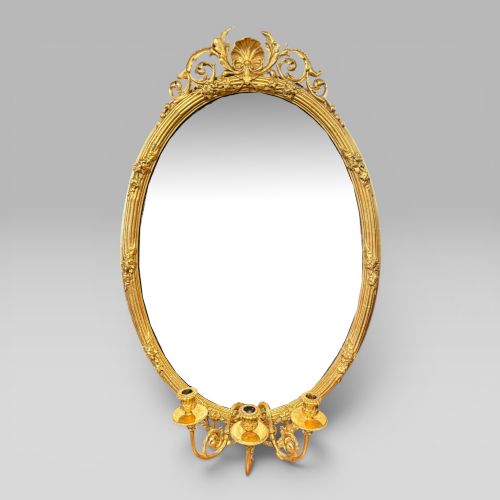
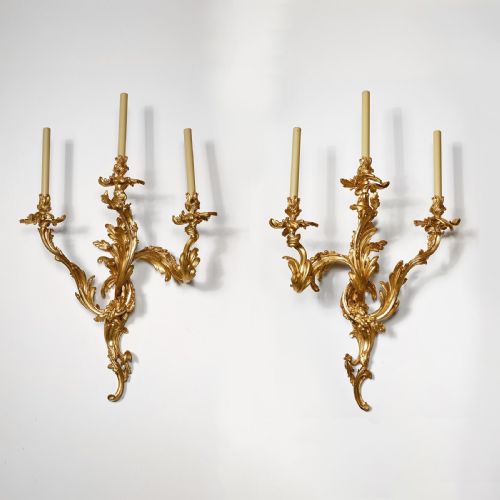
Ornate wall sconces span centuries of decorative lighting and wall furniture, taking the form of candle-bearing wall lights, girandole mirrors, brackets, and wall pockets. You will most frequently encounter pairs of French twin or triple-arm lights alongside gilded girandoles dating from the nineteenth and early twentieth centuries.
The selection ranges from robust Victorian brass and bronze apparatuses to lighter French Rococo Revival and Empire style pieces shaped with scrolling foliage and ribbon motifs. Many examples integrate mirrored backplates or carved wood frames designed to reflect candle or electric light across a room.
Originating largely from French, Italian, and English workshops, these fixtures served both practical illumination and decorative display in formal interiors. The inventory demonstrates a strong representation of continental design, particularly nineteenth-century and 1930s interpretations of earlier Louis XIV and Rococo aesthetics.
How they were made
Metal components rely heavily on cast bronze, brass, or ormolu, often finished with fire-gilding or silver plating to achieve a luminous surface texture. These metal arms and backplates frequently incorporate intricate chased detail reflecting organic scrollwork and floral forms.
Wood and composite pieces utilise carved timber, gesso, and giltwood, where craftsmen built up layers of plaster over carved wood bases before applying gold leaf. The interaction between carved wooden frames and mirrored glass created depth in period reception rooms.
Listings feature periods spanning the eighteenth century through the 1930s, utilising brass, gilt bronze, gesso, and carved giltwood.
What varies in quality
The distinction between standard production and superior craftsmanship lies in the crispness of the casting and the depth of the hand-chasing on bronze and brass elements. Finer pieces retain sharp relief in their acanthus leaves and scrolls, whereas lesser examples show softened contours from worn or secondary moulds.
Surface finish also dictates value, with genuine fire-gilding or well-preserved period gold leaf offering a richer warmth than flat modern paints. The architectural integrity of carved wooden brackets and the weight of the supporting metal arms further separate everyday utility items from masterworks.
The Ornate Wall Sconces Glossary
- Girandole
- A branched wall light or candle sconce, frequently incorporating a mirror to multiply the reflection of the flame. These fixtures often feature elaborate giltwood or gesso frames.
- Ormolu
- Finely chased gilt bronze, created by applying a mercury-gold amalgam to cast bronze and heating it to drive off the mercury. This technique produces a durable golden lustre seen on high-end French fixtures.
- Appliqué
- A decorative wall sconce or light fitting mounted directly onto the wall surface. The term often describes French fixtures featuring multiple candle arms.
- Gesso
- A plaster mixture applied to wood surfaces as a base for gilding or painting. Artisans carved intricate details into the gesso layer before applying gold leaf.
- Rococo Revival
- A nineteenth-century design movement resurrecting the asymmetry, C-scrolls, and naturalistic shell motifs of the eighteenth-century French Rococo period. This style dominates the heavier bronze and brass lighting fixtures.
Ornate Wall Sconces: Frequently Asked Questions
How do I install antique wall sconces?
Many period sconces arrive rewired and ready for mounting by a qualified electrician using standard wall brackets. The structural weight of bronze or carved wood requires secure anchoring into wall studs.
Heavier fixtures such as multi-branch ormolu appliqués or large girandoles need substantial fixing plates to bear the load safely without damaging plaster walls.
Were these sconces originally wired for electricity?
Original period sconces were designed exclusively for wax candles or oil before being adapted for electric bulbs in later decades. Surviving examples often show historic conversions alongside modern rewiring efforts.
When evaluating pieces, look for evidence of how candle holders or drip pans were adapted to conceal lamp holders without compromising the sculptural silhouette.
How do I distinguish nineteenth-century pieces from later revivals?
Nineteenth-century castings and carvings generally display heavier metal gauge, deeper hand-chasing, and denser timber or gesso construction. Stylistic cues also point to specific revival eras like the Victorian interpretations of Louis XIV styles.
Examining the reverse sides of backplates and the nature of screw threads or fixings often reveals the manufacturing period more reliably than surface patination alone.
Can I mix different styles of wall sconces?
Matching pairs provide formal symmetry, but pairing sconces from related revival periods can create a balanced interior when scale and metal tones align. Mixing gilt bronze with brass requires careful consideration of room illumination.
Maintaining a consistent period vocabulary, such as pairing French Rococo Revival pieces in adjacent spaces, ensures visual harmony across different walls.