

Gold Wall Lights
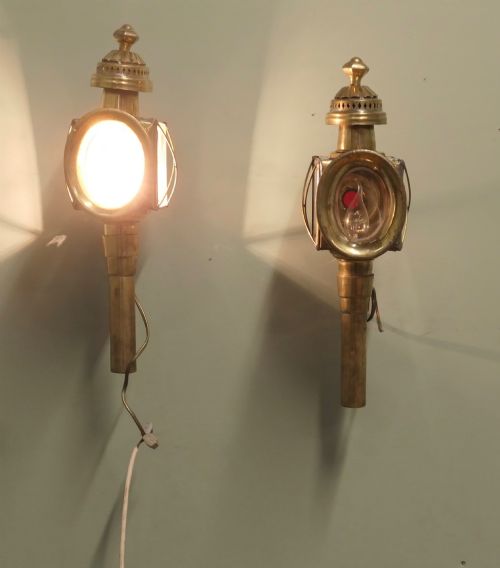
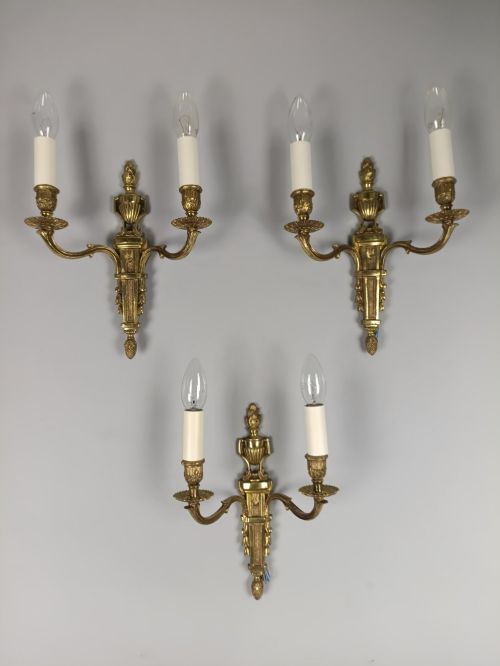
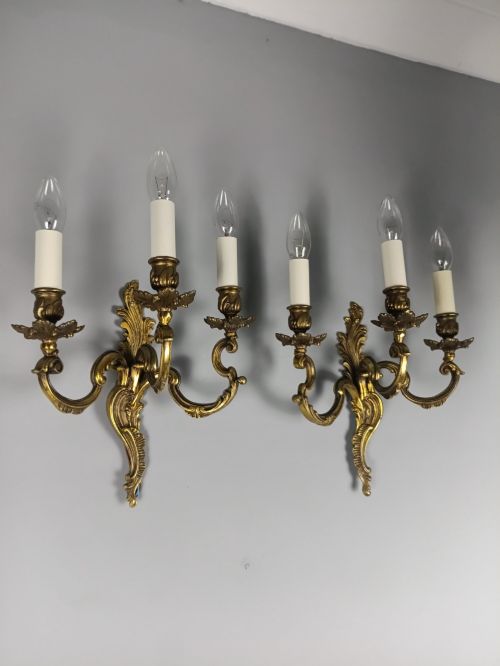
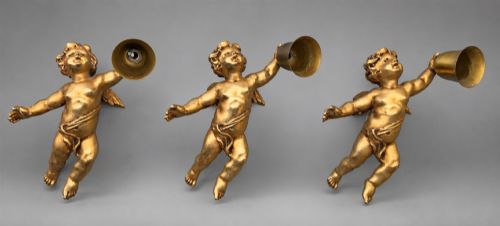
Gold wall lights deliver a warm, reflective glow, taking the form of gilded brass, ormolu, and carved giltwood sconces designed to illuminate period interiors.
Gold Wall Lights
Gold wall lights encompass ornate sconces, girandoles, and multi-branched candelabra fittings designed to mount directly onto interior walls. Buyers seeking this category encounter pieces predominantly originating from French and Italian workshops spanning the eighteenth century through to the interwar period of the twentieth century.
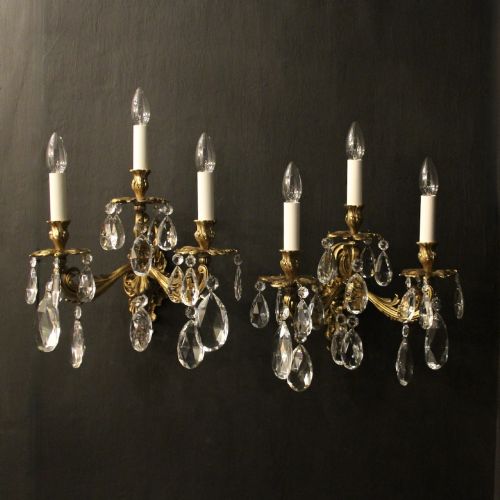
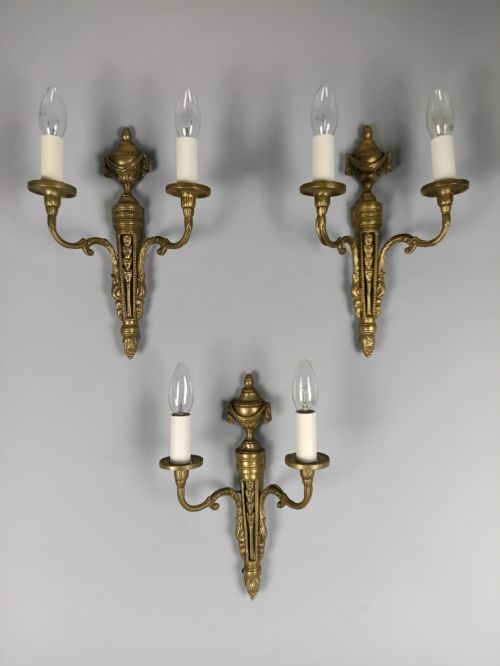
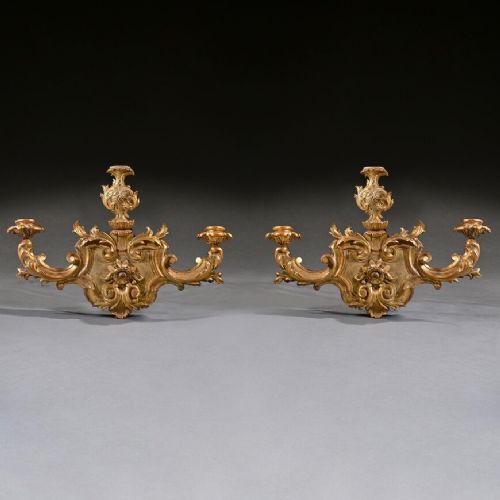
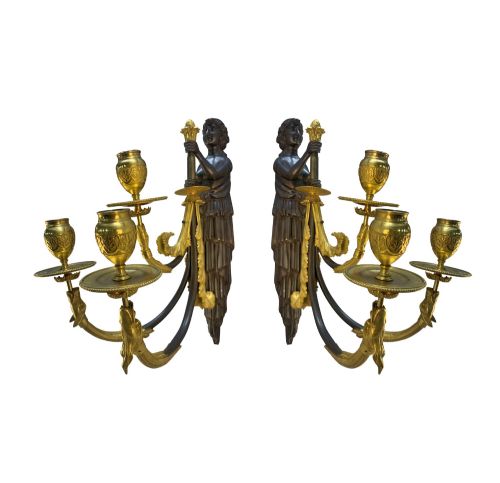
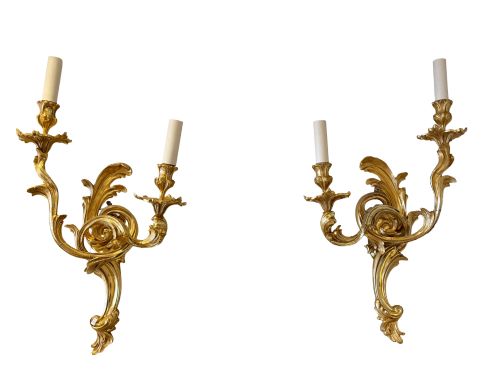
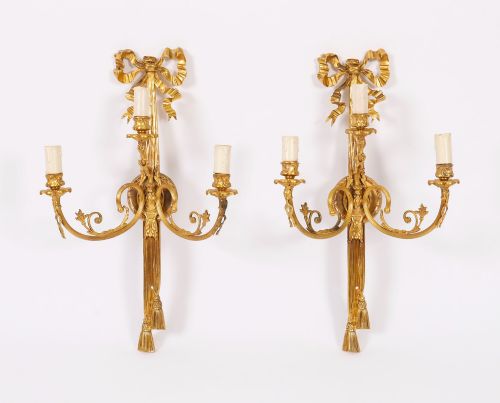
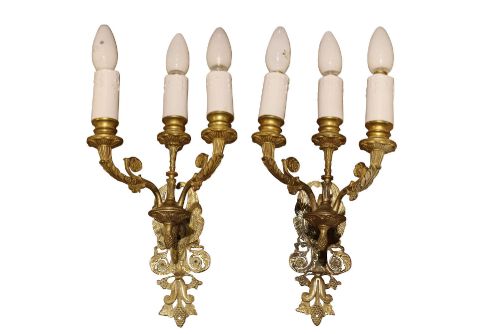
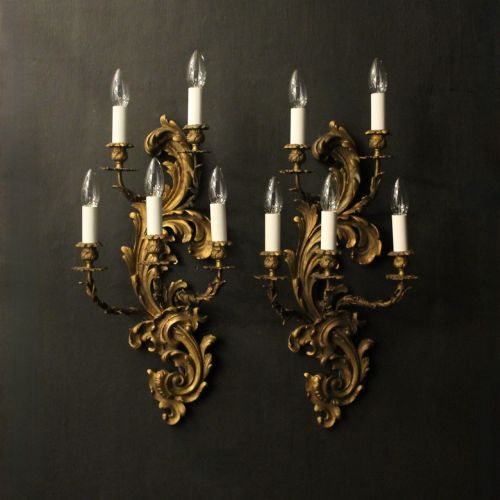
The selection on this page relies heavily on French production, featuring twin-arm and triple-arm configurations executed in gilt bronze, ormolu, and gilded brass. Alongside these, Italian giltwood girandoles and carved wooden wall fittings appear regularly, alongside occasional adjustable brass table or wall combinations.
Stylistic influences run from exuberant Rococo and classical Empire designs down to later nineteenth-century revivals and twentieth-century interpretations. Pairs and sets of four form a substantial portion of the available stock, reflecting the traditional requirement for symmetrical room placement.
How they were made
Metal components rely primarily on cast bronze, brass, and copper alloys finished with fire-gilding, ormolu, or modern plating methods. Artisans chased and detailed the metal surfaces by hand after casting to sharpen the acanthus leaves, ribbons, and scrollwork typical of French models.
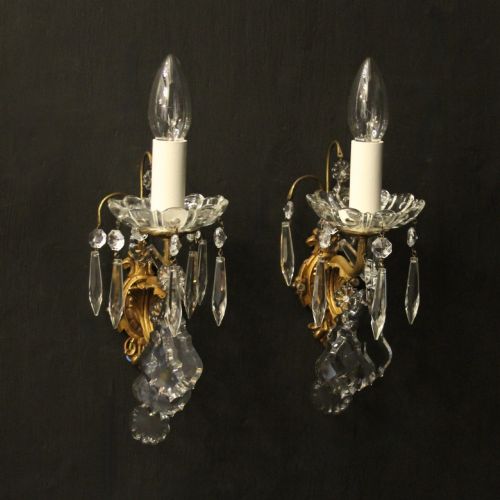
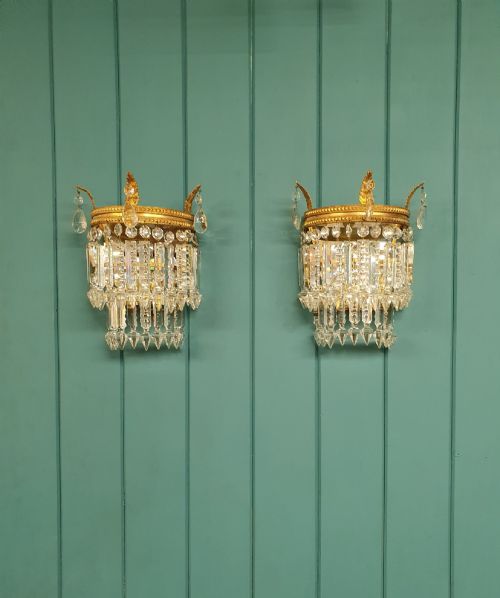
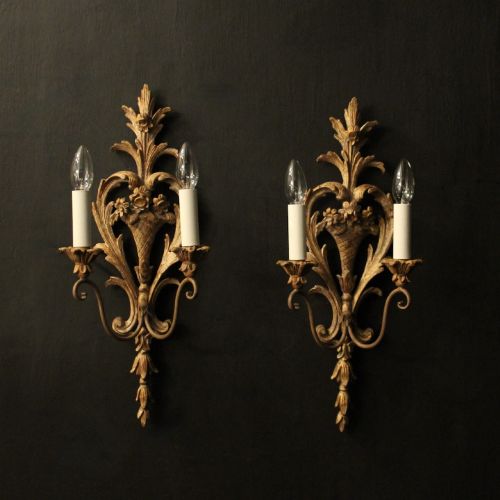
Wooden alternatives utilise hand-carved giltwood and gesso applied over a timber base, particularly visible in Florentine and George III style girandoles. Glass and crystal elements, including drops and convex half-lanterns, integrate into the metal frames to amplify the reflection of candlelight or early electric illumination.
Gold Wall Lights Retail Price Guide 2026
Typical asking prices for gold wall lights among the pieces listed under this phrase on Sellingantiques today, from the lower quarter to the upper quarter. They describe what is for sale here now, not the wider market.
Listings feature items spanning the eighteenth, nineteenth, and twentieth centuries, executed in brass, gilt bronze, ormolu, and giltwood.
What varies in quality
The distinction between ordinary production and superior work rests on the crispness of the metal chasing and the depth of the original gilding. Finer castings retain sharp architectural details and subtle textural contrasts, whereas lesser examples present softened edges from worn moulds.
Construction methods also dictate grade, with heavy bronze castings and solid hand-carved giltwood framing standing apart from lighter pressed brass assemblies. Integrity of the structural arms, original matching components, and the preservation of the gilded surface determine the standing of an individual fixture.
W.A.S. Benson·Maison Baguès·Casier·Bruce Talbert
The Gold Wall Lights Glossary
- Ormolu
- Gilded bronze produced through the application of a mercury and gold amalgam followed by heat treatment. This hazardous historical technique yielded a durable, deep metallic lustre distinct from modern electroplating.
- Girandole
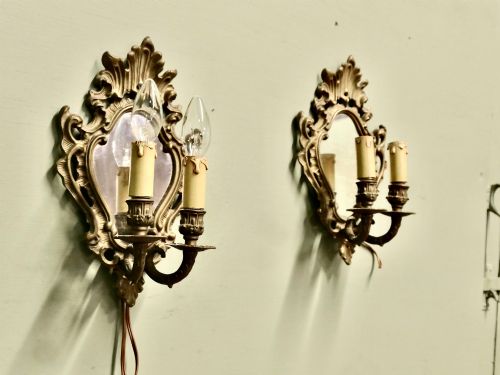
- An ornamental branched wall light featuring a mirror backplate. The reflective glass serves to multiply the illumination cast into the room.
- Applique
- A French term frequently applied to wall lights and sconces fixed directly to a vertical surface. They often feature matching arms and decorative backplates.
- Giltwood
- Timber, usually softwood or lime, prepared with layers of gesso and size before receiving thin sheets of gold leaf. Hand-burnishing brings selected areas to a bright metallic finish.
- Aesthetic Movement
- A late nineteenth-century design current prioritising artistic merit over strict historical revivalism. Pieces from this context display simplified structural lines and stylised ornamentation.
Gold Wall Lights: Frequently Asked Questions
How were gold wall lights used?
These fixtures served to illuminate reception rooms, hallways, and bedchambers by holding candles or oil before electricity became standard. Positioned above mantelpieces or flanking mirrors, they maximised ambient light through reflection.
Over time, many surviving examples received conversion to electricity while retaining their original decorative metal or wooden frames.
How do I date an antique wall light?
Dating relies on identifying the prevailing stylistic vocabulary, such as Louis XIV symmetry, Rococo asymmetry, or Empire neoclassical motifs. Material composition, casting methods, and fastening screws also provide clear chronological indicators.
Earlier eighteenth-century pieces display heavier hand-chased bronze work, whereas twentieth-century reproductions often utilise lighter stamped brass components.
Are these lights wired for modern use?
Many antique wall fittings arrive with modern electrical wiring or require professional rewiring to meet contemporary safety standards. Buyers should consult a qualified electrician to ensure compatibility with domestic circuits.
Rewiring typically preserves the structural integrity of the original metal arms and backplates.
What is the difference between a sconce and a girandole?
A sconce is a general term for any wall-mounted lighting bracket designed to hold candles or electric bulbs. A girandole specifically incorporates a mirrored backplate to bounce additional light back into the space.
Both forms appear frequently in gilded brass, bronze, and carved wood across various periods.