

Classical Wall Sconces
Classical wall sconces bring architectural elegance and warm illumination to interiors through enduring forms derived from antique French and Italian designs.
Classical Wall Sconces
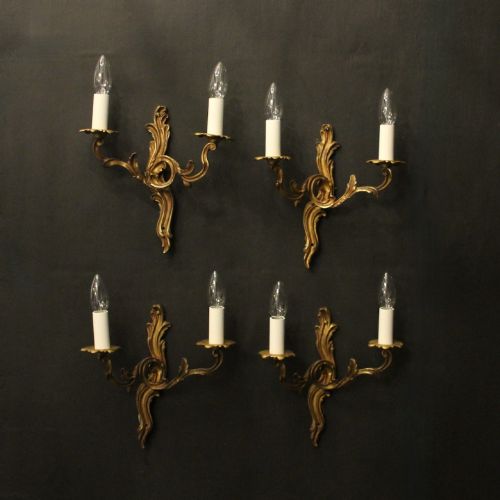
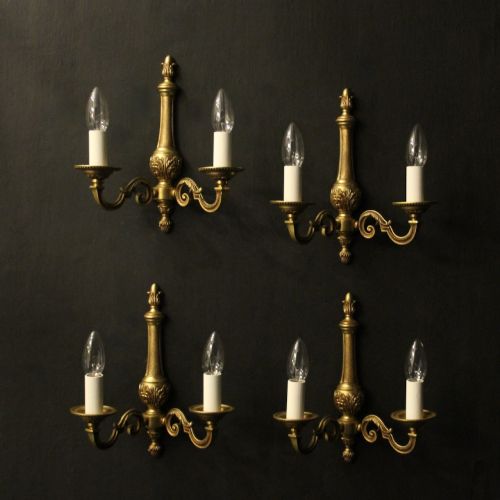
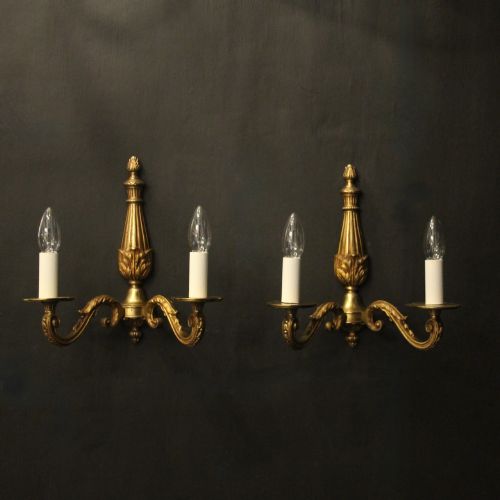
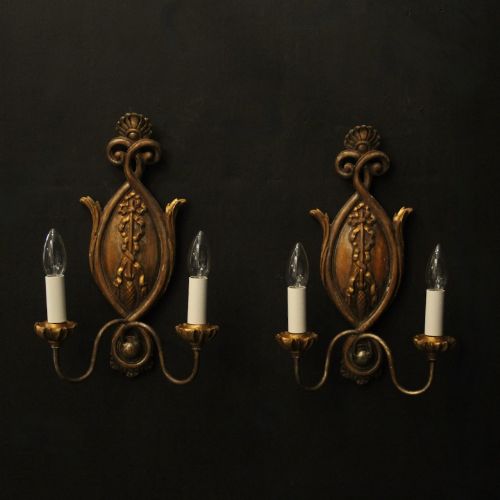
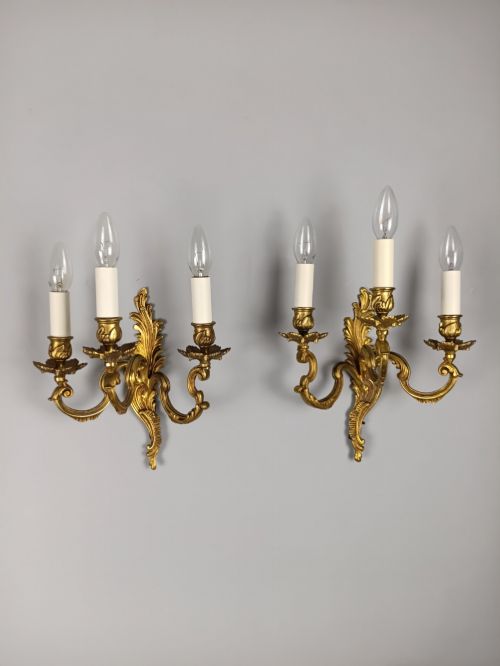
Classical wall sconces encompass wall-mounted light fixtures and brackets shaped by historical design movements such as Neoclassical, French Chateau, and Louis XVI styles. These pieces range from simple single-arm brackets to grand multi-branched fixtures designed to flank mirrors, fireplaces, or architectural focal points in a room.
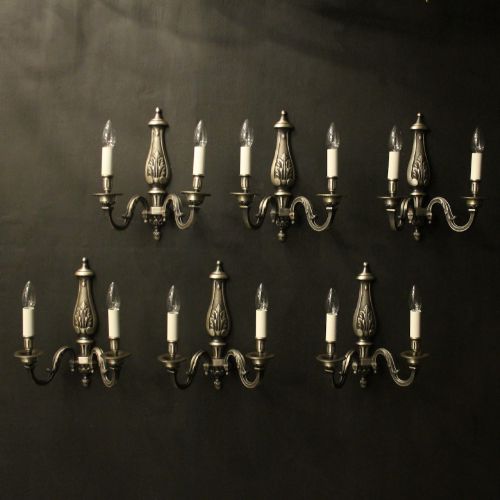
The most common versions encountered here date from the late nineteenth century through the early decades of the twentieth century, often drawing directly upon earlier eighteenth-century aesthetics. Pairs and larger sets predominate, reflecting the traditional requirement for symmetrical placement in formal interiors.
Origins heavily skew toward continental European workshops, with French and Italian pieces representing a large portion of the selection alongside English interpretations. Forms extend from twin-arm and triple-arm wall lights to specialised architectural elements like wall brackets, lanterns, and torch-form sconces.
Materials and Construction
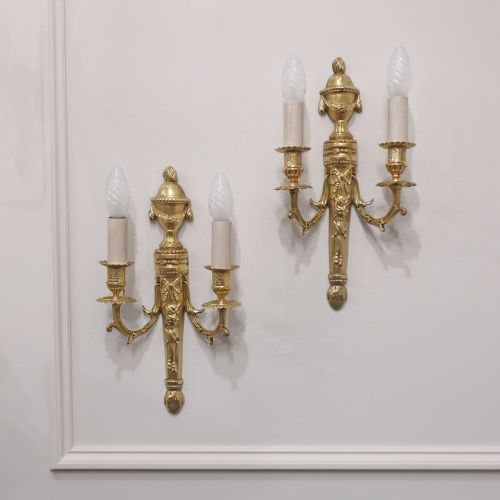
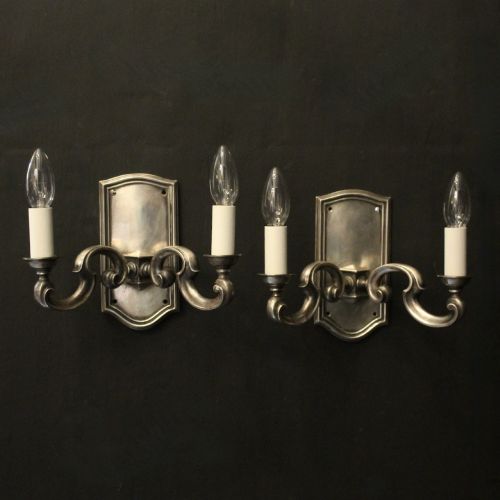
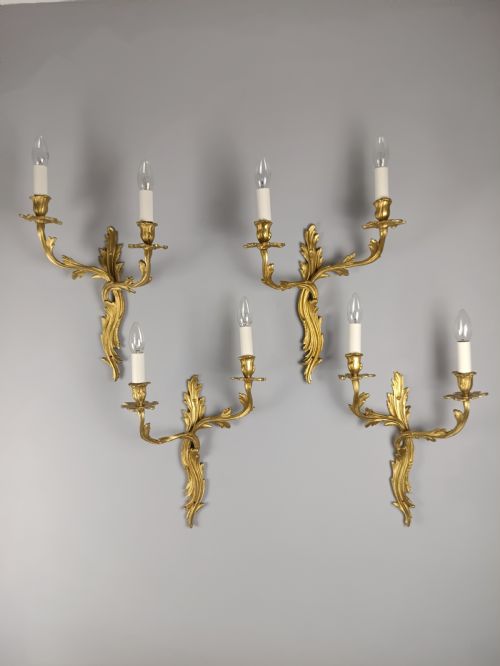
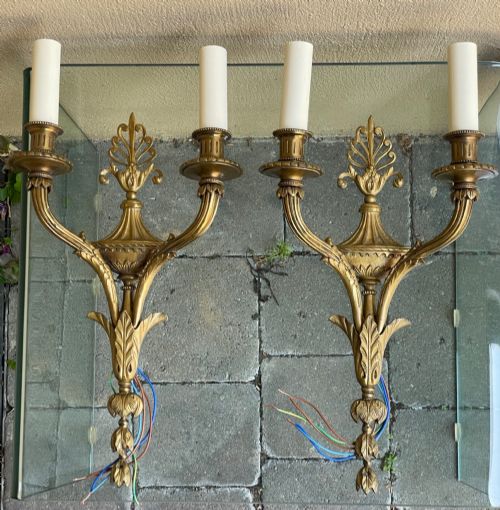
Cast metals form the structural backbone of these fixtures, with gilt bronze, ormolu, brass, and silver-plated or silver-gilded brass utilised extensively across French and English pieces. Artisans employed traditional metal-casting techniques to achieve crisp relief work on motifs such as ram's head masks, urns, and scrolling foliage.
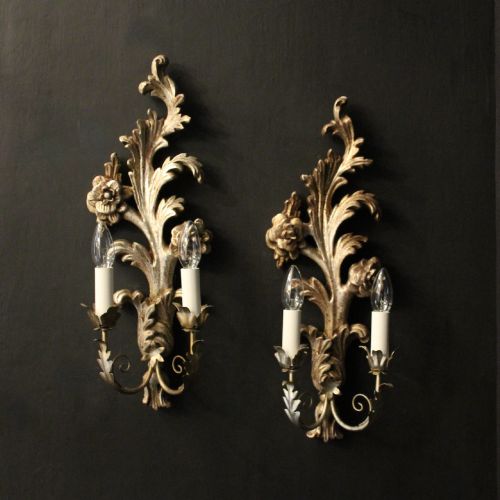
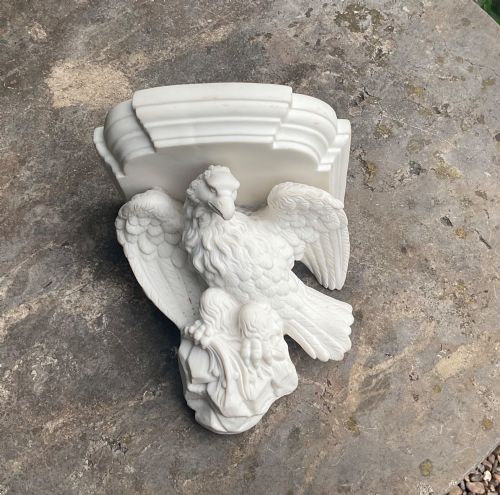
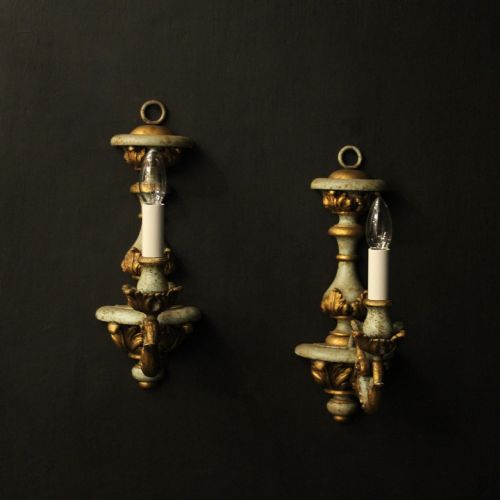
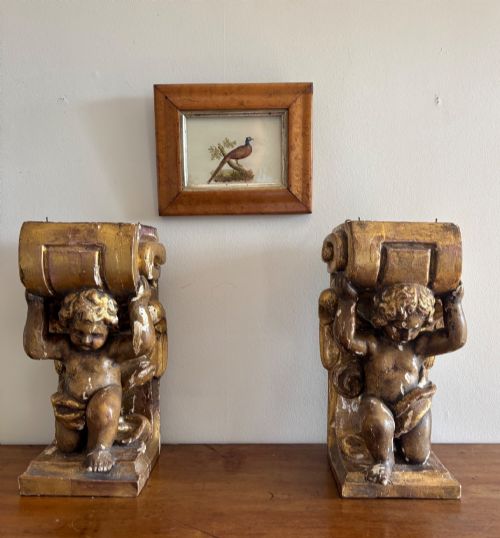
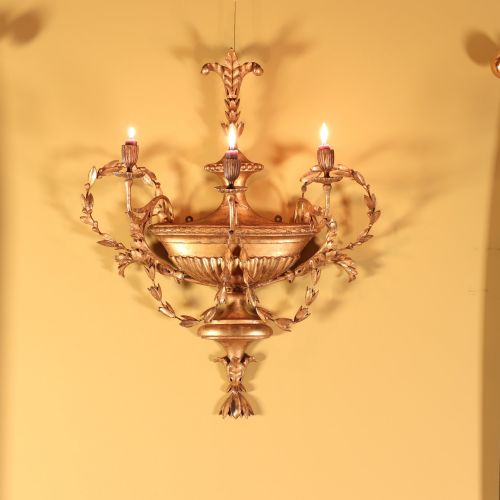
Wood and gesso serve as the primary media for carved Florentine and English wall brackets and sconces, finished with gold leaf, silver giltwood, or polychrome paint. These wooden elements demonstrate the skill of carvers who shaped intricate acanthus leaves and classical architectural mouldings by hand.
Classical Wall Sconces Retail Price Guide 2026
Typical asking prices for classical wall sconces among the pieces listed under this phrase on Sellingantiques today, from the lower quarter to the upper quarter. They describe what is for sale here now, not the wider market.
Listings feature periods spanning from the eighteenth-century George III era through the Edwardian period and the 1930s.
Assessing Craftsmanship and Detail
Quality reveals itself in the crispness of the casting and the depth of the chased detail on bronze and ormolu mounts. Superior examples exhibit sharply defined ornamentation where human hands have refined the metal after casting, whereas lesser pieces display softened edges and shallower relief.
The finish execution separates standard production from finer work, visible in the handling of genuine gold leaf, nuanced verdigris patination, or carefully applied silver gilding. Construction robustness also matters, as heavier multi-arm fixtures require sound internal mounting and secure arm joints to support the weight safely.
Casier·F. & C. Osler
The Classical Wall Sconces Glossary
- Ormolu
- Gilded bronze produced by applying a mercury and gold amalgam to a bronze base and heating it to drive off the mercury. This technique creates a durable, rich golden surface characteristic of fine French lighting.
- Giltwood
- Timber, typically carved gesso-covered wood, coated with thin sheets of gold leaf or gold paint. It provides a luminous decorative finish popular in classical interior design.
- Neoclassical
- A style spanning the eighteenth and nineteenth centuries that draws inspiration from the classical art and architecture of ancient Greece and Rome. It relies on symmetry, straight lines, and classical motifs like urns and swags.
- Florentine
- Pertaining to decorative arts originating from Florence, Italy, often characterised by ornate carved wooden forms and silver or gold leaf finishes. These pieces frequently feature rich surface textures and traditional Italian motifs.
- Applique
- A French term frequently used interchangeably with wall sconce or wall light. It denotes a decorative lighting fixture mounted directly onto a vertical surface.
Classical Wall Sconces: Frequently Asked Questions
How do I choose the right size wall sconce?
Scale depends on the dimensions of the wall space and the surrounding furniture, such as a fireplace or mantelpiece. Larger rooms and high ceilings accommodate multi-arm sconces or sets of four to six, while narrower spaces suit single or twin-arm brackets.
Proportion also relates to the height of placement, ensuring the light sits at an effective level for both illumination and visual balance.
Were these sconces originally wired for electricity?
Most pieces dating from the nineteenth and early twentieth centuries were originally configured for candles or gas before later conversion to electricity. Surviving examples often show adaptations made during past rewiring projects to accommodate modern bulbs.
Inspect the backplate and internal channels to understand how wiring was integrated into the historical structure of the metal or wood.
How do I distinguish Louis XVI style from Rococo?
Louis XVI style emphasises straight lines, strict symmetry, and classical architectural elements like fluting, urns, and geometric symmetry. It reflects a turn toward orderly classical restraint.
In contrast, Rococo design embraces asymmetrical compositions, C-scrolls, and exuberant naturalistic motifs like flowing water and shell forms. This creates a more fluid, dynamic visual rhythm.