

French Ormolu Sconces
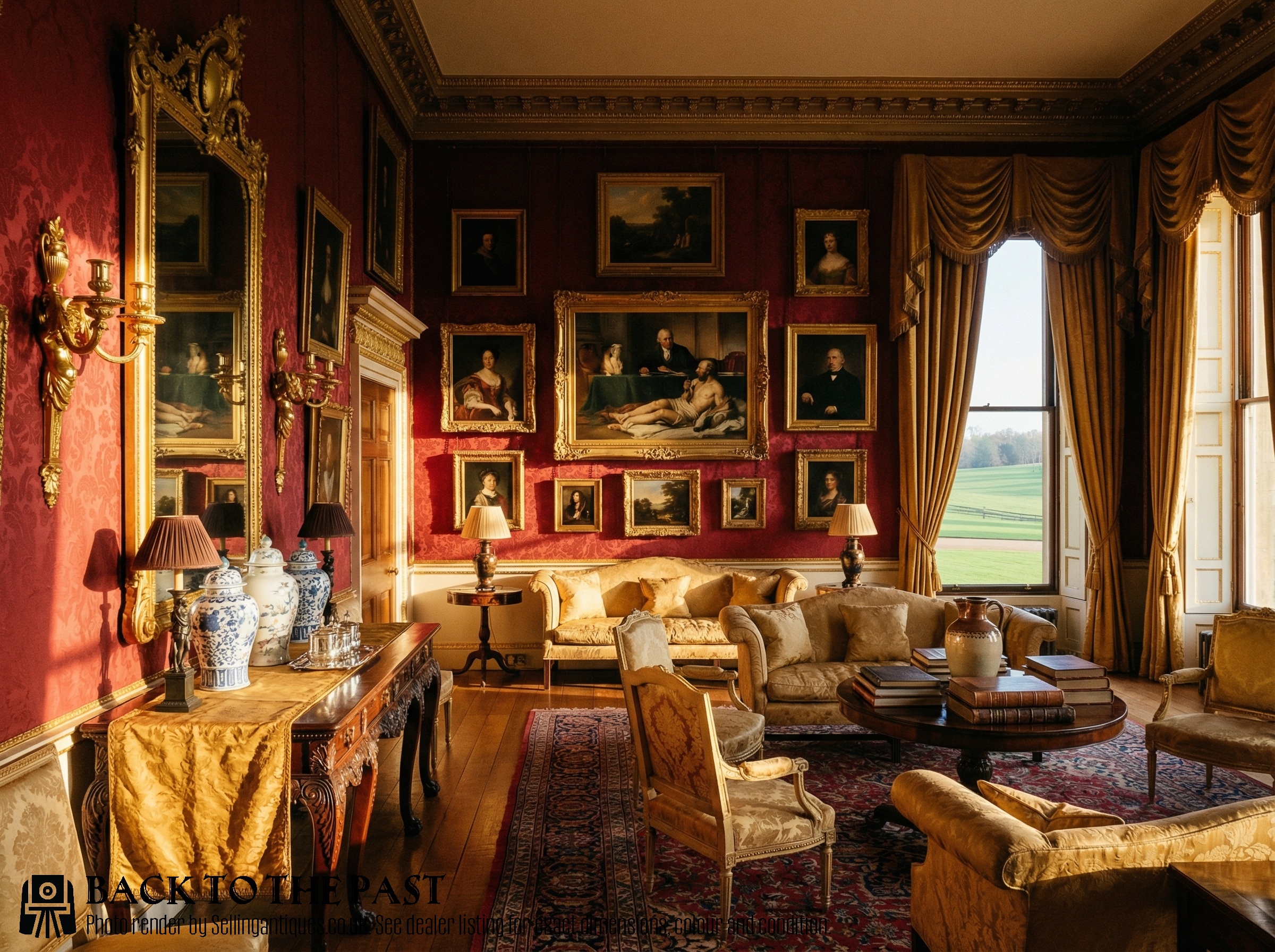
French ormolu sconces bring warm, reflected light and sculptural elegance to an interior, cast in metal and finished with rich gilding.
French Ormolu Sconces
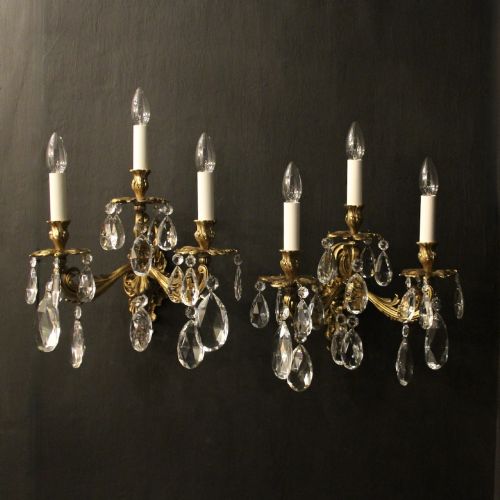
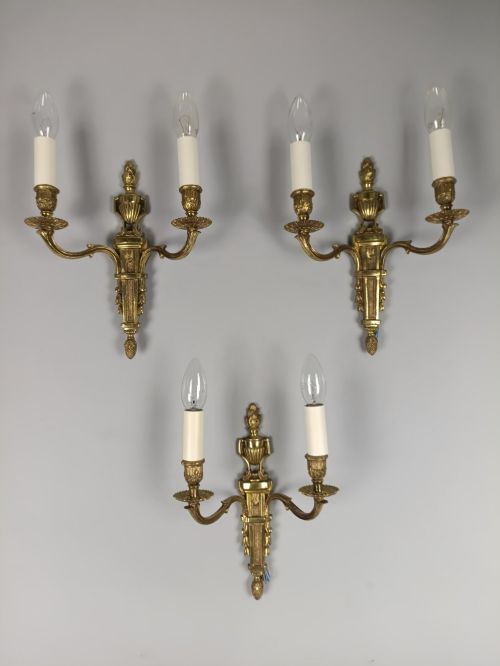
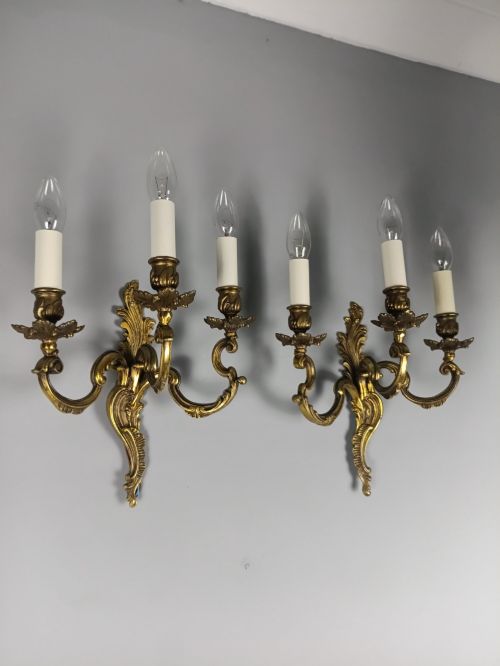
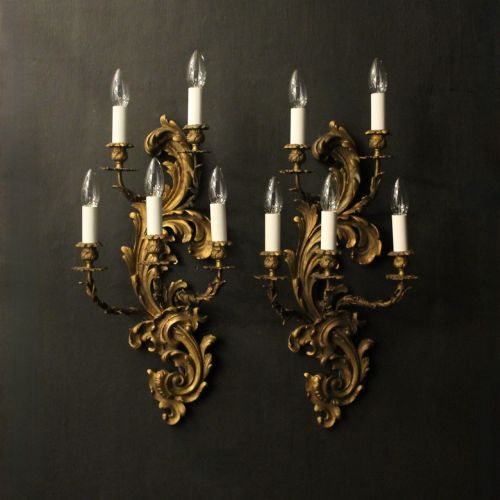
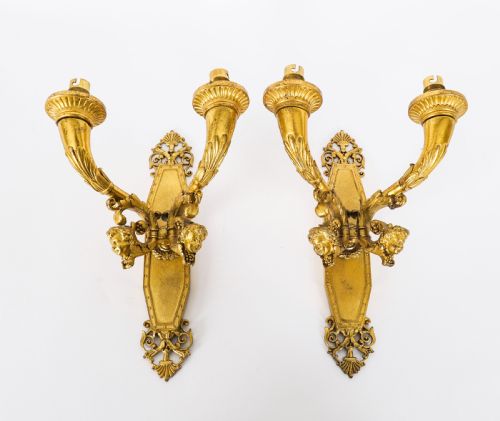
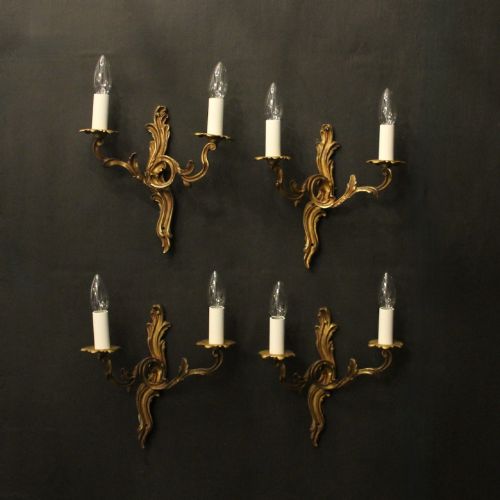
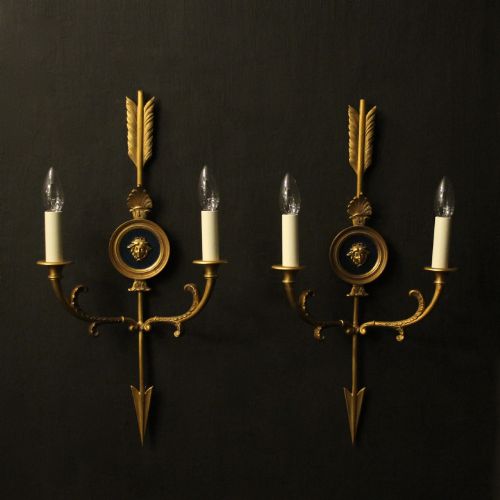
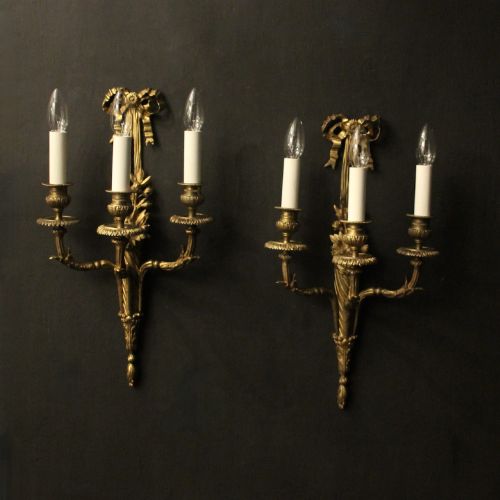
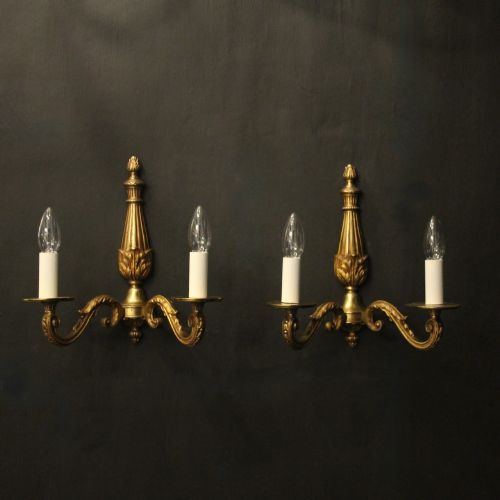
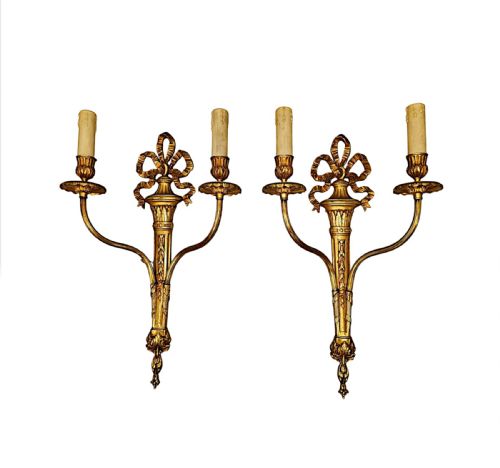
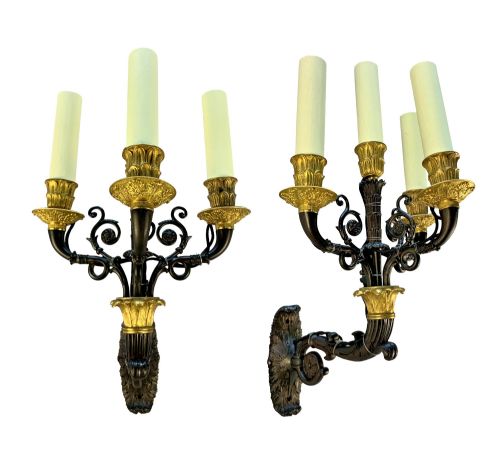
French ormolu sconces are decorative wall-mounted light fittings designed to hold candles or illuminate a room with architectural flair. When you search for french ormolu sconces, you encounter twin and triple-arm fixtures alongside larger sets from the eighteenth century to the 1930s.
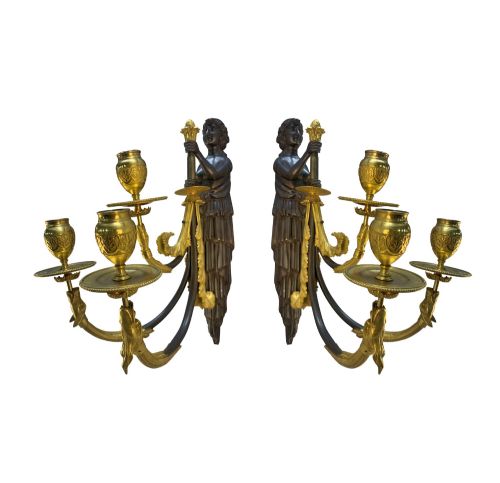
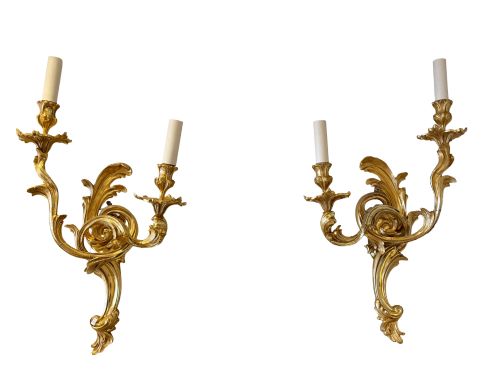
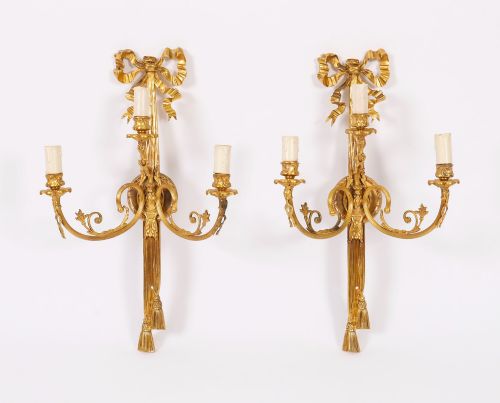
The prevailing examples on this page span the nineteenth and early twentieth centuries, drawing on Rococo, Louis XVI, and Empire styles. These wall lights range from simple single-arm brackets to elaborate multi-branch appliques adorned with classical motifs and scrolling foliage.
How they were made
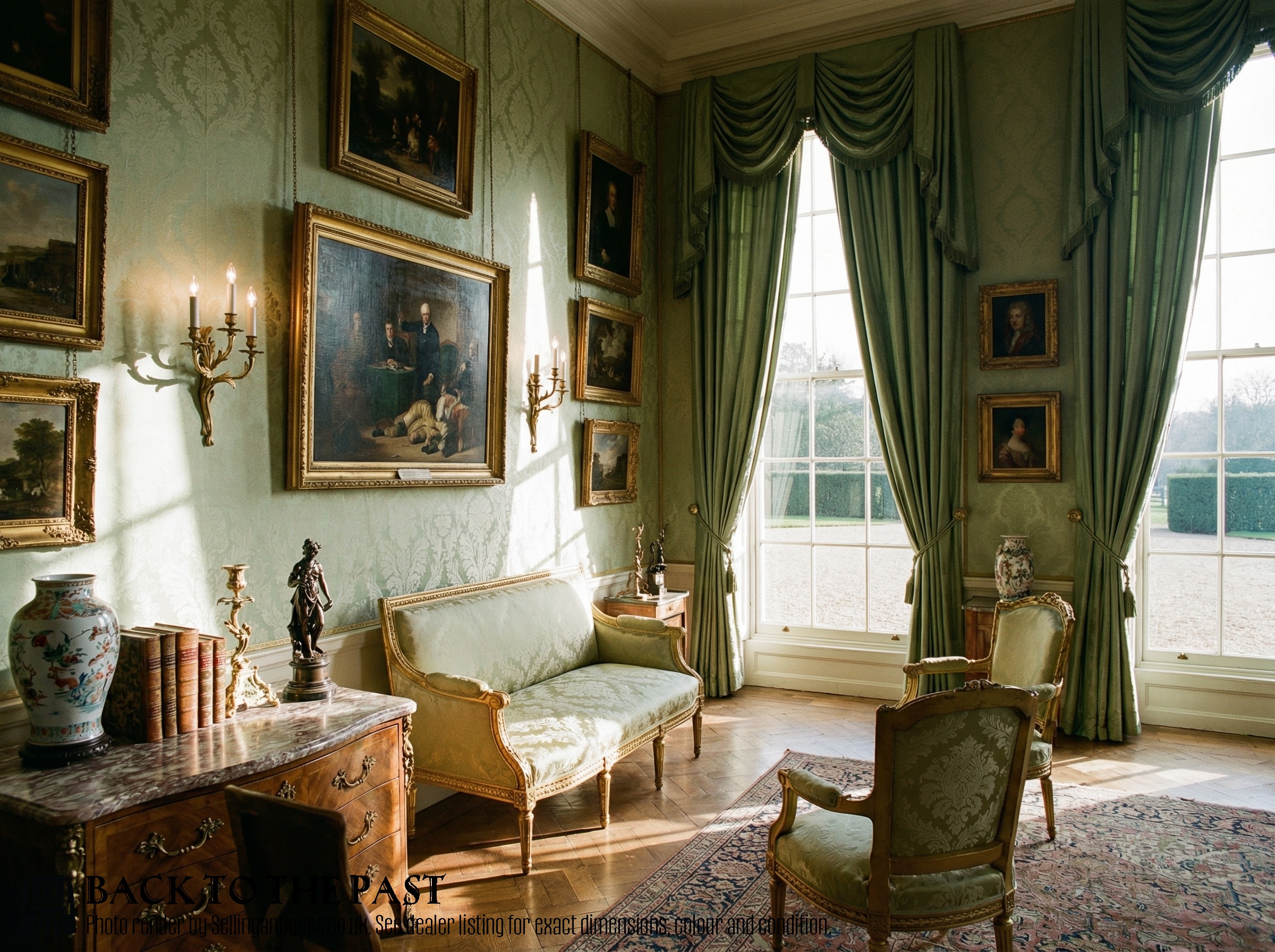
The primary material is bronze, brass, or cast metal, which was intricately worked and then gilded using traditional techniques to create the characteristic ormolu finish. Artisans employed mercury gilding in earlier periods and electroplating in later decades to adhere gold layers to the base metal.
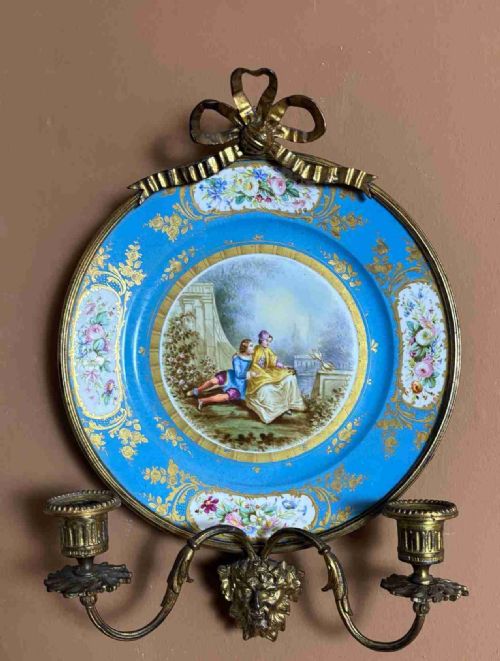
Casting allowed makers to achieve high relief and deep undercuts, which were subsequently hand-chased with tools to sharpen details like acanthus leaves and fluting. Selected pieces incorporate additional elements such as porcelain flowers, glass pendants, champleve enamel, or marble columns.
French Ormolu Sconces Retail Price Guide 2026
Typical asking prices for french ormolu sconces among the pieces listed under this phrase on Sellingantiques today, from the lower quarter to the upper quarter. They describe what is for sale here now, not the wider market.
Listings include items from the 18th Century through to 1930, utilising materials such as ormolu, gilt bronze, brass, porcelain, and marble.
What varies in quality
The distinction between ordinary and exceptional pieces lies in the crispness of the chasing and the depth of the metalwork. Superior examples retain sharp leaf edges and varied surface textures, where smooth polished areas contrast with matte gilded sections.
Weight, engineering, and the integration of secondary materials like Sevres porcelain or hand-cut glass also determine the standing of a sconce. Finer castings sit flush to the wall and demonstrate structural harmony across every arm and drip pan.

Casier
The French Ormolu Sconces Glossary
- Ormolu
- Gilded bronze produced by applying a gold and mercury amalgam to a bronze base, or through later electroplating methods. This finish yields a warm golden hue that resists tarnishing over decades.
- Applique
- A wall-mounted light fixture designed to reflect light against the room surfaces. The term is often used interchangeably with wall sconce in historical inventories.
- Rococo
- A decorative style characterised by asymmetrically arranged scrolls, shell motifs, and naturalistic plant forms. It dominated mid-eighteenth-century French design and experienced several revivals.
- Empire
- A Neoclassical style inspired by ancient Roman, Greek, and Egyptian motifs such as laurel wreaths, urns, and sphinxes. It gained prominence during the rule of Napoleon Bonaparte.
- Girandole
- A branched wall light featuring mirrors or reflective backplates to amplify the illumination from candles. These fixtures maximise the perceived light in dimly lit historical interiors.
French Ormolu Sconces: Frequently Asked Questions
How do I mount french ormolu sconces safely?
Wall lights require secure attachment to studs or solid masonry due to the weight of cast bronze and brass. Most antique fixtures arrive with original backplates or mounting loops ready for installation by a qualified electrician.
Wiring should be assessed to ensure old sockets meet contemporary safety standards. Professional placement ensures the sconces hang level and support the weight of multi-branch arms.
Were these sconces made for candles or electricity?
Many examples on this page originated as candle sconces before being adapted for electric bulbs in the twentieth century. Conversion typically involves running discreet internal wiring through the hollow arms without altering the exterior brass.
Candle-form sleeves are often added to mimic the original appearance while hiding modern lamp holders. This preserves the visual integrity of the historic metalwork while providing practical home lighting.
How do I clean and care for ormolu?
Dusting with a soft, dry microfibre cloth prevents the accumulation of grime in the recessed chasing of the bronze. Avoid abrasive polishes, harsh chemicals, or water, which can strip the thin layer of historical gilding.
Professional conservation is recommended for pieces showing active tarnish or green oxidation. Gentle handling preserves the original surface patina developed over centuries of exposure.
How can I tell the period of a wall light?
Stylistic cues such as symmetry, floral swags, and classical urns point toward Louis XVI or Empire periods, while asymmetric scrolls suggest Rococo revival. Fasteners, screw types, and casting seams offer further clues to whether a piece dates to the eighteenth century or a later nineteenth-century revival.
Comparing the weight, chasing quality, and mounting brackets helps distinguish genuine period production from twentieth-century interpretations.