

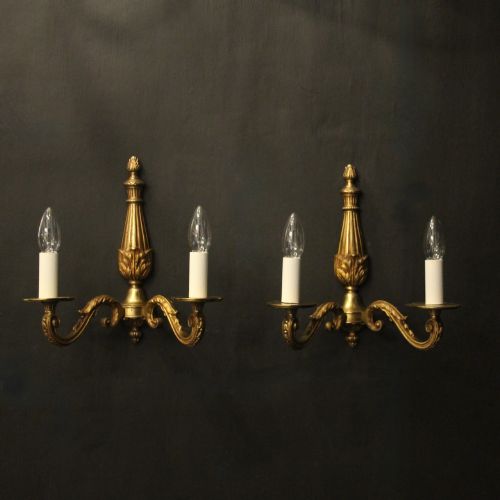
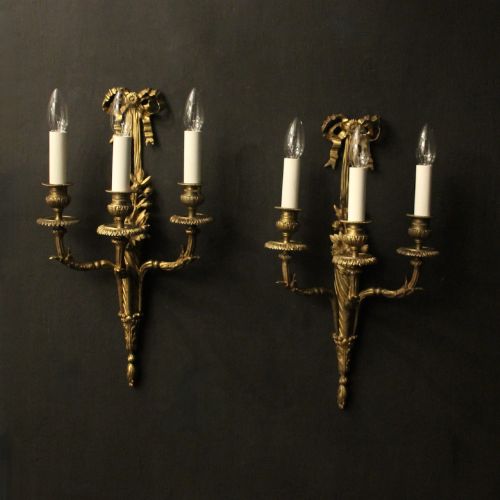
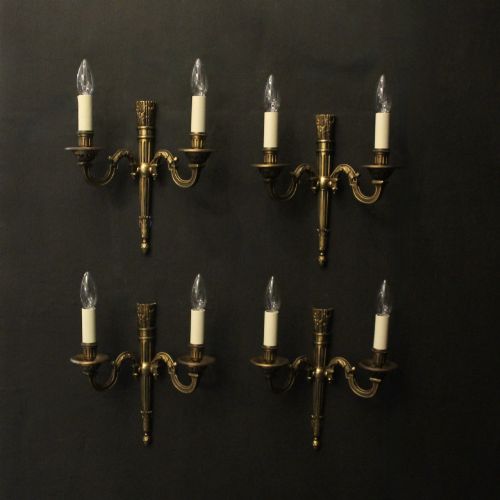
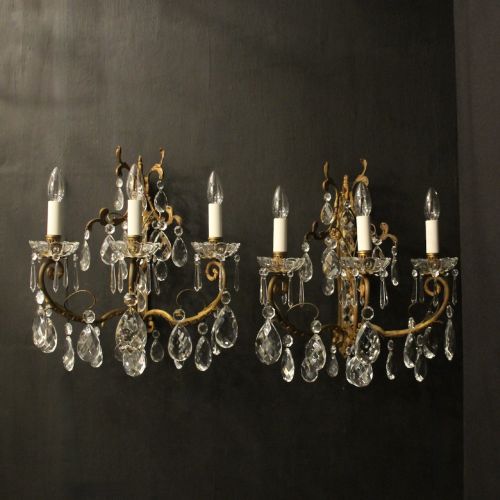
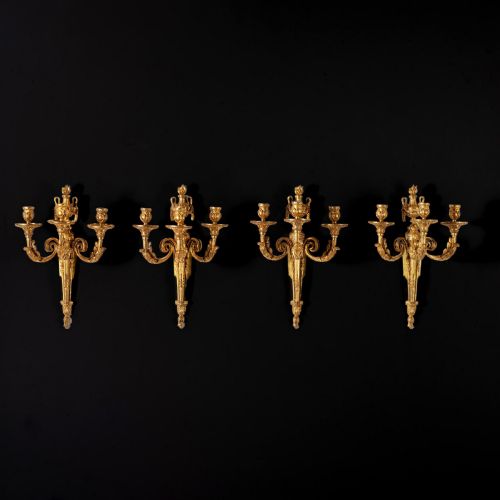
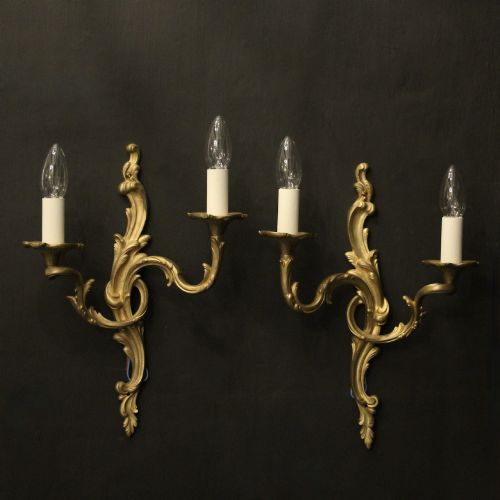
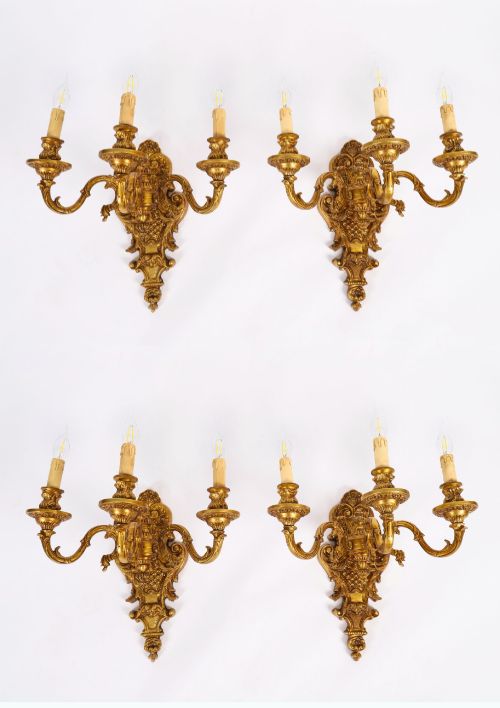
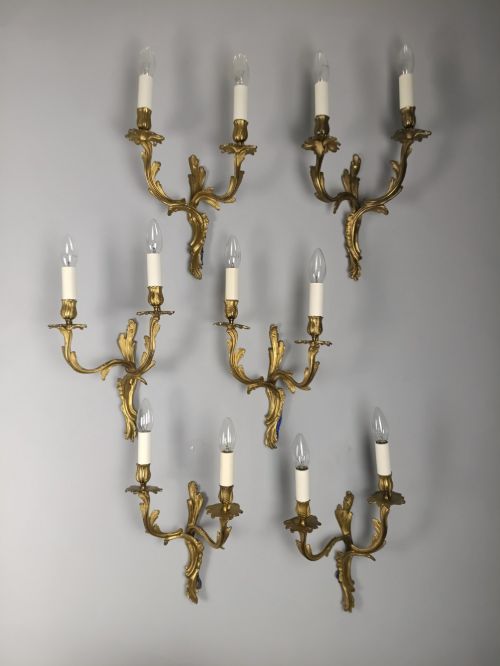
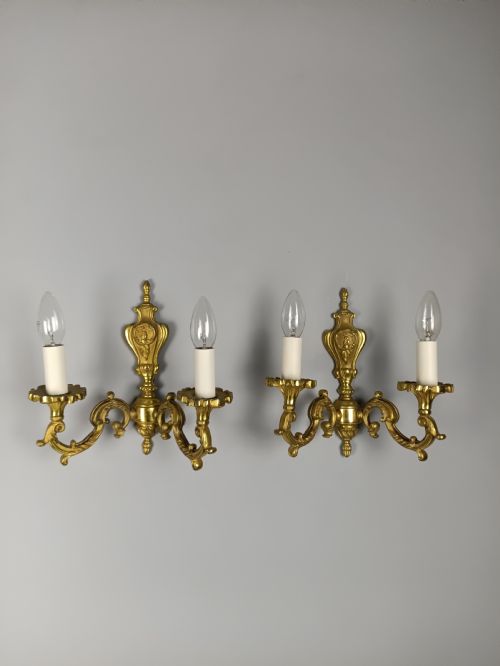
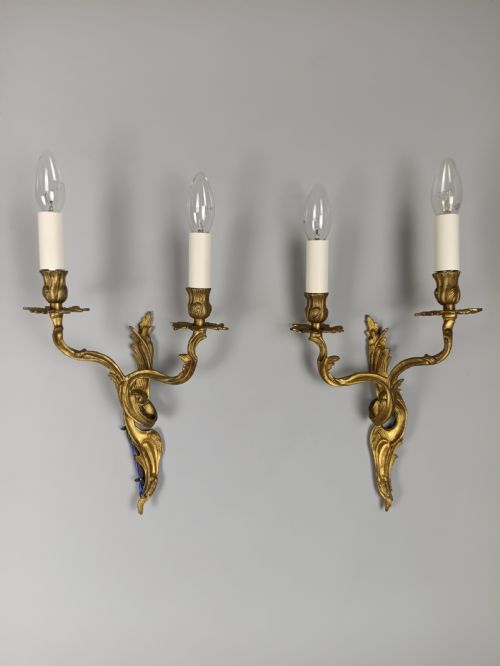
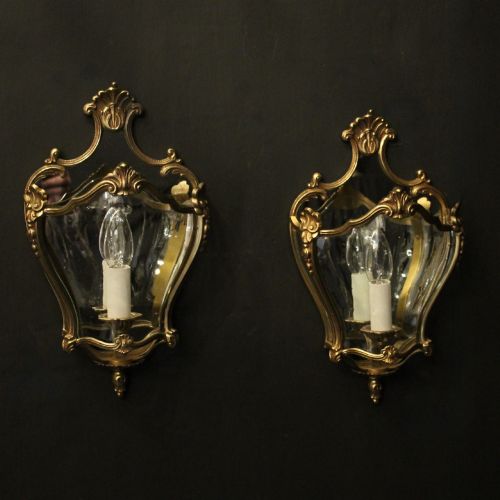
Bronze Wall Appliques
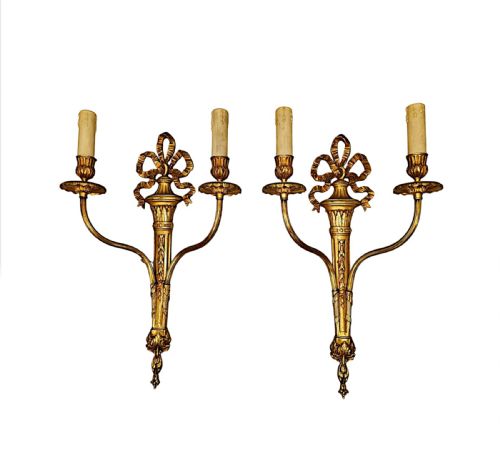
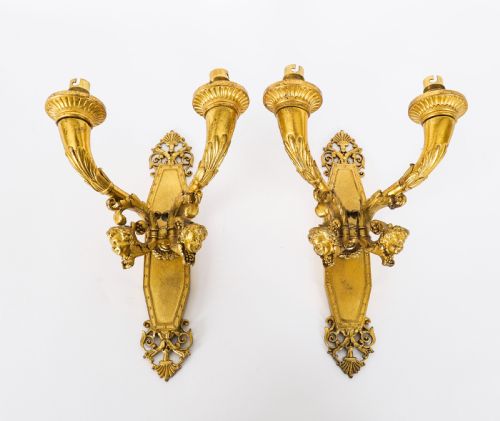
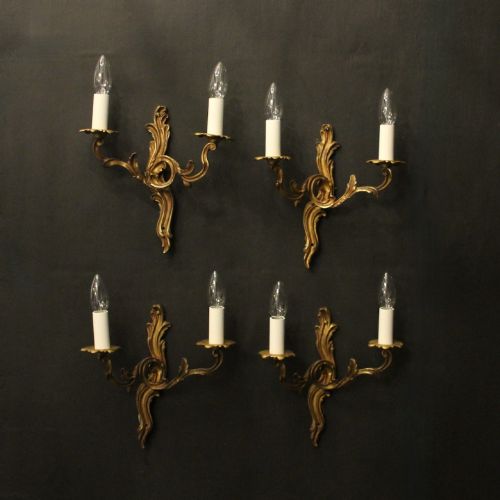
Bronze wall appliques are ornamental lighting fixtures mounted to surfaces, bringing historic illumination and rich metallic texture to interiors.
How they were made
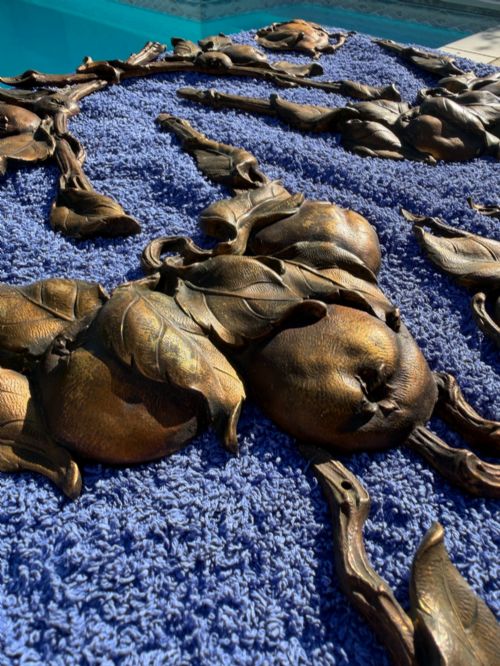
These metal fixtures rely on traditional casting techniques using bronze, brass, and silvered bronze. Molten metal is cast into detailed forms and subsequently finished by hand to create intricate surface relief.
Gilding and ormolu applications provide the characteristic golden sheen seen across many examples. Selected pieces incorporate crystal elements, porcelain flowers, or ribbons to enhance the decorative scheme.
What varies in quality
The depth and preservation of the original gilding or ormolu surface dictate visual richness. Heavier metal gauge and substantial arm configurations also elevate the standing of a fixture.
Several wall sconces secretly double as sturdy furniture mounts, proving that historic hardware occasionally suffered from an identity crisis.
Poix Blin
The Bronze Wall Appliques Glossary
- Ormolu
- Finely ground high-carat gold applied to a bronze base using a mercury amalgamation technique. This historic process yields a warm, durable metallic lustre.
- Applique
- An ornamental bracket or fixture designed to be fixed to a wall for holding candles or electric lamps. The term is frequently used interchangeably with wall light or sconce.
- Rococo
- A decorative style characterised by asymmetrical scrollwork, C-curves, and naturalistic plant motifs. It heavily influences many eighteenth-century and revival French lighting fixtures.
- Louis XVI
- A neoclassical style marked by symmetry, straight lines, urns, and classical architectural details. Pieces in this style reflect restraint and geometric harmony.
- Candelabra
- A branched candlestick holder designed to support multiple candles or bulbs from a single base or wall fixture. Larger versions often feature twin or triple arms.
Bronze Wall Appliques: Frequently Asked Questions
How do I wire historic wall lights?
Most antique fixtures require professional rewiring to meet modern electrical safety standards before installation. Electricians can carefully thread modern flex through the historic arms without damaging the bronze structure.
Original sockets are often replaced with modern lamp holders while preserving the exterior metal body. It is advisable to consult a specialist familiar with fragile ormolu and gilded surfaces.
Were these fixtures meant for candles?
Earlier examples from the eighteenth and nineteenth centuries were designed exclusively for wax candles. Deep drip pans beneath the nozzles caught melting wax before it reached the wall.
Later twentieth-century adaptations frequently incorporate electric fittings, though many retain faux candle tubes to maintain their original aesthetic.
How should I clean gilded bronze?
Dusting gently with a soft, dry brush is the safest method for routine maintenance. Avoid abrasive cloths, polishes, or chemical cleaners that can strip away delicate ormolu and gilding.
Water and moisture should be kept away from the metal surfaces to prevent corrosion and tarnishing. Professional conservation is recommended for heavily soiled pieces.
Can I mix different revival styles?
Pairing Rococo and Louis XVI pieces within the same room works well if the metal tones share a similar warmth and patina. Scale and proportion matter more than strict adherence to a single design era.
Using matching pairs on opposite sides of a fireplace or mirror creates visual balance, even if other fixtures in the space vary.