


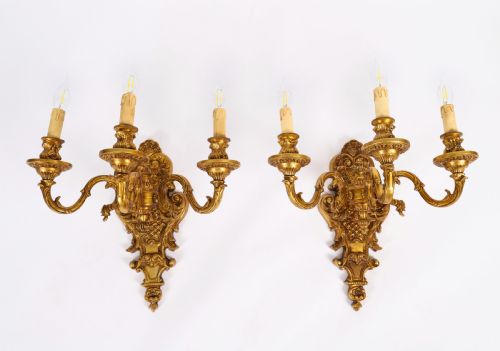
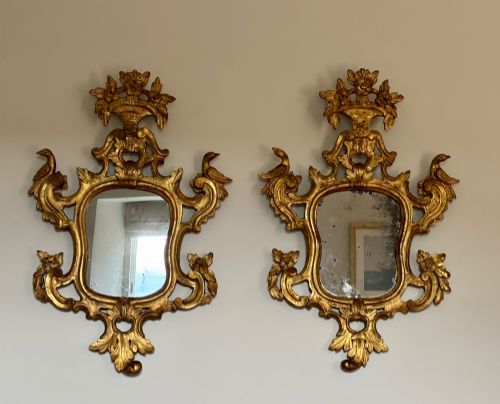

Gold Leaf Wall Sconces
Gold leaf wall sconces bring warmth and reflective depth to a room, offering an enduring choice for illumination and interior adornment.
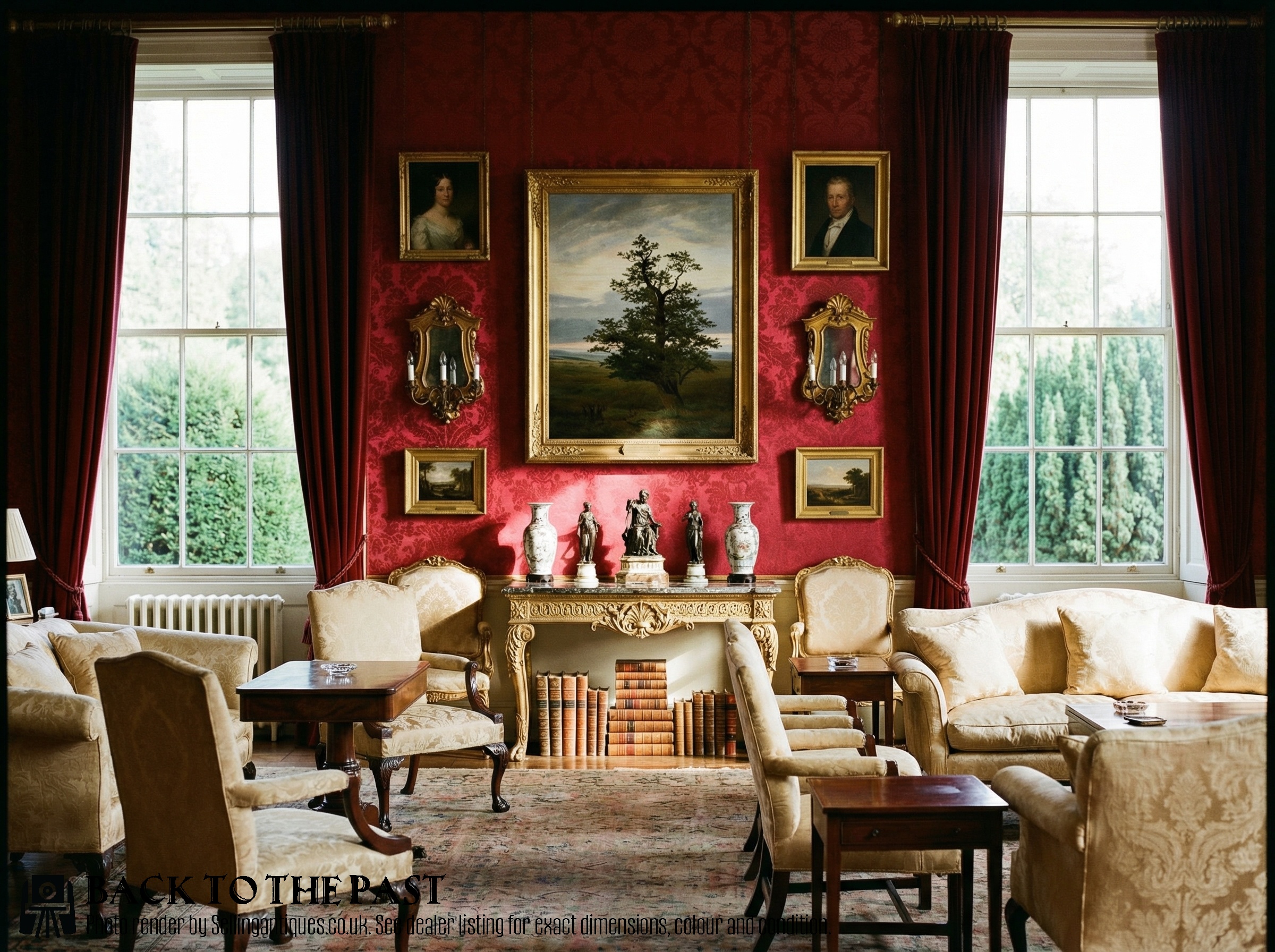
Gold Leaf Wall Sconces
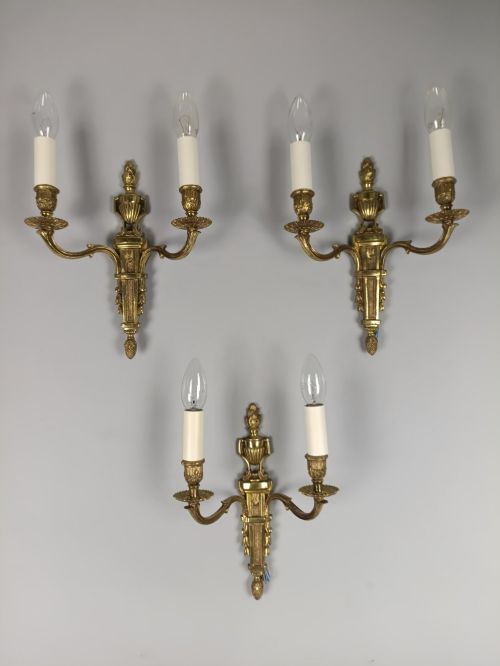
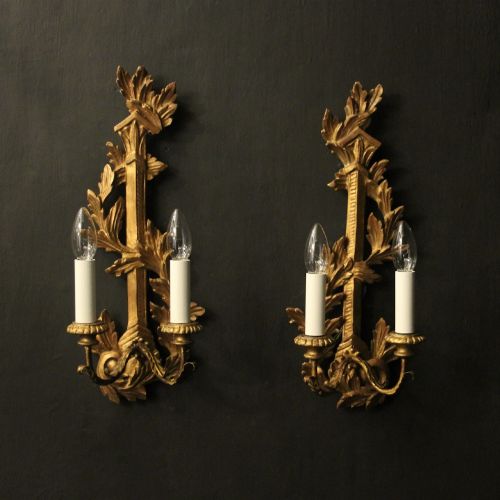
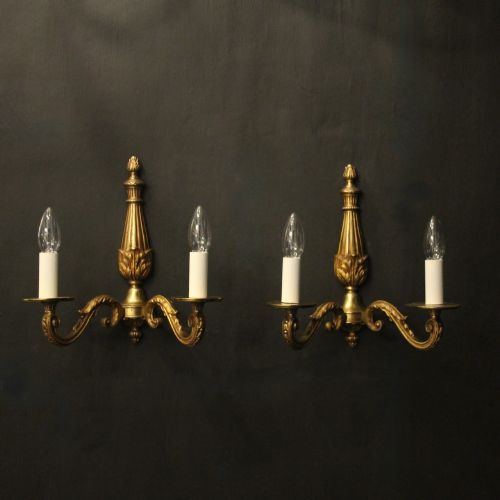
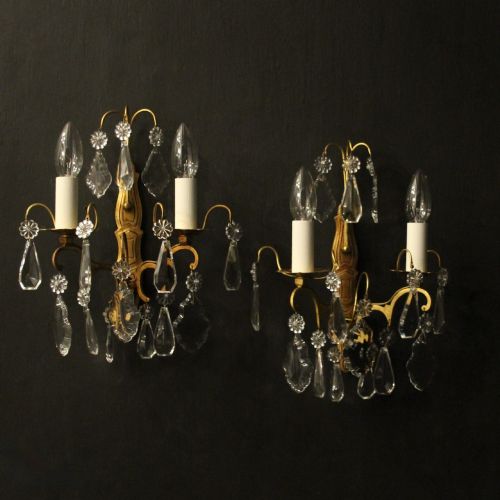
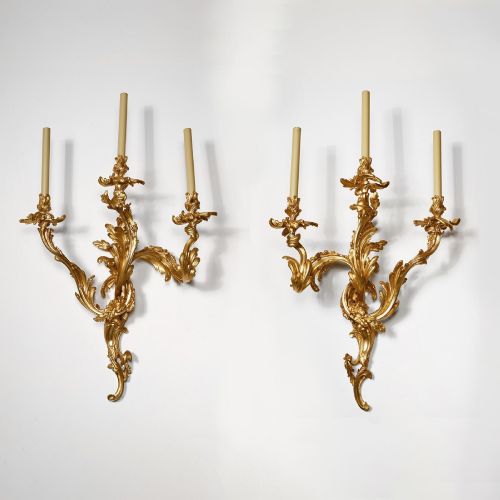
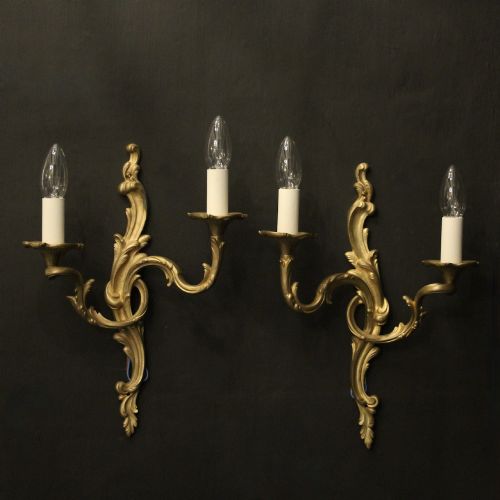
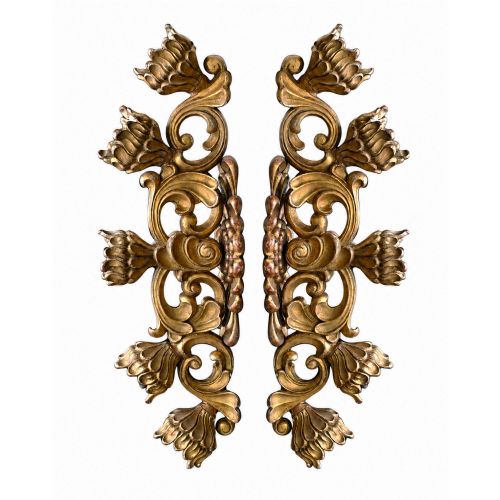
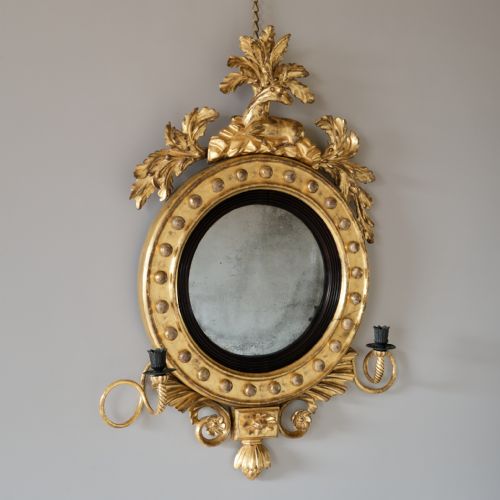
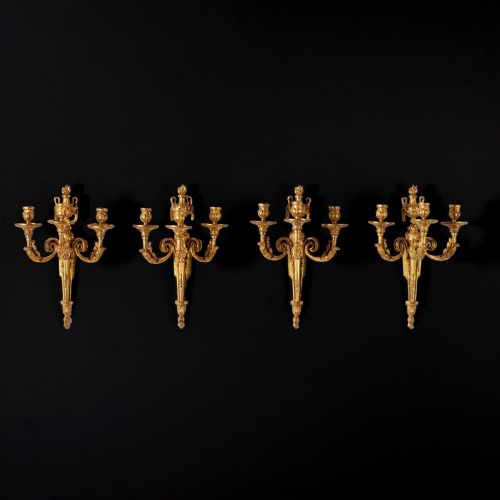
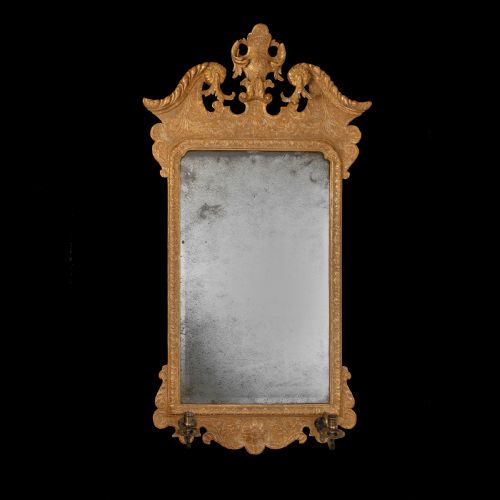
Gold leaf wall sconces encompass decorative lighting fixtures and wall-mounted brackets designed to hold candles or electric bulbs, alongside reflective mirror-backed pieces that amplify candlepower. When exploring gold leaf wall sconces, buyers encounter designs spanning the eighteenth century through to the early twentieth century, with French and Italian origins appearing frequently.
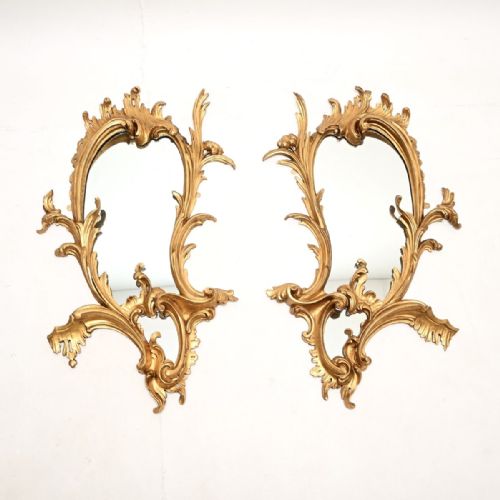
The selection ranges from restrained Regency and Neoclassical forms to exuberant French Rococo and Florentine styles. Pairs and larger sets dominate the selection, often taking the form of twin-arm or triple-arm light fittings alongside carved wooden brackets and girandole mirrors.
How they were made
Artisans applied delicate sheets of gold leaf, giltwood, or ormolu over carved wood, gesso, bronze, brass, and metal bases. This traditional gilding technique required precise hand application to prepare the surface and adhere the metallic leaf.
Carved wooden elements and cast bronze or brass frames provided sturdy structural foundations for the decorative metallic finishes. Glass components, including convex mirrors and sconce backplates, were integrated to enhance the play of light within domestic spaces.
Gold Leaf Wall Sconces Retail Price Guide 2026
Typical asking prices for gold leaf wall sconces among the pieces listed under this phrase on Sellingantiques today, from the lower quarter to the upper quarter. They describe what is for sale here now, not the wider market.
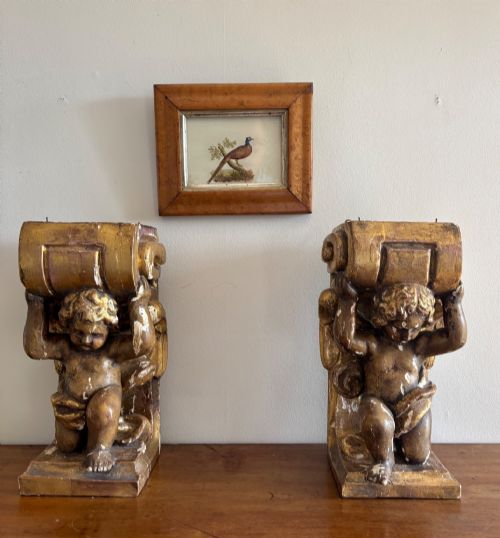
Several eighteenth-century mirrors and nineteenth-century putti wall lights keep watch over rooms, joined by mischievous cast cherubs holding branch mounts.
What varies in quality
The crispness of hand-carving in the wood or the fine detail in cast bronze and ormolu sets superior pieces apart from simpler productions. Depth and nuance in the application of the gold leaf surface create variations in how the light catches the contours of the form.
Integrity of construction in the arms, brackets, and mirror plates indicates the skill of the original workshop. Pieces retaining their original gilding layers and structural cohesion demonstrate higher craftsmanship than heavily restored examples.
Maison Baguès
The Gold Leaf Wall Sconces Glossary
- Giltwood
- Wood that has been coated with a thin layer of gold leaf or gold paint. This finish creates a bright, reflective surface characteristic of many antique frames and sconces.
- Ormolu
- Finely chased and gilt bronze used for decorative mounts and lighting fixtures. The technique produces a rich metallic lustre.
- Girandole
- A branched wall light or sconce, often incorporating a mirror backplate to reflect the candlelight. These pieces combine illumination with decorative optical effects.
- Gesso
- A plaster-like material applied to wood surfaces as a base for gilding. It is often carved or moulded before the gold leaf is laid down.
- Toleware
- Painted or lacquered metalware used for decorative objects and lighting. It provides a coloured contrast to gilded metallic surfaces.
Gold Leaf Wall Sconces: Frequently Asked Questions
How do I clean gold leaf wall sconces?
Dusting gently with a soft, dry brush is the safest method to maintain the delicate metallic surface without causing abrasion.
Water and chemical cleaning agents should be avoided entirely to prevent lifting or wearing away the thin layer of gold leaf.
Are antique wall sconces wired for electricity?
Many surviving examples have been professionally rewired for modern electrical use while retaining their historic metal and wooden bodies.
Buyers should inspect the internal wiring status of each individual piece to determine if professional installation adjustments are necessary.
How can I tell eighteenth century sconces apart from later revivals?
Eighteenth-century examples display hand-tooling marks, natural wear to the underlying gesso, and timber ageing consistent with centuries of use.
Revival pieces from the nineteenth and twentieth centuries often exhibit more uniform casting or machine-tooled elements alongside newer fastening hardware.