

Classical Wall Lights
Classical wall lights bring architectural symmetry and warm illumination to an interior, spanning French Neoclassical, Georgian Revival, and Florentine styles.

Identifying classical wall lights
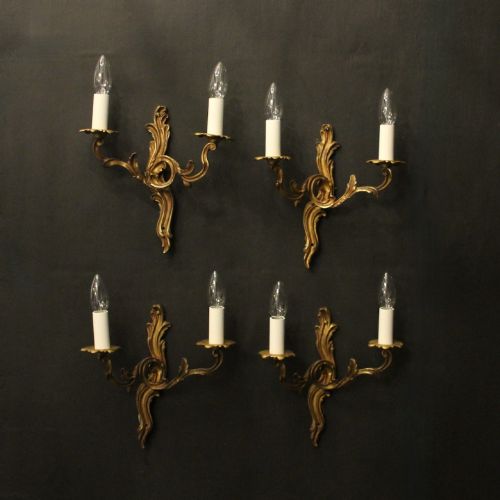
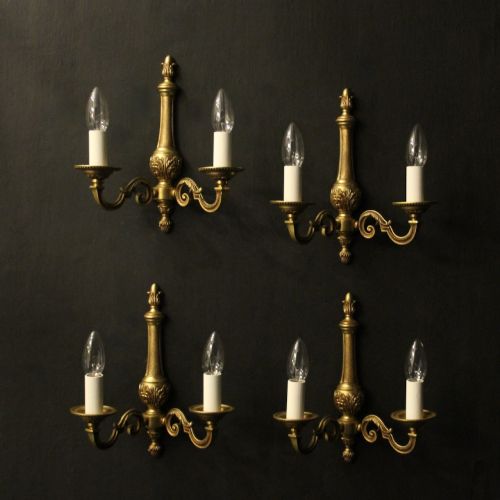
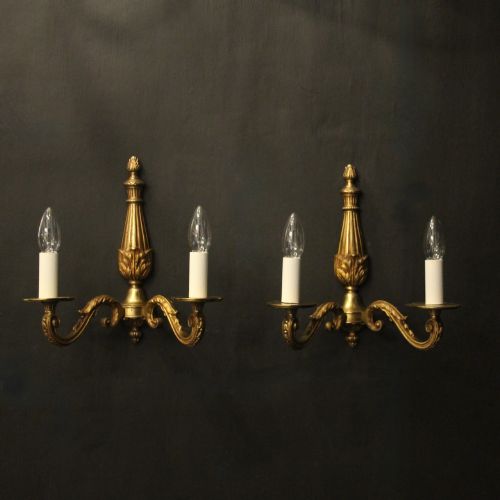
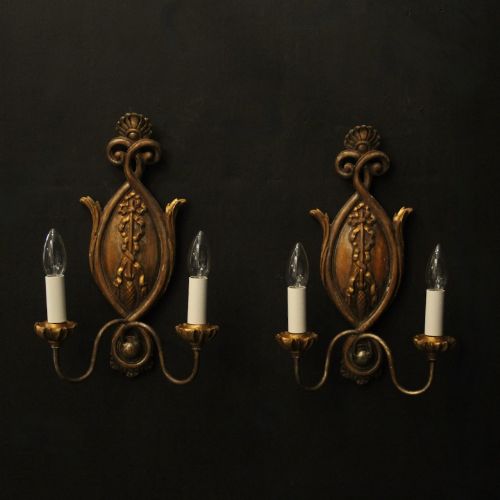
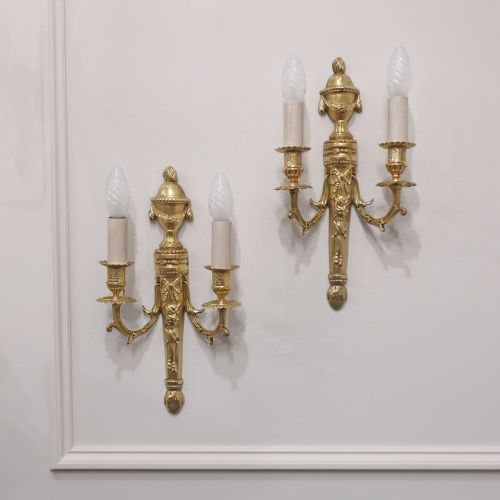
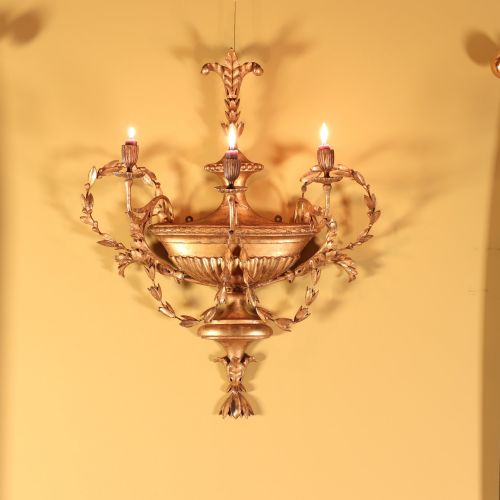
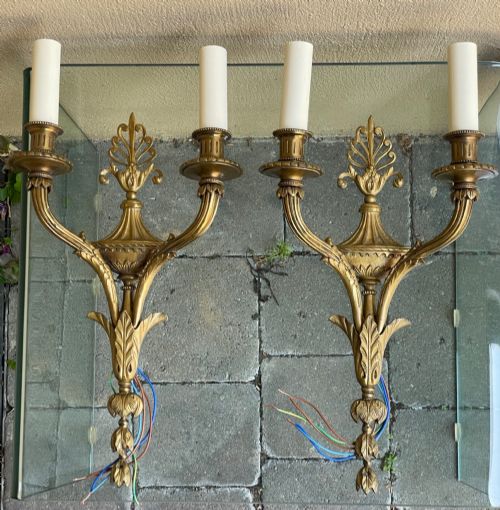
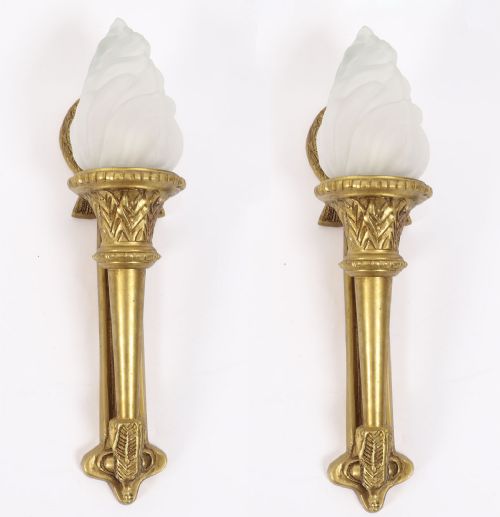
Classical wall lights take the form of wall lights, wall sconces, and appliques designed to mount directly onto vertical surfaces. When you search for classical wall lights, you encounter fixtures that draw heavily on historical vocabularies, featuring urns, fluted columns, ribbon and swag motifs, and flaming torches. The pieces available span the nineteenth century through the 1920s, 1930s, and 1940s.
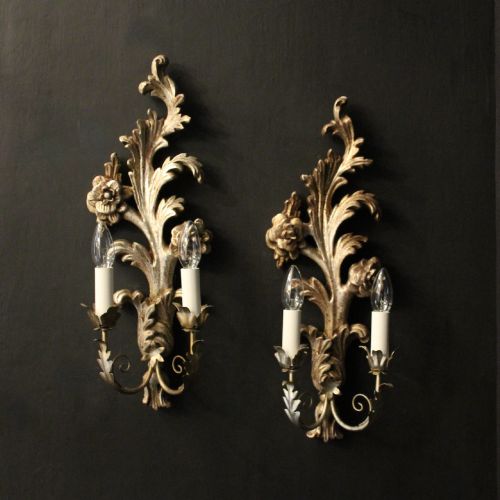
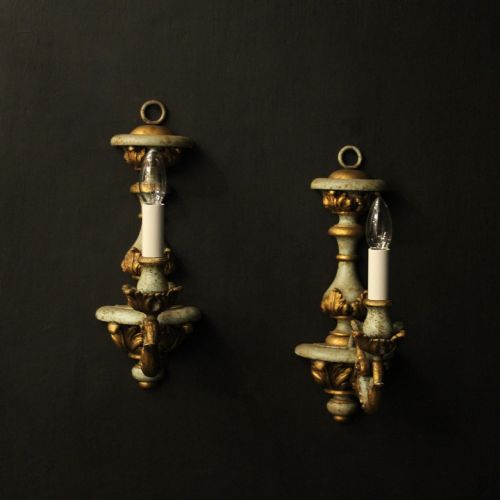
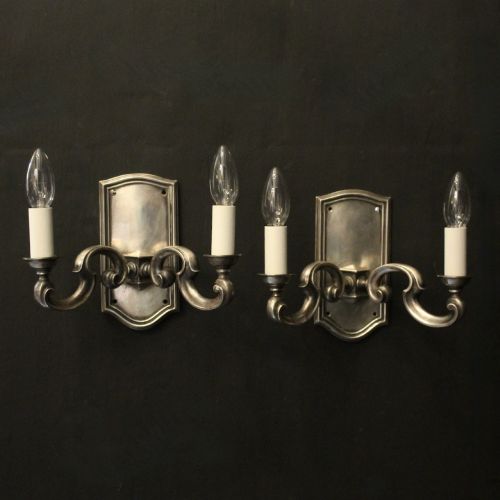
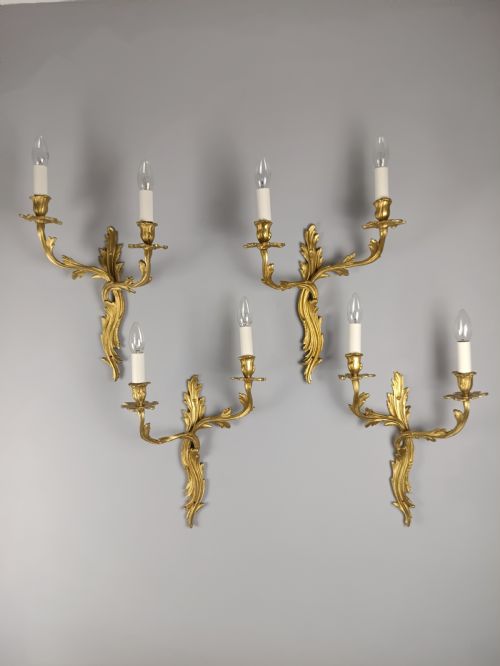
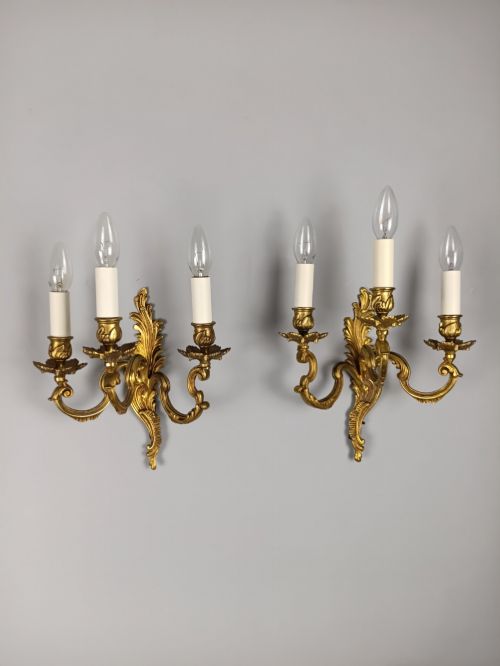
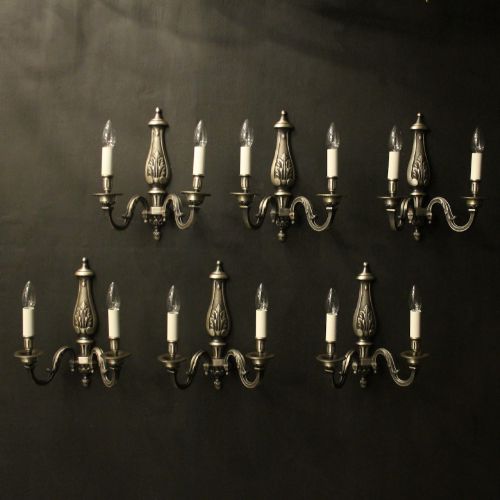
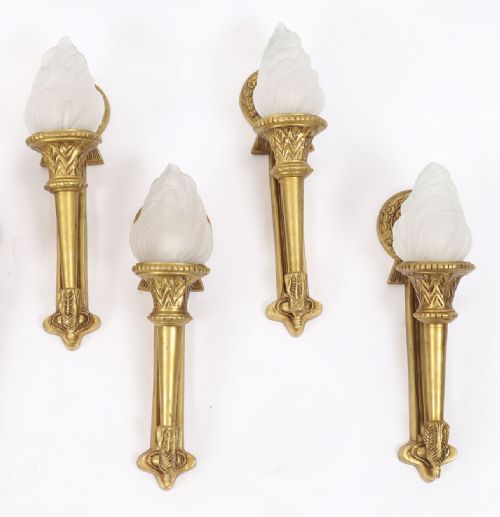
You are most likely to meet pairs and larger sets, including sets of three, four, five, and six matching branches. French designs dominate the selection, often rendered in the Louis XVI revival or general neoclassical style, alongside English Georgian revival pieces and Florentine giltwood examples. Single arm, twin arm, triple branch, and six branch configurations appear frequently across the periods.
Materials and construction
Metal forms the backbone of these fixtures, with brass, bronze, and ormolu utilised extensively for structural strength and intricate detail casting. Many surfaces receive secondary treatments such as silver plating, silvered brass, gilding with gold leaf, or giltwood finishes. Fixtures incorporating glass elements often feature flame or torch motifs paired with cast metal backplates.
Workmanship relies on traditional foundry casting, chased surface detailing, and hand applied finishes. Examples from the early twentieth century and earlier decades frequently display embossed facial motifs, crisp acanthus leaves, and structural arms secured with threaded fixings.
Retail Price Guide 2026
Typical UK retail prices for classical wall lights, calculated from the Sellingantiques database of over a million retail prices indexed since 2003. This retail price guide relies exclusively on Sellingantiques data; no external sources or auction records are used, so the figures do not describe the wider market.
Materials recorded across these listings include solid brass, bronze, silver-plated base metals, giltwood, and ormolu combined with glass.
Distinguishing quality tiers
The integrity of the matched sets drives distinction at the upper end, where surviving sets of four, five, or six identical branches maintain consistent patination across all components. Pairs and sets that retain their original giltwood or gold leaf surfaces without heavy overpainting command greater interest from collectors seeking period authenticity.
The Classical Wall Lights Glossary
- Ormolu
- A technique of applying finely ground high-carat gold to a bronze object, creating a rich golden surface that resists tarnishing. It defines the luxury finish on many nineteenth-century French fixtures.
- Sconce
- A wall-mounted lighting fixture designed to hold candles or electric bulbs, projecting light outward into a room. These often feature backplates that reflect the illumination.
- Giltwood
- Wood that has been coated with a thin layer of gold leaf or gold paint, frequently carved with classical motifs like acanthus leaves and ribbons.
- Applique
- A French term for a wall-mounted light fitting, synonymous with a wall sconce. It appears frequently in descriptions of nineteenth-century French lighting.
- Fluting
- Shallow, parallel concave grooves cut into vertical architectural elements like columns or urn stems. This decorative treatment translates directly onto the metal stems of classical wall lights.
Frequently Asked Questions
How were classical wall lights used originally?
Originally, these fixtures held candles to supplement natural light in grand rooms, placed alongside mirrors to multiply the illumination. They served both a functional purpose and an architectural role in wall decoration.
Over time, many surviving examples underwent conversion to electricity, allowing them to function safely in modern domestic settings while retaining their original aesthetic presence.
How do I tell a French style from English?
French classical fixtures frequently lean toward ornate ormolu, bronze, and Louis XVI revival details such as ribbons, swags, and classical faces. They often appear in larger sets with elaborate casting.
English variants tend to align with Georgian revival or Edwardian classical styles, prioritising silver plating, simpler brass forms, and restrained architectural lines.
Can these wall lights be rewired for modern use?
Many surviving pieces arrive with modern rewiring completed to current standards, ready for installation by a qualified electrician. This process preserves the antique metalwork while ensuring safe electrical operation.
When fixtures retain older wiring, a professional rewiring allows you to adapt the internal components to standard modern lamp holders without altering the external aesthetic.
How do I care for gilt brass and ormolu?
Maintenance requires gentle dusting with a soft, dry cloth to prevent the accumulation of dirt in recessed cast details. Avoid harsh chemical cleaners and abrasive polishes that can strip gold leaf or damage patinated finishes.
Preserving the surface involves handling the metal minimally and keeping fixtures away from excessive moisture or direct heat sources.