

French Revival Lighting
French revival lighting brings together ornate metalwork and period forms, offering a dramatic focal point for traditional interiors.
French Revival Lighting
French revival lighting encompasses a range of decorative fixtures drawn from historical European design movements, including table lamps, wall sconces, candelabra, and chandeliers. These objects adapt earlier aesthetics into functional illumination suited to nineteenth and twentieth-century domestic spaces.
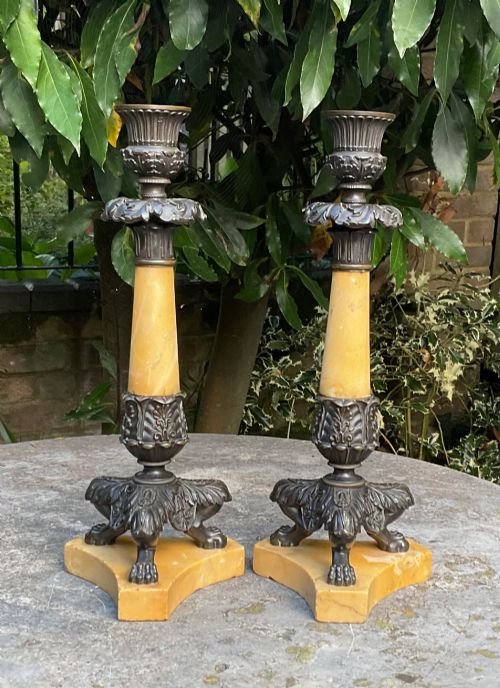
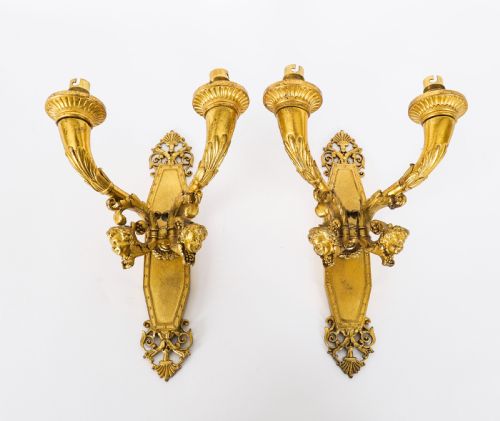
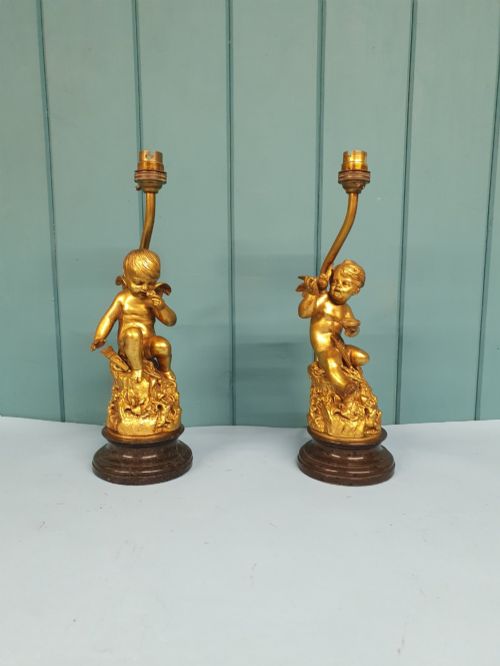
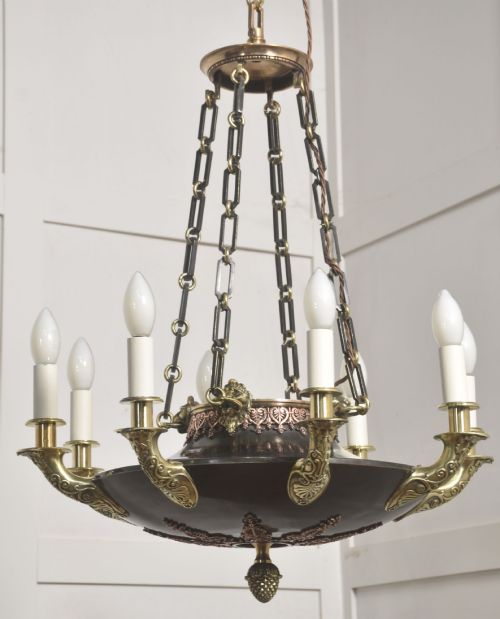
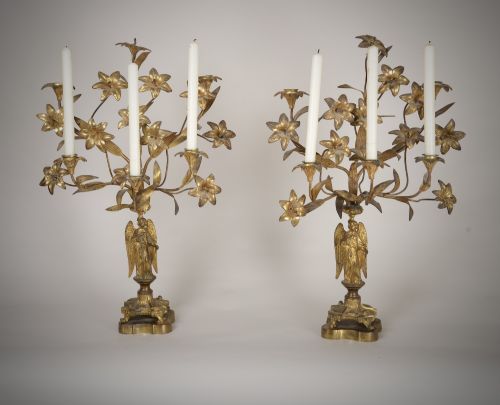
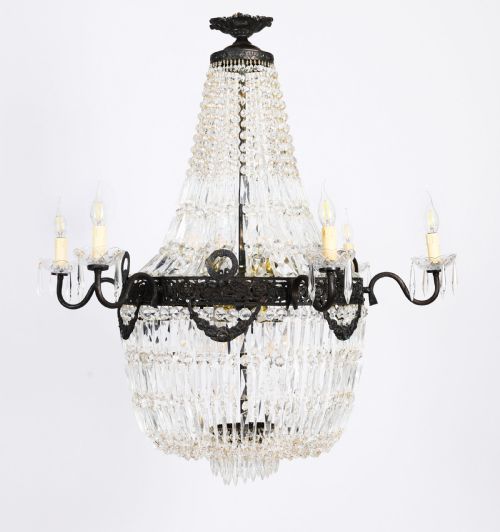
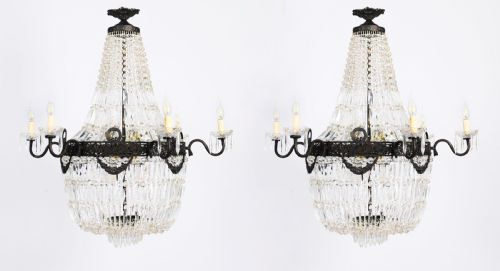
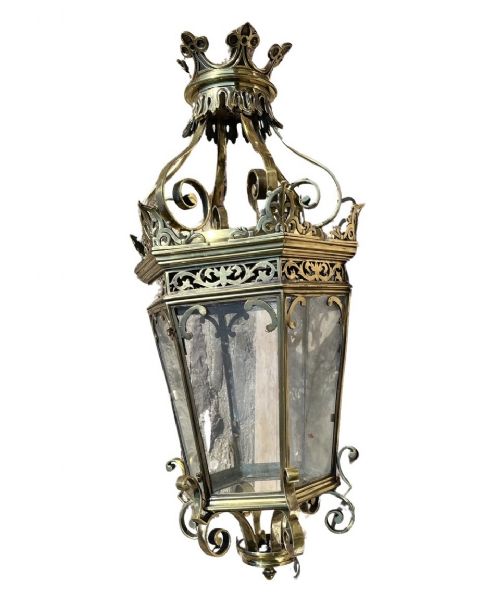
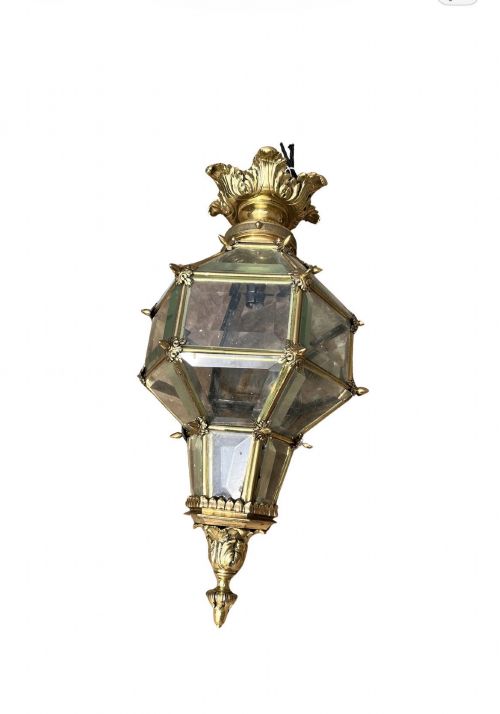
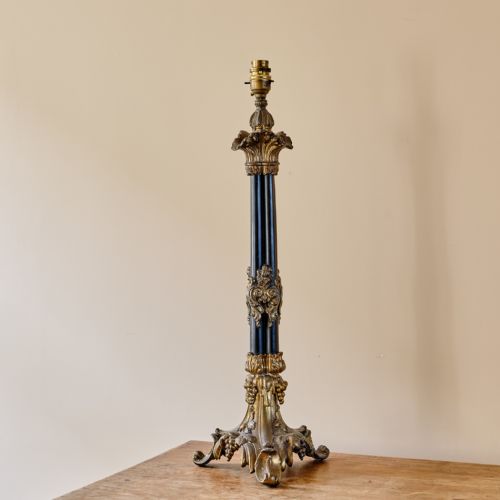
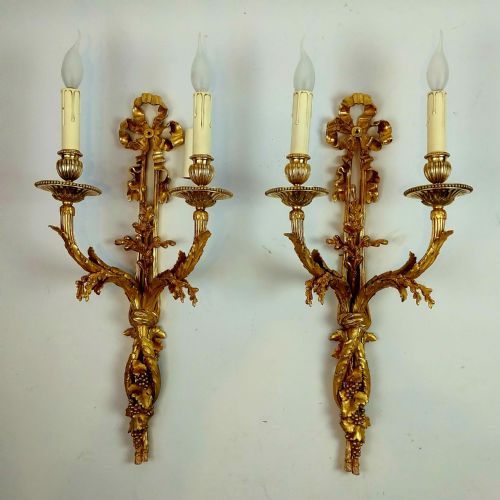
The selections available here rely heavily on revival styles rooted in the nineteenth century, drawing upon Regency, Gothic, Empire, and Louis periods. Buyers encounter items ranging from small gilt bronze table lamps to large multi-arm crystal tent chandeliers and brass lanterns.
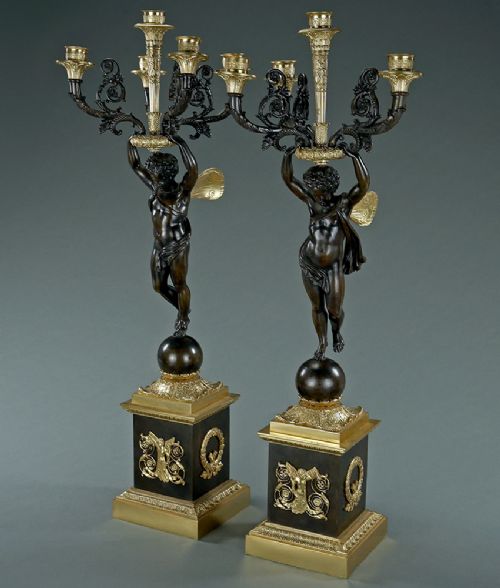
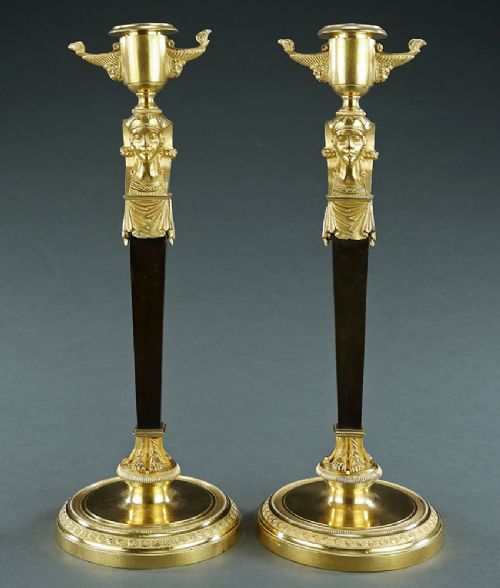
Many items originate from nineteenth-century workshops, though twentieth-century interpretations also appear frequently across the inventory. These pieces often incorporate figurative elements such as cherubs, maiden figures, and soldiers alongside classic architectural motifs.
How they were made
Metal fabrication forms the backbone of these pieces, utilising gilt bronze, ormolu, brass, and copper cast into elaborate shapes. Makers employed traditional foundry techniques to produce detailed components, which were then chased, finished, and gilded.
Secondary materials such as marble, onyx, and glass complement the metal structures. Marble and onyx provide heavy, stable bases for candlesticks and lamps, while cut crystal tent chandeliers utilise glass drops to refract light from multiple branches.
What varies in quality
The refinement of the casting and chasing work dictates the visual impact of each fixture. Finer examples display crisp detail in figurative elements and foliage, whereas simpler pieces show softer edges and less intricate surface finishing.
Material selection and integrity play a significant role in the overall standard of the object. Heavy gilt bronze and genuine ormolu exhibit greater depth of finish compared to standard plated metals, while well-matched stone bases indicate careful material sourcing.
The French Revival Lighting Glossary
- Ormolu
- Gilded bronze produced by applying a mercury and gold amalgam to a bronze base and heating it. This technique creates a durable, warm metallic finish seen on many nineteenth-century mounts.
- Candelabra
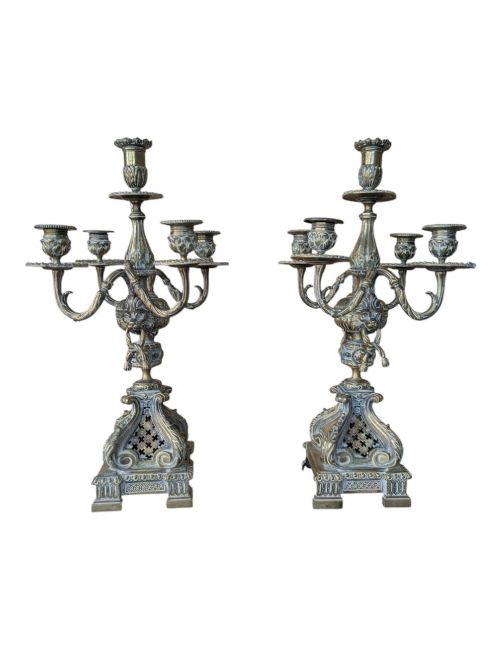
- A multi-branched lighting fixture designed to hold several candles. These often feature elaborate arm configurations and removable bobeches to catch wax.
- Tent chandelier
- A large hanging light fixture featuring strings of cut glass beads that form a tent-like canopy above the central tiers of branches. They are typically associated with grand ballroom settings.
- Torchère
- A stand or wall-mounted bracket designed to hold a light source. In revival lighting, these often take the form of sculptural figures supporting a light cluster.
- Retour d'Egypte
- A neoclassical style influenced by Napoleon's campaign in Egypt. It incorporates distinct archaeological motifs into decorative metalwork and furniture.
French Revival Lighting: Frequently Asked Questions
How do I identify a true revival piece?
Examine the casting quality, the weight of the metal, and the method of construction. Nineteenth-century examples typically show hand-finished chasing and heavier bronze or brass components.
Compare the decorative motifs against known historical periods like Louis XIV or the French Empire. Stylistic details often reveal whether an item is a period revival or a later twentieth-century interpretation.
Were these lamps originally electrified?
Most lighting fixtures from the nineteenth century were initially designed for candles or oil. Many surviving pieces have been subsequently converted to electricity for modern use.
Conversions often involve running wiring through hollow stems or central columns while preserving the original metalwork and surface finish.
How do I clean gilt bronze and ormolu?
Dust these metal surfaces gently with a soft, dry brush to prevent the accumulation of dirt. Avoid harsh chemical cleaners or abrasive cloths that can strip the delicate gilding.
Professional restoration is recommended if the surface requires deeper cleaning or if the original gilt layer shows signs of active deterioration.
Where should I place a heavy chandelier?
Large multi-arm fixtures require substantial ceiling support due to their combined metal and crystal weight. Professional installation is essential to secure the fixture safely to ceiling joists.
Position these chandeliers in rooms with adequate ceiling height to allow proper clearance beneath the lowest tier of lights or crystal drops.