


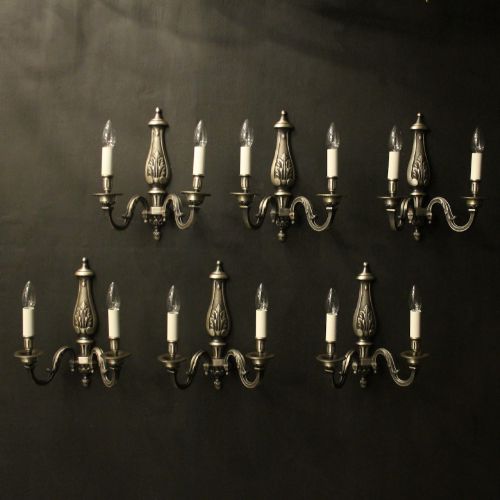
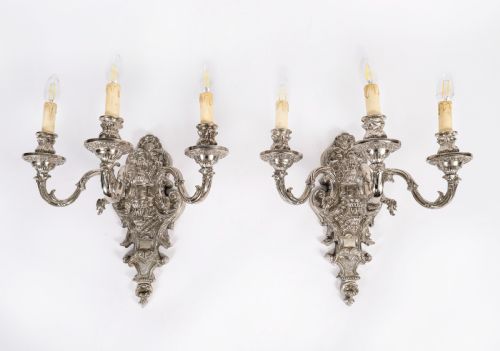
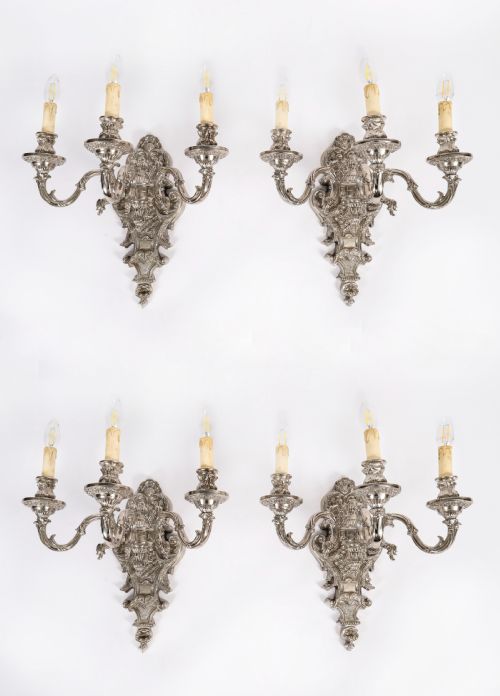


Silver Wall Sconces
Silver wall sconces bring sculptural illumination and period character to an interior through reflective metal surfaces and intricate casting.
Identifying Silver Wall Sconces
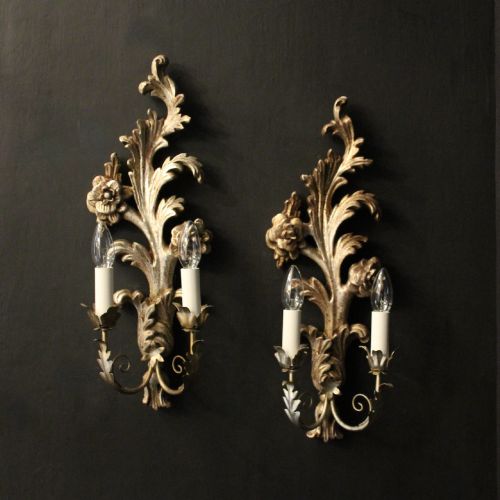
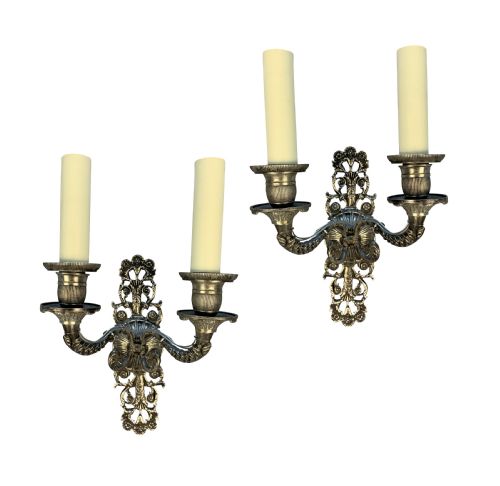
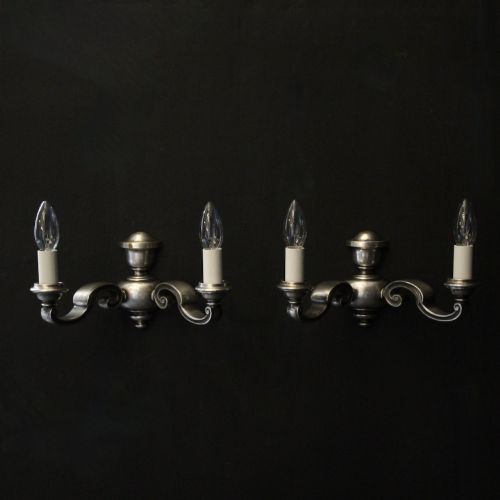
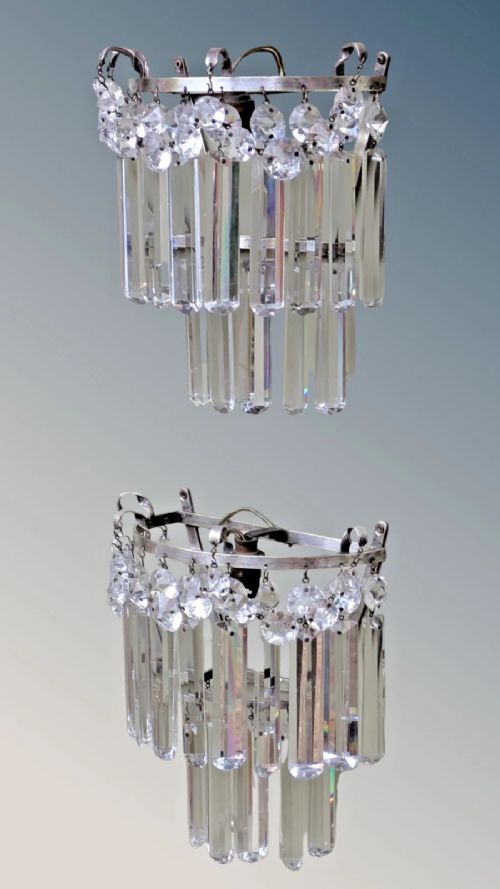
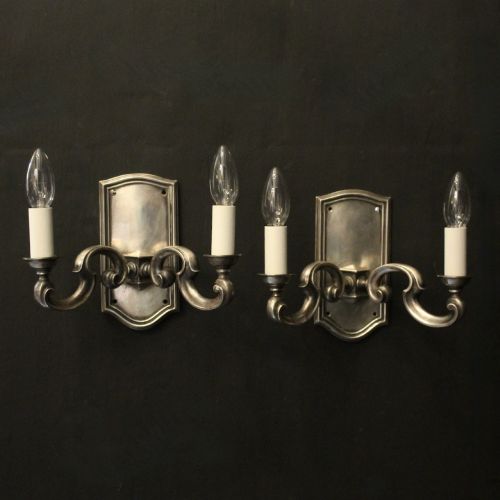
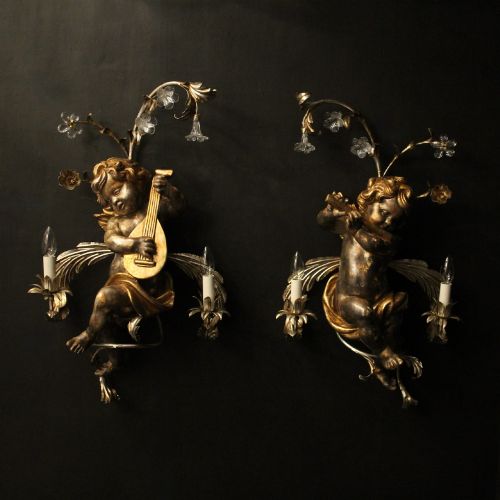
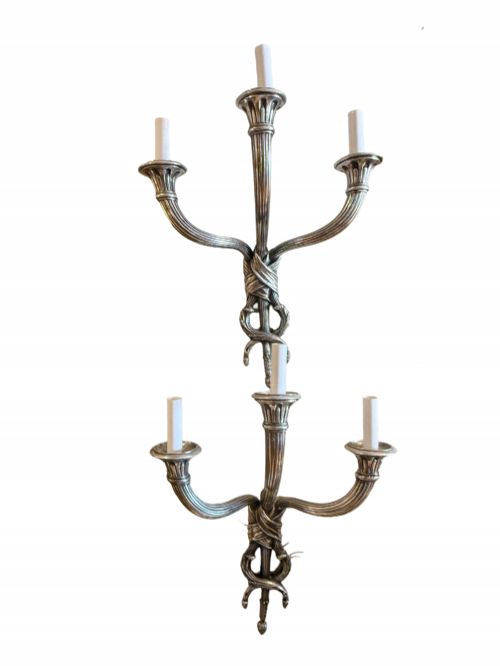
The forms range from simple twin-branch lights to elaborate multi-branch configurations, often incorporating figural elements such as cherubs, mermaids, and classical motifs. Materials vary from silver plate and silvered bronze to gilt metal, brass, and incorporated jasperware or glass elements. Most examples date from the Edwardian era up to the nineteen-forties, reflecting diverse historical revival movements popular across Europe.
Materials and Manufacture
The construction of these pieces relies on base metals such as bronze, brass, cast metal, and various alloys that undergo plating or finishing processes. Silver plating, silvered bronze, and silver gilding provide the reflective metallic surface characteristic of the style. Heavier pieces utilise cast metal techniques to achieve high levels of detail in ornamental foliage, figurative elements, and architectural motifs.
Secondary materials integrate into the designs, including marble backplates, ceramic jasperware inserts, and glass components that contrast with the metallic structures. Workshops employed casting, chasing, and plating methods common to European metalwork production during the Victorian and Edwardian periods.
Retail Price Guide 2026
Typical UK retail prices for silver wall sconces, calculated from the Sellingantiques database of over a million retail prices indexed since 2003. This retail price guide relies exclusively on Sellingantiques data; no external sources or auction records are used, so the figures do not describe the wider market.
Materials recorded across the inventory include silver plate, silvered bronze, brass, marble, and jasperware.
Evaluating Quality
The choice and execution of materials also distinguish the range, with substantial silvered bronze or heavy silver plating demonstrating better durability than thin base metal applications. Construction methods that ensure secure joints and well-integrated backplates indicate superior workshop standards.
The Silver Wall Sconces Glossary
- Silver Plate
- A thin layer of silver bonded to a base metal core such as brass or copper. This technique allowed manufacturers to produce decorative items with the appearance of solid silver at a lower cost.
- Silvered Bronze
- Bronze metal treated with a silver finish to combine the strength and casting properties of bronze with a bright metallic surface. It appears frequently in French lighting fixtures.
- Jasperware
- A type of fine stoneware developed by Josiah Wedgwood featuring a matte surface, often decorated with contrasting moulded white reliefs. It occasionally forms the central plaque or background of wall sconces.
- Louis XVI Revival
- A nineteenth-century stylistic movement imitating the neoclassical symmetry, straight lines, and classical motifs of the French reign of Louis XVI. These designs often incorporate urns, swags, and ribbons.
- Rococo Revival
- A design style drawing on the asymmetrical scrolls, shell motifs, and naturalistic curves of the mid-eighteenth century. It gained renewed popularity during the Victorian era for decorative metalwork.
Frequently Asked Questions
How do I clean silver plated wall sconces?
Maintenance requires gentle dusting with a soft cloth to prevent the accumulation of dirt within the cast details. Avoid harsh chemical polishes that can wear away thin silver plating over time.
For stubborn tarnish, use a mild, non-abrasive cleaner specifically formulated for plated silver, applying it lightly with a cotton swab in hidden areas first.
Were these sconces originally wired for electricity?
Many examples from the late nineteenth and early twentieth centuries were originally designed exclusively for candles and have been adapted for electricity at a later date. Others were manufactured during the transition period when electric lighting became common in domestic interiors.
Examining the backplate and nozzle interiors often reveals whether the fixture retains its original candle fittings or has undergone conversion.
How are wall sconces securely mounted?
Proper installation depends on the weight and backplate design of the specific piece, with heavier cast bronze or multi-branch sets requiring wall anchors and screws fixed directly into structural studs. Lighter silver-plated or sheet metal versions may use standard wall plugs.
Consulting a qualified electrician ensures that both the physical mounting and the internal wiring meet safety standards for domestic installation.
How do I identify French revival styles?
French revival pieces often display characteristic Louis XV or Louis XVI ornament, such as asymmetrical scrollwork, acanthus leaves, and cast cherubic figures. The origin is frequently indicated by the casting quality and specific patination methods typical of continental workshops.
Comparing the decorative motifs against known historical design vocabularies helps distinguish French production from British or other European equivalents.