


Converted Oil Lamp
A converted oil lamp brings nineteenth-century lighting into modern interiors through structural brass, cut glass, and painted porcelain wired for electricity.
Converted Oil Lamp
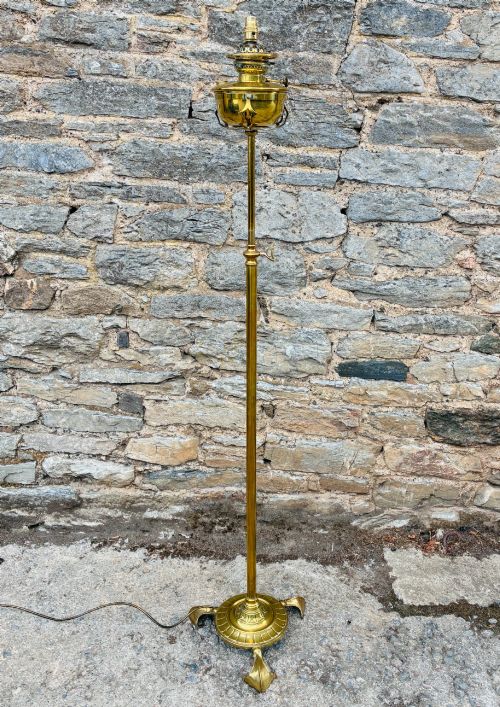
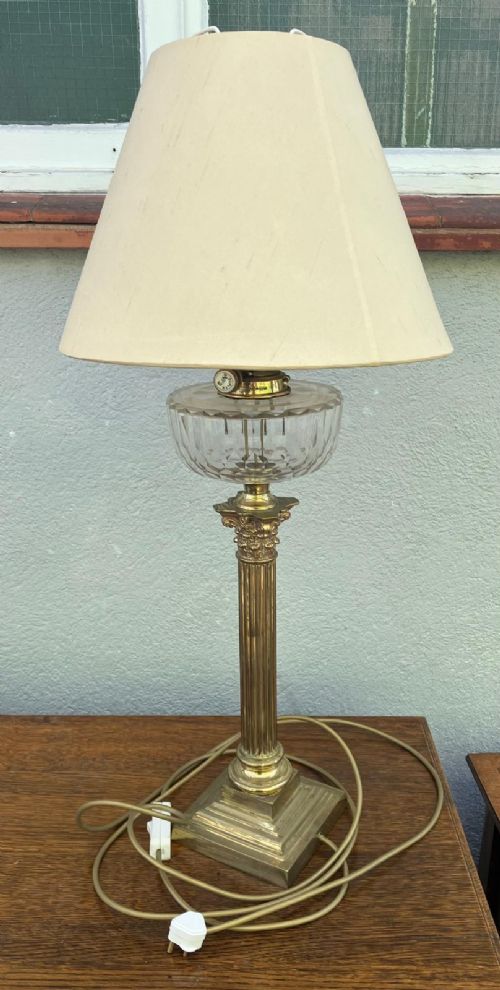
When searching for a converted oil lamp, buyers encounter nineteenth-century lighting fixtures originally designed to burn paraffin or colza oil that have since been adapted for electricity. These pieces range from compact table models to tall telescopic standard and floor lamps used to illuminate period and contemporary spaces.
The most common examples on this page date from the Victorian and late nineteenth-century periods, spanning styles from Neoclassical Revival Corinthian columns to sinuous Art Nouveau brass and bronze forms. Originating across England, France, and wider Europe, these lamps frequently combine heavy metal reservoirs with decorative ceramic, glass, or cloisonné bodies.
How they were made
Makers constructed these fixtures using cast and spun brass, copper, and bronze, often pairing metal bases with blown, moulded, or cut glass reservoirs. Many examples incorporate porcelain, opaline glass, or hand-painted faience, supported by heavy iron or giltwood stands designed to maintain stability while holding fuel.
Production techniques relied on precision metalwork, such as telescopic extending mechanisms and weighted collars, alongside decorative elements including repoussé stamping, cloisonné enamel, and intricate brass casting. Burners and mounts frequently bear the marks of notable nineteenth-century manufacturers like Hinks, integrating specialised hardware into domestic lighting.
Converted Oil Lamp Retail Price Guide 2026
Typical asking prices for converted oil lamp among the pieces listed under this phrase on Sellingantiques today, from the lower quarter to the upper quarter. They describe what is for sale here now, not the wider market.
Some nineteenth-century models incorporate a cherub orchestra right into the brass column.
What varies in quality
The standard of a converted oil lamp is determined by the crispness of its metal casting, the weight and clarity of its glass or crystal components, and the integration of its decorative elements. Superior examples display finely chiselled mounts, substantial bronze or brass gauges, and undamaged hand-painted ceramic bodies that retain their original colour and detail.
Completeness and proportion also dictate standing within the range, as pieces retaining matched original shades, functional telescopic mechanisms, and signed burner assemblies command greater interest. The subtlety of period details, from Neoclassical fluting to organic Art Nouveau contours, separates ordinary utilitarian pieces from finer decorative works.
Hinks of B'ham·Wild and Wessel·Osler
The Converted Oil Lamp Glossary
- Duplex burner
- A double-wick burner mechanism used in nineteenth-century lamps to produce a brighter flame. These assemblies often bear maker stamps and dictate the upper proportions of the lamp body.
- Telescopic standard
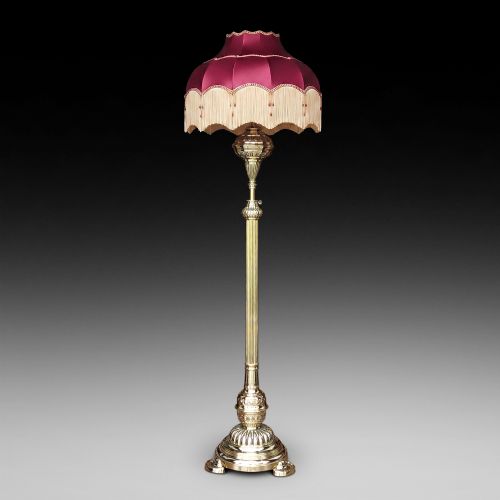
- An adjustable floor or table lamp shaft that extends vertically via an internal sliding mechanism. This allows the height of the light source to be altered.
- Opaline glass
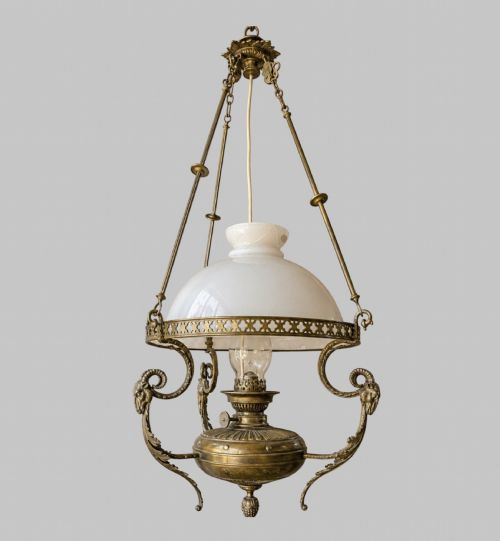
- An opaque or translucent art glass popular in the nineteenth century, produced in shades of white, blue, and green. It frequently forms the body or shade of decorative lighting.
- Corinthian column
- A classical architectural column style featuring an ornate capital carved with acanthus leaves. Many nineteenth-century table and standard lamps adopt this form in cast brass.
- Cloisonné
- A decorative metalwork technique where enamel is applied within wire compartments soldered to a base. It appears on Japanese and European lamp bodies from the late nineteenth century.
Converted Oil Lamp: Frequently Asked Questions
How do I choose the right height?
Table lamps suit sideboards and desks, whilst telescopic standard lamps work best beside armchairs or sofas where adjustable height is practical.
Consider the scale of the room and the intended placement to ensure the proportions of the column and base balance the surrounding furniture.
Are these lamps safe to use today?
Most examples have been adapted for electricity from their original oil-burning state, replacing internal fonts with modern wiring and lamp holders.
Buyers should have any vintage electrical fitting checked by a qualified professional to ensure it meets current safety standards.
How do I identify a French piece?
French examples from the nineteenth century frequently feature Napoleon III bronze mounts, painted porcelain de Paris, or Sevres-style vases combined with heavy cast brass.
Stylistic cues include ornate cherub motifs, tripod bases, and distinctively coloured opaline glass components.
Can I replace missing shades?
Finding period-correct replacement shades, such as cranberry glass or opaline coolie styles, requires matching the fitter size to the original gallery.
Many lamps accommodate standard contemporary shades, though antique glass preserves the historical integrity of the piece.