
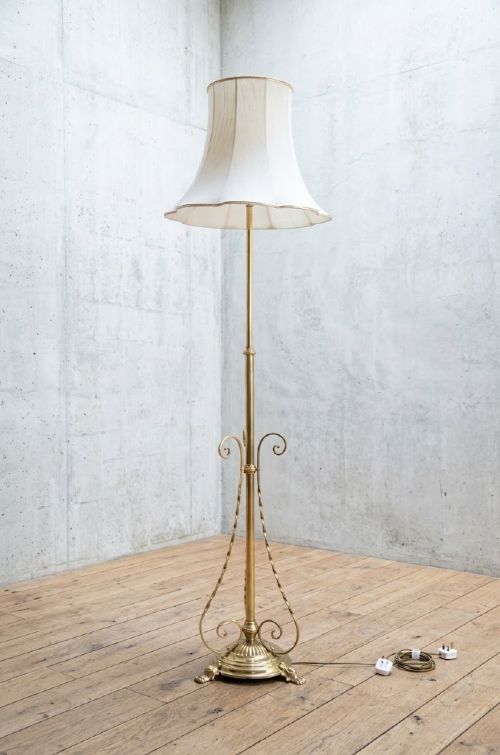
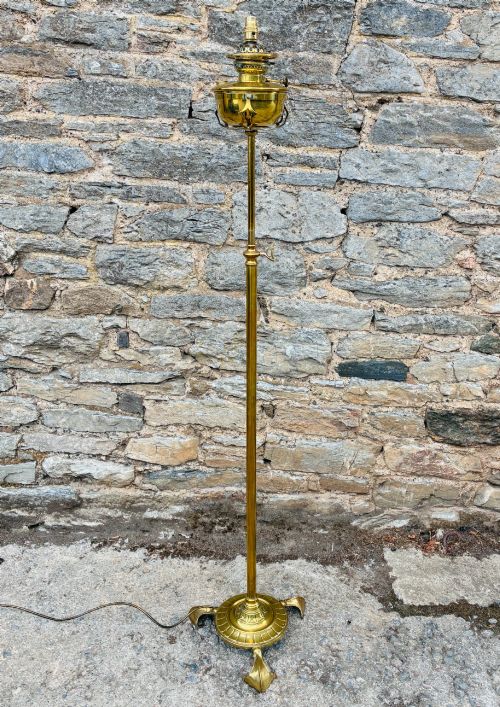
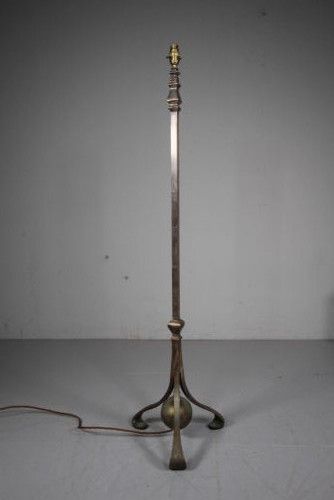
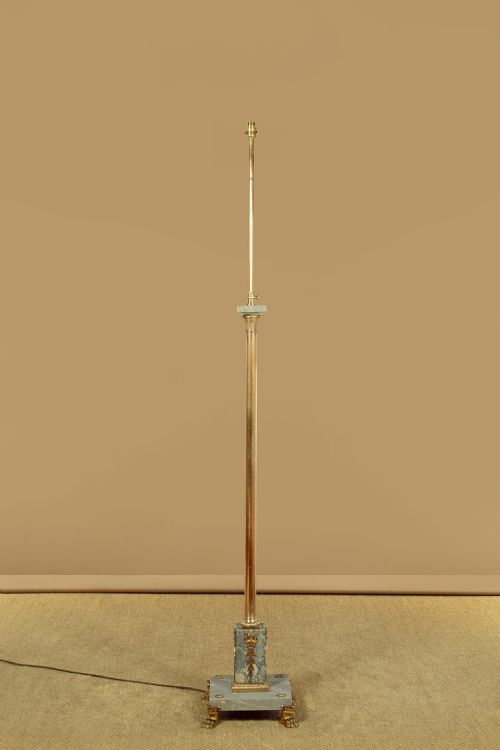
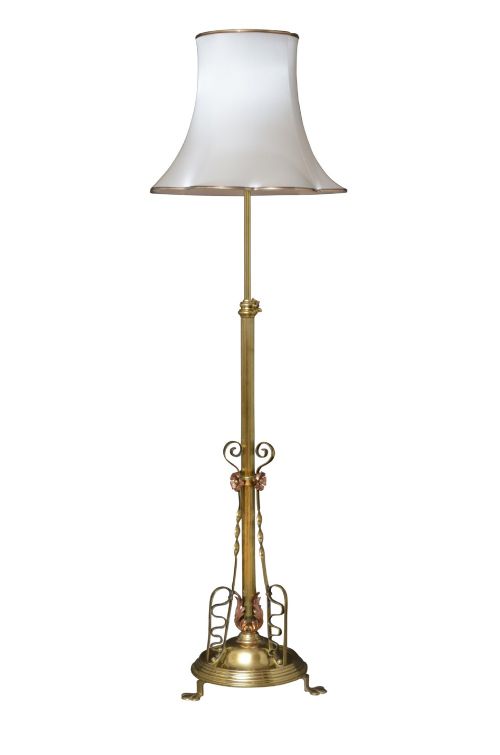
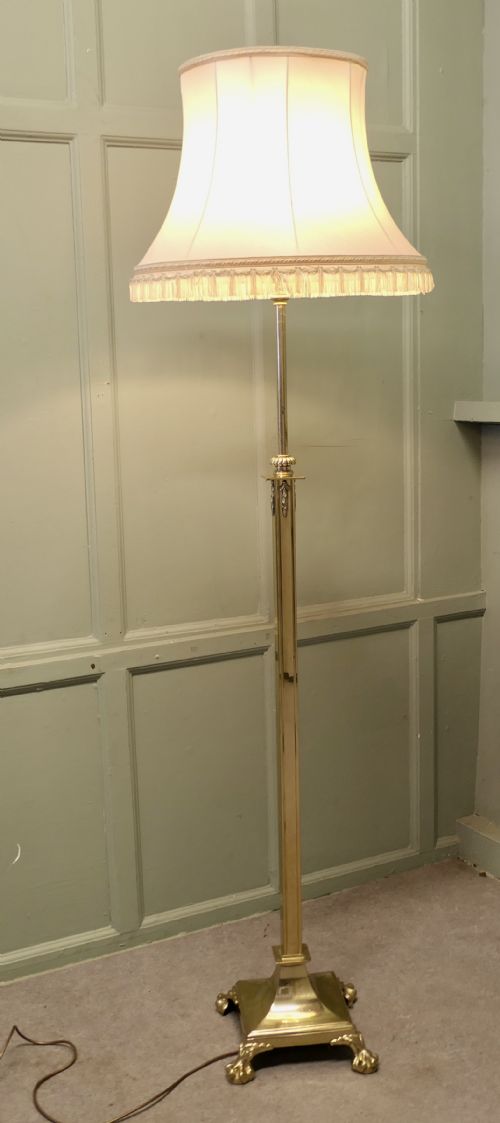
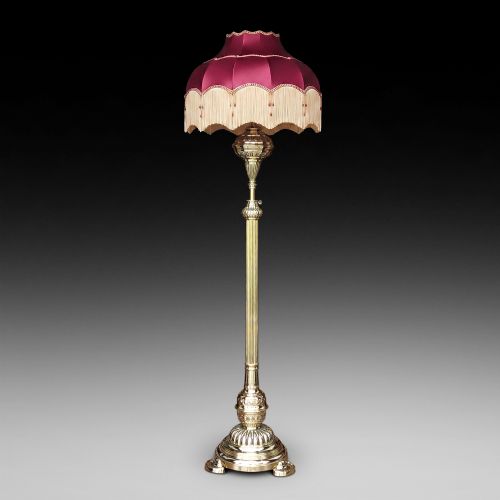


Brass Telescopic Lamp
When you search for a brass telescopic lamp, you are looking at height-adjustable floor and standard lighting designed to alter light levels by extending vertically.
Brass Telescopic Lamp
A brass telescopic lamp is a height-adjustable floor or standard lighting piece, often originating from Victorian, Edwardian, and Arts and Crafts periods. These lamps frequently started life as oil burners before conversion to electricity, utilising sliding mechanisms to alter the column length.
The versions most commonly met on this page combine polished brass shafts with heavy weighted bases, spanning production dates from the late nineteenth century through to the early twentieth century. Tall standard lamps and columnar floor variations dominate the selection, often incorporating copper accents or ceramic reservoirs.
Makers and workshops of the period applied diverse stylistic influences, ranging from classical Corinthian columns to organic Art Nouveau curves and functional Arts and Crafts designs. The underlying mechanics rely on inner sliding tubes held by screw keys or friction collars.
How they were made
Construction relies on heavy cast brass bases combined with hollow drawn brass tubing that allows the inner shaft to slide smoothly upward. Copper, marble, and wrought iron appear as secondary materials for weight distribution and decorative contrast.
Many examples began as oil-burning standards featuring brass fonts and burners, which were later adapted to house electrical wiring through the central vertical channel. Surface finishing involves polished or patinated metalwork, sometimes paired with opaline glass shades or fabric covers.
Listings feature brass, copper, marble, and onyx materials across Victorian and Edwardian periods.
What varies in quality
Quality rests in the weight and thickness of the cast brass base, which prevents the tall frame from tipping when fully extended. Thinner tubing and lightweight stamped components indicate lower tiers of production compared to heavy cast columns.
The precision of the internal sliding mechanism dictates how well the lamp holds its height without slipping. Superior examples feature robust locking keys and substantial gauge metal that withstands daily adjustment.
Hinks of B'ham·Messenger·W A S Benson
The Brass Telescopic Lamp Glossary
- Telescopic
- Capable of being extended or shortened by the sliding of concentric tubes. This mechanism allows the overall height of the standard lamp to shift according to the room layout.
- Standard Lamp
- A floor-standing lamp designed to illuminate a room from a vertical post. These tall fixtures frequently incorporate adjustable stems and weighted bases.
- Corinthian Column
- A classical architectural column style featuring ornate acanthus leaves on the capital. Victorian makers frequently adopted this form for tall brass floor lamps.
- Font
- The reservoir container that held lamp oil prior to electrical conversion. These vessels are typically fashioned from brass, copper, or ceramic.
- Standard Oil Lamp
- A lighting fixture originally fuelled by oil before being electrified for modern domestic use. Many surviving examples retain their original burner assemblies alongside altered wiring.
Brass Telescopic Lamp: Frequently Asked Questions
How do I adjust the height safely?
Loosen the thumbscrew or friction collar on the outer shaft gently while supporting the upper section with one hand. Slide the inner column to the desired level and tighten the mechanism securely before releasing your grip.
Avoid forcing the mechanism if it sticks, as old brass tubing can bind if tilted at an angle during adjustment.
Were all these lamps originally electric?
Most of these pieces started as oil lamps during the Victorian and Edwardian eras. They were subsequently converted to run on electricity as domestic power became widespread.
This conversion process typically involved running internal wiring through the original central burner and oil reservoir components.
What shades suit these tall stands?
Traditional fabric shades, opaline glass domes, and brass reflectors match the historical period of these standards. The proportions of the shade should balance the heavy brass base and extended height of the column.
Fitter galleries on the lamp dictate the specific ring diameter required to mount the shade securely to the top burner or harp.
How do I date an adjustable standard lamp?
Dating relies on stylistic clues such as the decorative motifs on the base, the form of the column, and manufacturing patents. Arts and Crafts models display plain hammered surfaces, whereas Victorian examples favour classical columns and heavy cast ornamentation.
The presence of original oil burner components and period wiring hardware also helps narrow the production decade.