

Traditional Standard Lamp
These traditional standard lamps bring versatile height and period character to a room.
What traditional standard lamps are
A traditional standard lamp is a floor-standing lighting piece designed to illuminate a room from a raised height. These pieces appear in forms such as floor lamps and standard lamps across our selection.
You are most likely to meet Edwardian and Victorian examples on this page, alongside pieces from the nineteenth century, nineteen-twenties, and nineteen-thirties.
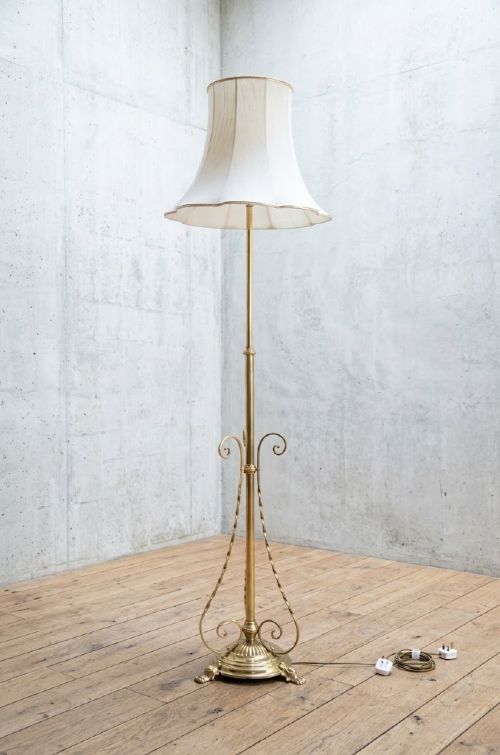
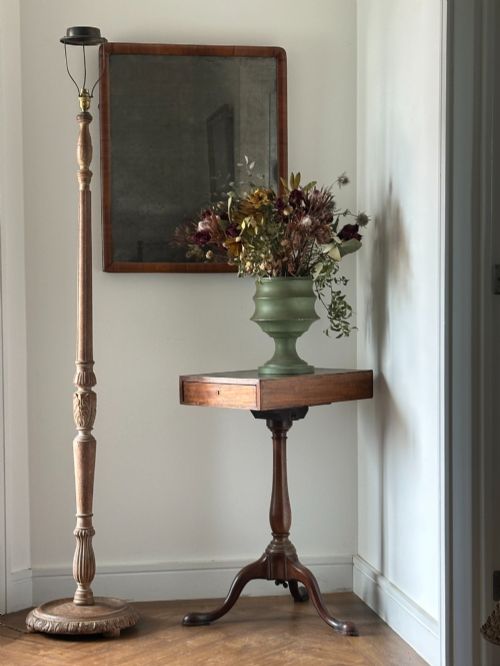
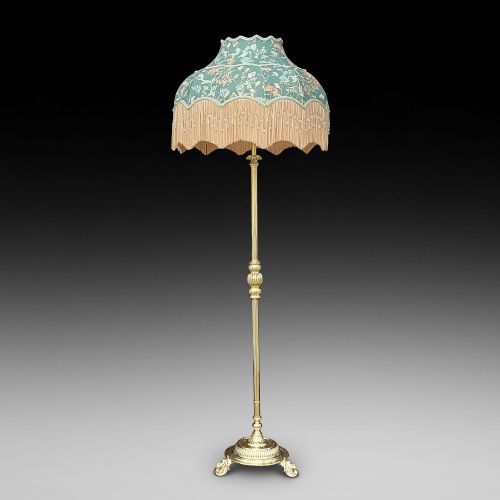
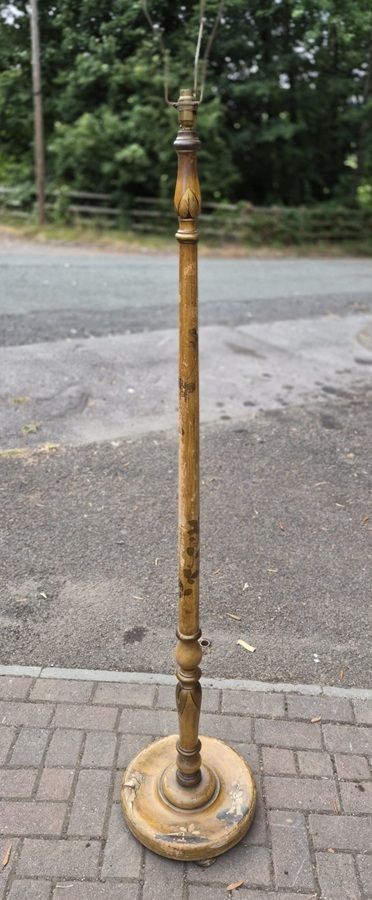
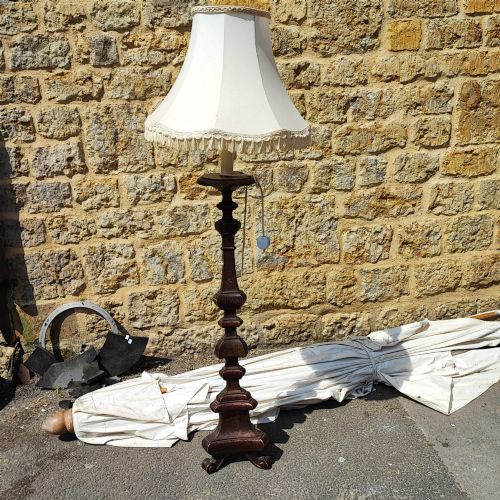
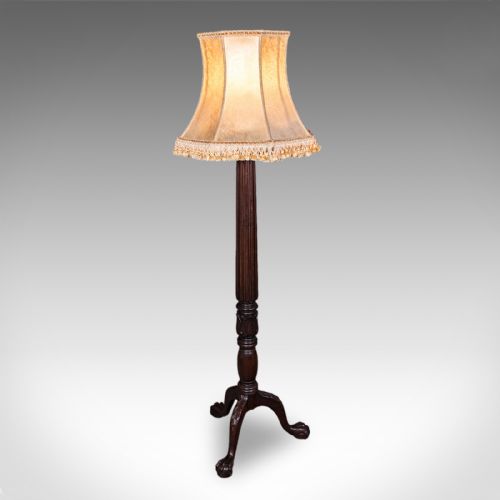
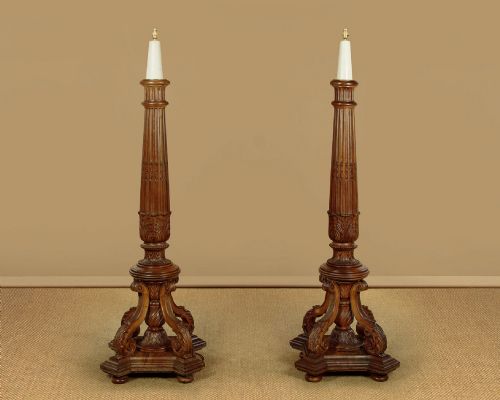
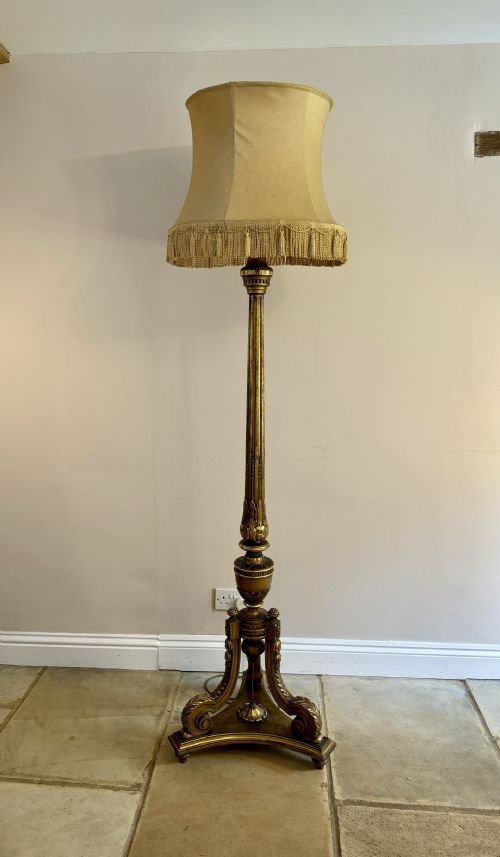
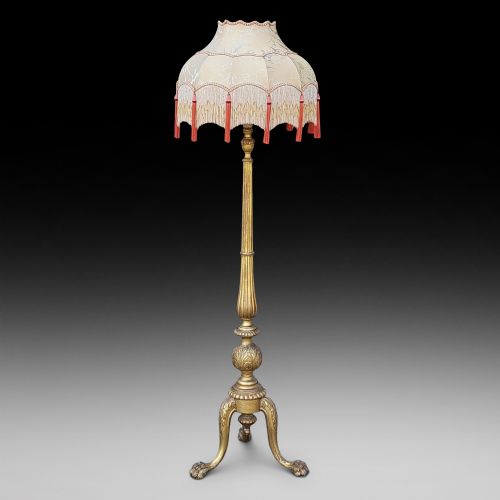
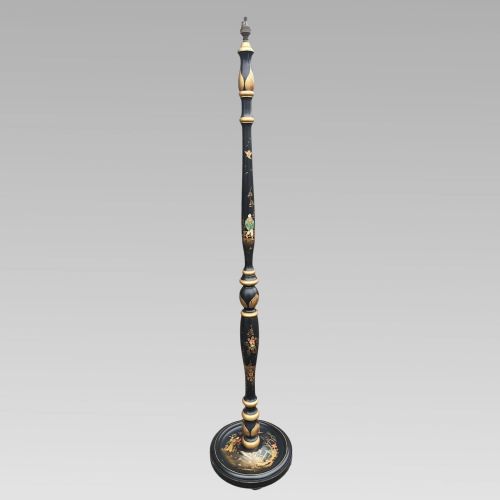
The selection includes timber structures in mahogany, oak, painted wood, and giltwood, as well as polished metal brass bodies paired with fabric, thread, and fringe shades.
How traditional standard lamps were made
Makers utilised turned and carved timber such as mahogany and oak to build sturdy shafts and weighted bases. Giltwood and painted wood finishes added decorative surface detail to specific frames.
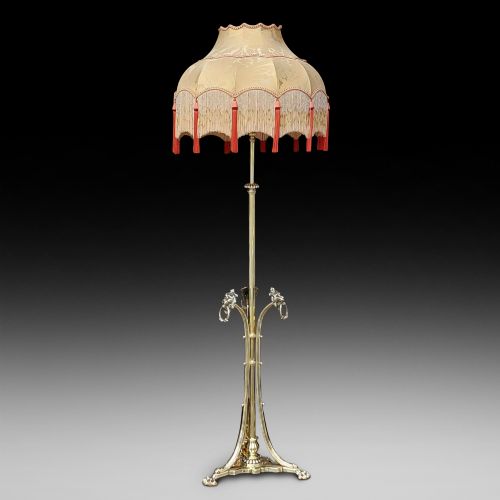
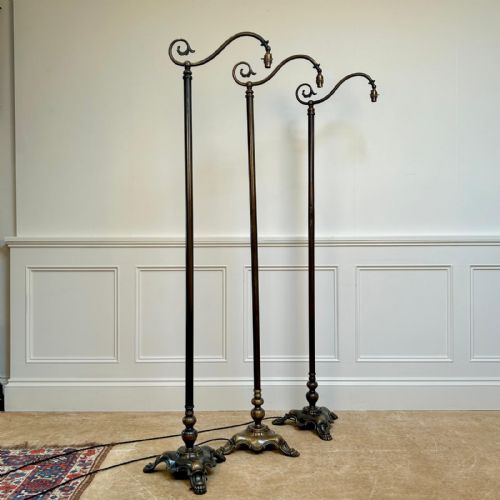
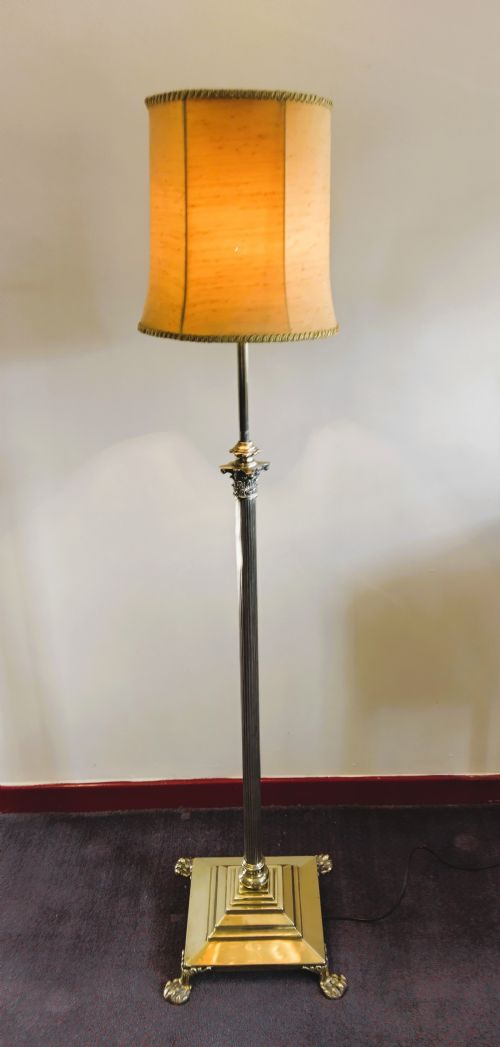
Brass was shaped into tubular columns and detailed with floral openwork bases. Telescopic mechanisms allowed users to adjust the height of the metal stems.
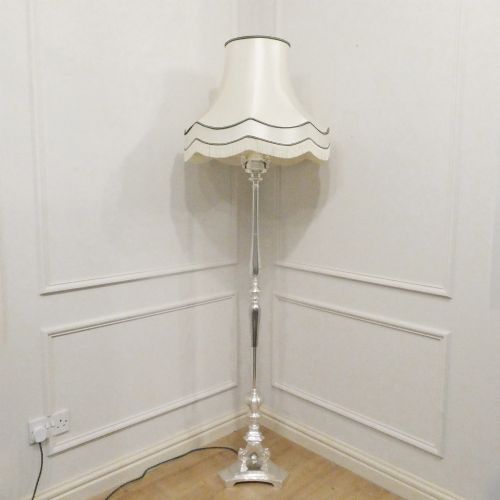
Shades incorporated fabric, thread, and decorative fringe elements to diffuse the light and soften the overall aesthetic.
Retail Price Guide 2026
Typical UK retail prices for traditional standard lamp, calculated from the Sellingantiques database of over a million retail prices indexed since 2003. This retail price guide relies exclusively on Sellingantiques data; no external sources or auction records are used, so the figures do not describe the wider market.
Some telescopic brass columns still hold their original vintage patina.
What varies in quality in traditional standard lamps
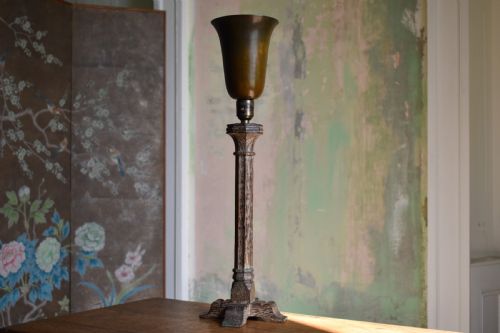
The sophistication of the timber carving and the complexity of the base design separate standard examples from finer pieces. Ornate openwork casting in brass demands greater skill than plain cylindrical tubing.
Material selection dictates the presence of rich grain in oak and mahogany or the careful application of giltwood. Telescopic mechanisms require precise engineering to function smoothly over decades.
The Traditional Standard Lamp Glossary
- Telescopic standard lamp
- A floor lamp featuring an adjustable inner shaft that raises or lowers the light source. This mechanism allows the owner to alter the height according to the room.
- Giltwood
- Timber treated with a thin layer of gold leaf or gilt paint. This technique gives the standard lamp a reflective, ornate surface.
- Chinoiserie
- European decorative style reflecting Chinese artistic motifs. Pieces in this style feature painted ornamentation inspired by East Asian designs.
- Art Nouveau
- A turn-of-the-century style characterised by organic, flowing lines and natural motifs. This aesthetic influences the decorative openwork found on some brass lamp bases.
Frequently Asked Questions
How do I use a standard lamp?
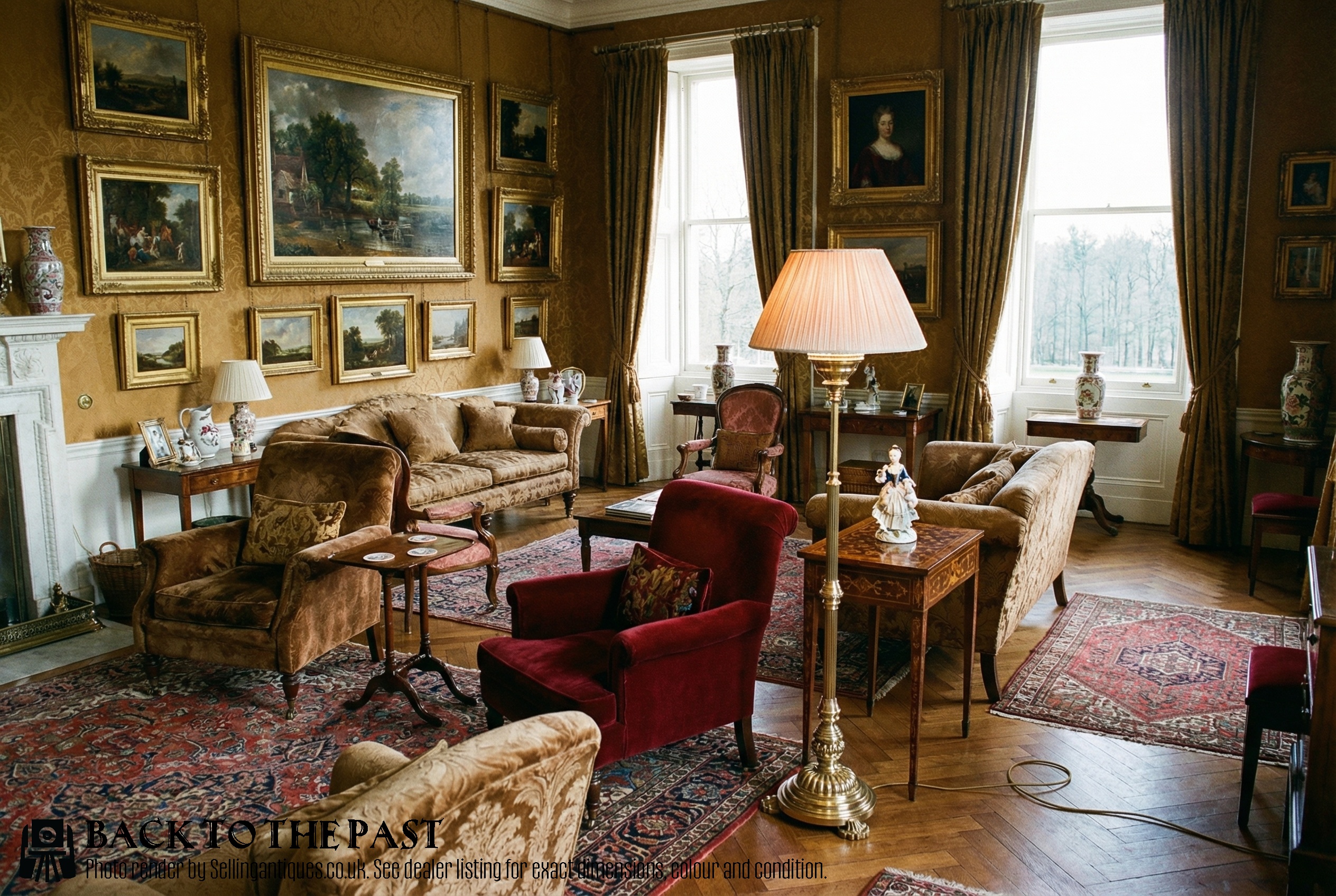
Place a standard lamp in the corner of a reception room to provide ambient height and softer secondary lighting.
Position it beside a reading chair or sofa where the raised height can cast direct illumination downward.
What periods do these lamps cover?
The available selection spans the Victorian and Edwardian eras, alongside pieces from the nineteenth century and the nineteen-twenties and thirties.
Earlier examples often feature heavy brass or carved mahogany, while later pieces introduce painted wood and giltwood.
Are brass standard lamps adjustable?
Certain brass floor lamps include telescopic columns that allow you to raise or lower the height of the fixture.
Fixed-height models maintain a single stature defined during their original manufacture.
What materials are used for shades?
Shades combine fabric and thread construction, frequently finished with a decorative fringe along the lower edge.
These textile elements work alongside brass and timber bases to complete the traditional look.