
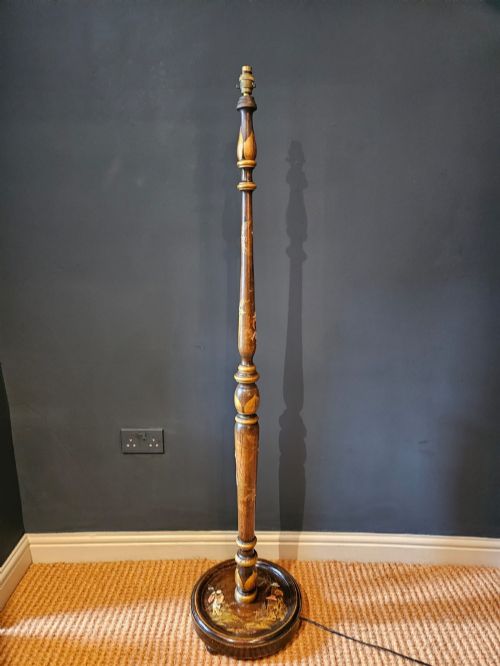
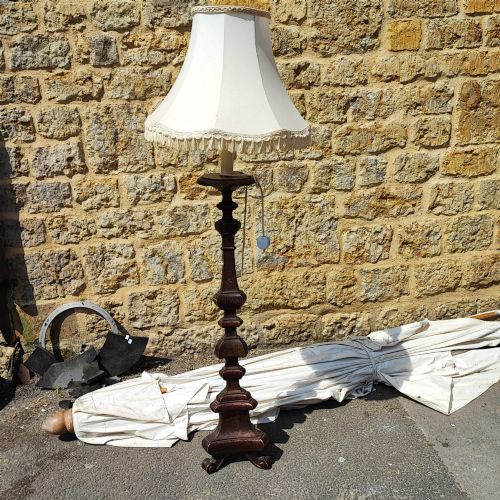
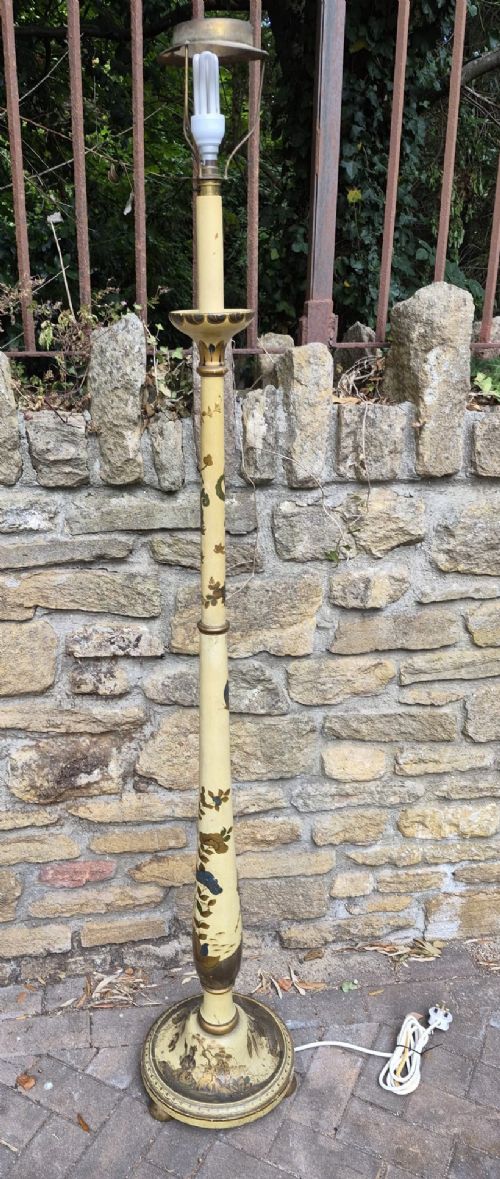


Turned Wood Floor Lamp
These turned wood floor lamps bring height and warmth to a room, offering practical illumination through centuries of craft.
Turned Wood Floor Lamp
A turned wood floor lamp stands as a vertical post designed to hold a shade and illuminate a space from a standing position. These pieces emerge from periods spanning the nineteenth century through the nineteen-thirties, reflecting diverse influences from Edwardian simplicity to Chinoiserie decoration.
The standard lamp appears in multiple timbers including mahogany, oak, beech, pine, and painted wood, often incorporating brass elements or parcel gilt details. Buyers encounter traditional English country styles alongside regency revival forms and arts and crafts interpretations.
Makers of the past utilised standard lamps to anchor sitting rooms, pairing turned timber shafts with fabric shades and sometimes triple glass fittings. The selection on this page captures standard lamps and floor lamps in various heights and finishes.
Materials and construction methods
Craftsmen shaped these lamp standards on a lathe to create the distinctive turned profiles found along the timber shafts. Mahogany, oak, beech, and pine serve as the primary woods, sometimes finished with paint, parcel gilt, or lacquer.
Metal components such as brass frequently appear alongside glass shades to complete the assembly of these tall light fittings. Artisans applied decorative paintwork and Chinoiserie motifs directly onto the wood surfaces during specific periods like the Edwardian era and the nineteen-twenties.
Turned Wood Floor Lamp Retail Price Guide 2026
Typical asking prices for turned wood floor lamp among the pieces listed under this phrase on Sellingantiques today, from the lower quarter to the upper quarter. They describe what is for sale here now, not the wider market.
Some tall lamp standards come dressed in triple glass shades to catch the light.
Assessing quality in turned wood floor lamps
Quality reveals itself in the crispness of the lathe turning and the selection of the timber grain. Finer examples display balanced proportions along the tall shaft and stable footing at the base.
The sophistication of the surface finish separates standard production from superior pieces, particularly where hand-applied Chinoiserie decoration, parcel gilt, or carved details are present. Original brass hardware and glass shades further elevate the standing of a piece.
The Turned Wood Floor Lamp Glossary
- Standard lamp
- A traditional British term for a floor lamp, describing a tall vertical light fitting designed to stand on the floor. These pieces typically support a fabric or glass shade at the top.
- Turned wood
- Timber shaped on a lathe to create circular profiles, beads, and reeding along the vertical shaft of the lamp. This method defines the primary silhouette of the piece.
- Chinoiserie
- European imitation of Chinese artistic motifs, frequently seen in painted and lacquered decorations on lamp standards from the Edwardian period and earlier decades. It introduces intricate patterns and orientalist scenes.
- Regency revival
- A stylistic period drawing inspiration from the early nineteenth century Regency era, reinterpreted in later standard lamps through classical lines and dark mahogany timbers.
Turned Wood Floor Lamp: Frequently Asked Questions
What is a turned wood floor lamp?
A turned wood floor lamp is a tall lighting fixture featuring a vertical wooden shaft shaped on a lathe. These pieces are also historically known as standard lamps and have been used to light rooms for over a century.
They combine functional illumination with decorative woodwork, ranging from plain oak and mahogany posts to elaborately painted Chinoiserie designs.
How do I date a standard lamp?
Dating a standard lamp involves examining the timber species, the style of the turning, and any surface decoration such as paint or gilt. Edwardian and earlier Victorian pieces often feature denser woods and hand-applied finishes.
Later examples from the nineteen-thirties reflect more streamlined traditional forms or incorporate period hardware like brass fittings and glass shades.
Where were floor lamps placed in period homes?
These lamps stood beside armchairs, reading desks, or in corners of sitting rooms to provide ambient and task lighting. Their height allowed them to cast light down over seating areas without taking up table space.
In larger reception rooms, they served both a practical purpose and as decorative accents matching the surrounding furniture.
How do I care for antique wood lamps?
Caring for these lamps requires gentle dusting with a dry cloth and occasional application of appropriate wood wax to nourish the timber. Protecting the finish from direct sunlight and excessive moisture preserves the original surface.
Electrical components should be checked by a qualified professional to ensure safe modern usage while retaining the historic standard.