
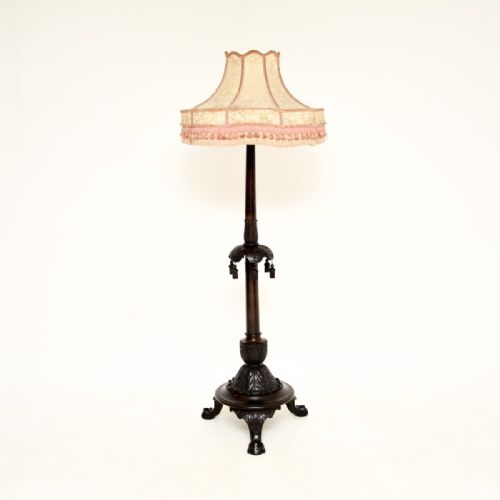
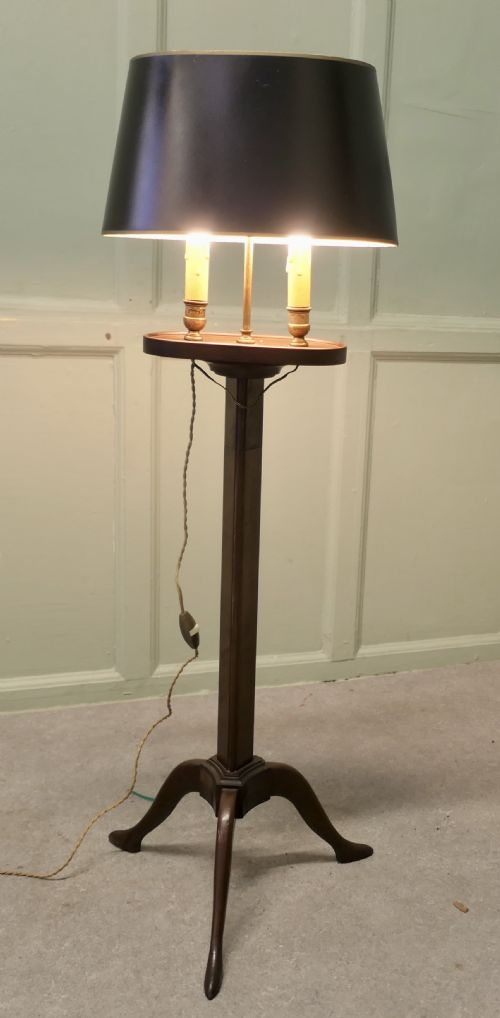
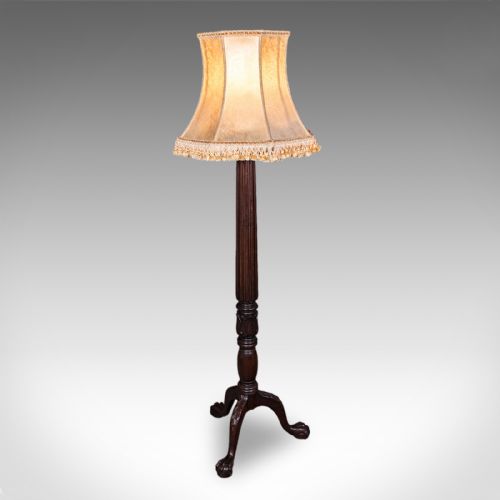


Vintage Mahogany Standard Lamp
These vintage mahogany standard lamps bring stately presence and rich timber warmth to a corner, offering a grounded focal point for traditional interiors.
Vintage Mahogany Standard Lamp
A vintage mahogany standard lamp provides vertical lighting paired with the deep grain and reddish hue of durable hardwood. Buyers searching for a vintage mahogany standard lamp encounter floor-standing designs spanning from the nineteenth century through the interwar years.
The selection ranges from restrained Edwardian columns and dainty cottage interpretations to heavier revival styles including William IV and Regency influences. Pieces often incorporate contrasting materials like brass mountings or tiered platforms to elevate their architectural silhouette.
Functional adaptations appear frequently among these floor lamps, including converted pole screens, bouillotte dual-light arrangements, and combined table standards. These variations reflect how earlier domestic lighting was routinely modified to suit changing technological demands.
Materials and construction
Makers utilised solid mahogany and polished veneers to build the structural shafts, often carving the timber with reeded, fluted, or spiral details. Turning lathes shaped the central pillars, while heavier weighted bases ensured stability for tall floor-standing stems.
Metal components such as brass, gilt brass, and painted metal provided structural collars, adjustable fittings, and decorative feet. Fabric shades and multi-tiered glass fittings completed the lighting assemblies, diffusing illumination across period interiors.
Design influences span from Georgian and Regency traditions through to 1930s traditional styles and cottage aesthetics.
Judging quality in standard lamps
The distinction between ordinary and superior examples lies in the crispness of the timber carving and the architectural proportion of the turned column. Finer pieces display carefully matched grain patterns and substantial timber weights rather than lightweight construction.
Original metal fittings and quality brass hardware indicate higher workshop standards, whereas later conversions or replaced components alter the historical integrity of the piece. The sophistication of revival detailing, from Regency curves to William IV heft, dictates the visual authority of the lamp.
The Vintage Mahogany Standard Lamp Glossary
- Standard lamp
- A tall floor-standing lamp designed to illuminate a room from a standing position rather than a table top. These pieces form the primary category found within this selection.
- Pole screen
- A Victorian heating screen mounted on an adjustable vertical rod that shielded a seated person's face from a fireplace. Many surviving examples were later converted into standard lamps.
- Bouillotte lamp
- A traditional shaded light fixture originally designed for card playing, featuring adjustable candles or bulbs on a central metal shaft. This form translates into elegant floor-standing variations.
- Canterbury
- A low compartmentalised stand originally built for sheet music or newspapers. Combined versions integrate this storage feature directly beneath the lamp standard.
Vintage Mahogany Standard Lamp: Frequently Asked Questions
How do I date a mahogany standard lamp?
Dating relies on observing the turning styles, timber thickness, and secondary materials used in the construction. Pieces spanning from the Victorian era into the 1930s exhibit distinct decorative motifs ranging from heavy revival carving to simpler early twentieth-century proportions.
Hardware details and wiring configurations also offer clues, though electrical components are frequently updated. Comparing the turning profile against documented furniture styles helps narrow down the period of manufacture.
What is a pole screen conversion?
A pole screen conversion is an antique heating screen that has been adapted to hold a light fitting instead of its original embroidered panel. This practical nineteenth-century adaptation repurposed domestic items when central heating rendered fireplace screens obsolete.
These converted pieces retain the adjustable bracket mechanism characteristic of the original screens. They offer unusual silhouettes that distinguish them from purpose-built floor lamps.
Are these lamps stable on carpets?
Most standard lamps use weighted bases or wide timber platforms designed to maintain balance across floor surfaces. Tall shafts require adequate foundation weight to prevent tipping when positioned on thick rugs.
Heavier Victorian and revival models generally provide superior stability due to denser timber and cast metal internal ballasting. Checking the footprint width helps determine placement suitability.
How do I care for mahogany timber?
Maintenance involves dusting with a soft, dry cloth and applying natural wax sparingly to preserve the polished finish. Avoid placing timber lamps near direct heat sources or strong sunlight which can dry out the wood.
Periodic gentle buffing maintains the lustre of the mahogany grain without building up heavy residue. Keeping the environment stable protects both the timber joints and any applied veneers.