
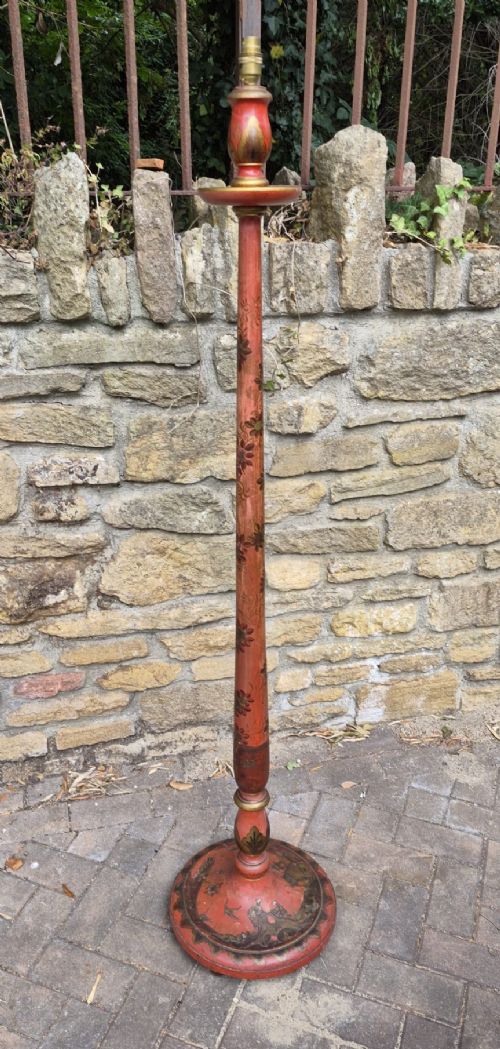
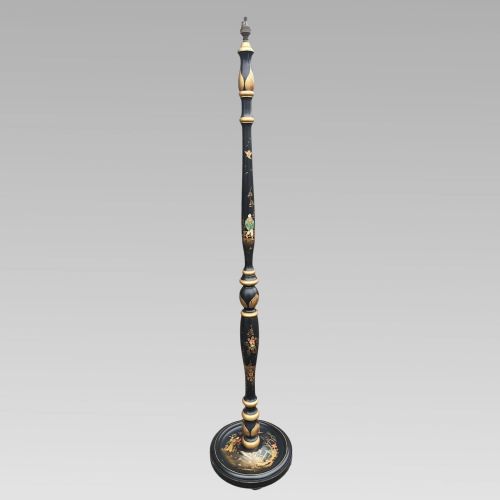
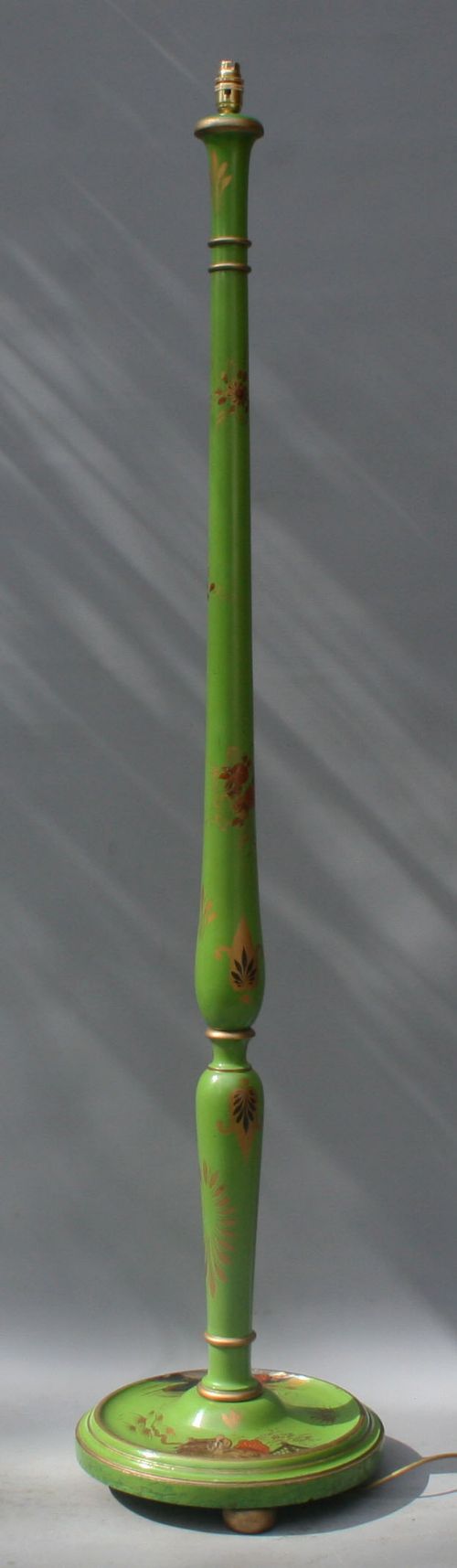


Edwardian Chinoiserie Floor Lamp
An edwardian chinoiserie floor lamp brings painted lacquer and oriental motifs to a room, offering height and warm illumination.
Edwardian Chinoiserie Floor Lamp
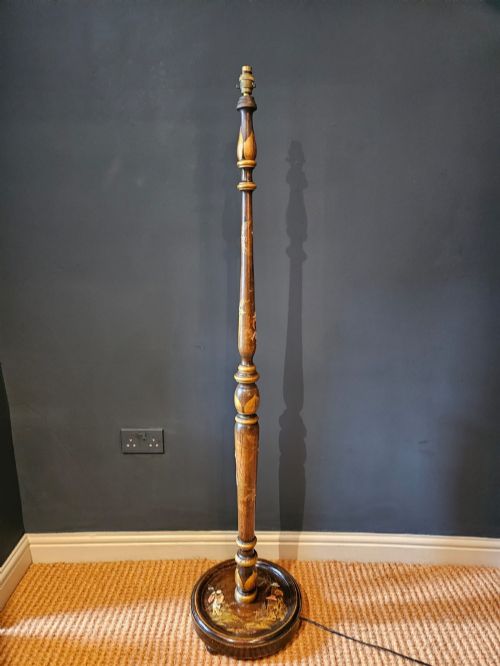
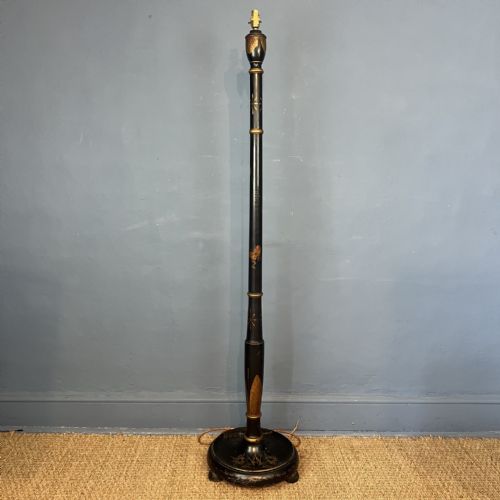
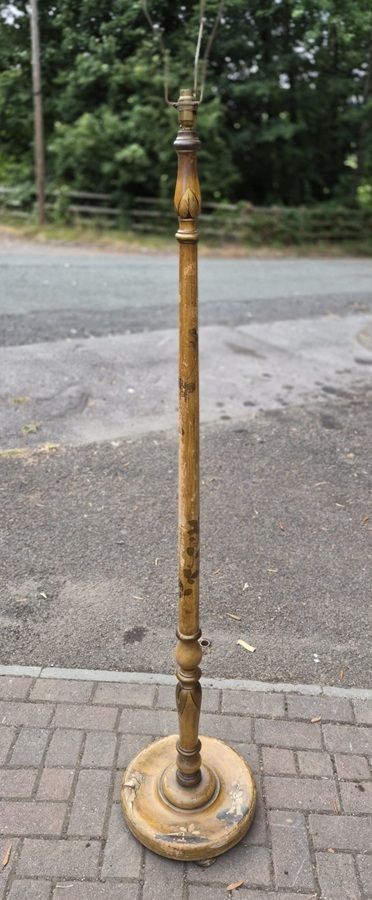
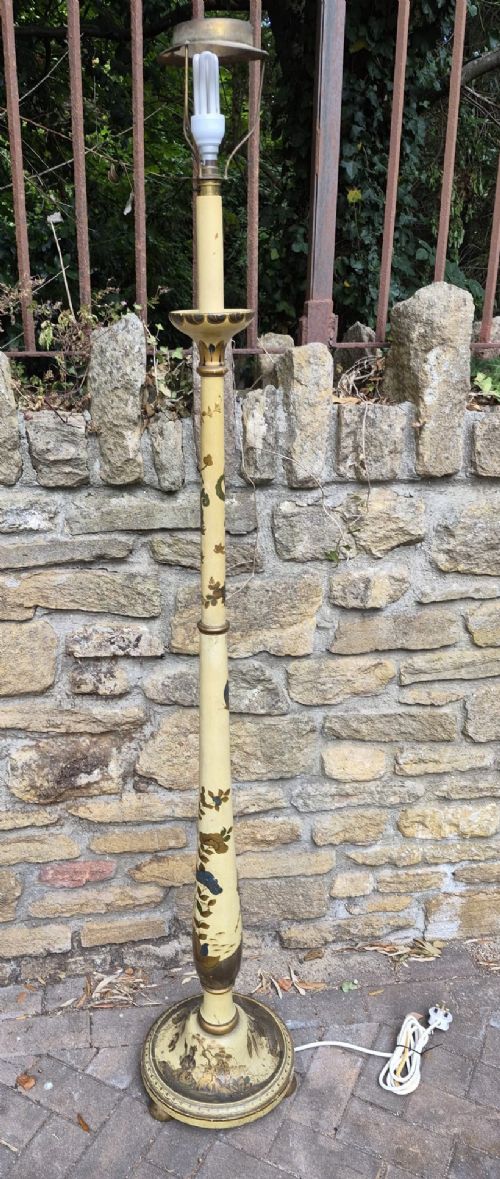
An edwardian chinoiserie floor lamp is a tall standing light decorated with painted oriental motifs on a lacquered or wooden body. These pieces bring vertical presence and ambient lighting to a reception room or study while displaying intricate decorative schemes.
You are most likely to meet standard lamps from the Edwardian period or the nineteen-tens, though examples stretch from the Victorian era into the nineteen-thirties. The forms vary from simple columns to octagonal shapes, often paired with fabric shades.
The decorative schemes rely on black, green, or crimson lacquer grounds adorned with gilt and painted figures, landscapes, or floral patterns. Collectors seek these lamps for their ability to anchor a corner with colour and period character.
How they were made
The construction of these lamps relies on turned wood, painted wood, or lacquered wood built to support the heavy weight of a standard lamp. Artisans applied layers of lacquer in black, green, or crimson, providing a smooth base for hand-painted ornamentation.
Gilt and paint bring the characteristic Chinese-inspired motifs to life across the wooden columns and bases. Brass fittings and wiring complete the build, transforming traditional carpentry into functional floor lighting.
Several examples have survived the decades wearing an octagonal green coat, proving that Edwardian rooms loved a geometry lesson.
What varies in quality
The depth and preservation of the lacquer finish set the standard for quality across these pieces. Fine examples retain crisp gilt detailing and subtle shading on the painted figures, whereas lesser pieces show flat, uniform brushwork with worn surfaces.
The complexity of the timber turning also defines the upper tier of the range, seen in architectural columns or octagonal shafts rather than plain cylindrical poles. The cohesion between the painted decoration and the underlying form separates ordinary production from superior craftsmanship.
The Edwardian Chinoiserie Floor Lamp Glossary
- Chinoiserie
- European interpretation and imitation of Chinese and East Asian artistic traditions, popular in decorative arts and furniture. This style uses motifs like pagodas, figures, and landscapes.
- Standard lamp
- A British term for a floor-standing lamp designed to sit on the floor rather than a table. These pieces provide ambient room lighting.
- Lacquer
- A durable finish applied in multiple coats to wood and polished to a smooth sheen. It forms the coloured background for chinoiserie decoration.
- Gilt
- Application of gold leaf or gold paint to highlight carved or painted details. It catches the light against dark lacquer grounds.
Edwardian Chinoiserie Floor Lamp: Frequently Asked Questions
What is an edwardian chinoiserie floor lamp?
An edwardian chinoiserie floor lamp is a tall wooden lighting standard decorated with painted oriental motifs on a lacquered surface. These pieces combine functional illumination with decorative artistry.
They originate primarily from the early twentieth century and feature colours such as black, green, and crimson.
How were these floor lamps used?
These lamps stood in drawing rooms and reception spaces to provide ambient lighting next to seating areas. Their height allowed them to cast light downward over a considerable radius.
They also served as decorative statements, matching oriental screens and lacquered furniture popular in period interiors.
How do I live with an antique floor lamp?
Living with these lamps involves placing them in corners or beside armchairs where their height complements surrounding furniture. Pairing them with a suitable fabric shade balances the visual weight of the lacquered column.
Care involves dusting the lacquered surface gently and keeping the piece away from direct sunlight to preserve the paint.
How do I tell periods apart?
Distinguishing periods relies on observing the subtleties of the lacquer work, turning styles, and colour palettes. Victorian pieces often lean towards heavy painted wood, while Edwardian and later examples utilise refined black, green, or crimson lacquer.
The presence of octagonal shafts or specific wiring updates also points towards distinct eras of manufacture and subsequent adaptation.