


Painted Wood Floor Lamp
A painted wood floor lamp brings height and hand-finished character to a room, drawing the eye upwards through decorative surface work.
Painted Wood Floor Lamp
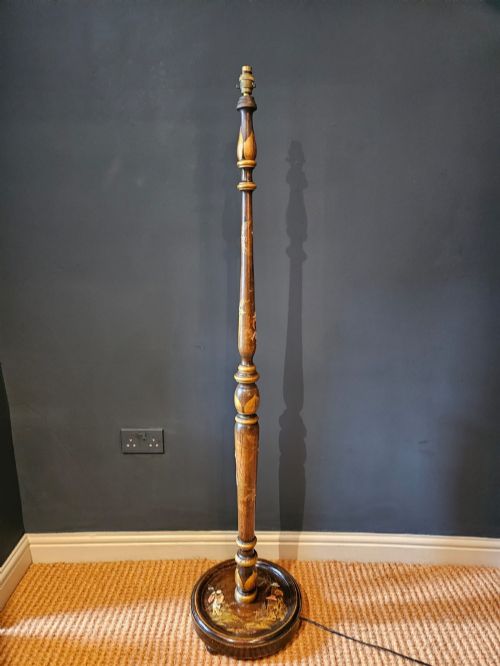
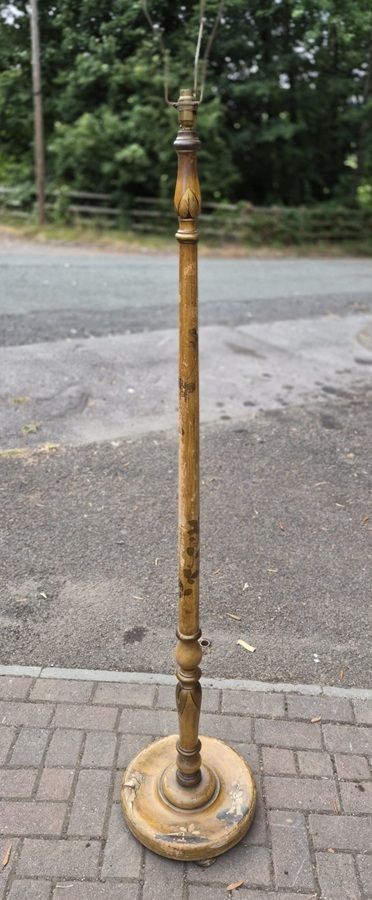
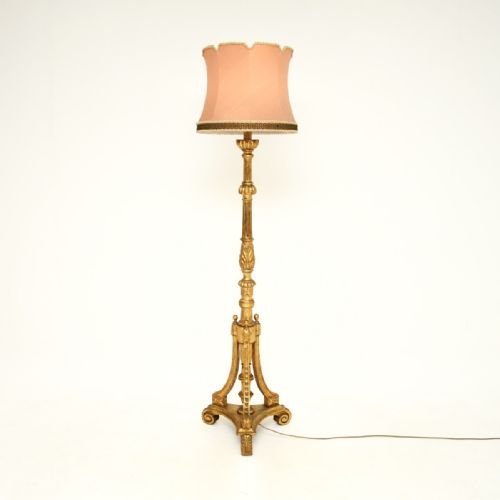
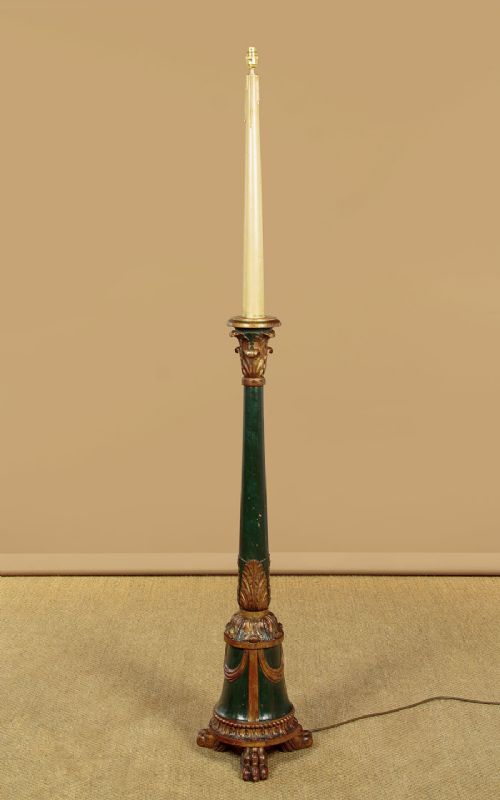
A painted wood floor lamp is a tall standing light fixture finished with pigment, lacquer, or gilt decoration over a wooden base. These objects function as primary vertical lighting while serving as decorative focal points within a room scheme.
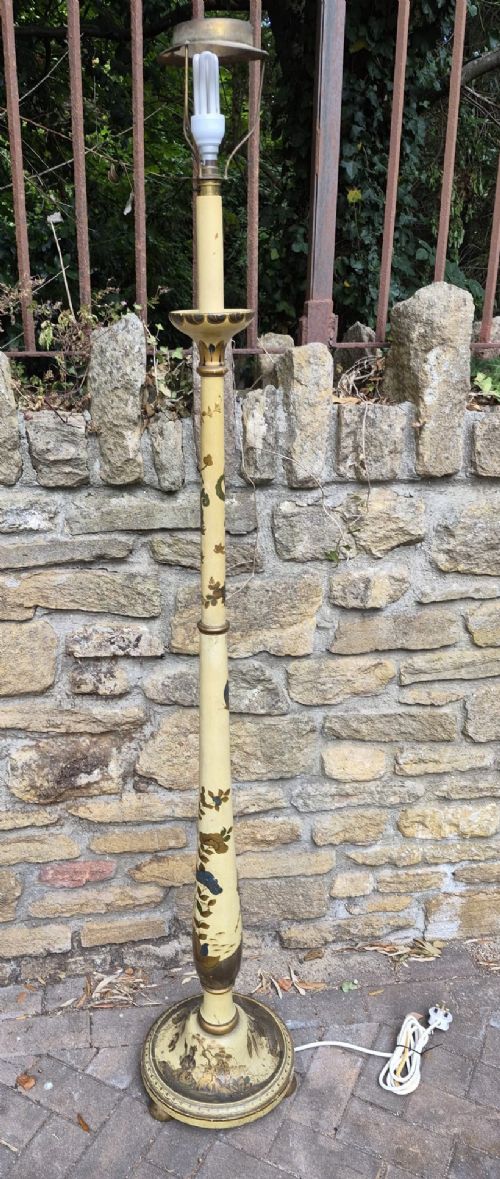
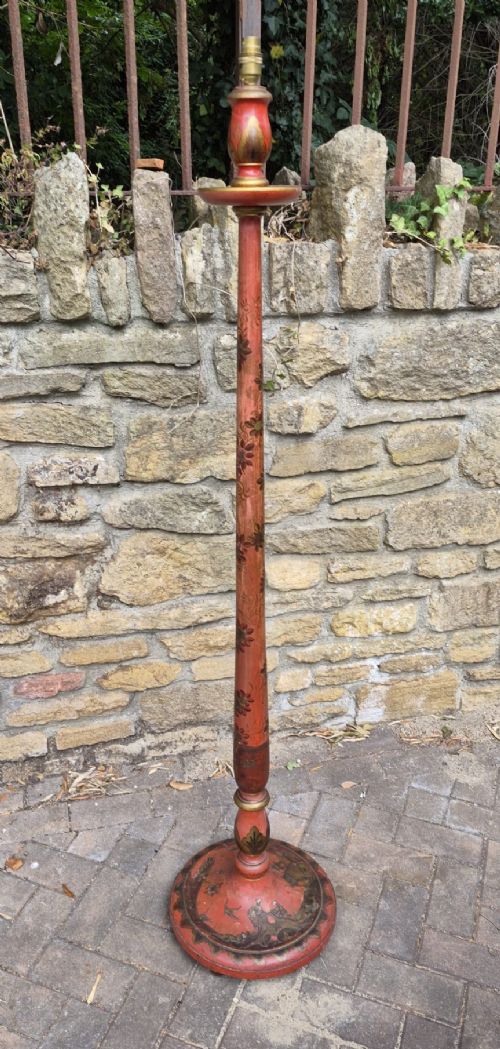
The versions most commonly met on this page span from the nineteenth century through the 1930s, encompassing standard lamps and torcheres. Many examples showcase elaborate stylistic treatments such as Chinoiserie and Venetian revival motifs.
Makers across different decades utilised turned or carved timber structures to support layered paint schemes, often combining contrasting hues like crimson or black with gold leaf highlights. The resulting forms range from simple tapered columns to figural carved standards.
How they were made
Makers constructed these standards from timber, employing carving, turning, and joinery to achieve slender vertical columns. Surfaces were then prepared with gesso before receiving coats of paint, lacquer, or gilding.
Decoration relied on hand application, whether through intricate Chinoiserie scenes, marbleised effects, or applied gilt details. Brass components frequently served as structural fittings or base weightings to ensure stability.
The listings on this site feature painted wood floor lamps spanning from 1800 through the 1930s, alongside brass and carved wood materials.
What varies in quality
The refinement of the painted surface distinguishes standard examples from superior pieces. Skilled execution in Chinoiserie detailing or rich gilding over gesso elevates the visual depth of the woodwork.
The underlying timber work and turning quality dictate the structural integrity and sculptural presence of the standard. Heavier bases and harmonious proportions separate the most accomplished examples from simpler utility pieces.
The Painted Wood Floor Lamp Glossary
- Chinoiserie
- European decorative style reflecting Chinese artistic influences, frequently seen on these lamps through painted motifs on lacquered backgrounds. This technique became particularly popular during the Edwardian period.
- Gesso
- Plaster-based preparation mixture applied to wood surfaces to create a smooth layer for gilding or painting. It allows intricate relief details to be carved before finishing.
- Standard Lamp
- Traditional British term for a floor lamp, consisting of a tall vertical pole supported by a heavy base. These fixtures were designed to hold large fabric shades.
- Torchere
- Tall ornamental stand or floor lamp, originally designed to carry a torch or candle. In later periods, these forms were adapted to hold electric light fittings.
- Giltwood
- Timber decorated with gold leaf or gold paint applied over a prepared surface. This finish catches the light and adds brightness to the carved details.
Painted Wood Floor Lamp: Frequently Asked Questions
How do I wire an antique floor lamp?
Rewiring requires running modern flexible cable up through the internal wooden channel or central tube of the standard. This process ensures the electrical safety of the fixture while preserving the original exterior appearance.
It is advisable to consult a qualified electrician to carry out this work, particularly with older standards that may have narrow internal bores or fragile brass fittings at the top.
What shade suits a standard lamp?
Selecting a shade depends on the height and visual weight of the painted wooden column. Traditional fringes and wide proportions complement the heavier silhouettes found in Edwardian and Victorian examples.
Lighter Chinoiserie standards often pair well with silk or pleated shades that balance the decorative surface work without overwhelming the delicate painted motifs below.
How do I care for painted wood?
Dusting regularly with a soft, dry cloth prevents the accumulation of dirt on delicate painted and gilt surfaces. Avoiding moisture and direct sunlight protects the historic finishes from fading or lifting.
Applying wax should be approached with caution, as many antique painted surfaces respond poorly to traditional furniture polishes and require gentle handling instead.
How are different periods identified?
Dating relies on observing the stylistic characteristics, such as the distinct motifs of Chinoiserie decoration or the heavy carving associated with nineteenth-century pieces. The choice of base turning and paint layering also provides clues to the era of manufacture.
Comparing the joinery methods and the composition of the gesso beneath the paint helps confirm whether a piece belongs to the Edwardian era or earlier Victorian decades.