


Lacquered Standard Lamp
A lacquered standard lamp brings vertical height and painted oriental scenes to a corner, combining practical lighting with decorative depth.
What a lacquered standard lamp is
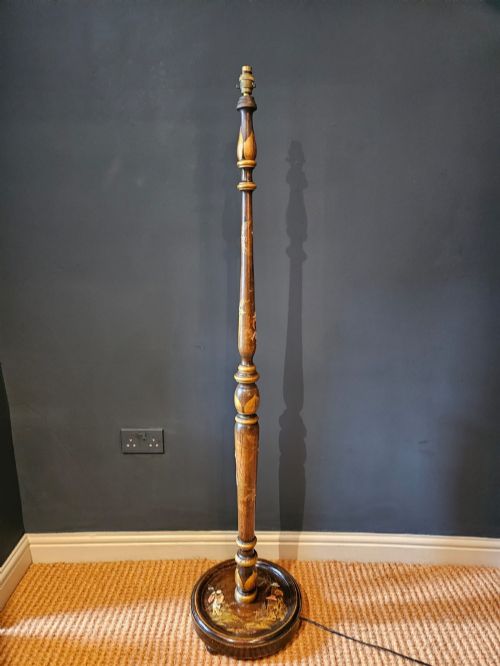
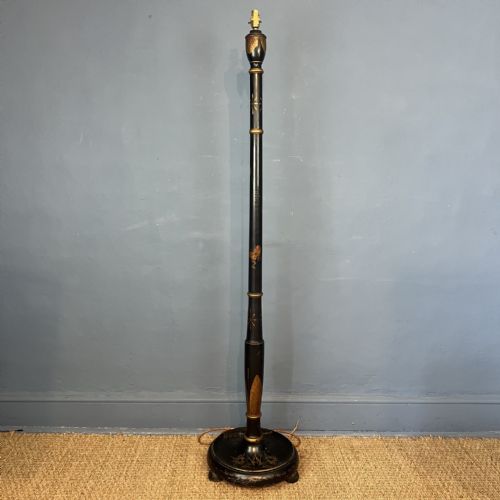
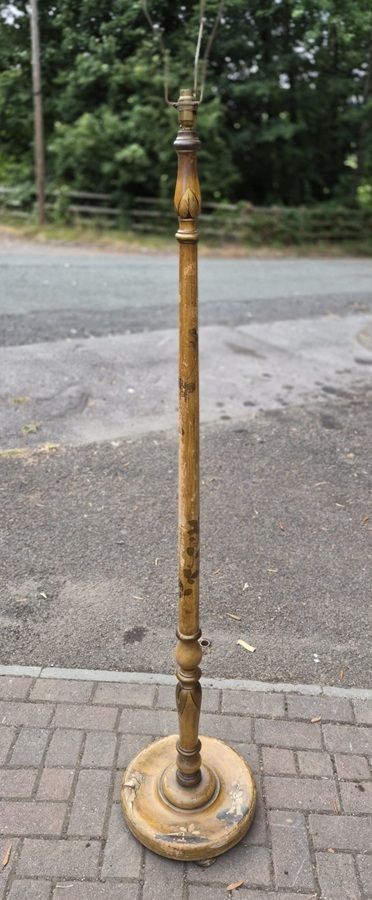
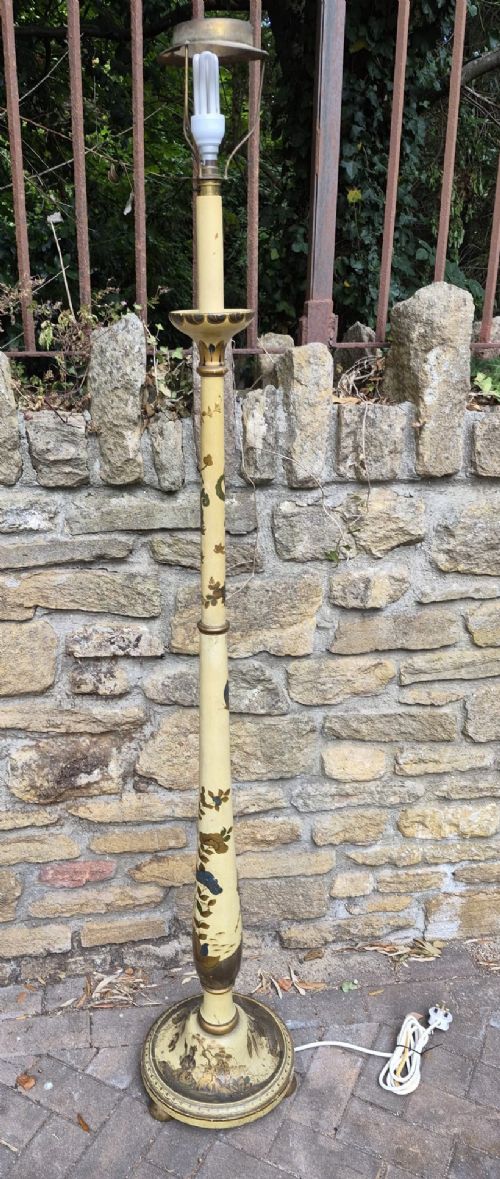
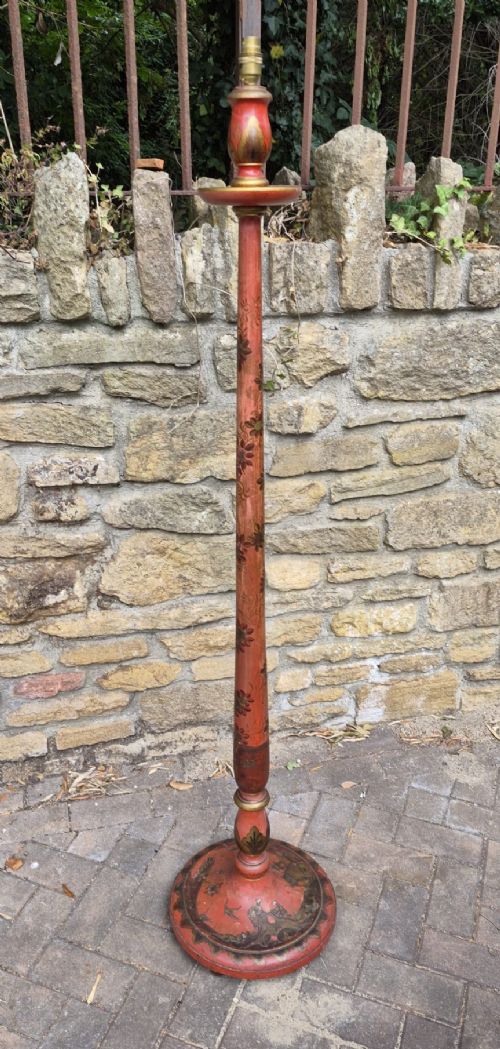
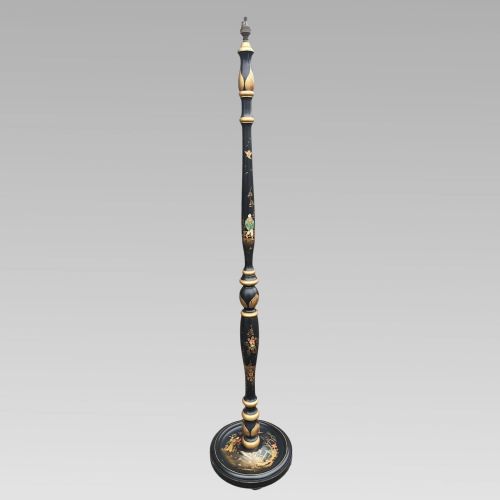
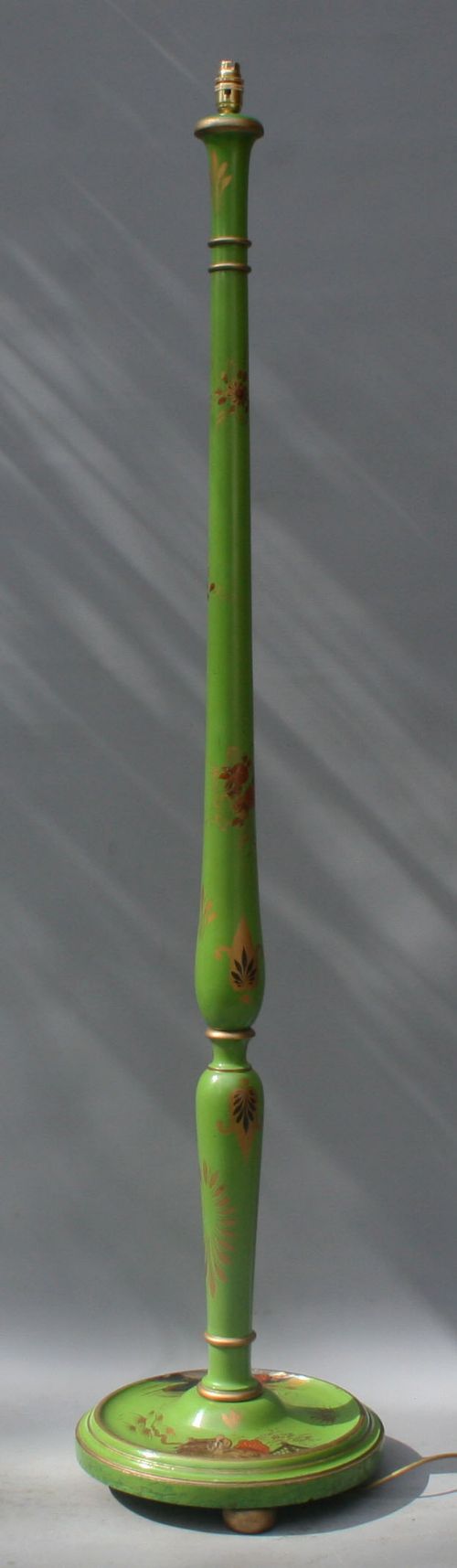
When you search for a lacquered standard lamp, you find tall floor-standing lighting fixtures decorated in the chinoiserie taste. These pieces stand upright to illuminate a room while serving as significant decorative objects through their painted surfaces.
The version you are most likely to meet on this page belongs to the Edwardian period or the 1930s, though Victorian examples also appear. They typically take the form of standard lamps or floor lamps designed to hold fabric shades.
Makers produced these fittings in various colourways, with black, red, and blue backgrounds most commonly recorded. Each piece displays distinct oriental motifs applied to the wood base.
Materials and construction
Makers utilised wood, painted wood, and lacquered wood as the primary foundations for these tall floor lamps. Brass components often provide structural support or functional fittings alongside the painted wooden shafts.
The surface decoration relies on lacquer and paint, frequently executed in the chinoiserie style with gilt detailing. Artisans built up layers of lacquer to create a smooth finish before applying the pictorial designs.
Retail Price Guide 2026
Typical UK retail prices for lacquered standard lamp, calculated from the Sellingantiques database of over a million retail prices indexed since 2003. This retail price guide relies exclusively on Sellingantiques data; no external sources or auction records are used, so the figures do not describe the wider market.
Several past examples arrived paired specifically with Downton Abbey style handmade silk shades.
Separating the ordinary from the exceptional
The finesse of the hand-painted chinoiserie decoration determines the visual merit of the piece. Crisp detailing in the oriental scenes and rich application of gilt separate simpler models from finer examples.
The depth and durability of the lacquer finish indicate the care taken during production. Deeper, more lustrous surface coatings show greater attention to traditional finishing techniques.
The Lacquered Standard Lamp Glossary
- Chinoiserie
- European theatrical interpretation of Chinese and East Asian artistic traditions. This style dominates the surface decoration found on these standard lamps.
- Standard lamp
- A tall floor-standing lighting column designed to stand beside furniture. These pieces support lampshades to provide ambient room illumination.
- Japanned
- European imitation of East Asian lacquerwork using specialised varnishes and heat drying. This term appears in descriptions alongside standard lacquering.
- Gilt
- Application of gold leaf or gold-coloured pigment to highlight specific details. Artisans utilise this technique to accentuate the painted motifs on the lamp shafts.
Frequently Asked Questions
Where should I place a standard lamp?
These tall floor lamps suit corners or spaces beside seating where they provide functional illumination. Their decorated shafts add vertical interest to a room scheme without requiring table space.
Position the lamp near a wall socket to keep cords tidy while allowing the painted chinoiserie design to remain visible from the main seating areas.
How do I care for lacquered wood?
Dust the surface regularly with a soft, dry cloth to prevent particle buildup on the lacquer. Avoid harsh chemical cleaners or abrasive materials that could damage the painted finish.
Keep the lamp away from direct sunlight and excessive temperature fluctuations to protect the lacquer and gilt details over time.
What periods do these lamps date from?
The pieces recorded here span from the Victorian era through the Edwardian period and into the 1930s. Edwardian examples with chinoiserie decoration form a substantial portion of the available items.
Earlier nineteenth-century pieces also appear occasionally, showing darker black lacquer finishes and distinct proportions compared to later twentieth-century iterations.
What colours are available?
Black lacquer serves as a traditional base colour found across numerous historical examples. Red and blue colourways also feature prominently in the surviving record.
These coloured grounds often carry contrasting gilt or painted oriental figures, creating a striking visual presence within an interior space.