

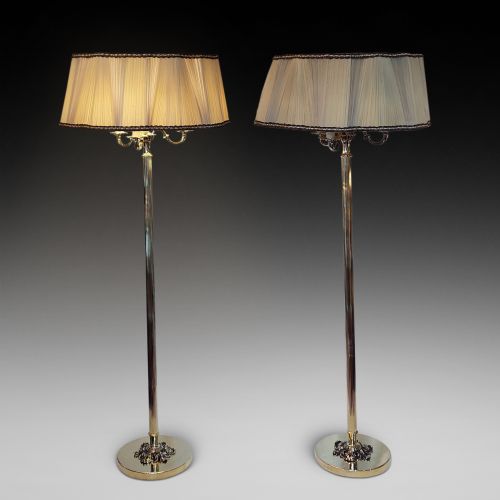


1920s Standard Lamp
A 1920s standard lamp brings adjustable height and striking vertical presence to a room, offering both ambient lighting and period style.
1920s Standard Lamp
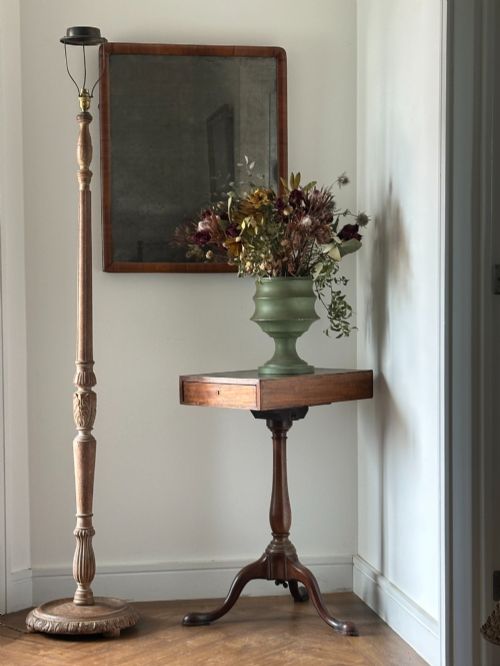
A 1920s standard lamp provides tall freestanding illumination, frequently taking the form of floor lamps and standard lamps designed to stand beside seating or within corners. These pieces emerge across the interwar period, drawing on designs from the nineteen-tens through to the nineteen-thirties.
The aesthetic range spans geometric Art Deco forms to elaborate revival styles, including Georgian Revival and Louis XVI Revival pieces. Buyers regularly encounter standard lamps paired with lamp tables or featuring specialised configurations such as uplighters and torchere vase designs.
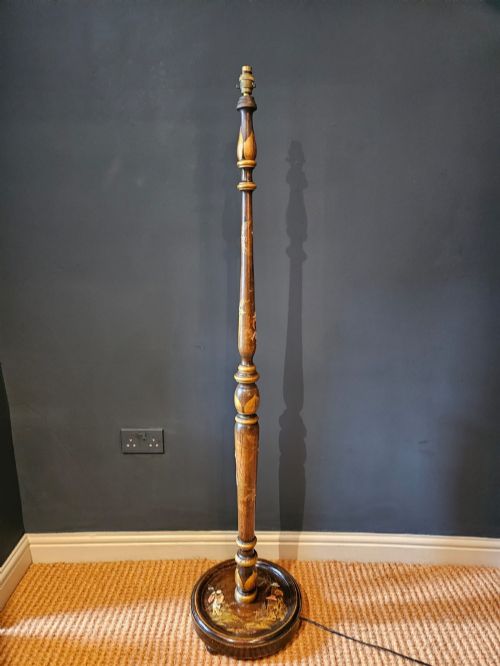
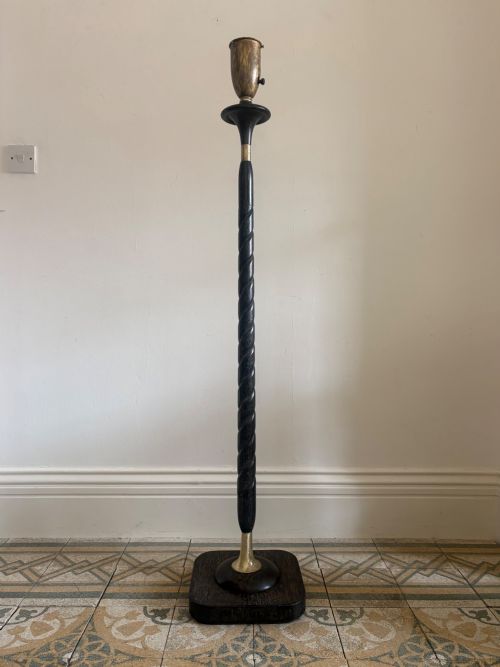
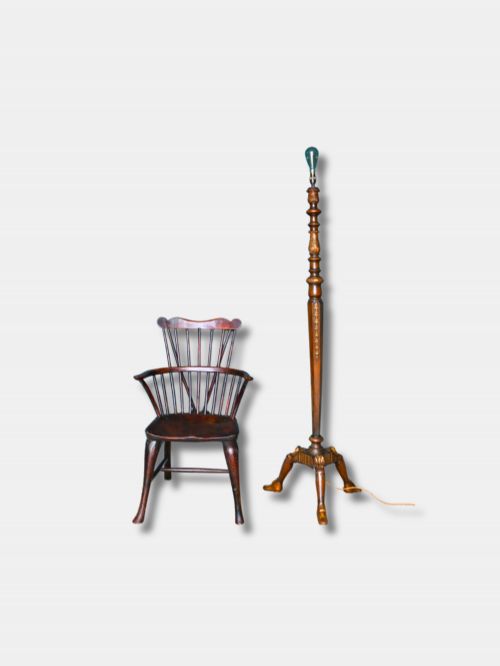
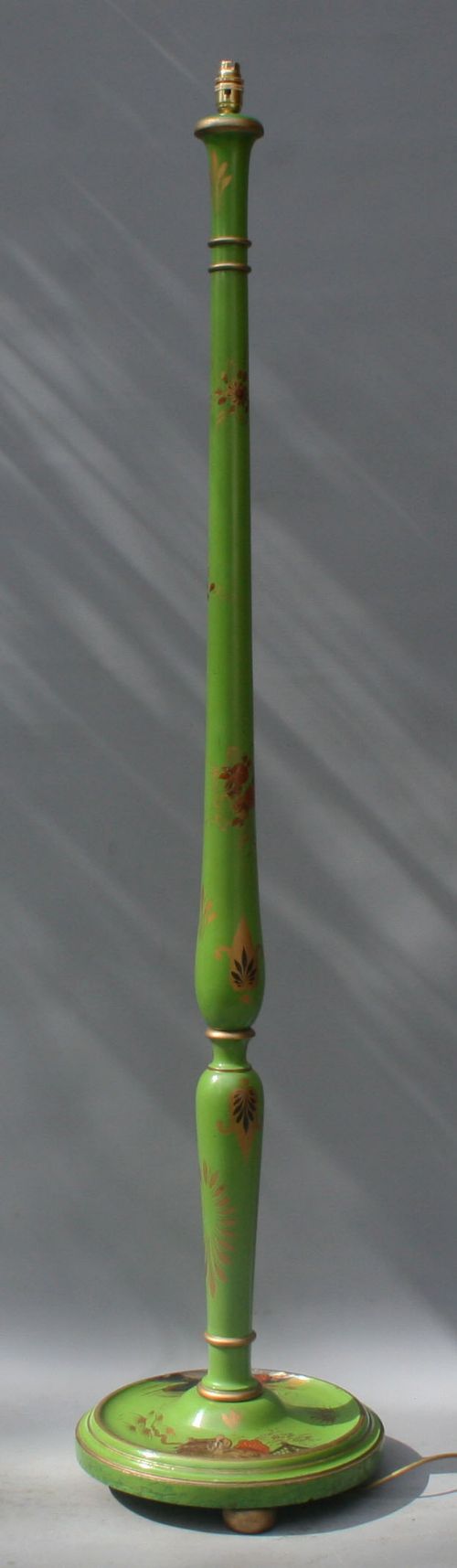
Makers and workshops of the era utilised diverse cultural influences, producing pieces styled with Chinoiserie decoration alongside traditional European motifs. Construction formats vary from simple tripod bases to substantial barley twist shafts.
How they were made
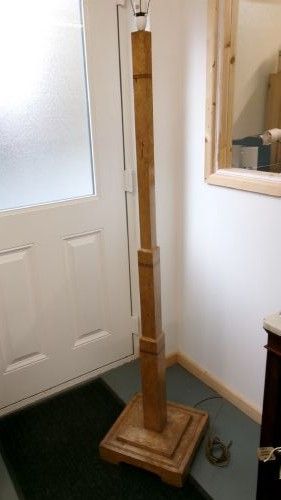
Carpenters and cabinet makers employed a variety of timbers including oak, walnut, blond walnut, padouk, ebonised wood, and giltwood. Carving and turning techniques created distinctive shafts like the barley twist, whilst lacquer and gilt finishes provided decorative surfaces.
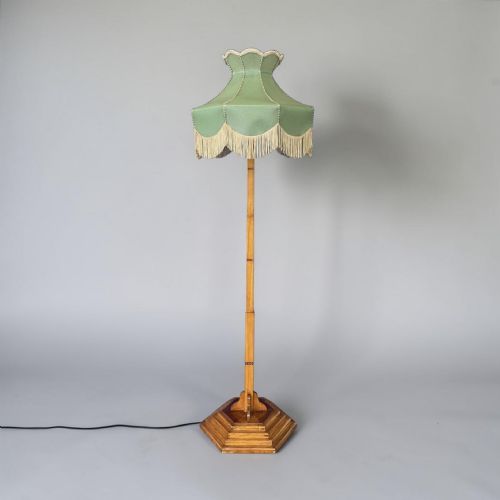
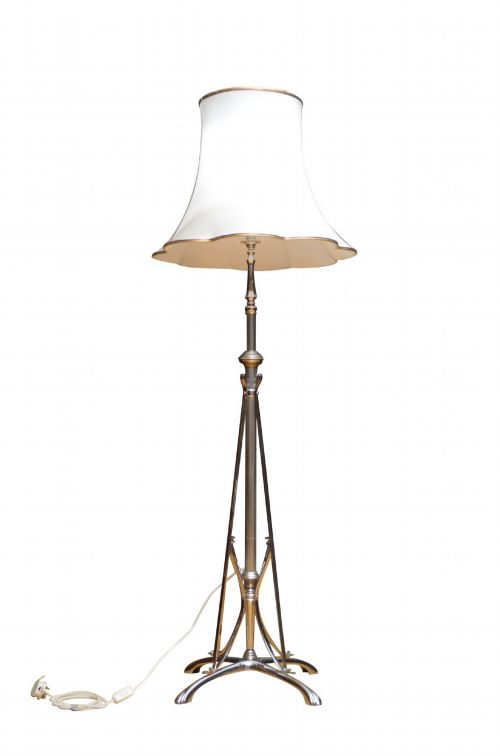
Metalworking introduced functional elements through brass and adjustable chrome structures. Fabric components completed the construction, typically integrated as fitted shades to diffuse the light from the upright standard.
1920s Standard Lamp Retail Price Guide 2026
Typical asking prices for 1920s standard lamp among the pieces listed under this phrase on Sellingantiques today, from the lower quarter to the upper quarter. They describe what is for sale here now, not the wider market.
Listings demonstrate a frequent use of oak and walnut, alongside brass, chrome, and decorative lacquer finishes.
What varies in quality
The distinction between standard examples and superior pieces rests upon the execution of the carving, the choice of timber, and the sophistication of the finish. Finely figured walnut, intricate hand-carved padouk, and detailed Chinoiserie lacquer distinguish the finer interpretations.
Mechanical complexity and material selection also define the range, where adjustable brass and chrome mechanisms or solid giltwood mouldings show greater craftsmanship than simpler turned wooden shafts.
The 1920s Standard Lamp Glossary
- Standard lamp
- A tall freestanding floor lamp designed to illuminate a room from a fixed upright position. These objects typically incorporate a weighted base and a tall central shaft.
- Barley twist
- A spiral turning technique resembling a twisted rope, carved into the wooden shaft of a lamp. This decorative motif appears frequently in period timber furniture and floor lamps.
- Chinoiserie
- European artistic interpretation of Chinese and East Asian decorative styles, often featuring hand-painted motifs and lacquer. Lamps utilising this style display distinctive pictorial decoration.
- Torchere
- A tall ornamental stand or floor lamp historically designed to hold a torch or candle. In the interwar period, this form evolved into standard lamps with vase-like decorative profiles.
- Uplighter
- A lighting configuration designed to cast illumination upward toward the ceiling rather than downward. These fittings provide indirect ambient light within a space.
1920s Standard Lamp: Frequently Asked Questions
How do I choose between wood and metal 1920s standard lamps?
Wooden standards in oak, walnut, or padouk offer traditional warmth and suit classic interiors through carved details or barley twist stems.
Metal examples in brass or adjustable chrome deliver a cleaner aesthetic suited to Art Deco schemes and functional spaces.
Where should I place a standard lamp in a room?
Standard lamps sit effectively beside armchairs, sofas, or in dark corners to provide adequate reading and ambient light.
Tall upright floor models frame seating areas well without consuming valuable surface space on tables.
What is the difference between an uplighter and a standard lamp?
A standard lamp typically diffuses light outward through a conventional shade to illuminate the surrounding space.
An uplighter directs its light source upward toward the ceiling, creating indirect ambient illumination.
How do I identify Art Deco standard lamps?
Art Deco standard lamps feature streamlined silhouettes, geometric forms, and modern materials such as chrome.
They contrast with revival styles by omitting traditional ornamental carving in favour of sleek architectural lines.