


Adjustable Brass Lamp
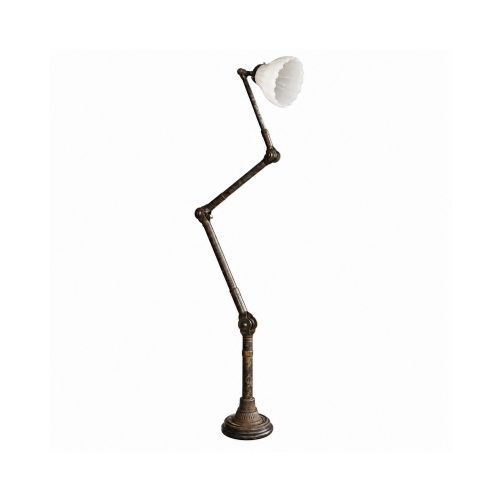
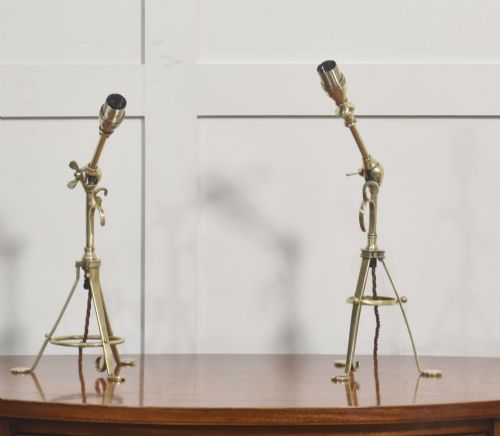
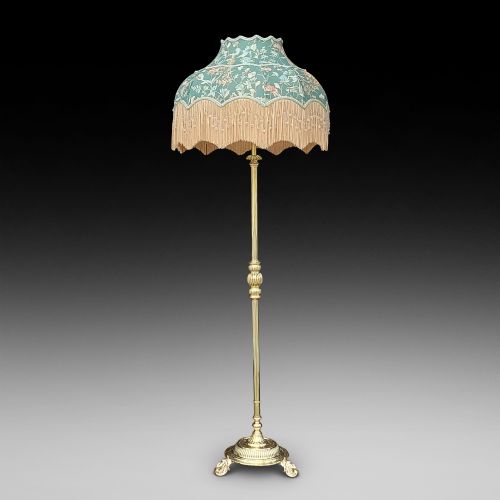
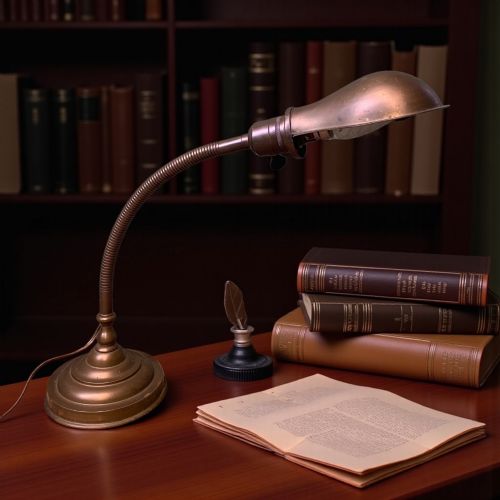
An adjustable brass lamp offers directional utility and period charm, spanning Victorian telescopic standards and Arts and Crafts desk lights.
Adjustable Brass Lamp
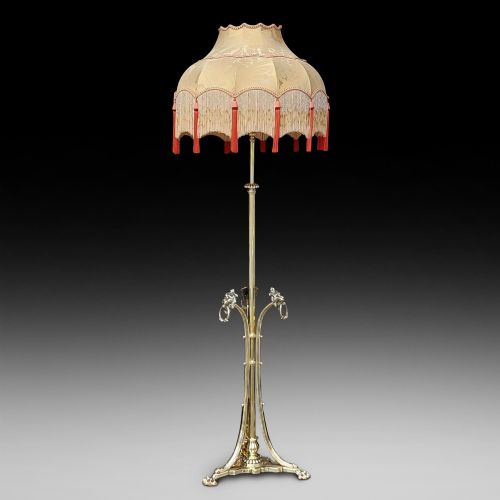
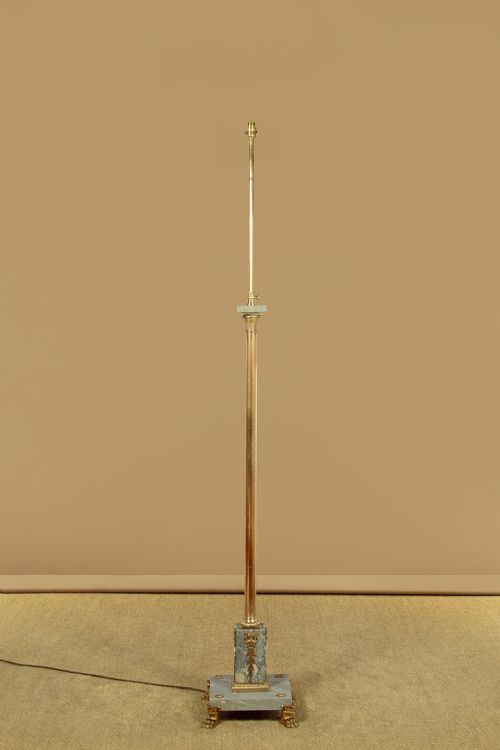
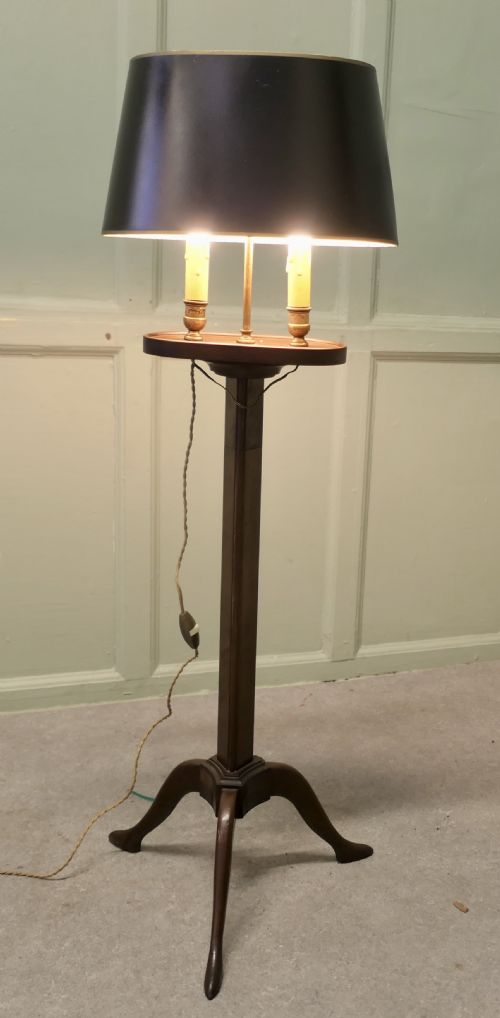
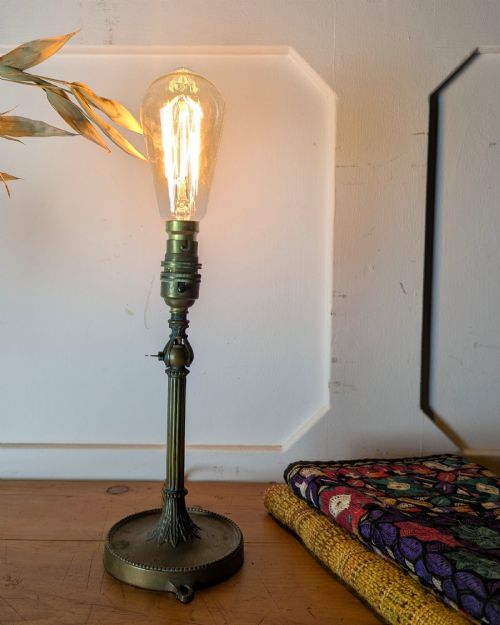
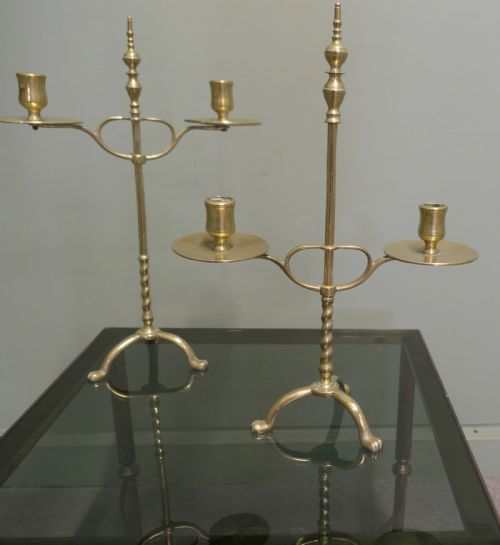
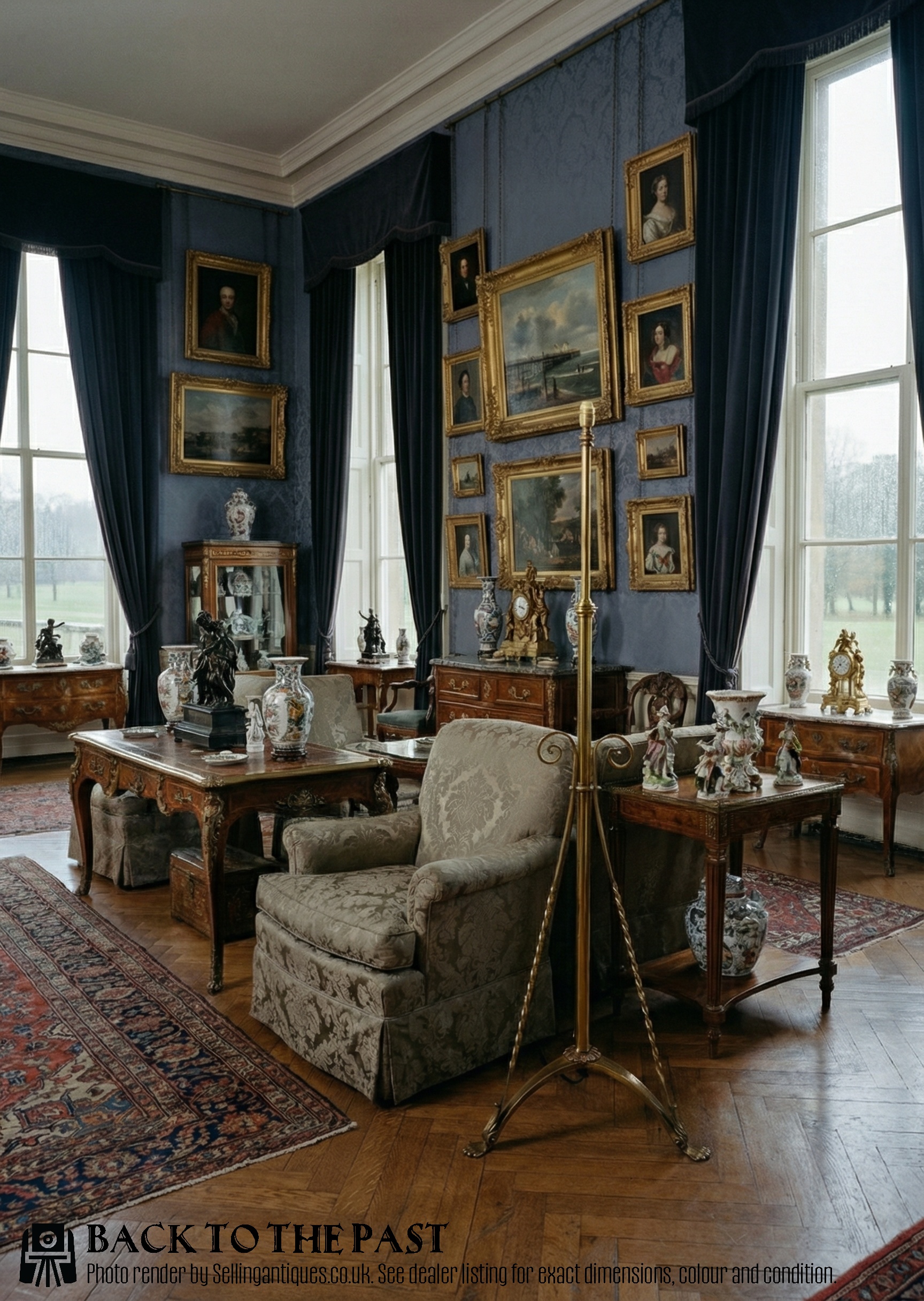
An adjustable brass lamp satisfies both task lighting and ambient illumination through height-altering stems, swivelling arms, and sliding mechanisms. The search phrase covers an array of forms, from weighty floor-standing standards to smaller desk and table models.
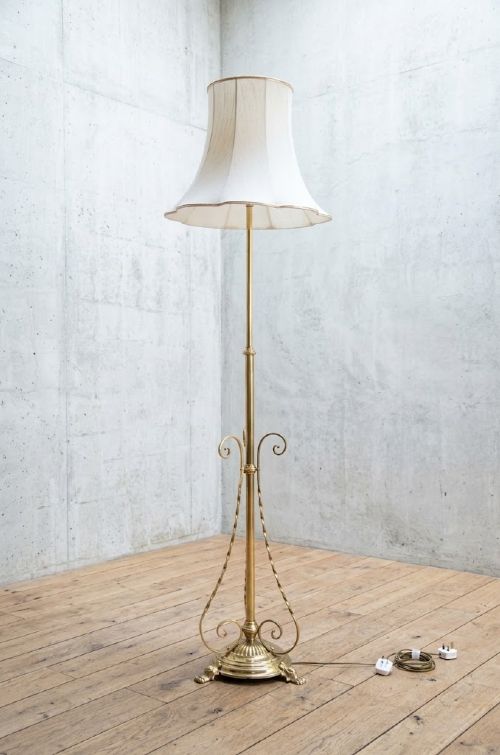
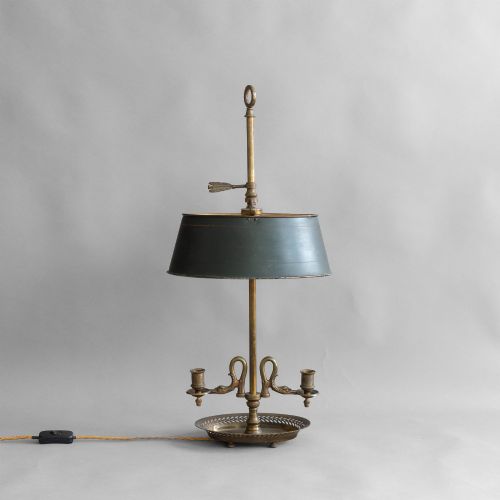
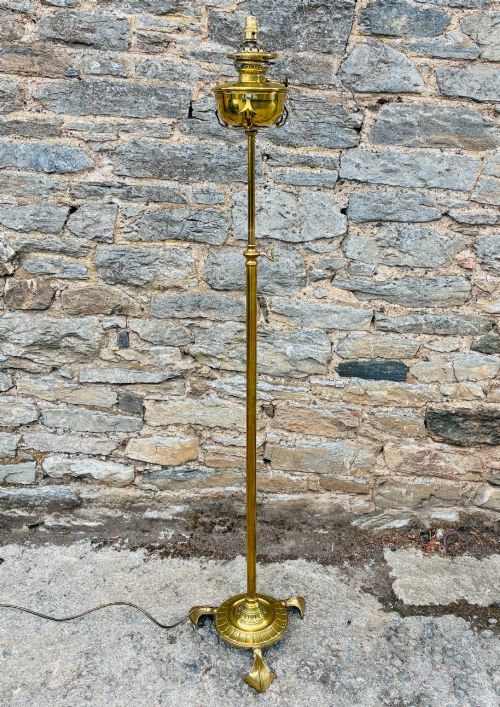
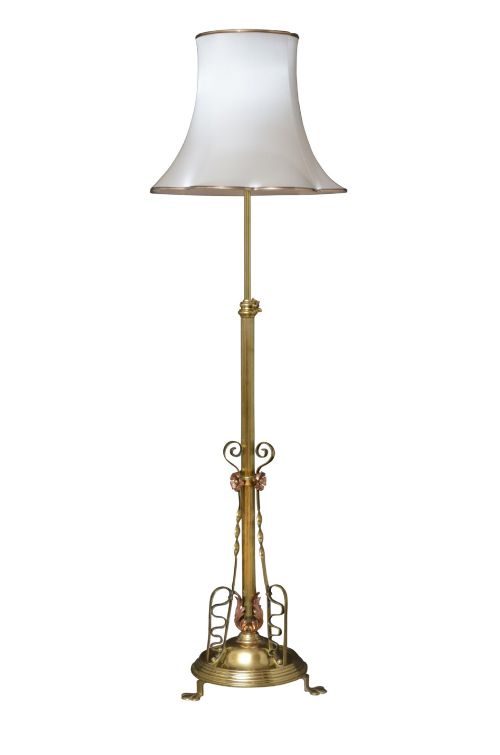
Victorian and Edwardian iterations dominate the selection, often taking the form of telescopic oil lamps or Corinthian columns originally fuelled by paraffin. Arts and Crafts examples, alongside French Empire and Art Nouveau pieces, introduce organic lines and mixed metal combinations.
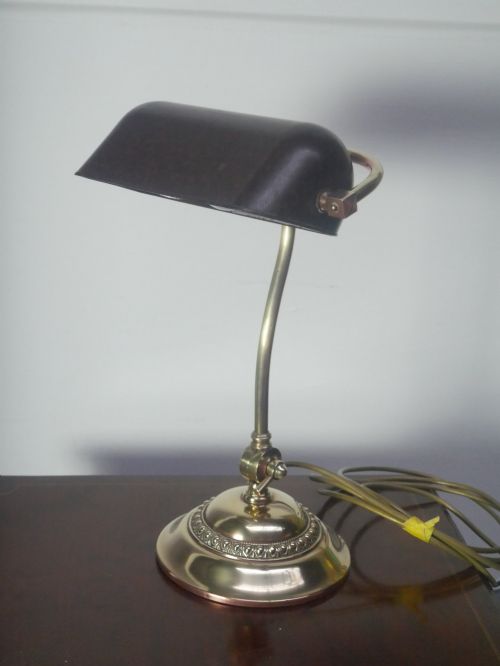
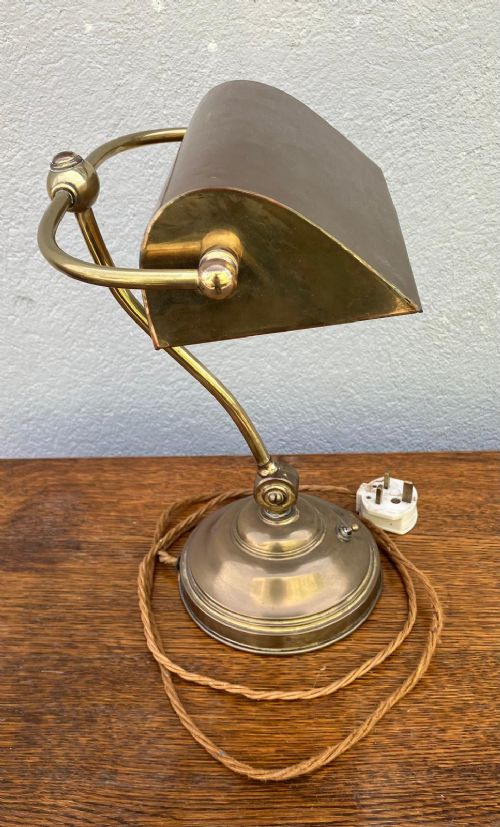
Floor lamps and standard lamps appear frequently alongside smaller student lights and bankers lamps designed for reading and writing. Many period pieces arrive with historical conversions to electricity, adapting older wiring safely for modern interiors.
Materials and Technique
Solid brass forms the primary structural foundation, frequently paired with copper, cast iron, steel, or bronze to create contrasting tones and weighted stability. Toleware shades, cranberry glass, and fabric elements complete the construction of surviving examples.
Makers utilised mechanical ingenuity such as rise-and-fall counterweights, sliding keys, and screw threads to achieve fluid height adjustment without slipping. Heavy cast bases provide the necessary counter-balance for tall telescopic floor standards and multi-arm brackets.
Adjustable Brass Lamp Retail Price Guide 2026
Typical asking prices for adjustable brass lamp among the pieces listed under this phrase on Sellingantiques today, from the lower quarter to the upper quarter. They describe what is for sale here now, not the wider market.
Early microscopic candle shades arrived safely packed in fitted wooden cases, ensuring travellers could examine specimens in the field.
Design and Execution
Quality reveals itself in the engineering of the moving parts, where smooth telescopic action and secure locking keys indicate superior workshop production. Finer examples retain crisply cast detailing along Corinthian capitals, weighted bases, and joints.
The choice of secondary materials marks out exceptional pieces, such as heavy hand-beaten copper rivets on Arts and Crafts models or intact original glass shades. Maker attributions and intact mechanical components elevate specific specimens above standard production pieces.
W.A.S. Benson·Faraday and Son·M Pillischer·Wild and Wessel·Hinks and Sons
The Adjustable Brass Lamp Glossary
- Telescopic
- A sliding tubular mechanism allowing the vertical height of a standard lamp to increase or decrease smoothly. This design often incorporates internal springs or friction collars to hold the stem at the desired level.
- Rise and fall
- A counterbalanced pulley or sliding mechanism that permits the light source to move vertically with minimal effort. Such systems appear frequently on oil lamps and ceiling pendants.
- Student lamp
- A utilitarian task light featuring a single burner or bulb, historically positioned to illuminate documents or desks. These pieces usually include adjustable shades to direct glare away from the eyes.
- Toleware
- Painted or lacquered sheet metal, commonly utilised for decorative lamp shades and oil reservoirs. It frequently appears in shades of green, black, or red with gilded border accents.
- Articulated
- Built with hinged or pivoting joints that permit flexible positioning of the arm or shade. This construction allows precise control over the angle of illumination.
Adjustable Brass Lamp: Frequently Asked Questions
How do telescopic lamps hold their height?
Internal friction mechanisms, sliding keys, or external thumbscrews secure the inner tube at the chosen elevation. Over decades, these parts maintain their grip through precise metal tolerances.
When adjusting an older standard, supporting the upper shaft prevents sudden drops that might strain the historical metalwork.
Were these lamps originally electric?
Many Victorian and Edwardian examples began life as oil or paraffin lamps before receiving later electrical conversions. Standard burners were replaced with wiring channels while retaining the original brass reservoirs and stems.
Signatures of conversion include adapted wick winders and hollowed burner assemblies that now accommodate modern lamp holders.
How do I care for antique brass?
Gentle dusting with a soft dry cloth preserves the aged patina that accumulates over generations of handling. Harsh chemical polishes strip away historical character and thin the outer metal layers.
Allowing the brass to age naturally maintains the depth of colour valued by collectors of period metalwork.
How do I distinguish Arts and Crafts examples?
Arts and Crafts pieces emphasise visible hand-craftsmanship, featuring hammered surfaces, exposed rivets, and simple geometric lines. Copper highlights frequently contrast with the warm golden tone of the brass.
Makers from this movement prioritised functional honesty over excessive neoclassical ornamentation, resulting in robust and purposeful designs.