



Art Nouveau Floor Lamp
These art nouveau floor lamp examples bring fluid organic lines and warm metallic tones directly into a room.
Art Nouveau Floor Lamp
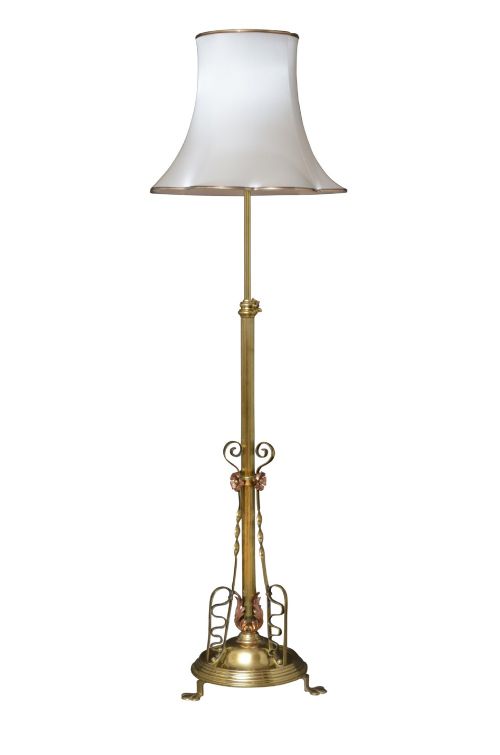
An art nouveau floor lamp offers tall illumination designed with the sinuous, nature-inspired motifs characteristic of the movement. These pieces appear frequently as standard lamps or floor standing reading lamps originating from the Victorian, Edwardian, and early twentieth century periods.
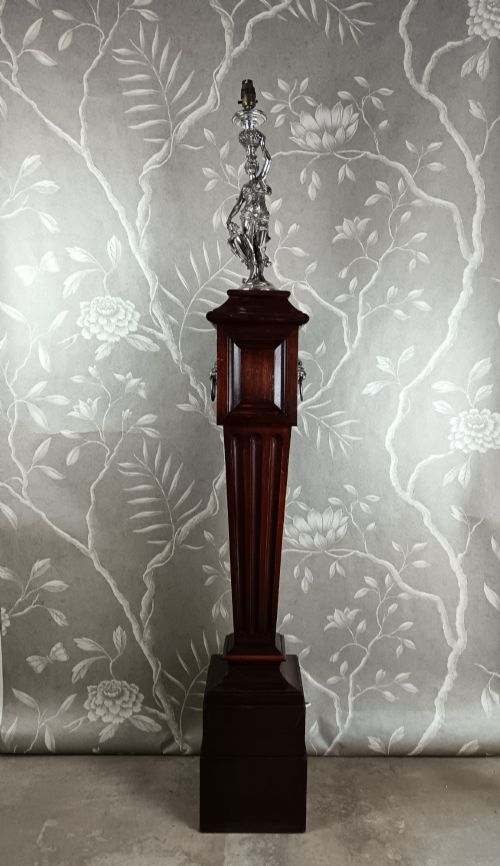
Makers utilised durable metals and mixed alloys to create both slender shafts and sturdy pedestals. Examples range from simple brass uprights to adjustable designs and figural pedestals featuring bronze or ironwork.
How they were made
Construction relies heavily on brass and copper, frequently combined with iron or silver plate to build the tall standards. Metalworking techniques allowed for height adjustment and the incorporation of detailed figural statues or organic motifs like water lilies.
Shades and wiring integrated fabric, thread, and glass elements to diffuse light effectively. These materials were worked within the stylistic traditions of Jugendstil, Belle Epoque, and Edwardian design.
Art Nouveau Floor Lamp Retail Price Guide 2026
Typical asking prices for art nouveau floor lamp among the pieces listed under this phrase on Sellingantiques today, from the lower quarter to the upper quarter. They describe what is for sale here now, not the wider market.
Some models feature cast herons and water lilies, proving that Victorian engineers wanted wading birds indoors.
What varies in quality
Quality depends on the complexity of the metalwork and the integration of decorative elements such as figural statues or mixed copper components. Heavier cast iron or substantial brass bases provide better stability than lighter alternatives.
The sophistication of the period styling, whether simple brass standards or elaborate designs featuring herons and water lilies, dictates the character of the piece. Adjustment mechanisms and marked metal elements also contribute to the distinction between simpler standards and more elaborate constructions.
WMF
The Art Nouveau Floor Lamp Glossary
- Standard Lamp
- A term frequently used interchangeably with floor lamp, denoting a tall freestanding light fitting designed to illuminate a room from floor level. These tall fixtures support various shade styles and burner mechanisms.
- Jugendstil
- The continental European manifestation of the art nouveau movement, prominent in German-speaking regions. This aesthetic emphasises stylized natural forms and flowing linear designs.
- Belle Epoque
- A period of optimism and artistic innovation in France spanning the late nineteenth century up to the First World War. Design from this era often leans towards decorative elegance and refined metallic finishes.
- Torchere
- A tall ornamental stand or floor lamp designed to hold a light source high above the ground. Antique versions often incorporate figural statues or heavy pedestals.
Art Nouveau Floor Lamp: Frequently Asked Questions
What is an art nouveau floor lamp?
An art nouveau floor lamp is a tall lighting fixture designed during the late nineteenth or early twentieth century featuring organic, flowing motifs. These pieces typically stand on metal bases made of brass, copper, or iron.
They serve as both functional illumination and sculptural elements within a room, often taking the form of standard lamps or adjustable reading lights.
How do I date these floor lamps?
Dating relies on examining the materials, construction methods, and stylistic markers such as Victorian or Edwardian design traits. Records show examples span the nineteenth century through to the early twentieth century.
Maker marks, such as those from WMF, or specific terms like Jugendstil and Belle Epoque help narrow down the period of origin.
Were these lamps used for oil or electricity?
Many early examples functioned originally as oil lamps, as indicated by descriptions referencing steamer oil lamps and standard reading lamps. Over time, numerous pieces were converted to accommodate electrical wiring.
This evolution means current examples often combine period metalwork with modern or updated electrical components.
How do I style a floor lamp in a room?
These tall fixtures suit spaces where you want to introduce warm metallic tones from brass and copper alongside organic forms. Their height makes them practical for corners or beside seating areas where ambient light is needed.
Pairing them with appropriate fabric or glass shades helps integrate their distinct period character into existing interiors.