


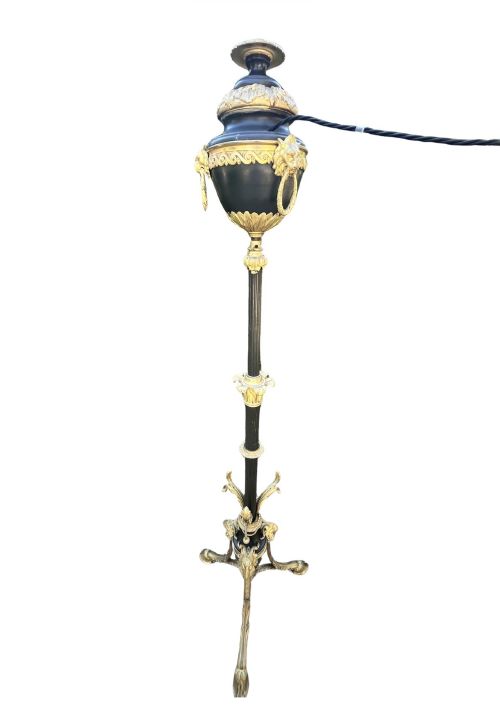
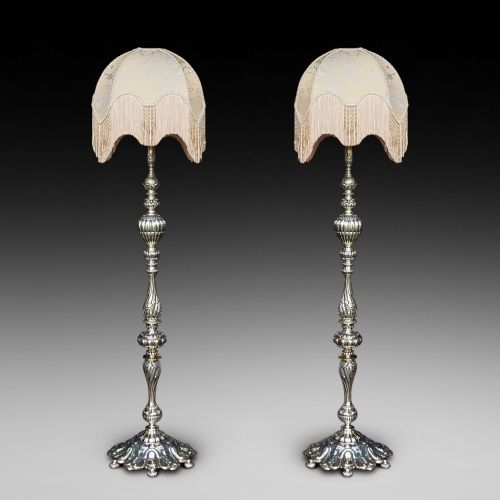
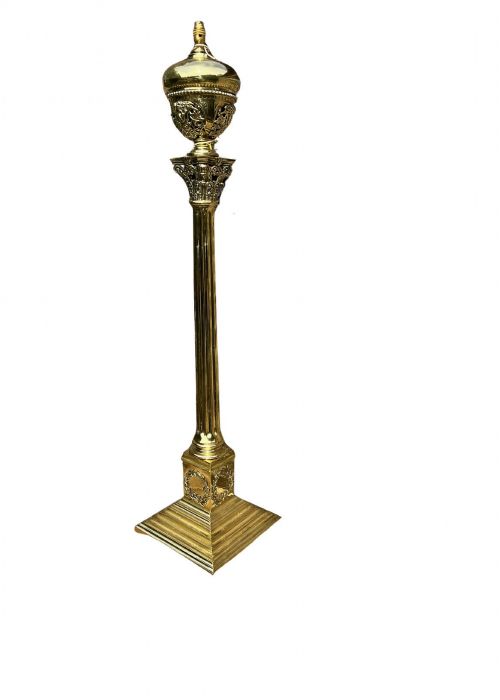


Ornate Brass Standing Lamp
These ornate brass standing lamps bring height, weight and warm metal tones to a room.
Identifying an ornate brass standing lamp
An ornate brass standing lamp is a tall lighting fixture designed to illuminate a room from floor level, utilising substantial metal shafts and decorative bases. When searching for an ornate brass standing lamp, buyers encounter pieces spanning the Victorian, Edwardian, and 19th-century periods, alongside specific 1920s examples. These pieces frequently appear in distinct regional or stylistic forms, such as French Chateau, Belle Epoque, and Art Nouveau designs.
The standard lamps and floor lamps listed on this page showcase the variety of heights and structural profiles typical of these eras. Many incorporate functional adjustments or multi-material compositions that set them apart from simple household lighting. Buyers most frequently meet heavy cast brass or bronze columns, often paired with decorative elements like marble and onyx plinths.
Materials and construction
Makers utilised solid brass, cast brass, and bronze to construct the primary weight-bearing shafts and decorative bases of these standing lamps. Metal components were cast, turned, and assembled using traditional engineering methods appropriate to the nineteenth and early twentieth centuries. Surface detailing often relied on intricate chasing and relief work cast directly into the metal.
Secondary materials such as marble, onyx, glass beads, and fabric shades complete the construction of these pieces. Bases frequently feature heavy stone plinths to provide stability for the tall upright standards. Fabric and beadwork appear on the upper sections or shades, adding texture and colour to the overall design.
Retail Price Guide 2026
Typical UK retail prices for ornate brass standing lamp, calculated from the Sellingantiques database of over a million retail prices indexed since 2003. This retail price guide relies exclusively on Sellingantiques data; no external sources or auction records are used, so the figures do not describe the wider market.
Recorded styles on this page range from Victorian and Edwardian to Art Nouveau, French Chateau, and Belle Epoque.
Assessing quality
Quality in these standing lamps rests upon the weight of the metal casting and the crispness of the decorative detail. Heavier cast brass and bronze components indicate superior material substance, whereas lighter assemblies lack the same physical presence and stability. The sharpness of chased ornamentation reveals the skill involved in finishing the metalwork by hand.
The integration of secondary materials like marble or onyx also defines the upper end of the range. Tighter joints, thoughtful proportion between the heavy base and the tall shaft, and functional mechanical adjustments demonstrate careful workshop execution. Pieces with complex stylistic traits, such as Art Nouveau curves or Belle Epoque casting, require greater technical mastery from the maker.
Messenger
The Ornate Brass Standing Lamp Glossary
- Standard Lamp
- A tall lighting fixture designed to stand directly on the floor, often synonymous with a floor lamp. These pieces provide ambient illumination at a higher level than table lamps.
- Cast Brass
- An alloy of copper and zinc poured into a mould to create solid, highly detailed decorative components. This technique allows for complex ornamentation along the lamp shaft and base.
- Onyx
- A banded variety of chalcedony quartz utilised for decorative plinths and column sections on standing lamps. Its natural veining adds contrasting colour and weight to the metal structure.
- Belle Epoque
- A period of French and European culture lasting from the late nineteenth century until the First World War. Objects from this era often display ornate, decorative aesthetics and sophisticated craftsmanship.
Frequently Asked Questions
What is a standard lamp?
A standard lamp is simply a tall lighting fixture designed to stand directly on the floor rather than resting on a piece of furniture. These fixtures became popular in the Victorian and Edwardian periods as interior gas and electric lighting evolved.
They serve both practical and decorative purposes in a room, providing elevated illumination while functioning as large sculptural objects. The listings here include standard lamps in various historical styles.
How were these lamps used?
These tall floor lamps provided localized illumination for reading, writing, or sewing in large Victorian and Edwardian drawing rooms. Placed beside seating areas, they allowed light to be cast downward from a height.
Their substantial weight and decorative bases meant they remained stable while standing free on carpets or wooden floorboards. Today, they serve a similar ambient function in traditional and eclectic interiors.
How do I date a brass lamp?
Dating a brass standing lamp involves examining the casting techniques, the style of the base, and the integration of materials like marble or onyx. Victorian and 19th-century examples often feature heavy cast brass with distinct period ornamentation.
Later pieces from the 1920s or the Edwardian Belle Epoque era show shifts in decorative vocabulary, such as Art Nouveau curves. Comparing the construction methods against known historical periods helps narrow down the origin.
What materials are used?
These standing lamps are primarily constructed from brass, cast brass, and bronze. These metals provide the structural strength and weight needed for a tall freestanding column.
Many examples incorporate secondary materials such as marble or onyx in the bases, alongside glass beads and fabric on the upper sections. Each material contributes to the overall weight and decorative character of the piece.