

Gold Standard Lamp
A gold standard lamp is a tall floor-standing lighting piece designed to illuminate a room from a raised height, bringing height and period character to an interior.
What a gold standard lamp is
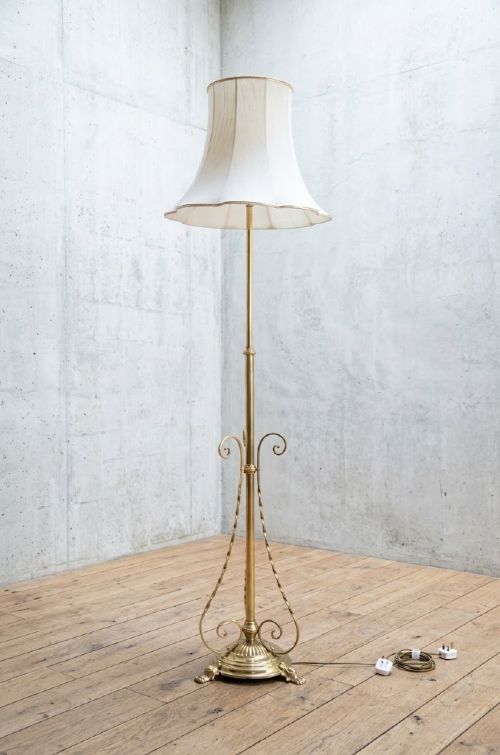
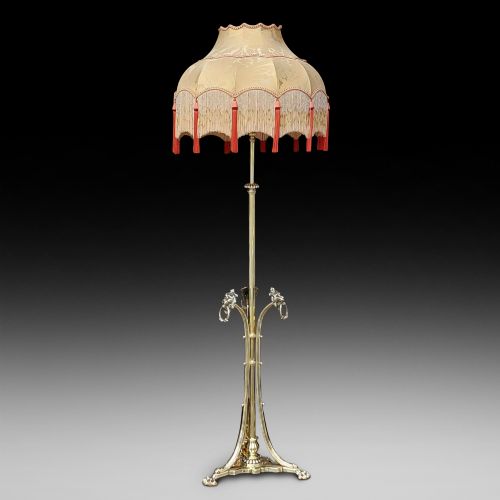
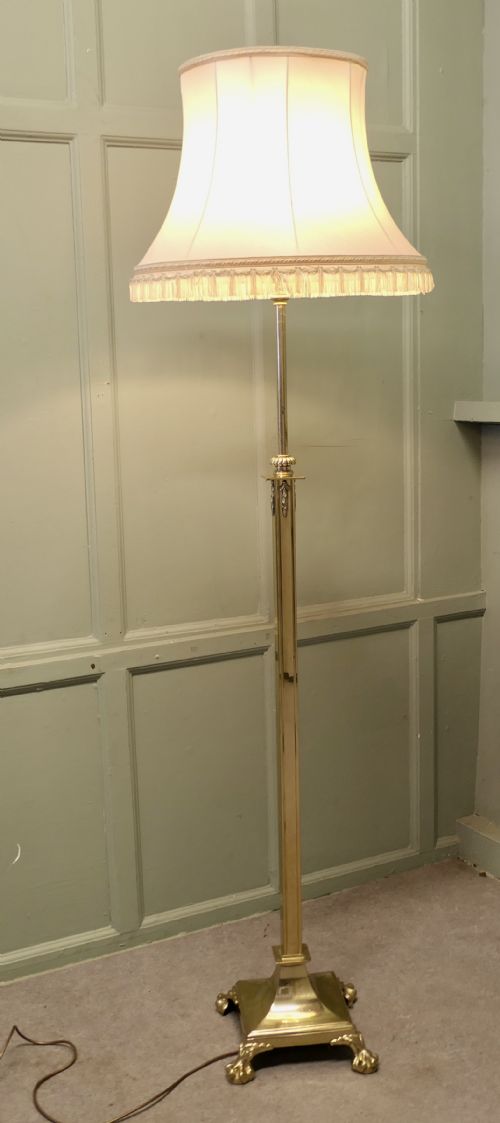
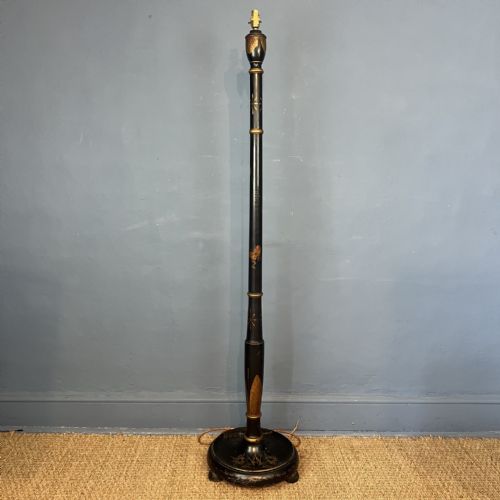
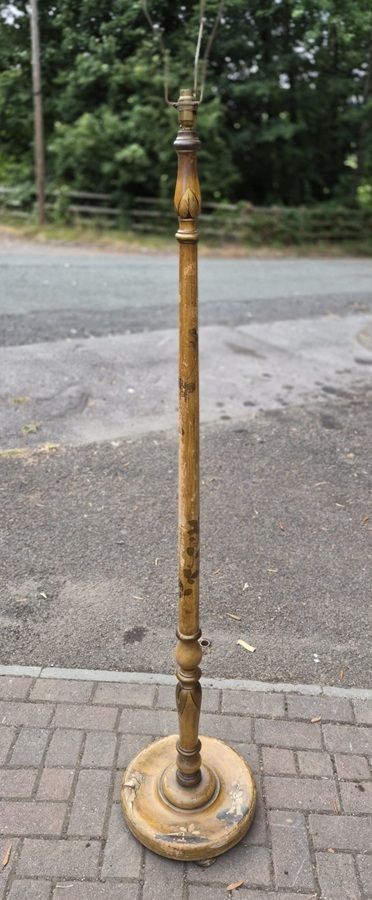
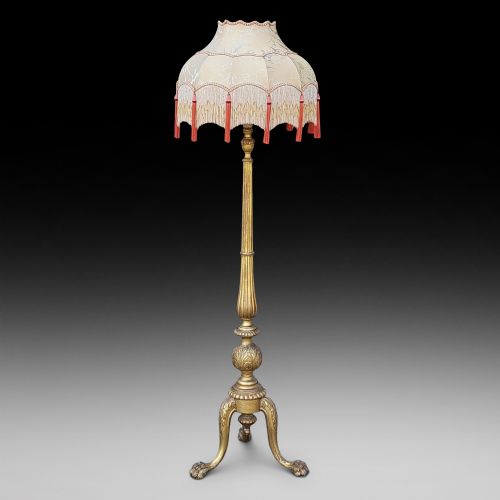
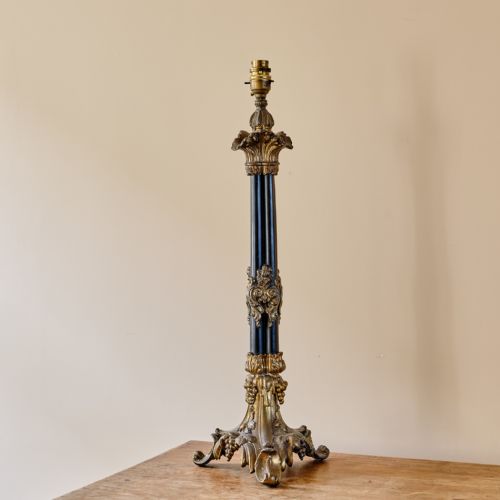
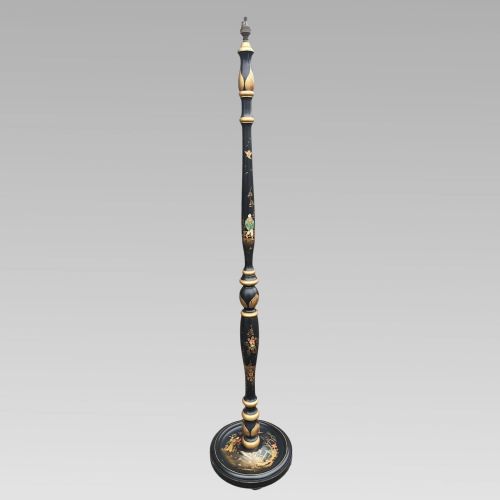
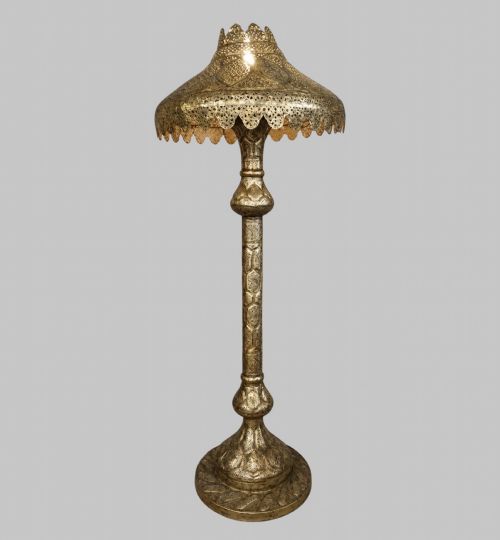
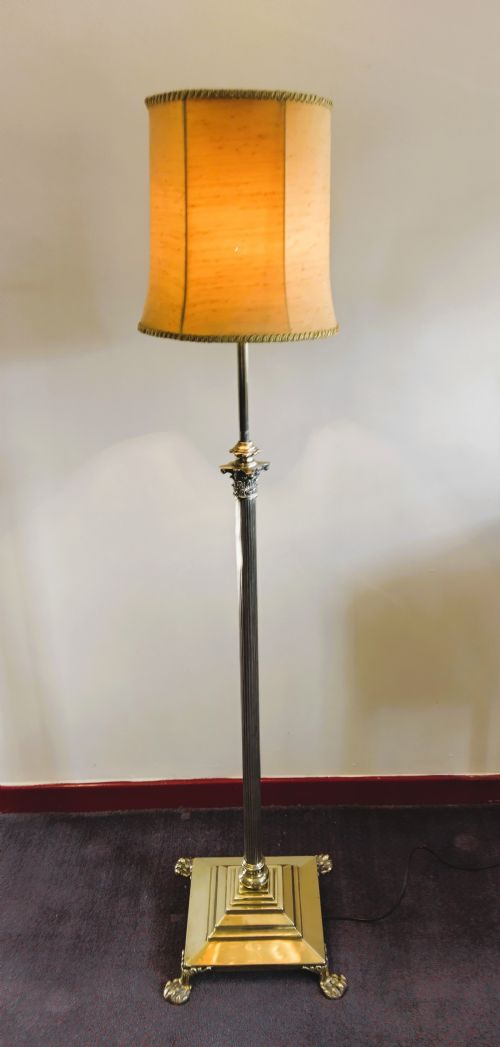
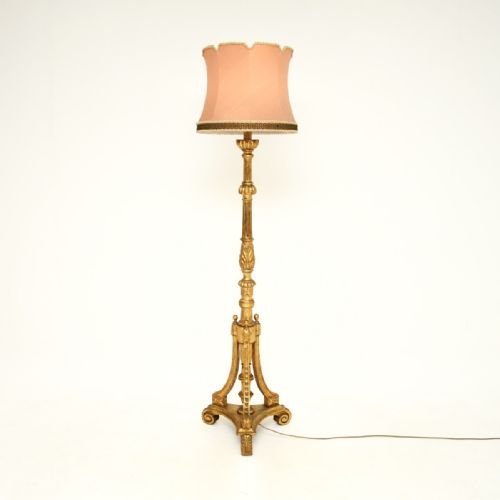
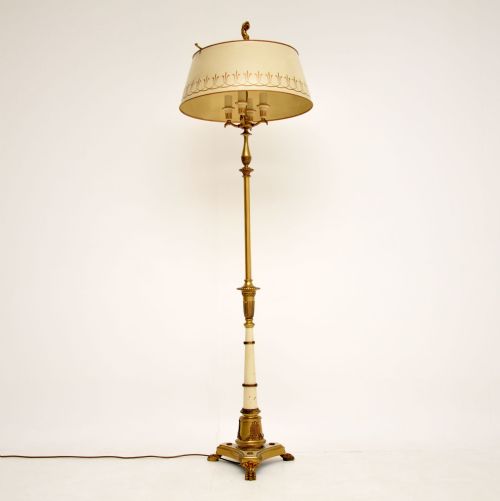
A gold standard lamp is a tall lighting fixture designed to stand on the floor, bringing illumination and height to a room. Buyers searching this phrase encounter pieces spanning the Victorian era, the nineteenth century, the nineteen-twenties, and the nineteen-thirties.
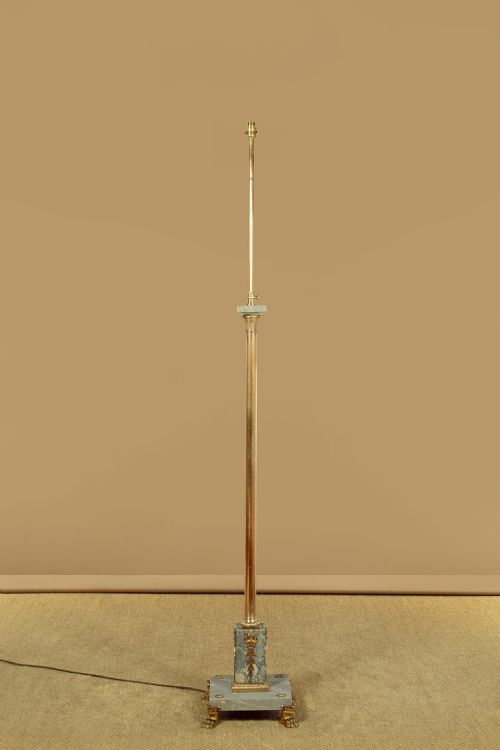
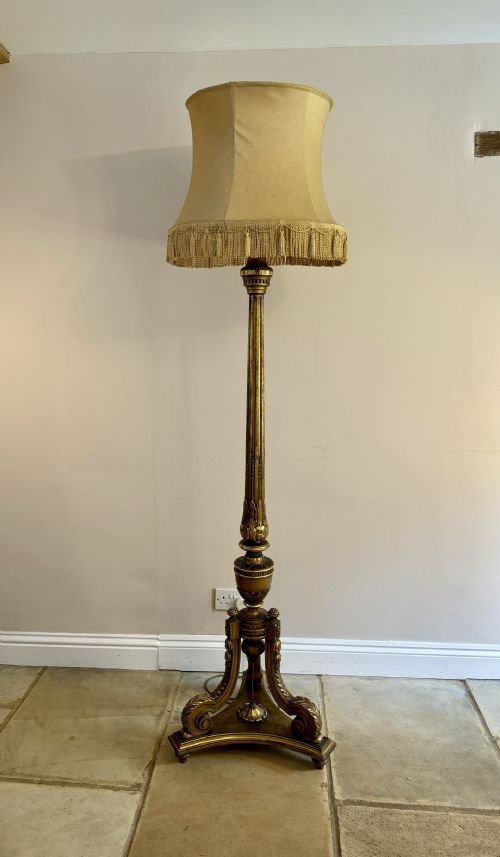
The forms on show include telescopic designs, Corinthian columns, and carved floor lamp shapes. Materials range from brass and cast brass to giltwood, gesso, fabric, marble, and golden oak.
The styles recorded in the inventory cover Victorian, Neoclassical Revival, French Chateau, nineteen-twenties Art Deco, Neoclassical, and French Classical. Converted oil lamps also appear alongside dedicated electric standards.
How they were made
Makers constructed these floor lamps using metals such as brass, cast brass, and gilded wood, alongside timber like golden oak and black lacquer. Gesso was applied to wooden surfaces to provide a smooth base for gilding.
Telescopic mechanisms allowed columns to extend upwards, while carving and column designs reflected Neoclassical, French Chateau, and Art Deco aesthetic influences. Shades of fabric completed the structures.
Retail Price Guide 2026
Typical UK retail prices for gold standard lamp, calculated from the Sellingantiques database of over a million retail prices indexed since 2003. This retail price guide relies exclusively on Sellingantiques data; no external sources or auction records are used, so the figures do not describe the wider market.
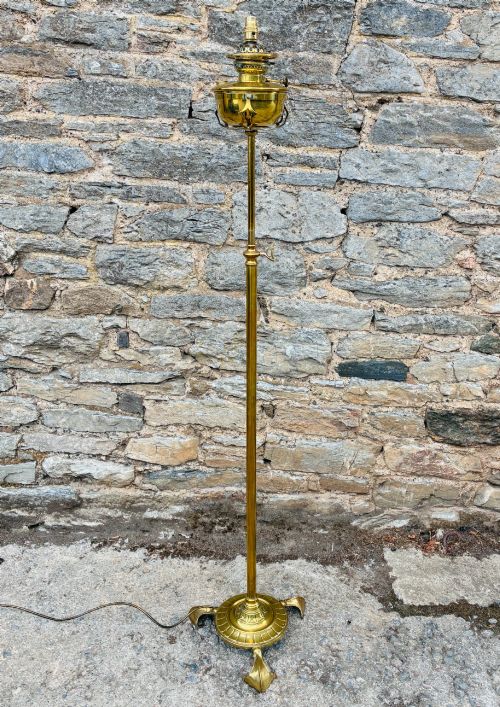
Some Victorian oil lamps lost their burners long ago, only to find a bright second act holding up an electric bulb.
What varies in quality
Quality separates plain utility standards from pieces with sculptural ambition through the depth of carving and the fineness of the metalwork. A carved gilded floor lamp or a Corinthian column standard displays more intricate detailing than a simple wooden shaft.
The choice of materials also marks the tier of a piece, with solid cast brass and giltwood sitting apart from simpler timber constructions. Telescopic mechanisms that function smoothly and retain their stability at height indicate superior manufacture.
The Gold Standard Lamp Glossary
- Telescopic
- A design feature allowing the vertical shaft of a lamp to extend or retract. This mechanism enabled the height of the light source to be adjusted.
- Corinthian Column
- A classical architectural column form utilised for lamp shafts, featuring ornate capitals decorated with acanthus leaves. This style reflects Neoclassical taste.
- Giltwood
- Timber that has been coated with a thin layer of gold leaf or gilt. It provides a bright, reflective surface favoured in French Classical and Victorian interiors.
- Cast Brass
- Metal formed by pouring molten brass into a mould rather than hammering or spinning it. This technique permitted decorative relief details on the lamp base and column.
Frequently Asked Questions
What is a standard lamp?
A standard lamp is a tall, freestanding floor lamp designed to hold a lightbulb and shade at an elevated position. They provide ambient room lighting without needing table surfaces.
These pieces typically feature a heavy base for stability, a vertical column, and a fitting at the top for a shade. They have served as primary room lights since the Victorian period.
How do I date a brass standard lamp?
Dating relies on examining the construction methods, column styles, and base designs. Victorian examples often utilise Corinthian column capitals or telescopic mechanisms.
Later pieces from the nineteen-twenties and nineteen-thirties introduce Art Deco geometric lines or golden oak construction. Converted oil lamps indicate an origin in the nineteenth century before electricity became standard.
Are these lamps all electric?
Many surviving examples were originally constructed for oil before being converted to electricity at a later date. Dedicated electric standards also appear from the early twentieth century onwards.
Conversions often retain the original telescopic brass columns used for adjusting the wick height. This allows older mechanisms to find a new purpose with modern wiring.
Where should I place a floor lamp?
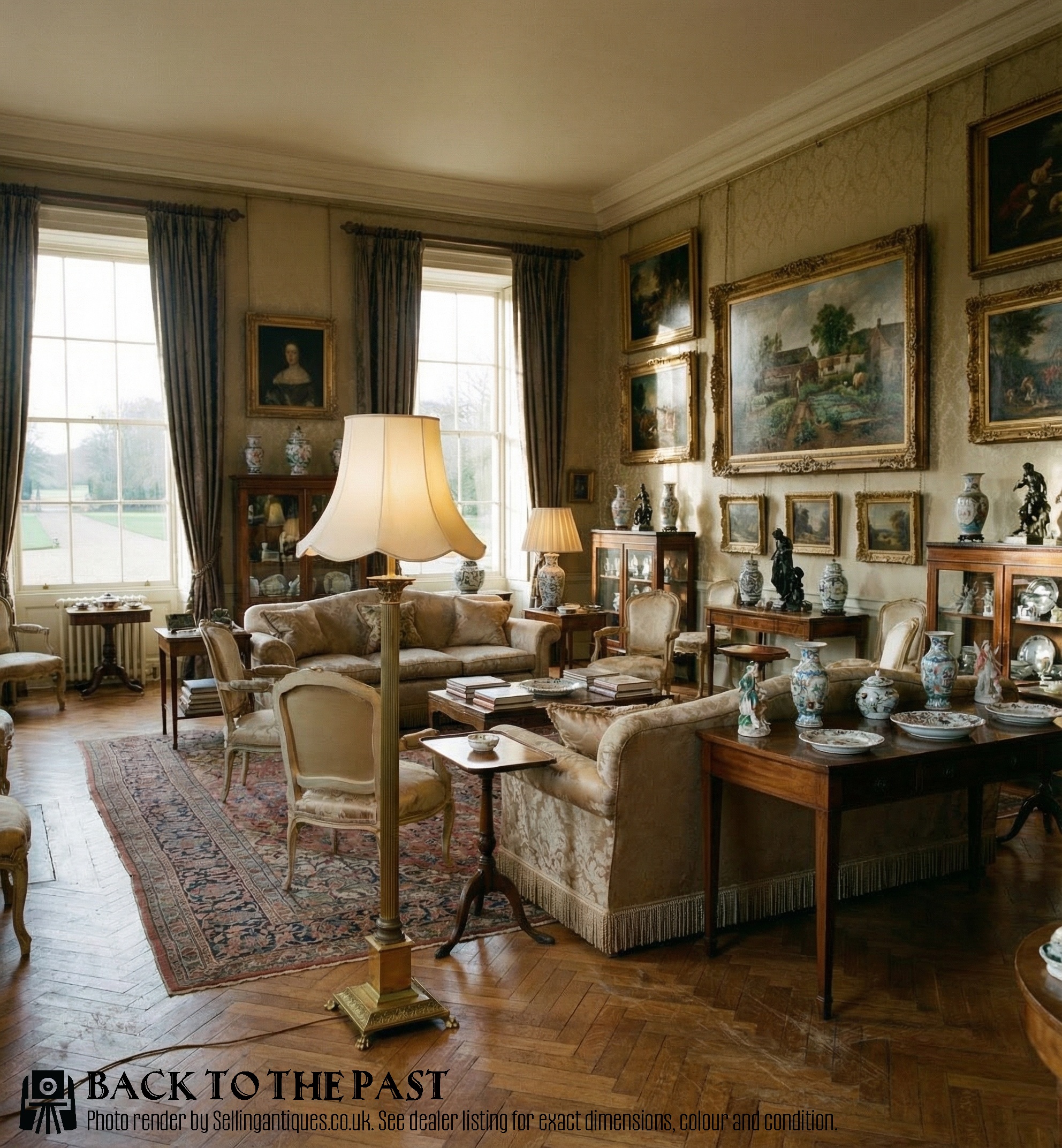
Floor lamps suit corners, reading areas, and spaces beside seating where overhead light is insufficient. Their height allows them to illuminate a wider radius.
Telescopic models offer the flexibility to alter the height depending on the surrounding furniture and ceiling clearance. Taller pieces command attention as decorative vertical accents in a room.