
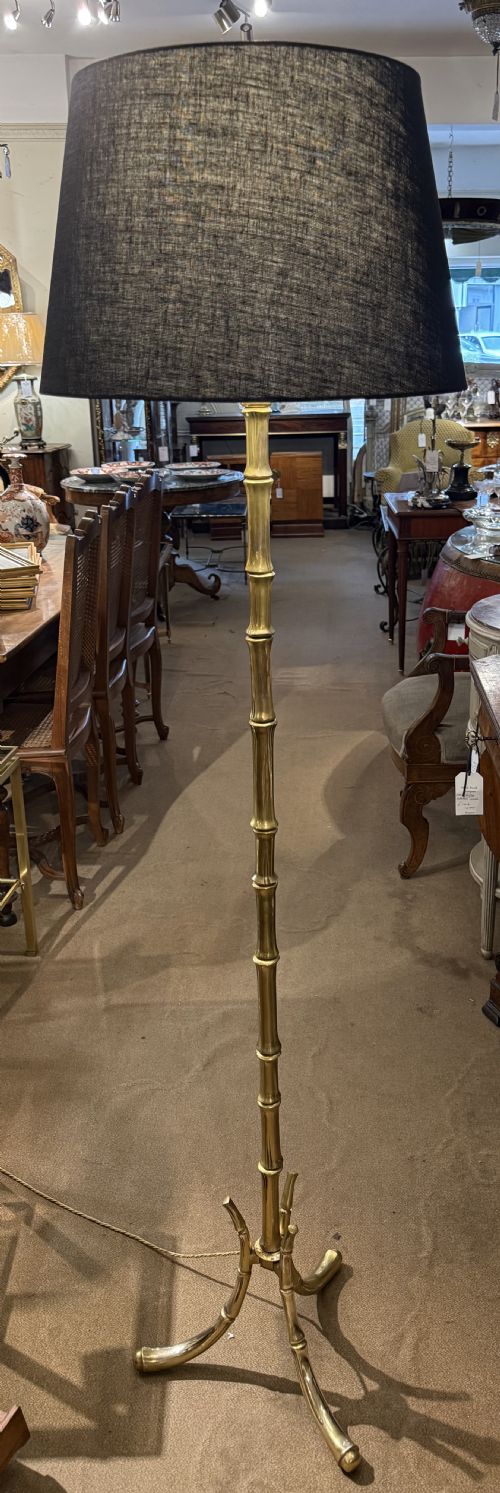
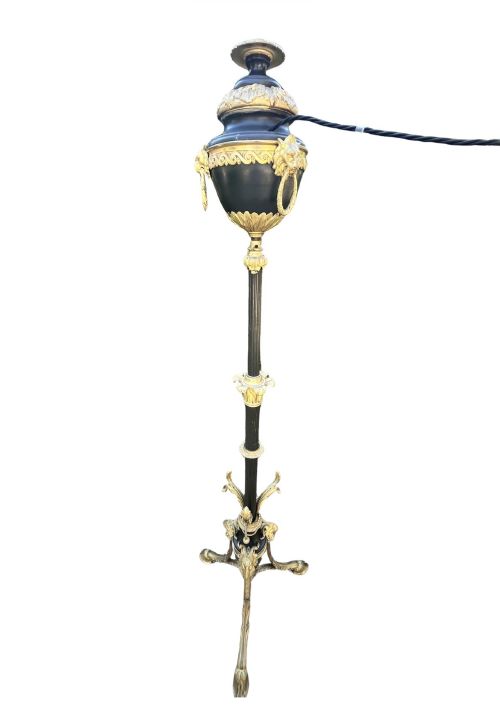
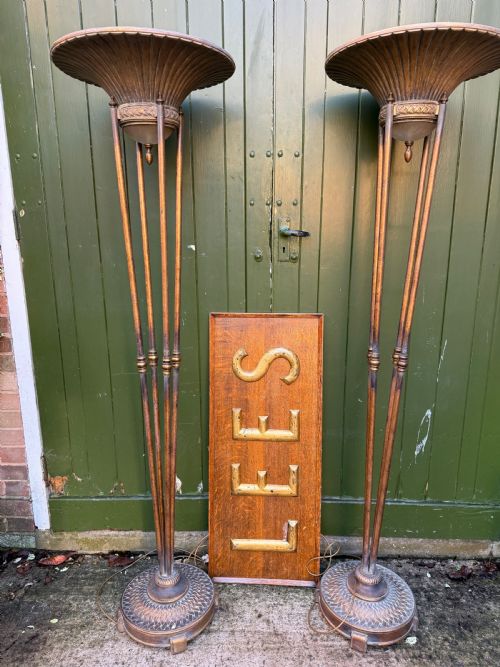


Gilt Brass Floor Lamp
A gilt brass floor lamp brings architectural presence and warm illumination to a room, drawing the eye with its polished metallic finish.
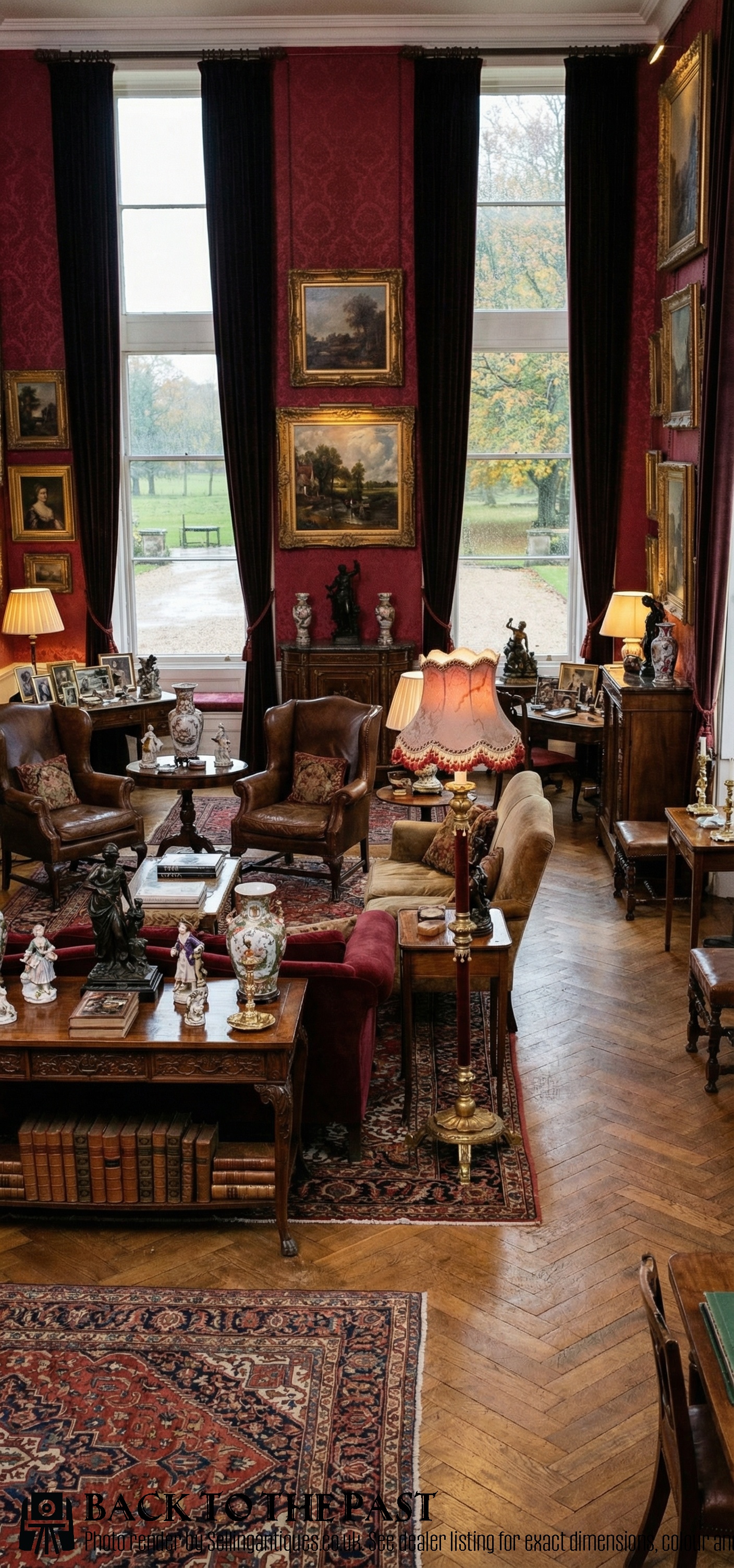
Gilt Brass Floor Lamp
A gilt brass floor lamp stands as a vertical lighting fixture designed to illuminate interior spaces from floor level. These pieces combine functional illumination with decorative metalwork across various historical periods.
Buyers encountering this page are most likely to meet standard lamps and floor lamps dating from the nineteenth century up through the nineteen-thirties. Forms range from simple adjustable standards to elaborate twin-arm lighting fixtures.
Origin styles vary widely, encompassing Victorian, Neoclassical, Italianate Baroque, Louis XVI style, and Arts & Crafts designs. Materials frequently incorporate brass, gilt bronze, patinated bronze, and fabric shades.
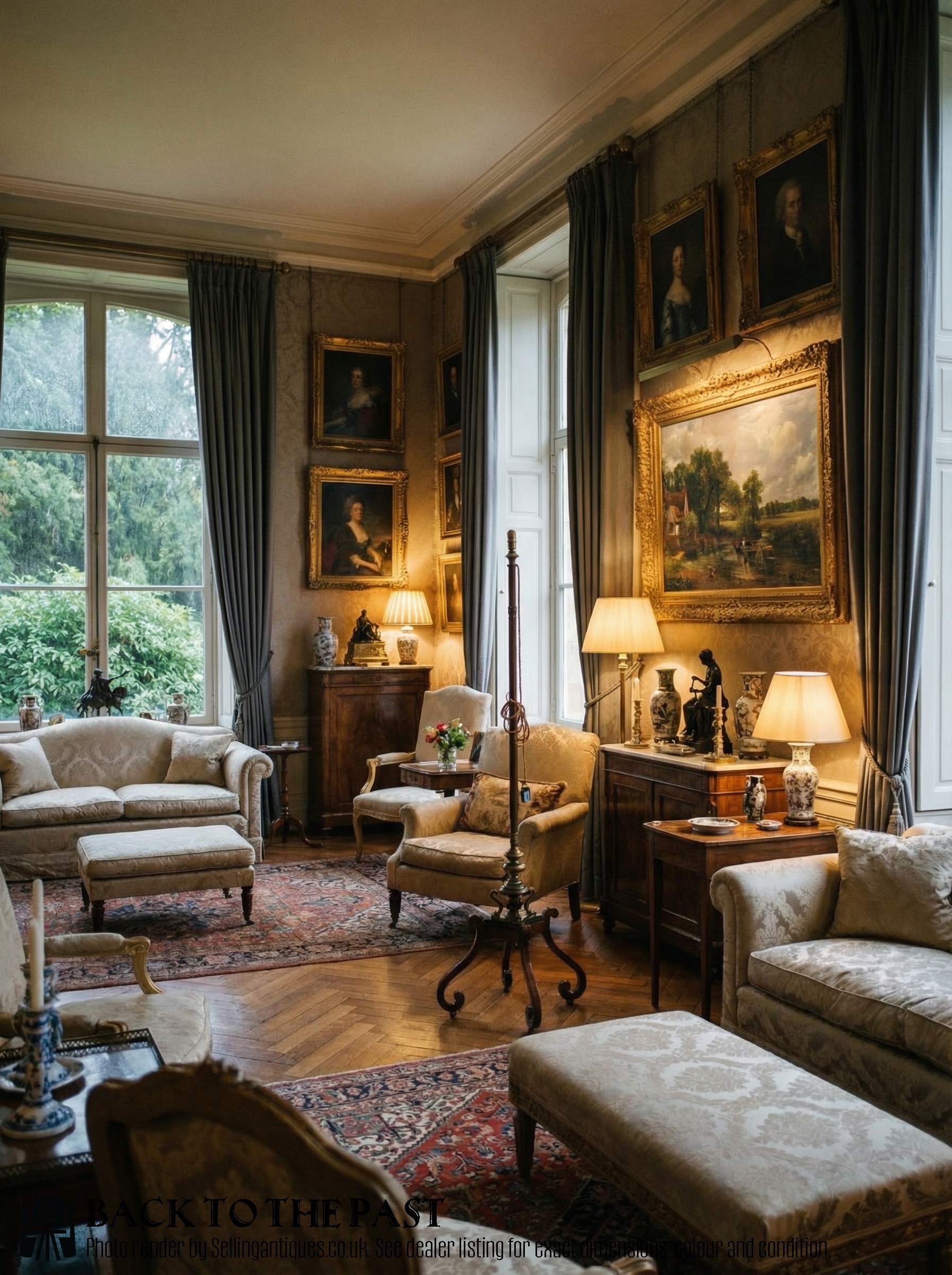
How they were made
Makers utilised cast metal, gilt bronze, and brass to form the structural uprights and weighted bases of these floor lamps. Techniques often involved detailed metal casting, hand-chasing, and the application of surface gilding or ormolu finishes.
Many examples integrate adjustable mechanisms, pole screen conversions, or multi-branch configurations requiring precise metalworking skills. Fabric elements and velvet components were subsequently added to complete the shade assemblies.
Some uprights began life blocking parlour hearth heat before clever hands turned them into reading lights.
What varies in quality
Quality separates through the crispness of the cast metal ornamentation and the depth of the original gilding on the brass surface. Finer examples display meticulous hand-finishing on decorative motifs rather than simplified, mass-produced detailing.
Construction integrity also dictates excellence, visible in the stability of the base and the precise engineering of adjustable brass joints or pole conversions. Superior pieces maintain their original structural components without undue wear.
Maison Bagues
The Gilt Brass Floor Lamp Glossary
- Gilt bronze
- Metalwork coated with a thin layer of gold to produce a rich, metallic lustre. This technique protects the underlying bronze while providing a decorative surface.
- Standard lamp
- A traditional British term for a floor lamp featuring a tall vertical shaft. These fixtures typically support a fabric or velvet shade at the top.
- Neoclassical
- A decorative style inspired by classical antiquity, characterised by symmetry, restraint, and classical motifs. Pieces from this tradition often feature clean architectural lines.
- Ormolu
- Finely ground gold applied in a mercury amalgam to bronze or brass. The resulting finish yields a bright, golden appearance typical of luxury furnishings.
- Pole screen
- A vertical stand originally designed to shield a face from fireplace heat, later adapted for lighting conversions. These converted pieces retain their characteristic central rod.
Gilt Brass Floor Lamp: Frequently Asked Questions
What is a gilt brass floor lamp?
A gilt brass floor lamp is a tall interior lighting fixture constructed primarily from brass with a gold-toned surface finish. These pieces serve both practical illumination and decorative roles within a room.
Designs span multiple historical periods, frequently incorporating stylistic elements from the nineteenth and early twentieth centuries.
How were standard lamps used historically?
Standard lamps provided movable illumination in reception rooms and parlours before built-in electrical wiring became standard in homes. They were placed beside seating areas to direct light downwards for reading or handwork.
Some early examples utilised oil lamps before undergoing later conversions to electricity.
How do I date a floor lamp?
Dating relies on examining stylistic details, construction techniques, and materials characteristic of specific periods like the Victorian era or the Arts and Crafts movement. Formations such as cast metal bases and switch types also offer clues to age.
Comparing the decorative motifs to documented historical styles helps narrow down the decade of manufacture.
How do I live with antique lighting?
Living with these lamps involves placing them in balanced interior settings where their metallic surfaces complement surrounding furnishings. They function well beside armchairs or in corners requiring ambient height.
Modern electrical safety checks ensure older wiring meets current standards while preserving the original antique standard.