
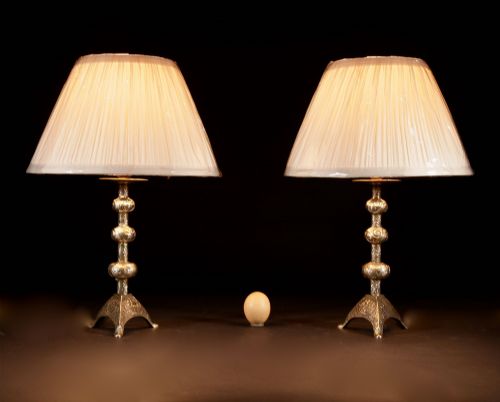
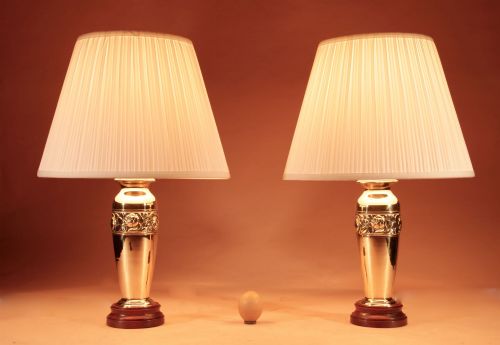
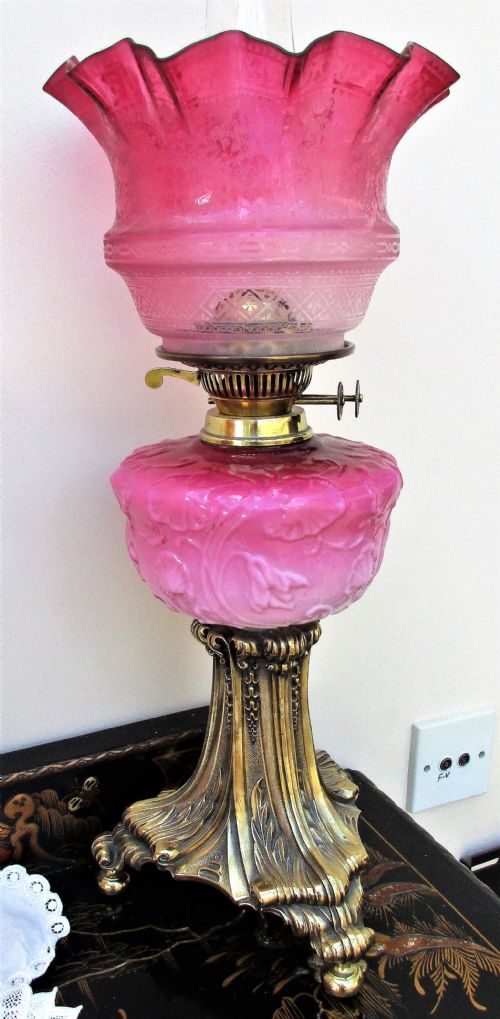


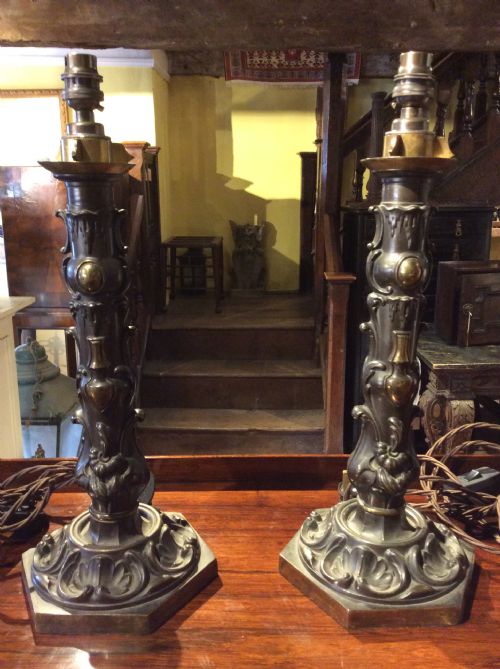


Embossed Brass Lamp
An embossed brass lamp brings warmth and tactile pattern into a room, offering the heavy substance and aged lustre that collectors prize.
Embossed Brass Lamp
When you search for an embossed brass lamp, you encounter table lamps, reading lamps, and converted oil lamps spanning from the nineteenth century into the twentieth. These pieces appear in styles ranging from Victorian and Arts and Crafts to Art Deco and Romanesque Revival, reflecting diverse decorative movements.
The version you are most likely to meet on this page is the nineteenth-century or early twentieth-century brass table lamp, often utilising surface decoration shaped through repoussé or stamping techniques. Many examples began life as oil lamps before later conversion to electricity.
Makers and origins stretch across England, France, India, and the Middle East, producing everything from bulbous lamp-bases with figurative motifs to slender barley twist columns. Fabric, glass, and porcelain frequently accompany the metal structure in shades or bodies.
How they were made
The construction relies heavily on sheet and cast brass, shaped by hand-hammering, repoussé work, or mechanical stamping to raise decorative patterns from the metal surface. These techniques allow for intricate floral, geometric, or figurative detailing across the body of the lamp.
Makers combined brass with secondary materials such as cranberry glass, porcelain, bronze, and wood to create contrast and structural stability. Converted oil lamps often retain original burners or reservoirs alongside later electrical adaptations.
Embossed Brass Lamp Retail Price Guide 2026
Typical asking prices for embossed brass lamp among the pieces listed under this phrase on Sellingantiques today, from the lower quarter to the upper quarter. They describe what is for sale here now, not the wider market.
Some heavy lamp-bases arrive embossed with unexpected elephants and regional deities.
What varies in quality
Quality reveals itself in the crispness and depth of the embossed or repoussé work, where sharply defined motifs indicate skilled hand-tooling rather than flat mechanical pressing. The weight and gauge of the brass itself signal whether a piece is robust or flimsy.
Proportion and integrity of form set the finer examples apart, particularly when paired with period glass shades or balanced columns. The subtlety of the patina and the quality of historical conversions further distinguish superior pieces.
The Embossed Brass Lamp Glossary
- Repoussé
- A metalworking technique where a design is hammered into relief from the reverse side of the sheet brass. This method creates tactile, three-dimensional surface patterns.
- Oil lamp
- A lighting device that burns liquid fuel via a wick, commonly converted to electricity in later periods. Many surviving brass lamps originated in this form.
- Romanesque Revival
- An architectural and decorative style drawing on medieval eleventh and twelfth-century forms. Pieces in this style utilise heavy, rounded arches and robust ornamentation.
- Barley twist
- A column design carved or spun in a helical spiral resembling barley sugar. This form adds visual movement and traditional weight to lamp stems.
Embossed Brass Lamp: Frequently Asked Questions
Are these lamps safe to use today?
Many older pieces have undergone conversion from oil to electricity, and some retain older wiring. It is sensible to have a professional electrician check the internal components before daily use.
Ensuring the lamp holder and cord meet modern standards lets you enjoy the antique metalwork safely in a contemporary home.
How do I clean embossed brass?
Dusting gently with a soft dry cloth preserves the aged surface and dark recesses of the embossed design. Avoid harsh chemical polishes that strip away characterful oxidation.
Leaving the natural patina untouched maintains the historical appearance that collectors value most.
Can I replace the fabric shade?
Shades are frequently replaced to suit modern interiors or to match the scale of the brass base. Many lamps accommodate standard fittings with modern shade carriers.
Matching the proportions of the shade to the bulbous or slender body ensures the silhouette remains balanced.
How do I date an oil lamp?
Dating relies on the style of the brasswork, burner mechanisms, and manufacturer stamps or registry marks found on the metal. Comparing the decorative vocabulary to known nineteenth and early twentieth-century periods helps narrow the timeframe.
Consulting regional motifs, such as Middle Eastern or Indian craftsmanship, also provides clues to origin and age.