
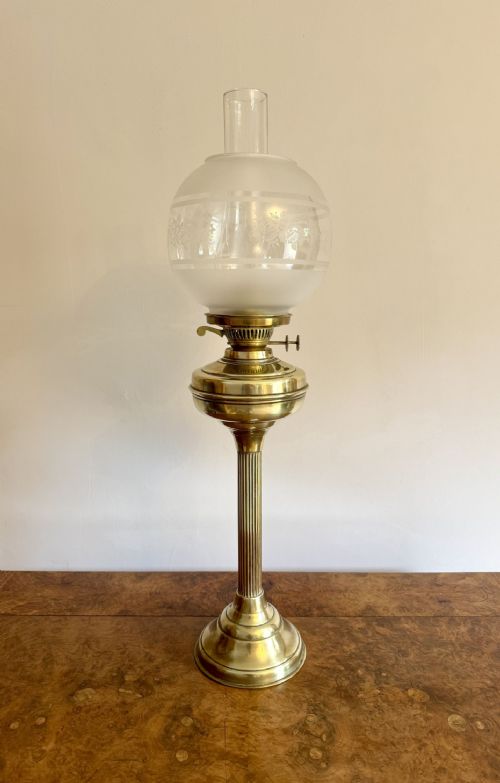


Reeded Column Table Lamp
A reeded column table lamp brings classical proportion and warm metallic weight into a room.

Reeded Column Table Lamp
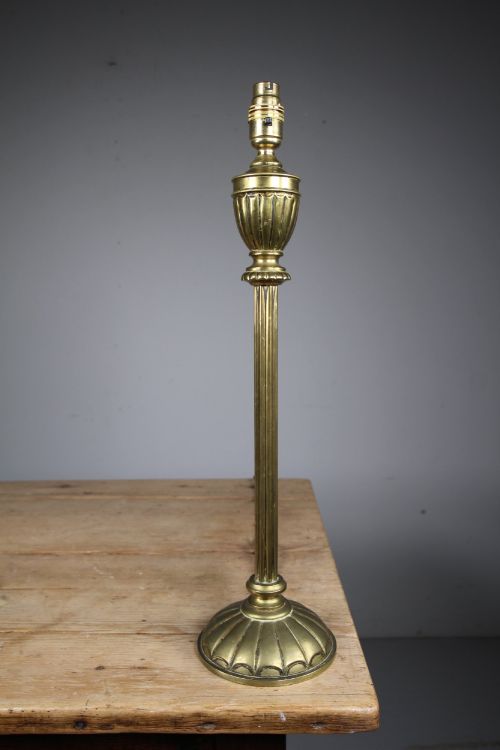
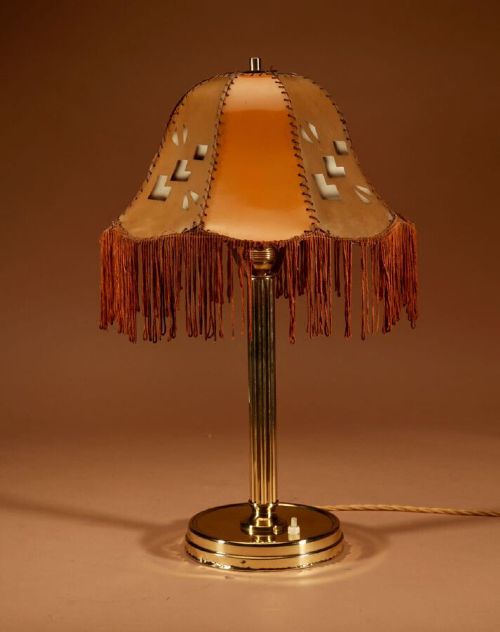
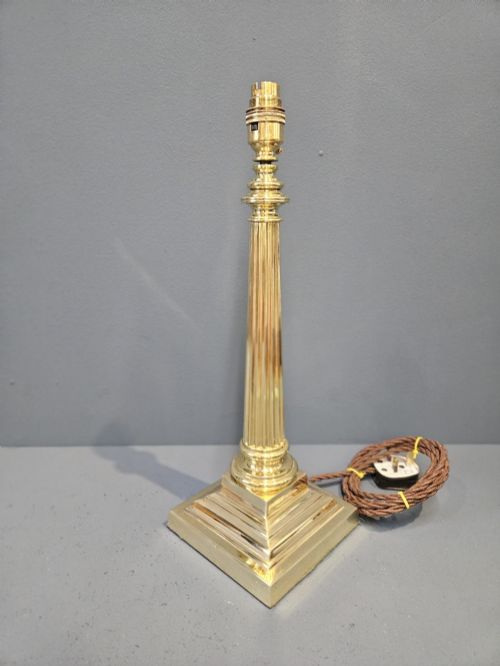
When you search for a reeded column table lamp, you are looking at upright lighting standards carved or cast with parallel vertical grooves known as reeding, echoing classical architectural orders. The pieces available on this page derive primarily from the Victorian and Edwardian eras, often originating as oil lamps before later conversion to electricity.
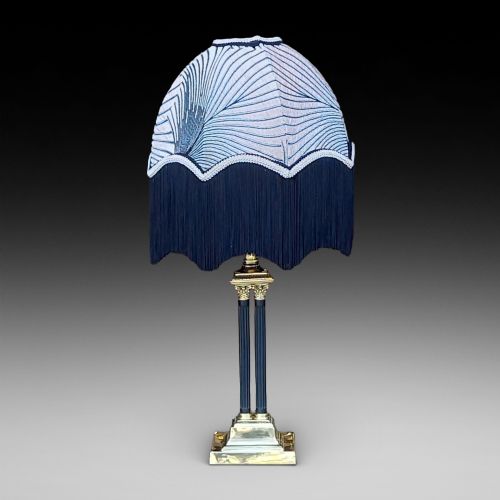
The architectural influence manifests clearly in capitals modelled on the Corinthian or Doric styles, sitting atop solid brass or occasionally marble shafts. Many examples retain the proportions of domestic lighting from the nineteenth and early twentieth centuries, scaled down for tabletop use.
Alongside standard lighting forms, the historical record shows related occasional tables in mahogany and oak, but the core of this selection remains vertical metal standards designed to cast downward illumination through fabric shades.
Materials and construction
The primary material across these pieces is brass, cast and turned to create the precise parallel channels of the reeded column. Makers also incorporated marble for weight and contrast, particularly in bases and column sections, while later wiring uses braided fabric flex.
Structural integrity relied on heavy metal bases to support the height of the column and any associated oil reservoir or burner mechanism. Components such as Corinthian capitals were frequently cast separately and fixed to the main shaft.
Reeded Column Table Lamp Retail Price Guide 2026
Typical asking prices for reeded column table lamp among the pieces listed under this phrase on Sellingantiques today, from the lower quarter to the upper quarter. They describe what is for sale here now, not the wider market.
Listings span the Victorian, Edwardian, and Art Deco eras, utilising brass, glass, marble, and mahogany.
Distinctions in quality
Quality in a reeded column table lamp lies in the crispness of the casting and the depth of the metalwork. Sharply defined fluting on the column and finely detailed acanthus leaves on a Corinthian capital separate superior examples from softer, simpler productions.
Weight and balance also dictate the standing of a piece, with heavier brass bases offering better stability and a more substantial feel in the hand. The integration of period conversion work, maintaining safe internal wiring without altering the exterior proportions, preserves the integrity of the object.
Gillows·Hinks
The Reeded Column Table Lamp Glossary
- Reeded
- Decorated with parallel raised semi-circular mouldings running vertically along a column. This treatment derives from classical architecture and adds texture to the vertical shaft.
- Corinthian capital
- The uppermost decorative member of a column, featuring carved acanthus leaves and scrolls. It serves as the ornate crowning element beneath the lamp fitting.
- Doric
- A simpler classical column style characterised by a plain, unadorned capital and a sturdy shaft. It offers a more restrained alternative to the ornate Corinthian order.
- Duplex burner
- A double-wick mechanism found on nineteenth-century oil lamps that produced a brighter flame. Many surviving examples retain these heavy brass burner assemblies.
- Pat test
- Portable appliance testing for electrical safety. Rewired vintage lamps often undergo this process to confirm they meet modern safety standards.
Reeded Column Table Lamp: Frequently Asked Questions
How do I date a brass lamp?
Dating relies on examining the construction methods, burner types, and styling cues such as neoclassical capitals or Edwardian proportions.
Heavier cast brass components and original oil mechanisms typically point towards Victorian manufacture, while lighter or more streamlined forms often indicate the Edwardian period.
Can these lamps take modern bulbs?
Most converted oil lamps and vintage standards accept standard modern screw or bayonet bulbs through standard lampholder fittings.
Rewired examples ensure that contemporary electrical connections match historical brass bodies safely.
Were these originally oil lamps?
A large proportion of nineteenth-century metal columns began life as paraffin or oil lamps before later conversion to electricity.
Retained burners, switches, or threaded collars often provide physical evidence of this earlier domestic function.
How do I clean old brass?
Maintenance involves gentle dusting and occasional cleaning with non-abrasive cloths to preserve the natural aged patina.
Harsh chemical polishes should be avoided so that the historic surface finish remains intact.