
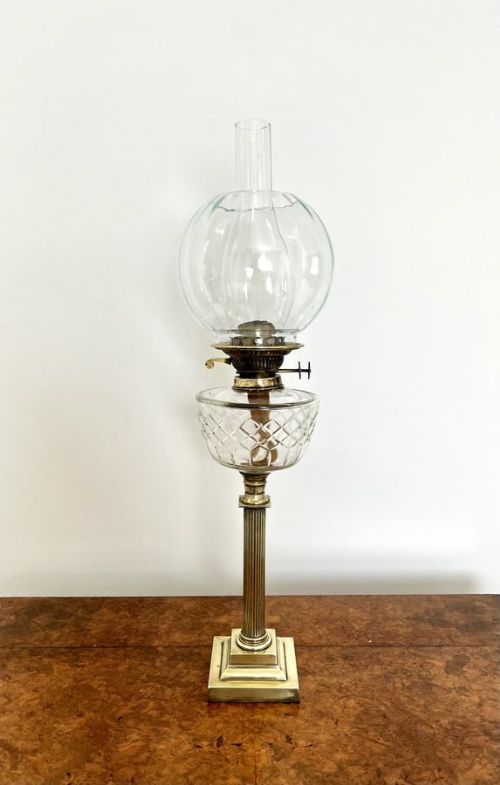
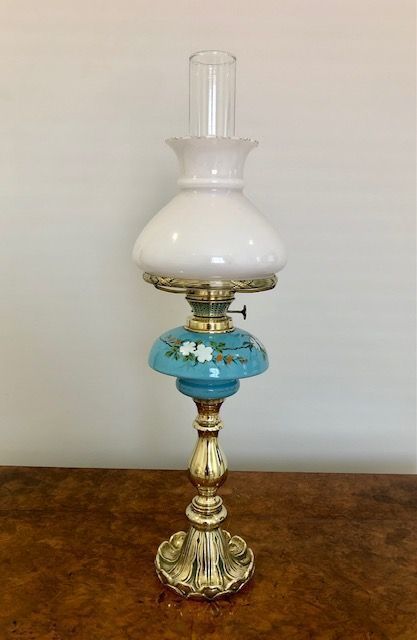


Vintage Oil Burner Lamp
These vintage oil burner lamp pieces are functional Victorian and Edwardian household lighting fixtures that bring period warmth and atmospheric illumination to a room.
What these lamps are
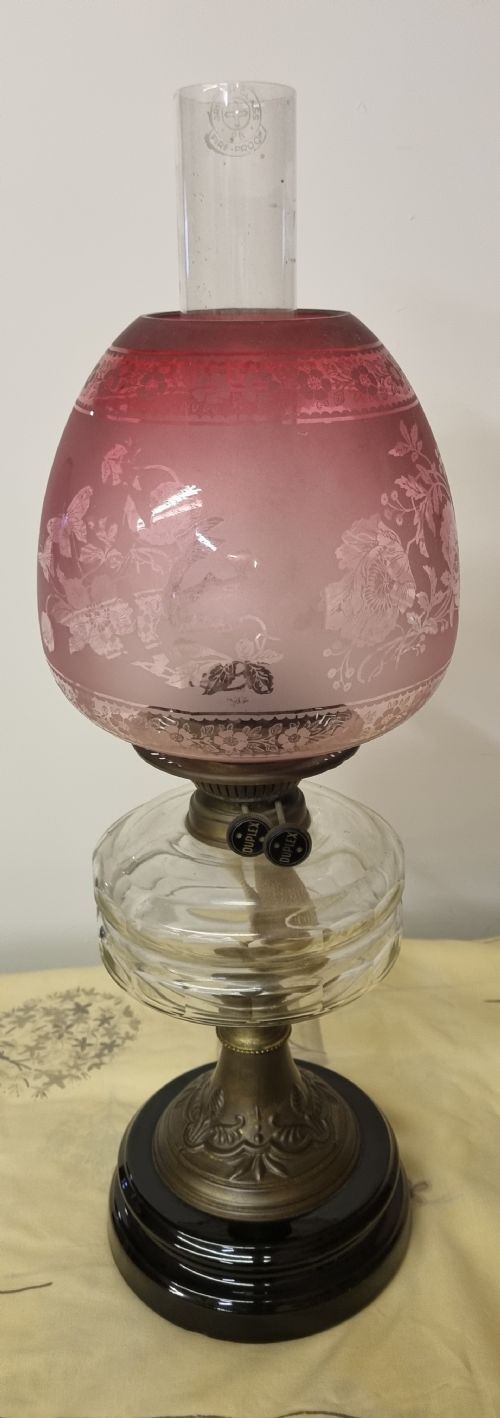
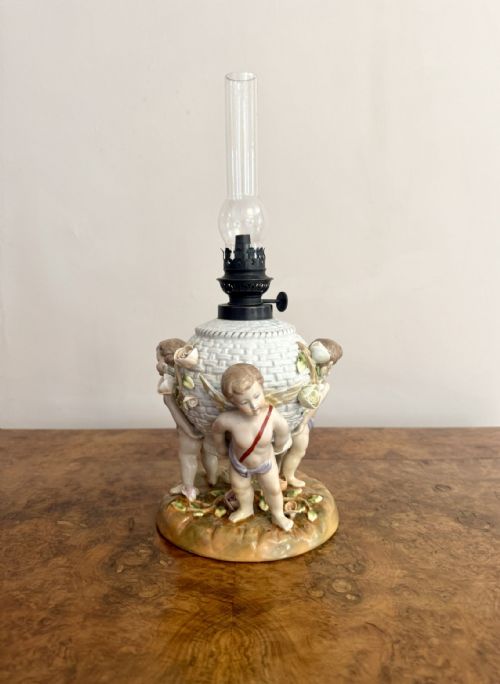
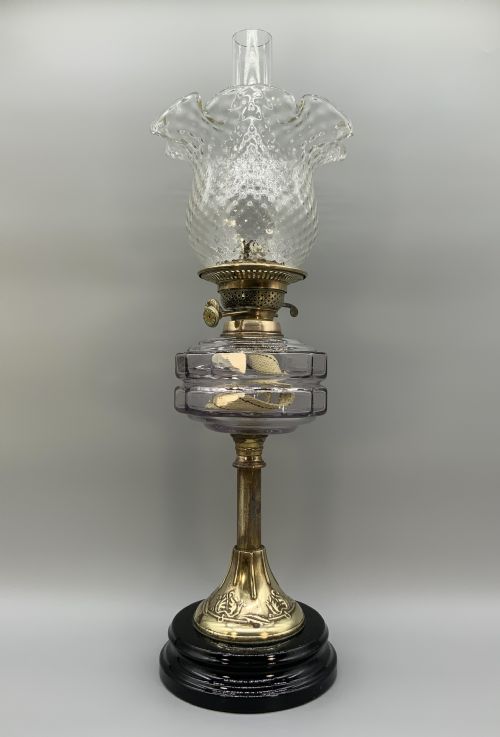
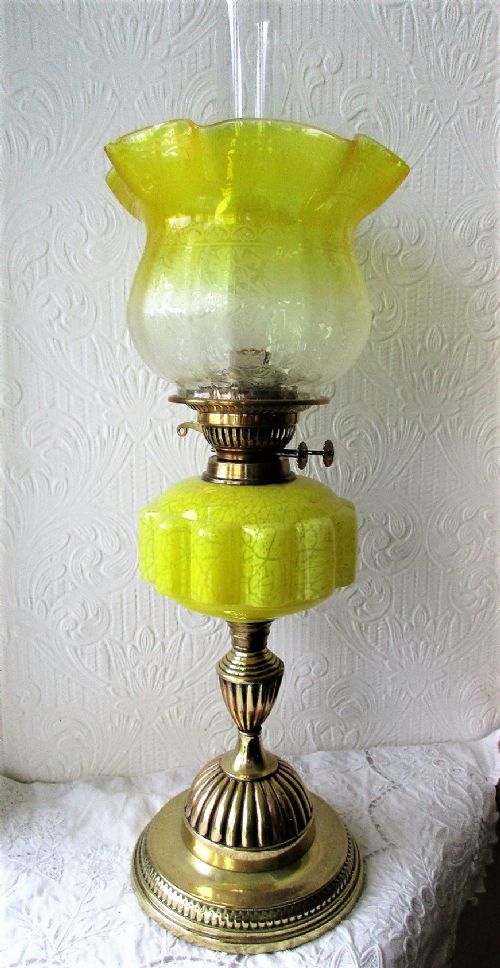
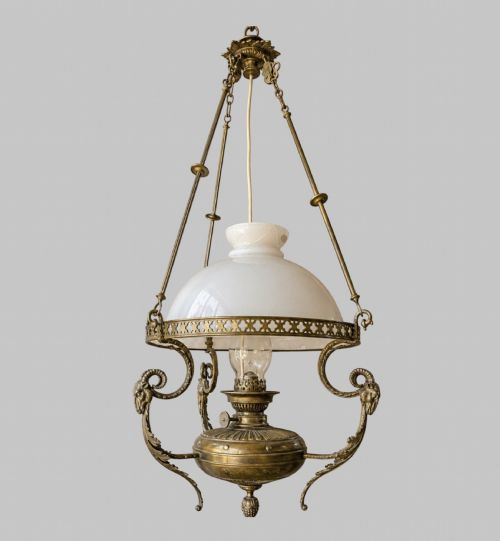
When you search for a vintage oil burner lamp, you encounter lighting devices primarily from the Victorian and Edwardian eras, spanning the nineteenth century up to nineteen hundred. These pieces originate largely from English workshops and utilise liquid fuel to generate illumination before the widespread adoption of electric lighting.
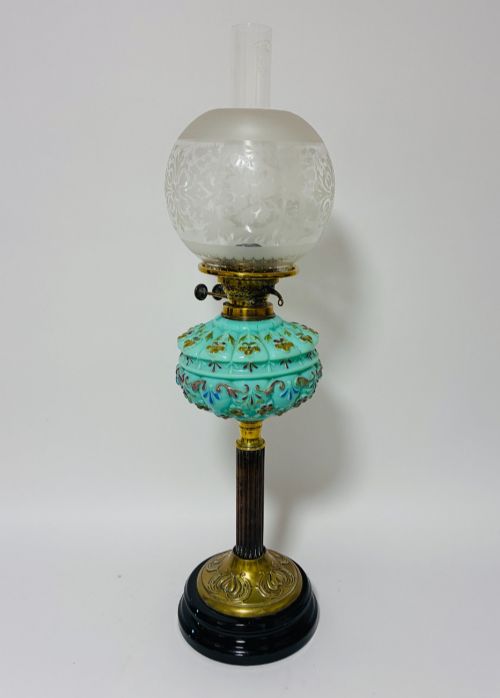
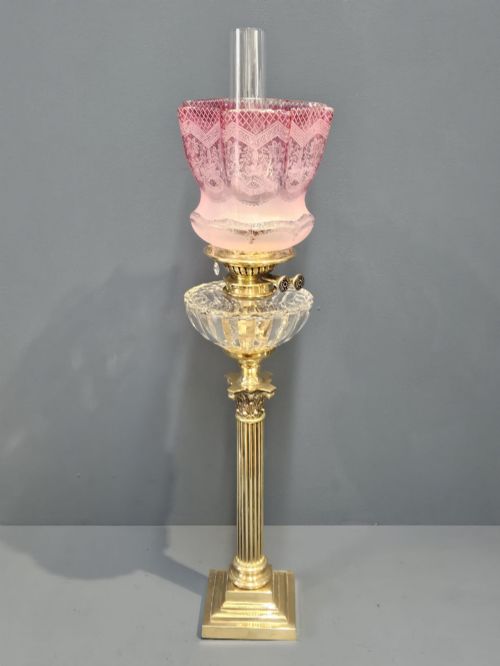
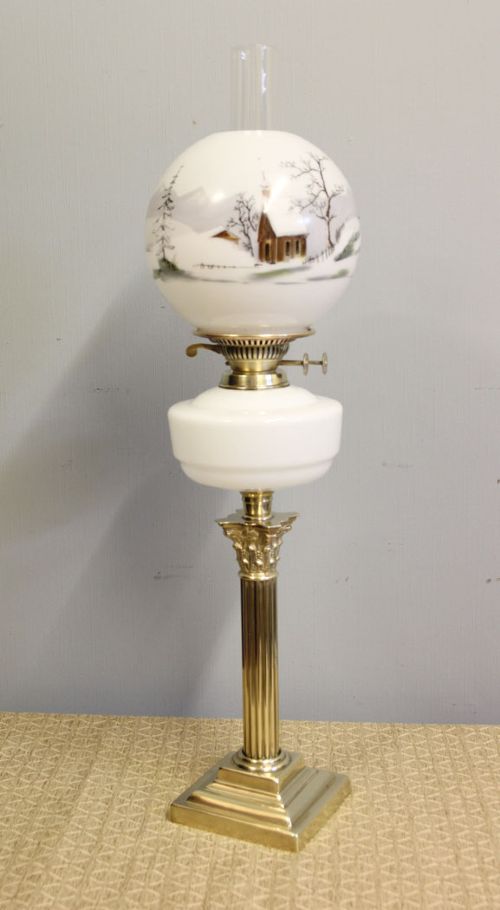
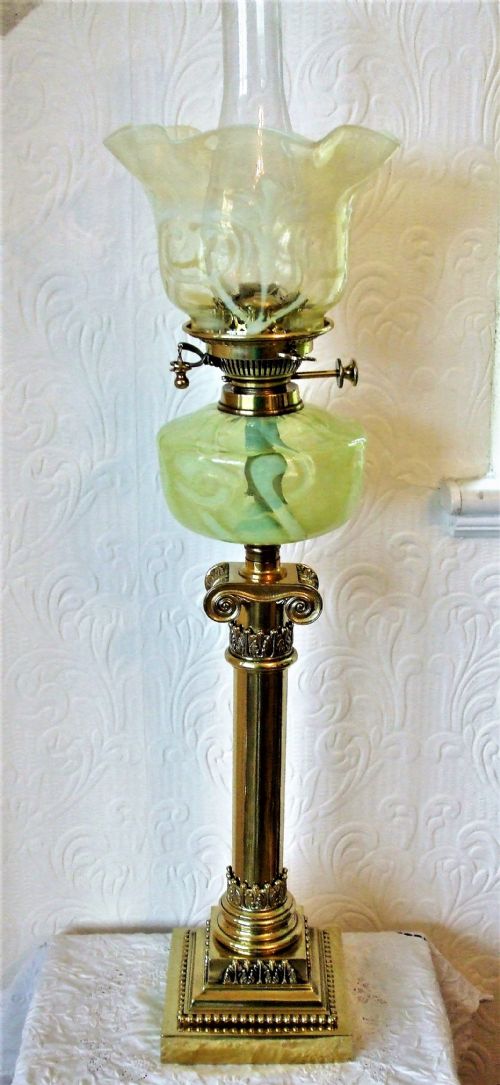
The dominant forms on this page include column designs such as the Ionic order, alongside simpler table models that rely on heavy bases for stability. Many incorporate fonts and chimneys designed to feed oxygen to the flame safely while casting a steady glow.

How they were made
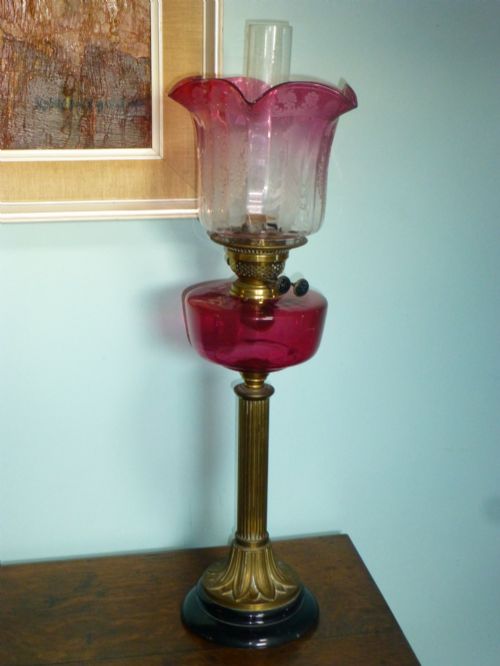
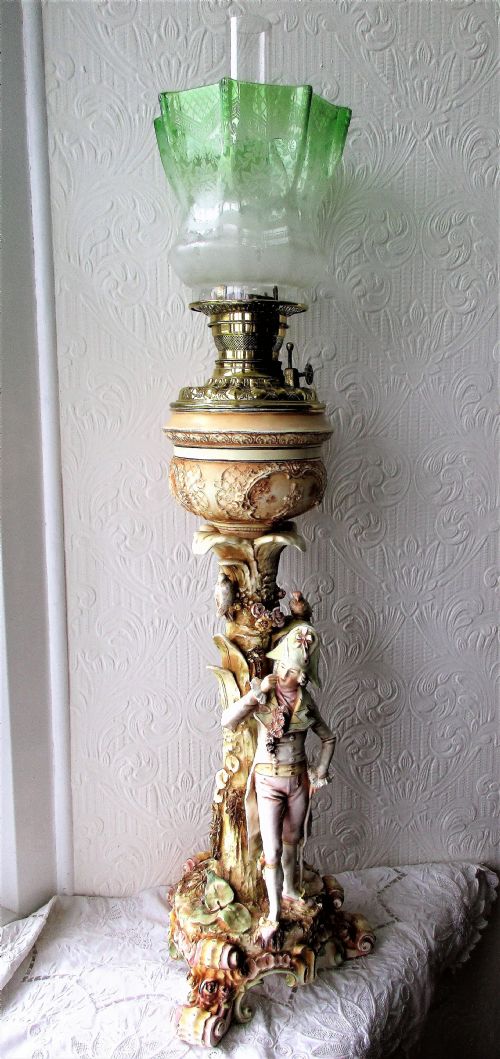
Manufacturers built these lamps using a combination of cast metal, brass, and heavy ceramics, often mounting them on ebonised ceramic bases for added weight. Metal components were turned, cast, and polished to create structural columns and burner assemblies.
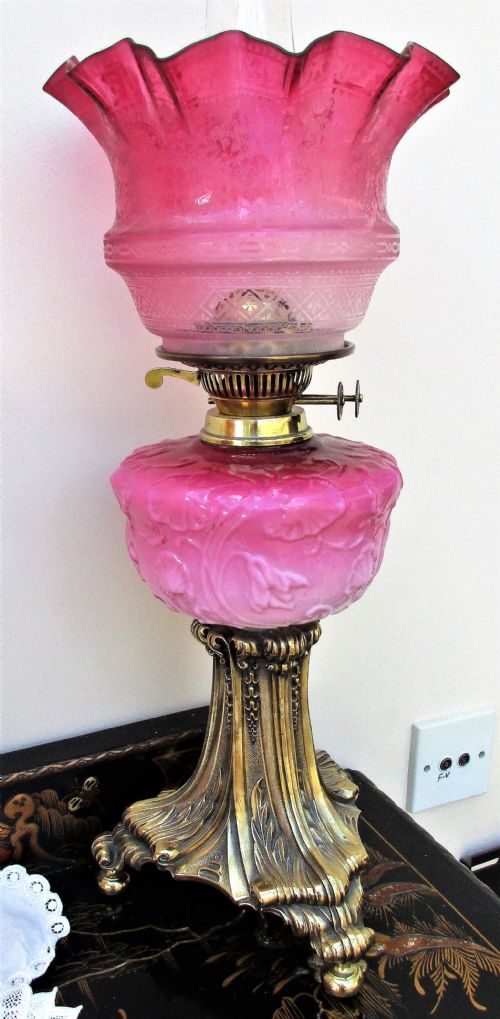
Reservoirs and shades feature clear glass, crystal, moulded glass, and distinctive cranberry glass, requiring glassblowing and mould-pressing techniques typical of nineteenth-century production. The coloured glass variants achieved their deep hues through specific mineral additives during the melting process.
Retail Price Guide 2026
Typical UK retail prices for vintage oil burner lamp, calculated from the Sellingantiques database of over a million retail prices indexed since 2003. This retail price guide relies exclusively on Sellingantiques data; no external sources or auction records are used, so the figures do not describe the wider market.
Some Victorian column lamps secretly weigh enough to double as improvised doorstops if the drafting gets too lively.
What varies in quality
The distinction between standard examples and superior pieces rests on the weight and finish of the materials, particularly the thickness of the brass and the clarity of the crystal or cranberry glass. Finer models display crisp casting detail on architectural elements like Ionic capitals rather than soft or blurred edges.
The integration of decorative shades also alters the character of a piece, with matching coloured or moulded glass shades representing a higher grade of manufacture than plain or replacement glassware.
The Vintage Oil Burner Lamp Glossary
- Ionic Column
- A classical architectural style featuring volutes on the capital, frequently adapted for the stems of nineteenth-century brass lamps. This form provides both structural rigidity and decorative elegance.
- Cranberry Glass
- A rich red-pink transparent glass produced by adding gold chloride to the molten batch. It is highly prized for lamp shades and fonts.
- Ebonised Ceramic
- Pottery that has been treated or glazed to imitate polished ebony wood. It appears frequently in the weighted bases of period lamps.
- Paraffin Lamp
- An alternative term for an oil lamp that burns paraffin or kerosene as fuel. These systems use a wick to draw fuel up to the burner.
Frequently Asked Questions
How do I operate a vintage oil burner lamp safely?
These lamps function by drawing fuel up a cotton wick into a burner assembly where it creates a steady flame beneath a glass chimney. Modern users typically keep them as decorative objects rather than active light sources.
To display one safely, ensure the fuel reservoir remains empty and keep the glass components clean using warm soapy water without submerging metal mounts.
What materials make up these period lamps?
The construction relies heavily on brass, cast metal, and ceramics for the structural bases and burner mechanisms. Reservoirs and shades utilise various forms of glass, including moulded glass, crystal, and cranberry glass.
Heavier models often incorporate ebonised ceramic sections to anchor the piece securely to a tabletop.
How can I tell Victorian lamps from Edwardian ones?
Victorian examples often date from eighteen sixty to eighteen eighty and frequently feature heavier brass casting, classical architectural motifs like Ionic columns, and deep cranberry glass. Edwardian pieces, appearing around nineteen hundred, sometimes show slightly lighter proportions while maintaining traditional brass and glass construction.
Both periods overlap significantly in their manufacturing techniques and aesthetic choices.
Where were these lamps originally used in a home?
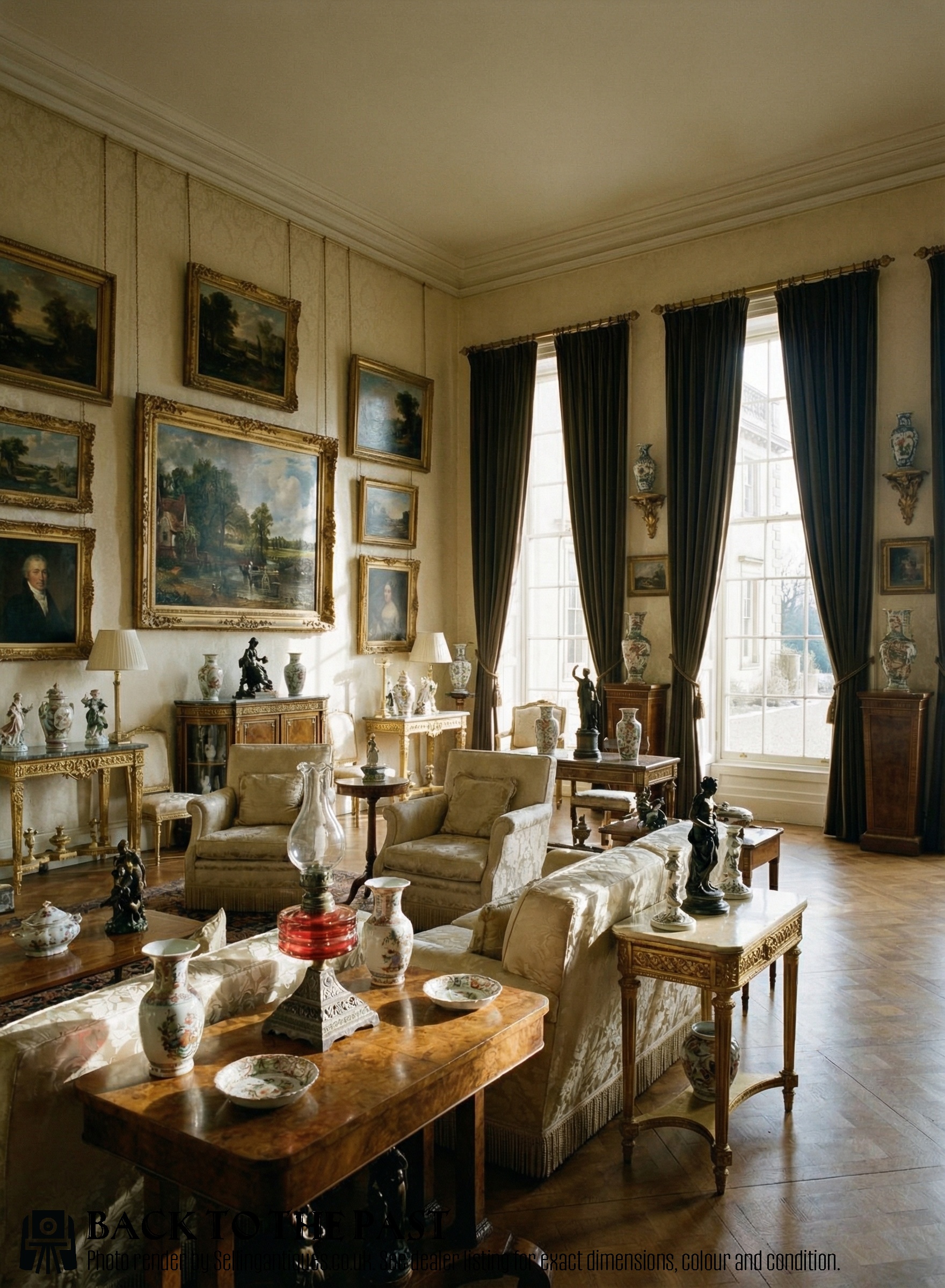
Households placed them on dining tables, mantelpieces, and sideboards to provide reliable illumination before electricity reached domestic interiors. Their decorative brass columns and coloured glass shades made them suitable for principal reception rooms.
They served as both essential utilities and decorative ornaments in nineteenth-century parlours.