
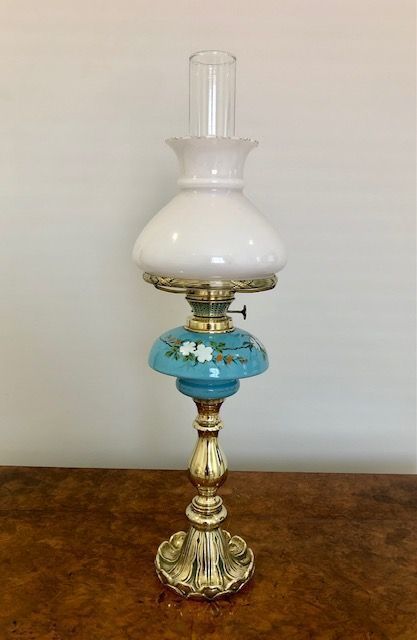


Blue Glass Oil Lamp
These blue glass oil lamps bring a vibrant hue and steady light into a room, blending Victorian and Edwardian craftsmanship.
What They Are
A blue glass oil lamp combines a coloured glass font with materials such as brass and ceramic. These pieces emerge from the Victorian and Edwardian eras, spanning the nineteenth century up to nineteen hundred.
Collectors encounter various forms among these listings, including table lamps, finger or hand lamps, and column designs. Some examples incorporate matching shades, including terrestrial globe shades and tinted glass shades.
The phrase blue glass oil lamp covers these decorative and functional lighting fixtures from past centuries. Pieces range from simple moulded glass fonts to elaborate arrangements featuring brass embossed columns.
How They Were Made
Makers utilised moulded glass for the coloured fonts, shaping the material while hot to achieve vibrant blue and duck egg blue tones. Clear glass and tinted glass also appear alongside the primary blue reservoirs.
Metal components typically involve brass and cast metal, forming sturdy bases and burner mounts that support the glass reservoirs. Embossed brass detailing frequently decorates the columns and bases of these lamps.
Listings feature materials including brass, ceramic, cast metal, and moulded glass across the nineteenth century and Edwardian period.
What Varies in Quality
The distinction between standard examples and superior pieces rests on the presence of original matching shades and the complexity of the brass work. Elaborate column supports and embossed metal mounts elevate a lamp's decorative presence.
The clarity and depth of the blue glass font also define the tier of the piece, with richer colour saturation and crisp moulding indicating finer production standards.
The Blue Glass Oil Lamp Glossary
- Font
- The reservoir that holds the lamp oil, typically formed from moulded blue glass in these pieces. It sits atop a metal or ceramic base.
- Finger Lamp
- A small portable oil lamp featuring a handle or loop attached to the body for carrying by hand. These domestic items were common in nineteenth-century bedrooms.
- Terrestrial Globe Shade
- A spherical glass shade painted or formed to resemble a map of the earth. These decorative covers diffuse the light from the burner.
- Column Lamp
- An oil lamp design featuring a raised pillar or column, often made of brass, separating the base from the oil font. This architectural style provides height and stability.
Frequently Asked Questions
How do I date a blue glass oil lamp?
Dating relies on the stylistic clues of the metalwork, glass moulding techniques, and associated shade designs. Pieces span the Victorian and Edwardian periods up to nineteen hundred.
Examining the brass mounts and the type of glass used helps narrow down the decade of production within the nineteenth century.
Were these lamps converted to electricity?
Some period lamps undergo conversion to electricity for modern household use, while others retain their original oil-burning mechanisms. Archives show examples of converted oil lamps alongside intact ones.
Buyers should inspect the burner assembly to determine the current functional state of the piece.
What is a finger oil lamp?
A finger oil lamp is a compact portable lighting device fitted with a small handle or ring for carrying. They provided room-to-room illumination before electric lighting became standard.
These smaller vessels often feature hand-held blue glass fonts paired with brass burners.
Do these lamps come with original shades?
Certain examples retain their original glass shades, including tinted or globe variations that match the period of the base. Finding a lamp with its matching shade adds considerable character.
Listings specify whether a shade accompanies the brass and glass font.