
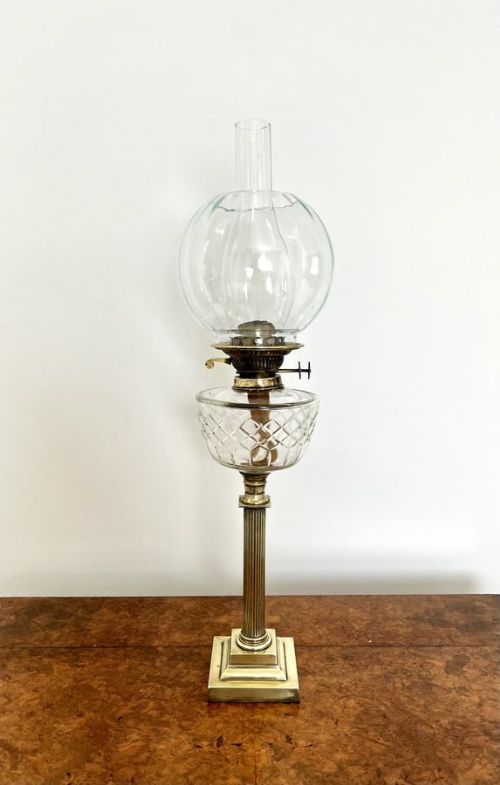
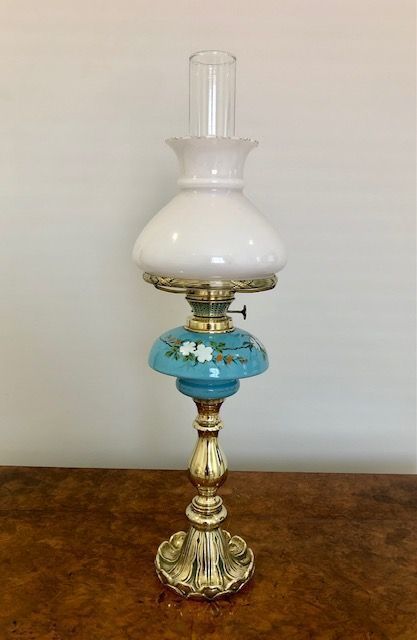


Brass Burner Oil Lamp
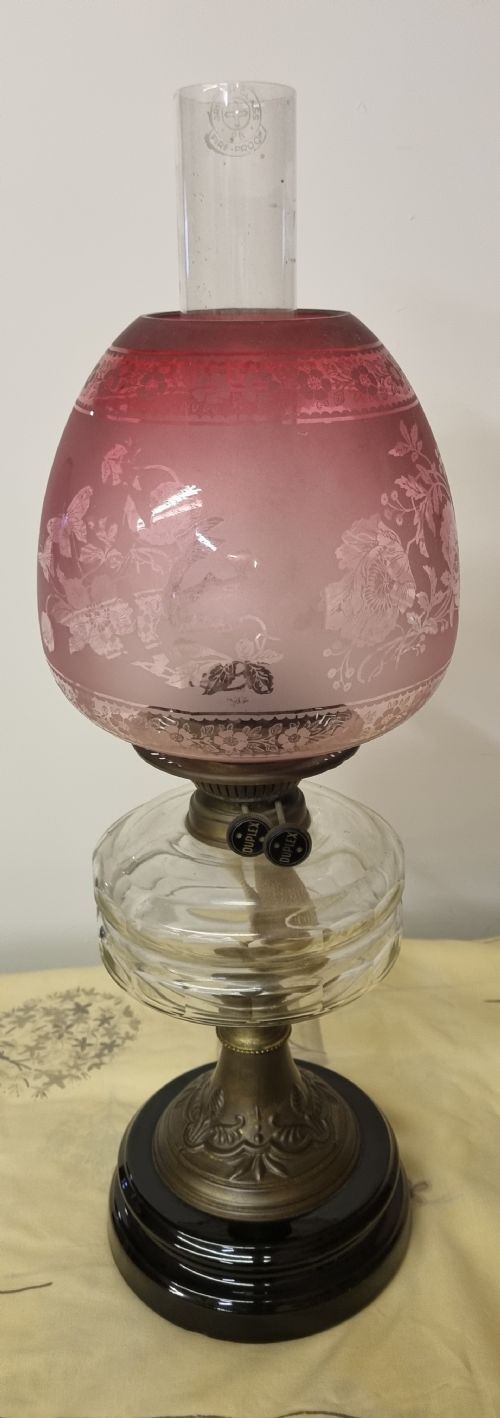
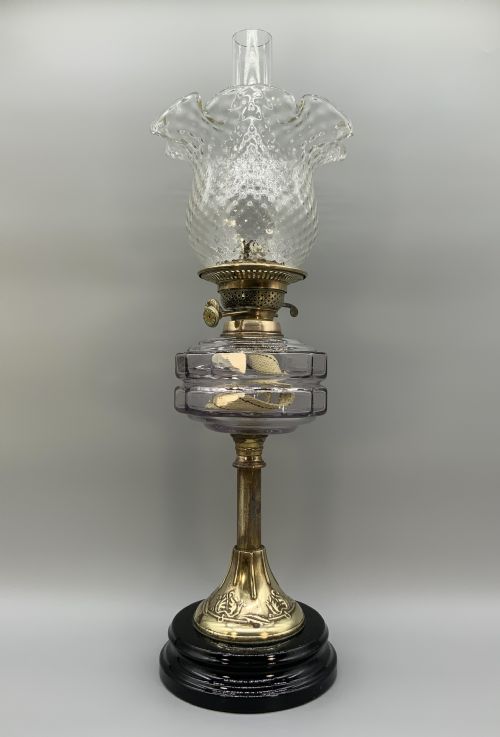
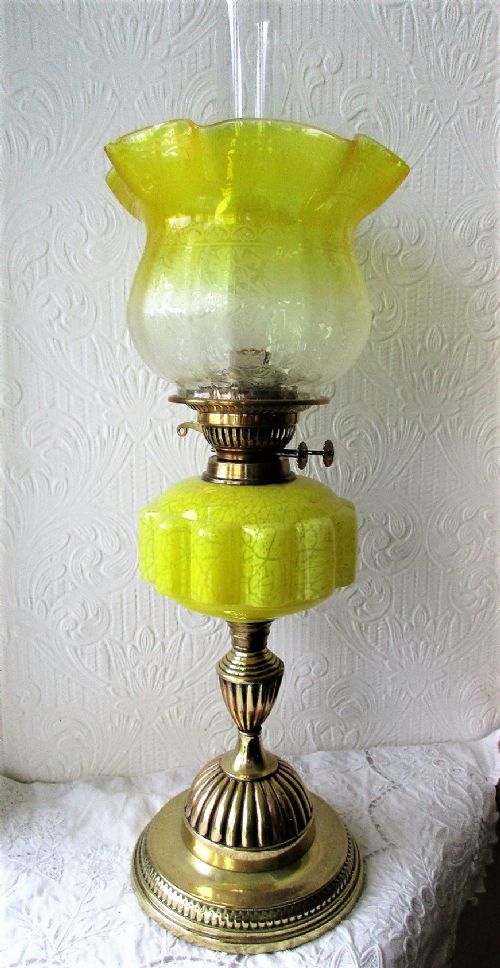
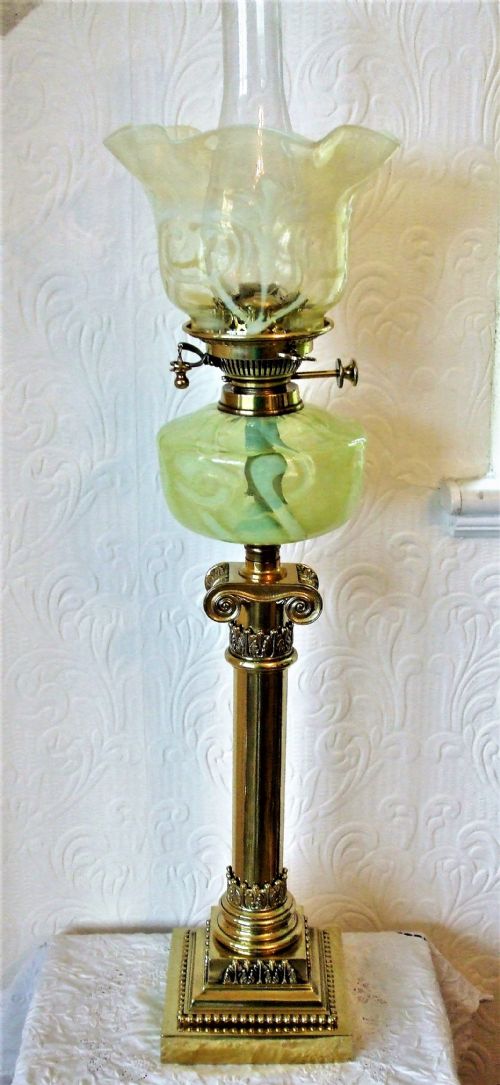
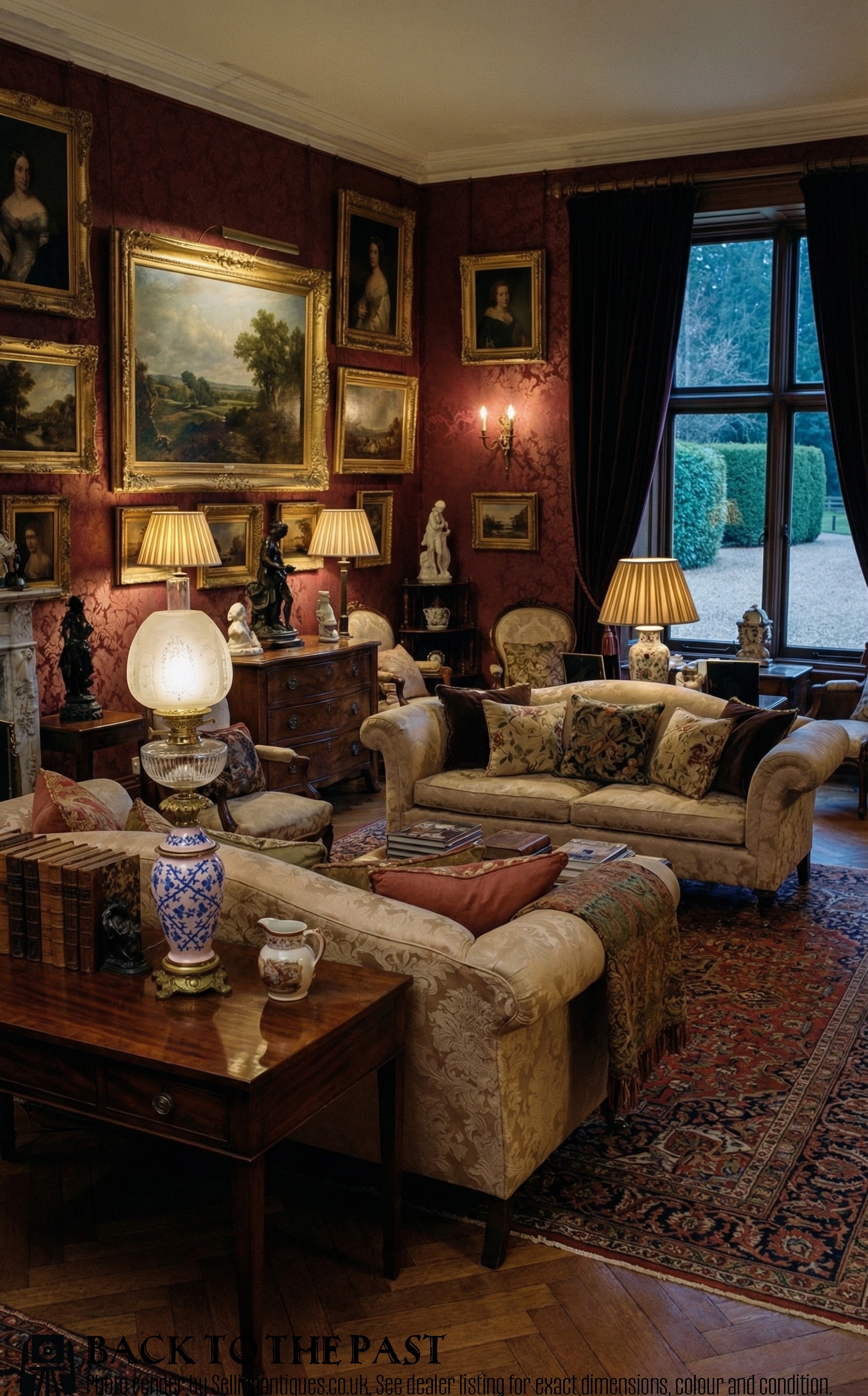
These brass burner oil lamps bring a warm Victorian glow to a room, offering genuine period character for a table or mantel.
What They Are
A brass burner oil lamp combines a functional metal burner with decorative reservoirs and bases from the Victorian era. These pieces frequently date from the 1860s through the 1880s, reflecting the domestic lighting technology of the period.
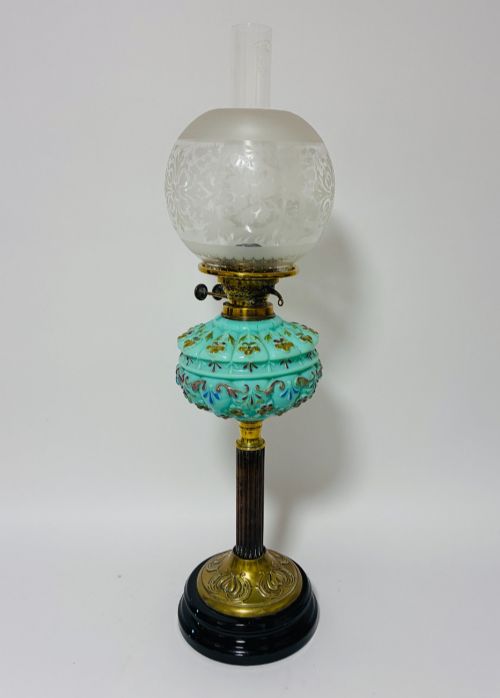
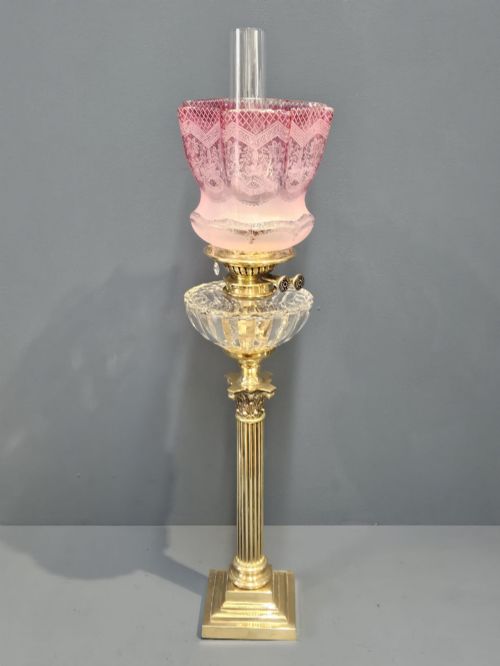
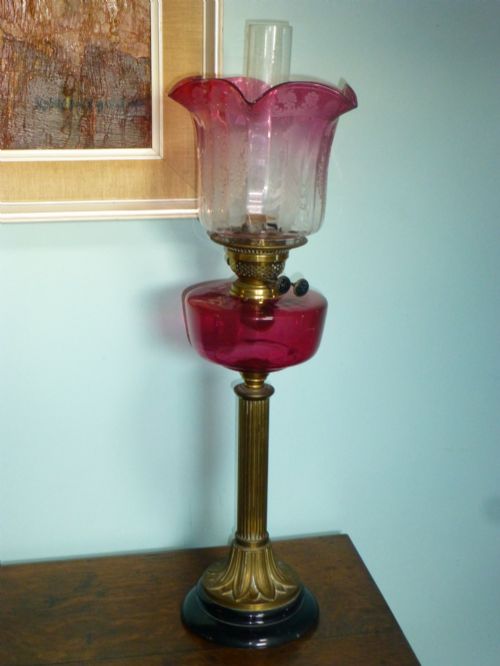
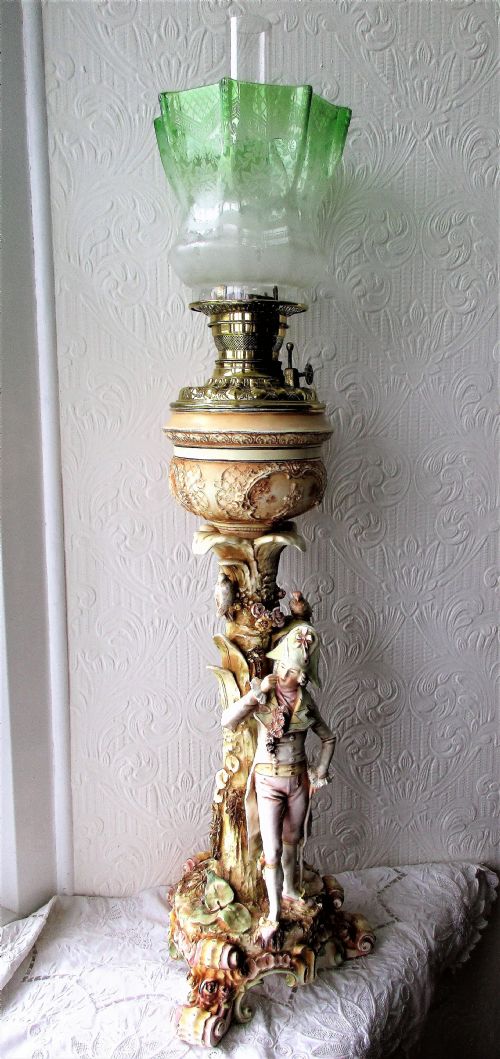
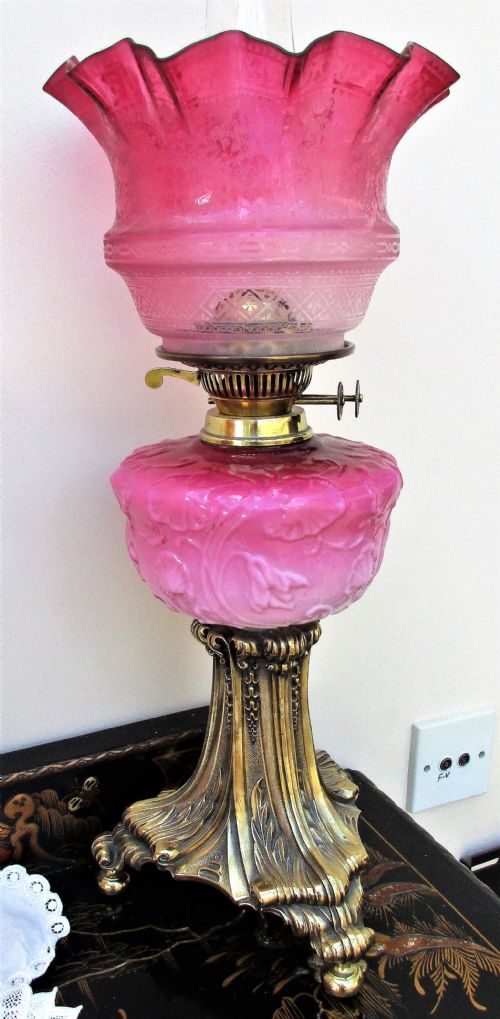
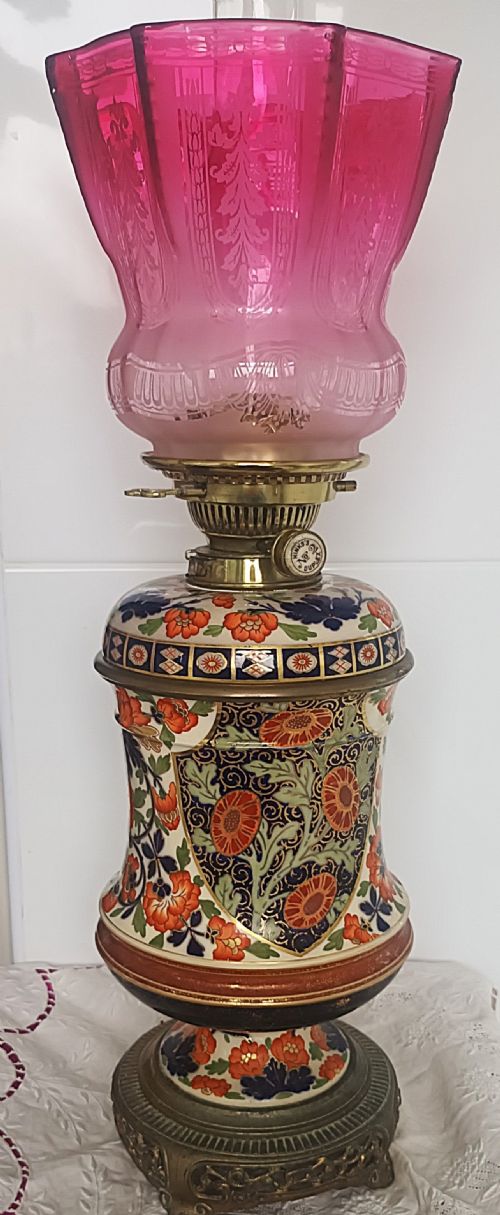
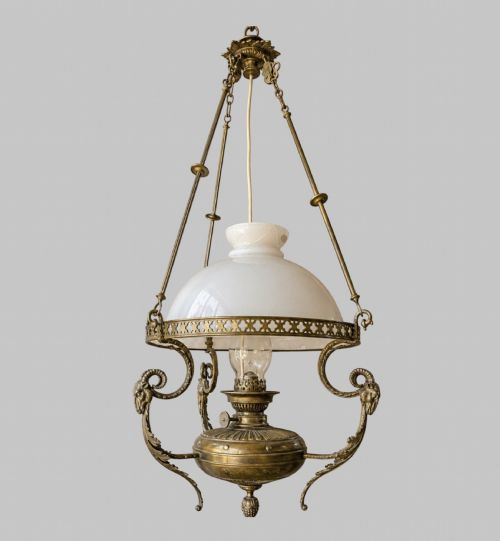
The objects appear in various forms on this page, including table lamps, peg lamps, and hanging designs. Many incorporate glass, porcelain, milk glass, cast iron, or silver plate alongside the brass mechanisms.
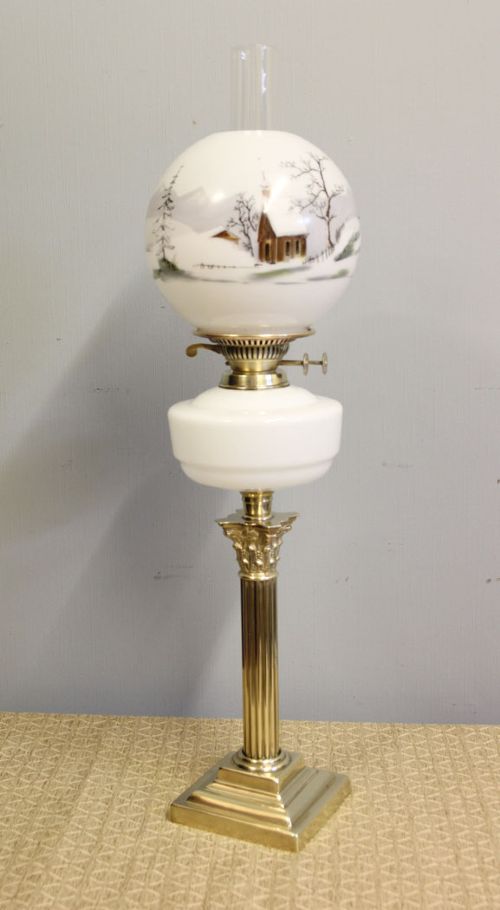
Makers and designers of the period utilised distinctive components, such as the Hinks No. 2 duplex burner paired with Corinthian column structures. Terrestrial globe shades and figural designs, like the white porcelain owl lamp, also appear.
How They Were Made
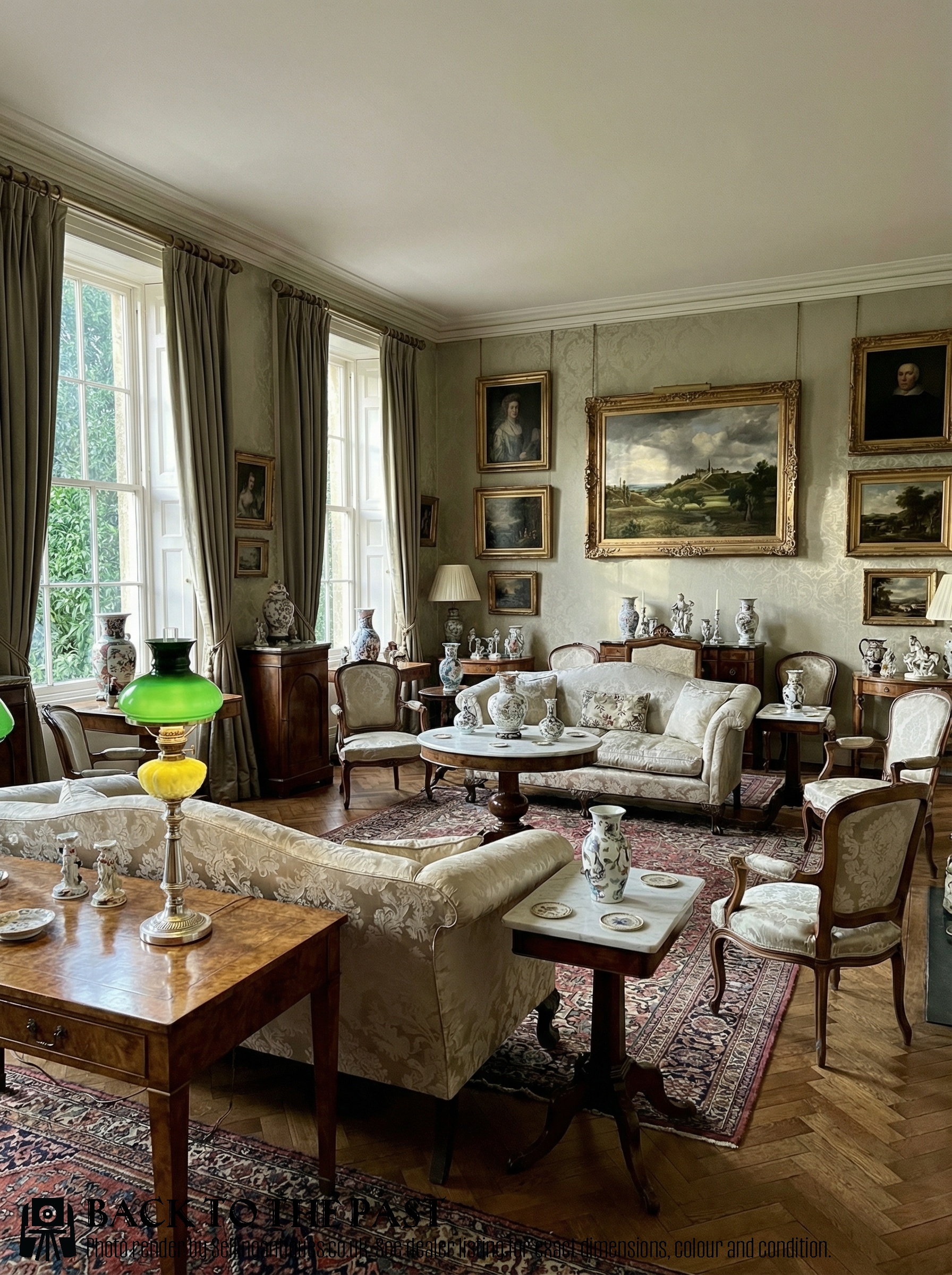
Manufacturers combined metalworking and ceramics, mounting brass burners atop porcelain, glass, or cast iron bodies. Silver plating was also applied to enhance the decorative finish of certain pieces.
Glass reservoirs utilised satin glass or milk glass, sometimes incorporating painted or moulded details. Toleware construction appears in hanging variants, paired with brass burner fittings.
Retail Price Guide 2026
Typical UK retail prices for brass burner oil lamp, calculated from the Sellingantiques database of over a million retail prices indexed since 2003. This retail price guide relies exclusively on Sellingantiques data; no external sources or auction records are used, so the figures do not describe the wider market.
A wise Victorian owl watches silently from the mantel, doubling as a clever porcelain oil lamp.
What Varies in Quality
Quality rests in the weight of the materials and the ambition of the design, distinguishing standard domestic lighting from exceptional exhibition pieces. Larger proportions and refined Corinthian columns elevate certain examples above simpler table lamps.
The sophistication of the shade and the complexity of the reservoir material, such as fine satin glass or detailed porcelain modelling, separate standard items from outstanding quality pieces.
The Brass Burner Oil Lamp Glossary
- Duplex burner
- A double-wick mechanism designed to produce a brighter flame than single-wick predecessors. This component often bears maker markings such as Hinks.
- Peg lamp
- A small oil lamp featuring a tapered base designed to drop directly into a separate candlestick or wall bracket. This form allows a single fixture to serve multiple mounting purposes.
- Satin glass
- Art glass treated with hydrofluoric acid to produce a velvety, matte surface texture. It appears frequently in late Victorian lighting.
- Toleware
- Painted or enamelled tinplate items used for domestic objects like hanging lamp bodies. The technique provides a durable coloured surface.
Frequently Asked Questions
How do I date an oil lamp?
Dating relies on stylistic markers, materials, and burner patents associated with the Victorian period.
Most examples on this page span the 1860s to the 1880s, combining brass components with glass, porcelain, or cast iron.
Can I still burn oil in these lamps?
These pieces originate as functional nineteenth-century lighting and retain their mechanical brass burners.
Many collectors choose to use them as decorative objects or convert them carefully for modern display.
What materials were used for the bodies?
Makers constructed the bodies from a diverse range of materials including brass, porcelain, milk glass, and silver plate.
Some unusual examples incorporate figural ceramics or terrestrial globe shades.