
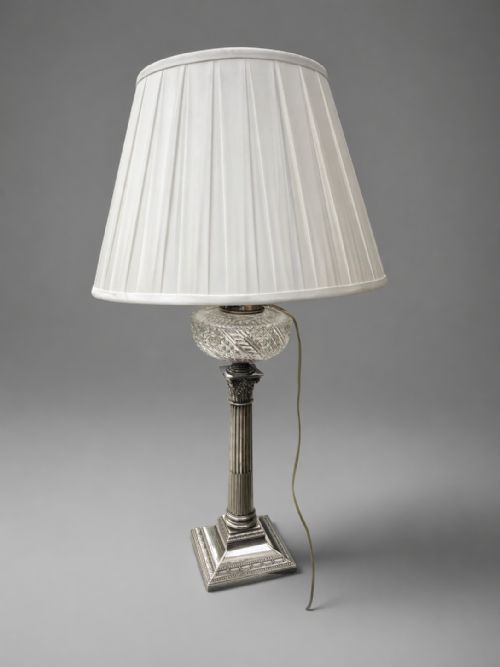


Silver Plated Oil Lamp
A silver plated oil lamp brings nineteenth-century warmth to a room, offering the gleaming reflection of metal paired with glass and fabric.

Understanding silver plated oil lamp designs
When searching for a silver plated oil lamp, buyers encounter pieces primarily spanning the Victorian era, the nineteenth century, and around nineteen hundred. These domestic lighting fixtures range from small paired table pieces to large urn-shaped vessels and stately Corinthian columns.
The most common versions met on this page belong to the Victorian period, frequently combining silver plate with brass, cut glass, satin glass, and fabric shades. Makers such as Hinks, Mappin & Webb, Evered's, and Palmer & Co. produced these utilitarian yet decorative objects during the height of oil-burning illumination.
Many examples utilise classic architectural forms like the Corinthian column, while others favour decorative urn shapes or peg lamps designed to sit inside existing holders. Each piece reflects the domestic interior tastes of late nineteenth-century Britain.
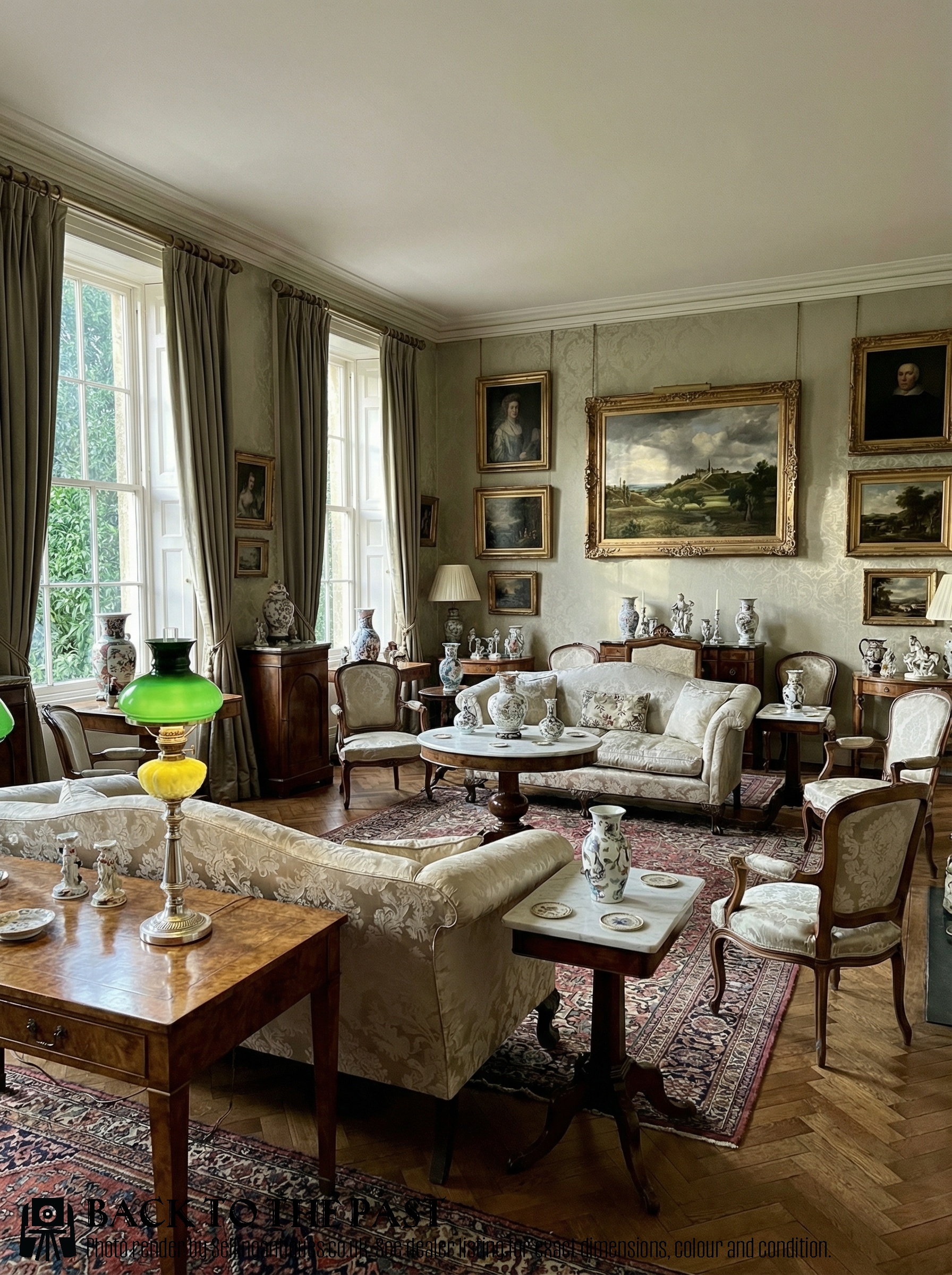
Materials and construction
These lamps rely on a base metal foundation, typically brass, coated with a layer of silver plate to create a bright, reflective surface. The manufacturing process often incorporated heavy metal castings for stability, particularly in tall column and urn styles.
Vessels for the fuel combined blown or cut glass with the metal mounts, sometimes featuring satin glass reservoirs in delicate pastel shades. Burner mechanisms and collars were engineered from brass and other functional metals to secure wicks and glass chimneys.
Retail Price Guide 2026
Typical UK retail prices for silver plated oil lamp, calculated from the Sellingantiques database of over a million retail prices indexed since 2003. This retail price guide relies exclusively on Sellingantiques data; no external sources or auction records are used, so the figures do not describe the wider market.
Some Victorian households relied on these heavy metal columns to provide steady illumination long before the street outside buzzed with electric glow.
Assessing quality and craftsmanship
Quality in these lighting pieces rests on the crispness of the casting work and the proportion of the design. Urn-shaped bodies and Corinthian capitals show greater artistic ambition through deeply chased acanthus leaves and fluted shafts.
The weight of the metal and the clarity of the cut glass or satin glass reservoirs distinguish finer examples from standard production. Signed works bearing identifiable maker marks add a documented layer of workshop pedigree to the finished object.
Mappin & Webb·Hinks·Evered's·Palmer & Co.
The Silver Plated Oil Lamp Glossary
- Silver plate
- A thin layer of silver fused or electroplated onto a base metal such as brass or copper. This technique allowed manufacturers to produce domestic items with the appearance of solid silver at a lower cost.
- Corinthian column
- An architectural order featuring an ornate capital decorated with acanthus leaves, frequently adopted for the tall shafts of nineteenth-century table lamps.
- Peg lamp
- A small oil lamp fitted with a tapered lower metal peg designed to drop directly into the socket of a candlestick or a dedicated base.
- Satin glass
- Art glass treated with an acidic vapour bath to produce a velvety, matte texture on the surface. It appears frequently on Victorian lamp reservoirs in soft pinks and whites.
- Burner
- The mechanical assembly screwed to the top of the oil reservoir that holds the cotton wick and adjusts the flame height.
Frequently Asked Questions
How do I date a silver plated oil lamp?
Dating relies on stylistic markers, registry marks, and known maker names stamped into the brass collars or burner knobs. Victorian pieces often display Gothic or classical Revival motifs characteristic of the mid to late nineteenth century.
Later examples moving towards nineteen hundred tend to feature simpler proportions or Edwardian refinements. Comparing the weight, glass type, and construction methods helps place the piece within its historical decade.
Can I still burn oil in these lamps?
Most buyers choose to wire these lamps for electricity rather than burn paraffin or lamp oil indoors. Converting the piece preserves the original metal and glass components while making it safe for modern daily use.
Retaining the original burner mechanism during conversion allows the lamp to maintain its historic visual character without altering the exterior silhouette.
What glass components should be present?
A complete antique lamp typically includes a glass reservoir for the fuel and often a matching shade or glass chimney. Reservoirs are found in clear cut glass, opaque glass, or satin glass variants.
Replacement shades and chimneys are common because fragile glass frequently broke over decades of domestic use. Checking whether the glass matches the period of the silver plated base is key for collectors.
How do I clean silver plated metal?
Maintenance requires a soft cloth and a gentle silver polish formulated for plated items to avoid wearing through to the base brass. Aggressive scrubbing or abrasive pastes will permanently damage the thin silver surface.
Regular, light dusting keeps tarnish at bay without requiring harsh chemical immersion that might harm adjacent glass reservoirs or fabric elements.