

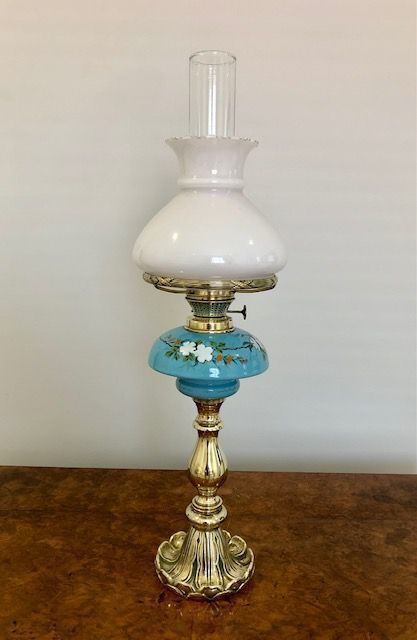


Blue Glass Paraffin Lamp
A blue glass paraffin lamp brings brilliant Victorian colour and warm, glowing light to any room, offering both practical history and striking interior character.
Blue Glass Paraffin Lamp
When searching for a blue glass paraffin lamp, collectors encounter oil lamps dating from the Victorian and Edwardian eras, spanning the mid-nineteenth century up to nineteen hundred. These pieces combine a functional fuel reservoir with decorative glass components, frequently paired with matching or tinted shades.
The most common examples on this page feature moulded glass fonts or bases rendered in rich shades of blue, often mounted upon brass columns or black glass plinths. They reflect the domestic lighting technology of their period before electricity became universal in British homes.
How they were made
Makers utilised pressed and moulded techniques to shape the vibrant blue glass reservoirs and globes, allowing for tactile patterns and consistent wall thickness. These glass elements were then combined with turned brass collars, burners, and weighted metal bases.
Ceramic components and black glass bases occasionally feature in the assembly, providing stability and structural contrast to the bright glass fonts above.
Blue Glass Paraffin Lamp Retail Price Guide 2026
Typical asking prices for blue glass paraffin lamp among the pieces listed under this phrase on Sellingantiques today, from the lower quarter to the upper quarter. They describe what is for sale here now, not the wider market.
Listings on this page span the Victorian and Edwardian periods, featuring materials such as brass, opaline glass, and ceramic.
What varies in quality
The distinction between standard domestic lighting and superior examples lies in the crispness of the glass moulding and the weight of the brass fittings. Finer specimens display deep, even colour saturation within the glass and retain original burners or matched shades.
The integration of materials also dictates overall merit, where a sturdy brass bracket or a flawless black glass base elevates the piece from a simple utilitarian object to a considered decorative statement.
Hinks
The Blue Glass Paraffin Lamp Glossary
- Burner
- The metal mechanism at the summit of the lamp that controls the wick and flame. It often bears the maker's stamp or patent details.
- Globe shade
- A rounded glass cover that diffuses the light and protects the flame from drafts. Terrestrial globes are frequently tinted or etched.
- Plinth
- The foundational base block supporting the lamp body. In this collection, they appear in materials such as black glass or heavy brass.
Blue Glass Paraffin Lamp: Frequently Asked Questions
How do I operate an old oil lamp?
Operating a vintage lamp requires filling the reservoir with modern liquid paraffin and threading a clean cotton wick through the burner mechanism. Allow the wick to absorb the fuel thoroughly before lighting.
Keep the flame low to prevent smoke and soot from marking the delicate glass shade above.
Can I use these lamps for daily lighting?
While these pieces remain fully functional, many collectors treat them primarily as decorative objects for mantelpieces or side tables. Using them safely requires checking the integrity of the burner and wick.
Ensure the lamp sits on a stable surface away from drafts if you choose to burn paraffin.
How do I date a Victorian oil lamp?
Dating relies on examining the style of the brasswork, the manufacturing technique of the glass, and any patent marks stamped onto the metal burner. Mid-nineteenth century examples often display heavier cast brass and hand-finished components.
Later Victorian and Edwardian pieces shift towards mass-produced moulded glass and lighter bracket assemblies.