
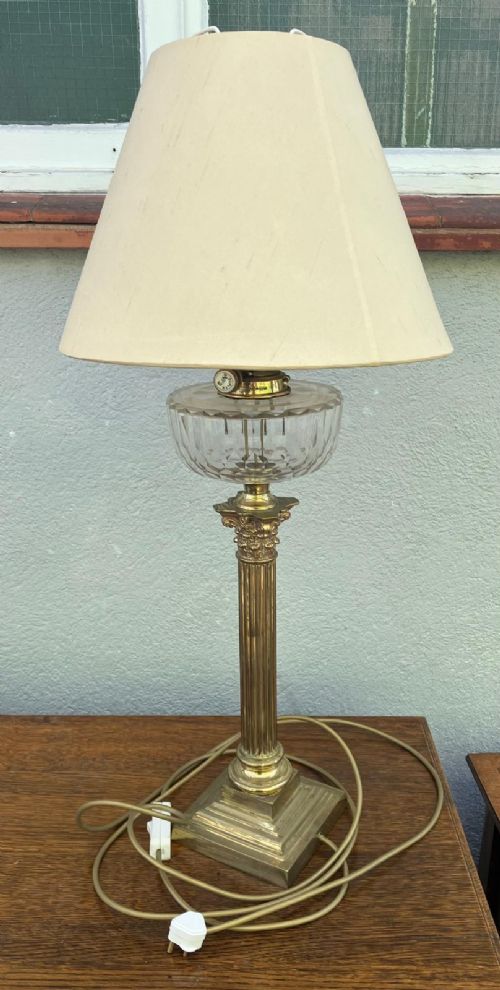


Brass Pedestal Oil Lamp
A brass pedestal oil lamp brings warm Victorian and Edwardian character to a room, offering both decorative presence and period lighting history.
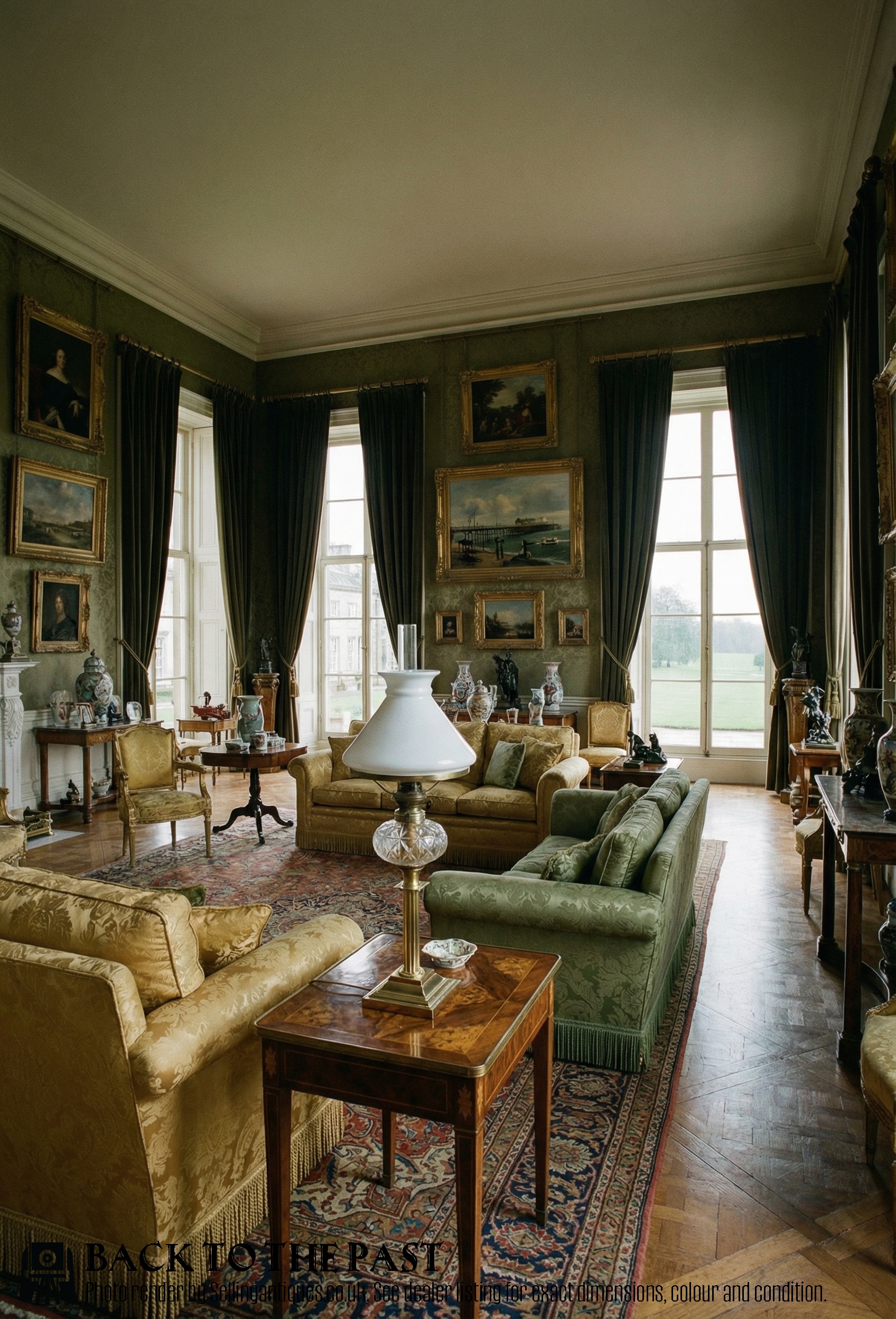
Understanding the Brass Pedestal Oil Lamp
A brass pedestal oil lamp stands as a sturdy domestic lighting fixture from the nineteenth and early twentieth centuries. These pieces combine a raised metal base with an oil reservoir, frequently topped by a glass shade.
The versions most commonly met on this page span the Victorian and Edwardian eras, with dates reaching from the mid nineteenth century into 1900. Table lamps and paraffin lamps form the primary household types available in these listings.
Makers and designers from the Victorian, Edwardian, and Arts and Crafts movements shaped these objects using brass paired with glass, ceramic, and copper. Each piece reflects the domestic lighting technology of its specific period before electric illumination became universal.

Materials and Construction
Makers utilised solid brass for the pedestals and structural bodies, often combining the metal with ebonised ceramic or standard ceramic components for stability and contrast. Copper also appears in specific Arts and Crafts examples.
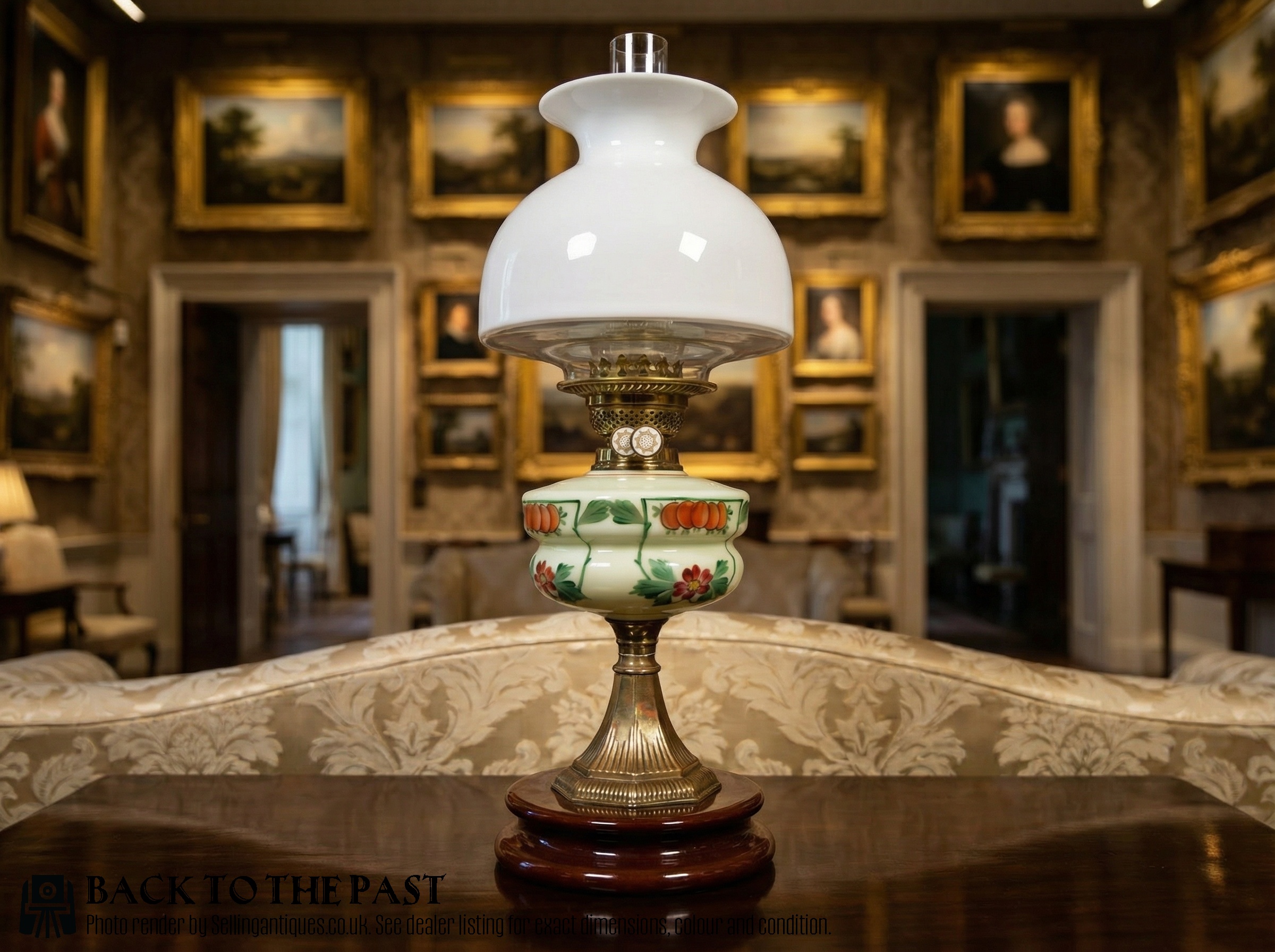
Reservoirs and shades display diverse glass techniques, featuring plain, cut glass, hand painted decoration, and striking coloured glass including cranberry and opal hues. These delicate glass elements contrast with the heavier metallic bases.
Retail Price Guide 2026
Typical UK retail prices for brass pedestal oil lamp, calculated from the Sellingantiques database of over a million retail prices indexed since 2003. This retail price guide relies exclusively on Sellingantiques data; no external sources or auction records are used, so the figures do not describe the wider market.
The listings span four distinct periods: 1860, 1880, Victorian, and 1900.
Assessing Quality and Merit
The distinction between standard domestic pieces and superior examples rests in the ambition of the materials and the crispness of the manufacture. Heavier gauge brass castings and intricate cut glass or hand painted shades mark out the better productions.
Stylistic cohesion elevates certain pieces above ordinary utility objects, particularly where Arts and Crafts copper work or distinctive cranberry glass reveals deliberate artistic direction rather than routine factory output.
The Brass Pedestal Oil Lamp Glossary
- Pedestal
- A structural support base that elevates the oil reservoir above the table surface. This raised form allows the light to project further across the room.
- Reservoir
- The container that holds the burning oil or paraffin beneath the burner mechanism. These are frequently formed from coloured or cut glass.
- Cranberry glass
- A rich red transparent glass coloured by the addition of gold chloride during manufacture. It creates a warm glow when the lamp is lit.
- Opal glass
- A translucent milky white glass used widely for shades to diffuse the harsh glare of the flame. It remains a distinctive marker of period lighting.
- Arts and Crafts
- A design movement valuing hand craftsmanship and honest materials over mass production. Pieces from this style often display simpler, more utilitarian metalwork.
Frequently Asked Questions
How do I date a brass oil lamp?
Dating relies upon stylistic clues within the metalwork, the form of the pedestal, and the material of the shade. Victorian examples often feature ornate castings, while Edwardian pieces can show lighter proportions.
Material combinations like cranberry glass or ebonised ceramic also point towards specific decades around 1900. Comparing the construction details against documented period examples helps confirm the age.
What maintenance do brass lamp bases need?
Brass naturally develops a darker patina over the decades, which many collectors prefer to leave untouched. Gentle dusting with a dry cloth is usually sufficient for regular upkeep.
Avoid abrasive metal polishes that can strip away the historic surface character and soften fine chased details. If cleaning is necessary, use a mild, non-ionic solution.
How do I identify cranberry glass?
Cranberry glass exhibits a distinct translucent pinkish red tone derived from gold particles suspended in the molten mixture. It ranges from pale rose to a deeper raspberry hue.
When held to the light, the colour appears even throughout the body rather than merely painted on the surface. This technique was highly favoured for Victorian shade production.