
Glass Shade Oil Lamp
A glass shade oil lamp brings warm Victorian and Edwardian illumination into a room through brass columns, ceramic fonts and vibrant coloured glass.

Glass Shade Oil Lamp
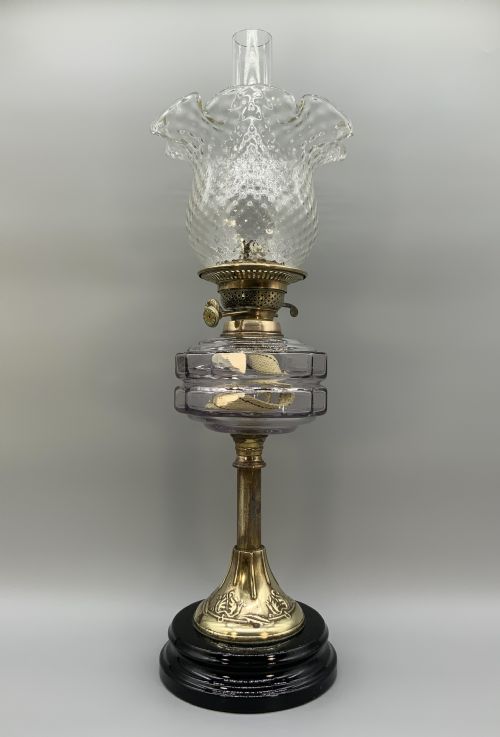
A glass shade oil lamp combines a sturdy base of brass, ceramic or bronze with an elaborate glass shade, originating primarily from the Victorian and Edwardian eras. These lighting pieces span tall floor-standing models, hanging lamps, and table lamps featuring twin-burning duplex burners or single wicks.
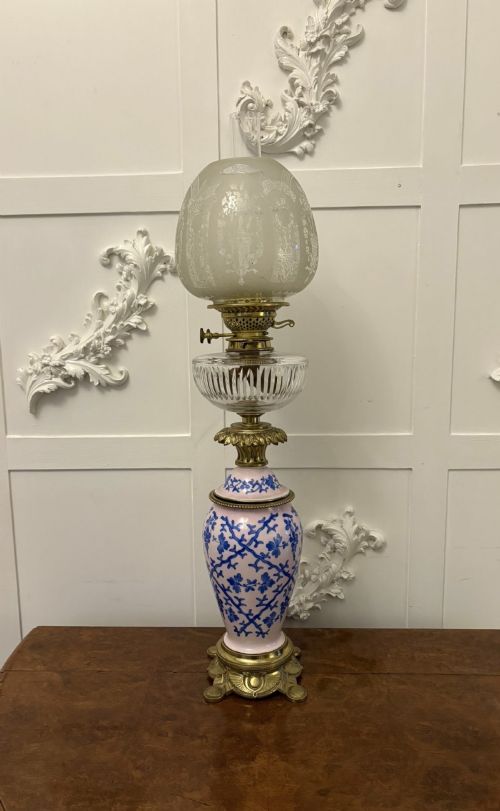
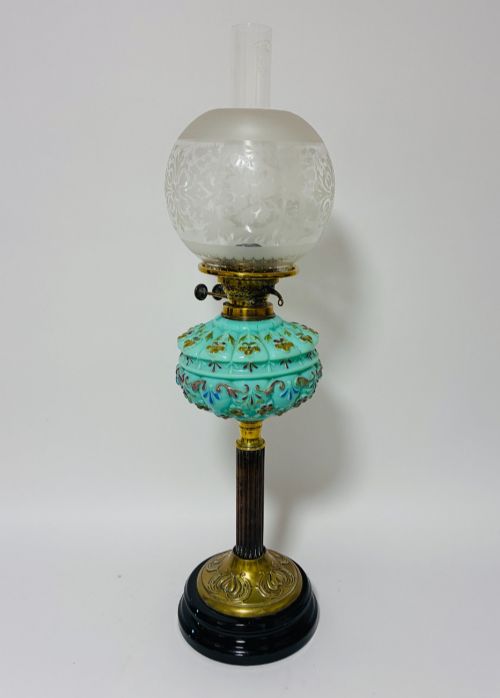
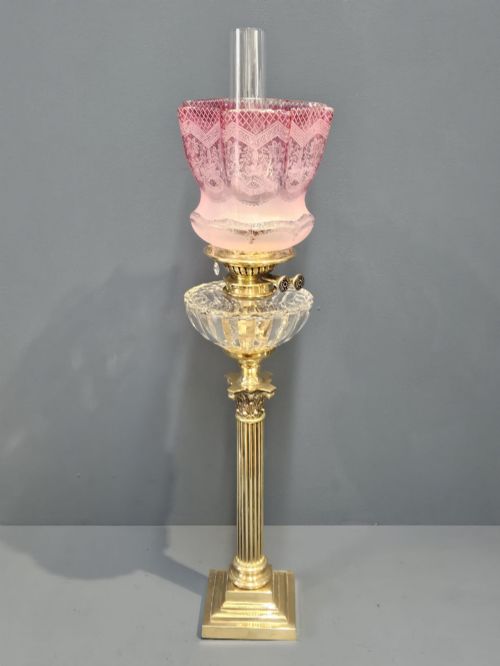
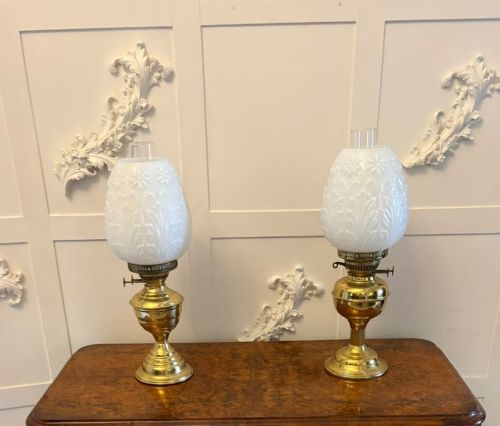
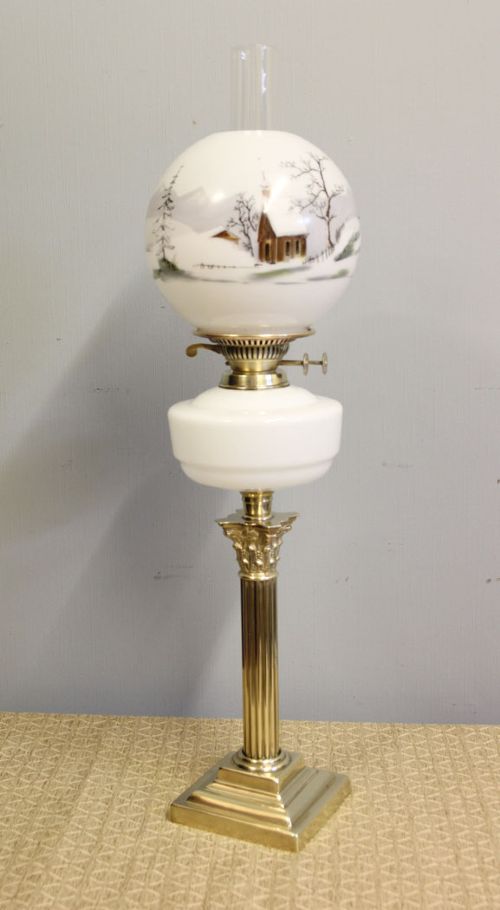
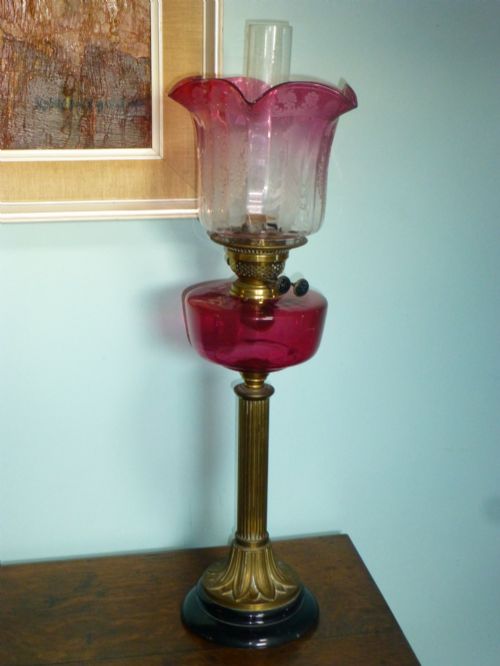
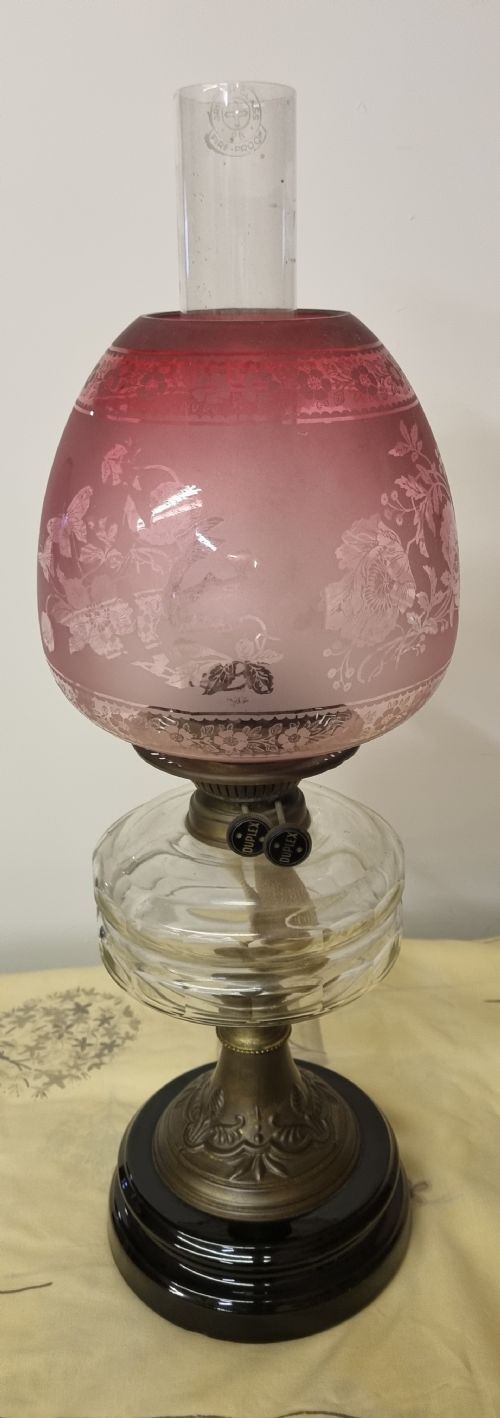
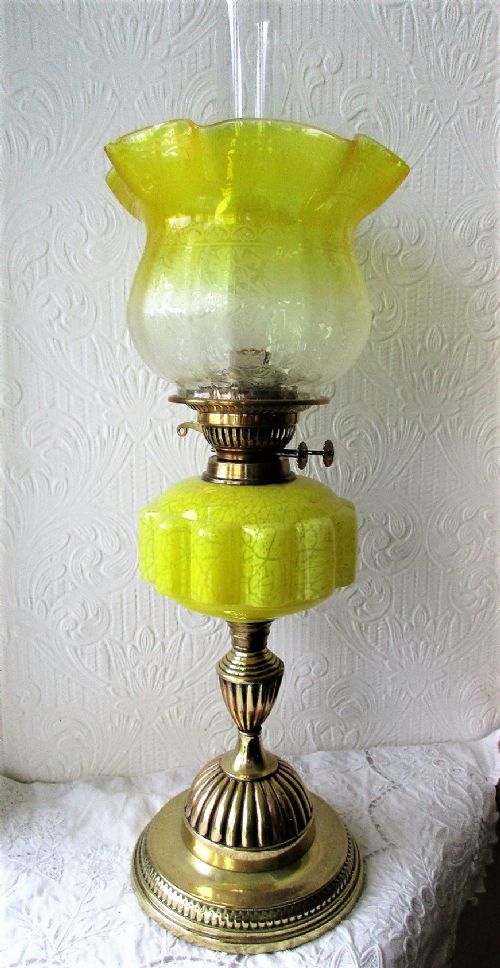
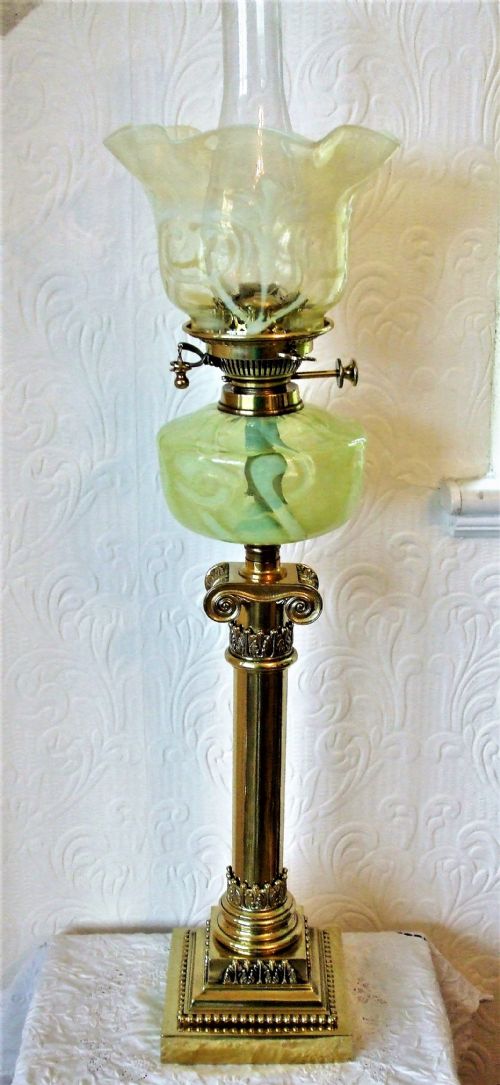
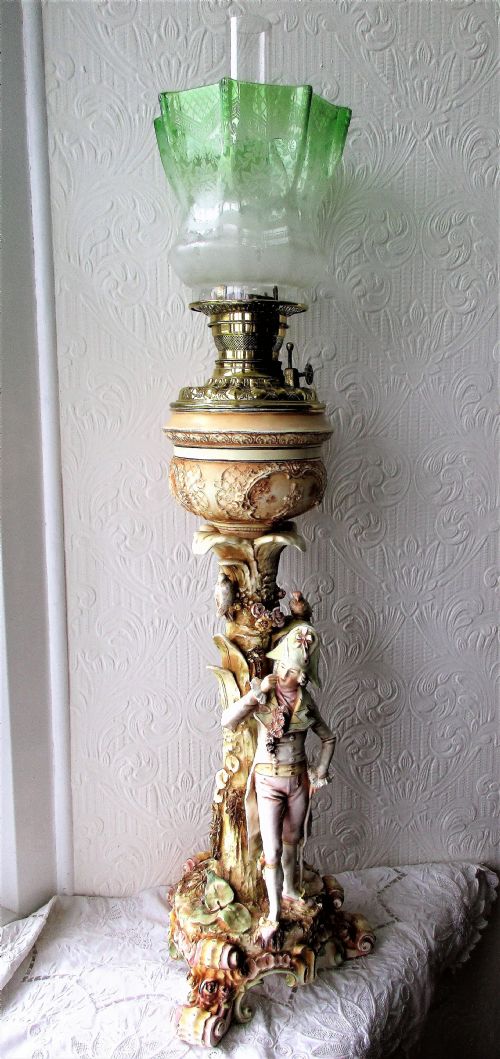
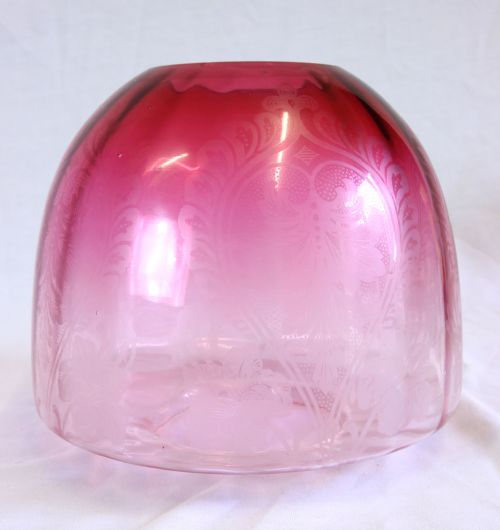
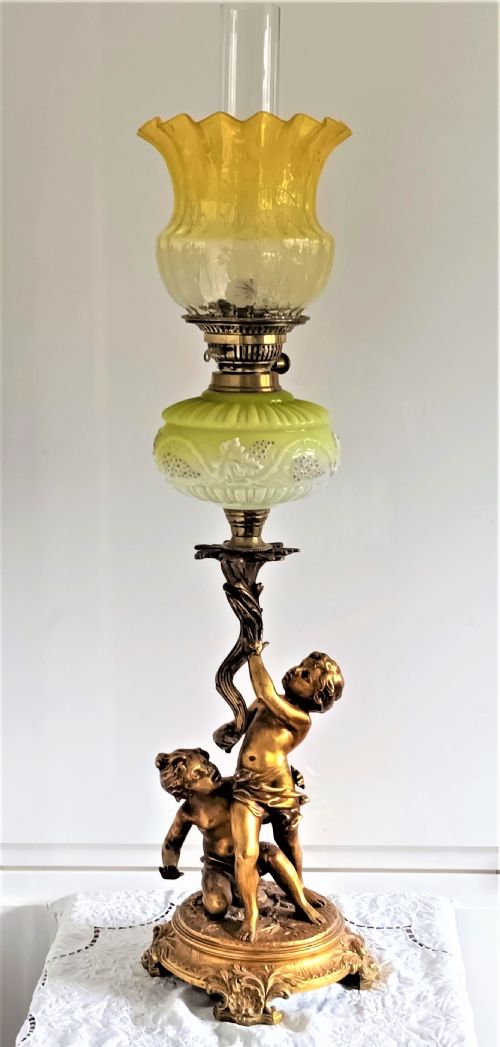
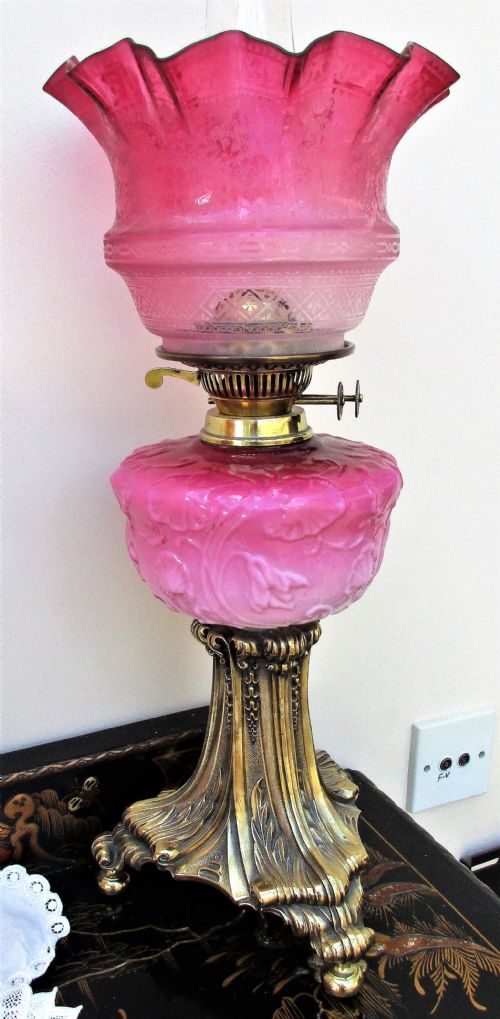
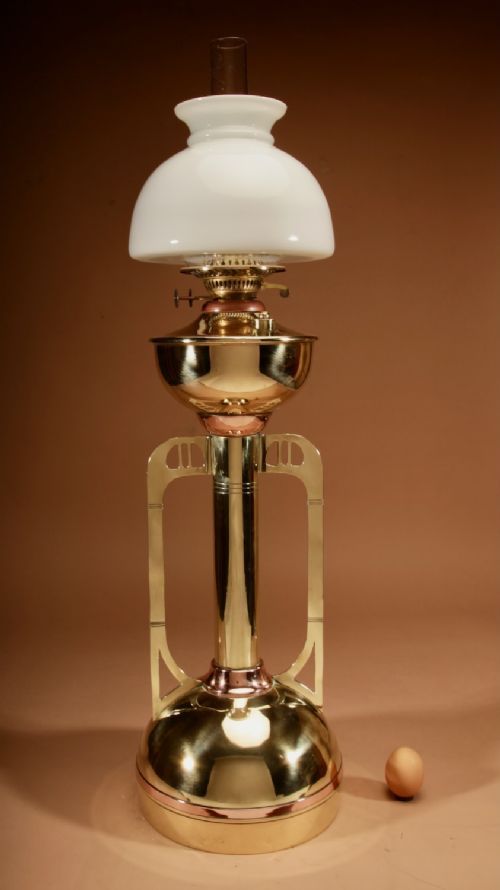
Most examples encountered here pair a polished brass or ceramic column with striking coloured glass elements, such as cranberry, opaline, vaseline or green glass fonts and matching shades. The styles range from classical Corinthian and Ionic columns to decorative Art Nouveau and Secessionist designs.
How They Were Made
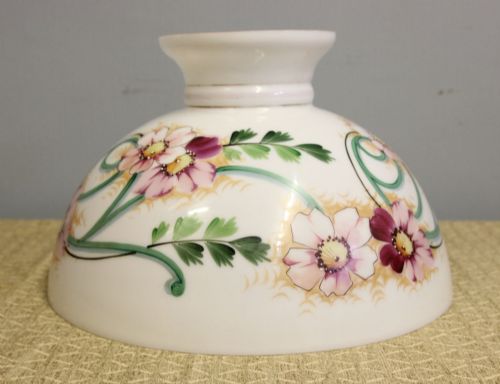
Brass and bronze provided the structural columns and bases, often cast in classical architectural forms or combined with ceramic and marble components. Font bodies and shades utilised blown, cased, and pressed glass techniques, frequently incorporating hand-painted botanical motifs or etched surface patterns.
Burner mechanisms, including double-burner duplex systems, relied on precision brass engineering to regulate the wick and flame. Certain models integrated copper, enamel, and cut glass to add texture and colour variation to the metallic and glass structure.
Among the ceramic and brass assemblies sits a porcelain lamp shaped like an observant owl.
What Varies in Quality
The sophistication of the metal casting and the complexity of the glasswork determine the standing of an individual piece. Heavy brass columns with detailed Corinthian capitals or figural bronze elements sit above simpler turned metal stems.
The execution of the glass shade itself dictates visual distinction, moving from plain opaline or amber to hand-blown, hand-painted cranberry glass and deeply etched tulip profiles. Maker marks on brass burners and porcelain bodies also separate standard production lamps from notable workshop outputs.
Hinks of Birmingham·Taylor Tunnicliff·Sitzendorf·Gustave Serrurier Bovy
The Glass Shade Oil Lamp Glossary
- Duplex burner
- A double-wick mechanism designed to produce a brighter flame than standard single-wick oil lamps. It usually requires wider flat wicks and a matching wide-collared shade.
- Cranberry glass
- A rich red-pink transparent glass created by adding gold chloride to the molten batch during manufacturing. It appears frequently in Victorian lamp shades and fonts.
- Opaline glass
- A pale, translucent white glass that diffuses light softly without complete transparency. This material was widely utilised for Victorian and Edwardian lamp shades.
- Vaseline glass
- A yellow-green transparent or translucent glass coloured with uranium dioxide that glows under ultraviolet light. Collectors prize this distinct material for its optical qualities.
- Font
- The reservoir container that holds the lamp oil beneath the burner assembly. Fonts in these listings are formed from brass, ceramic, or coloured glass.
Glass Shade Oil Lamp: Frequently Asked Questions
Are these lamps still suitable for daily lighting?
These pieces function as historical lighting objects that can be used with modern lamp oil or adapted carefully for interior ambience. Many collectors prefer to preserve them in original condition for display rather than regular daily use.
Ensure that the burner mechanism and collar remain secure and intact before adding fuel to any vintage lamp. Professional checks can verify the structural integrity of older brass and ceramic reservoirs.
How do I identify a Victorian oil lamp?
Victorian models frequently feature heavy brass columns, Corinthian capitals, or ceramic bodies decorated with hand-painted floral motifs. The integration of rich cranberry, green, or opaline glass shades is characteristic of late nineteenth-century production.
Maker names stamped onto the brass burner thumbscrews often point directly to Birmingham or continental European foundries from the period. Architectural influences like Ionic and Corinthian styling also signal Victorian manufacture.
What is the difference between table and floor lamps?
Table lamps are proportioned for placement on sideboards, desks, or parlour tables with shorter brass or ceramic columns. Floor standing models utilise extended pole stems and tripod bases designed to rest directly on the floor.
Floor lamps often incorporate heavier weighted bases or brass pole arrangements to maintain balance with large glass shades. Both types share similar burner mechanics and font materials.