

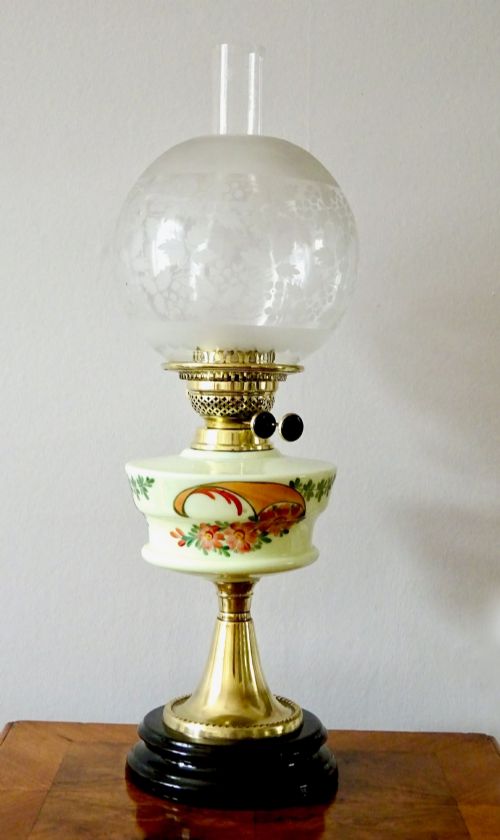


Traditional Paraffin Table Lamp
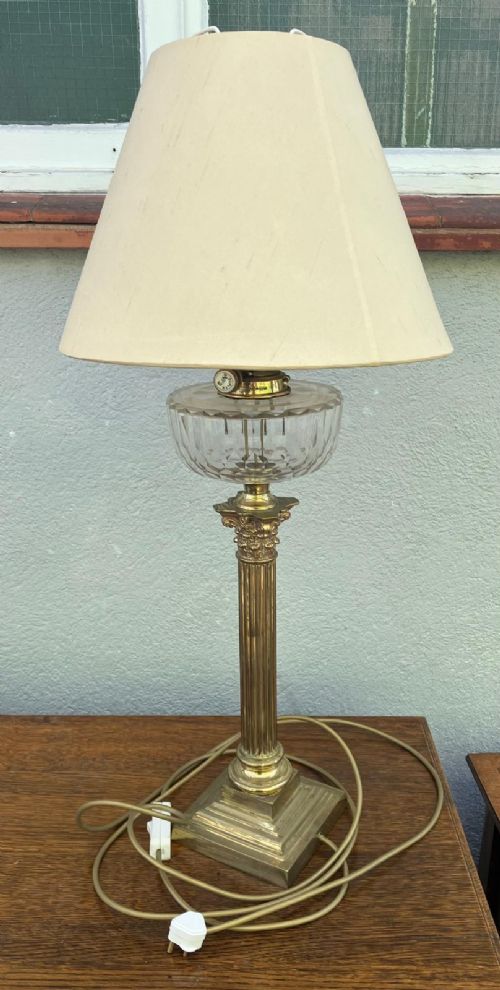
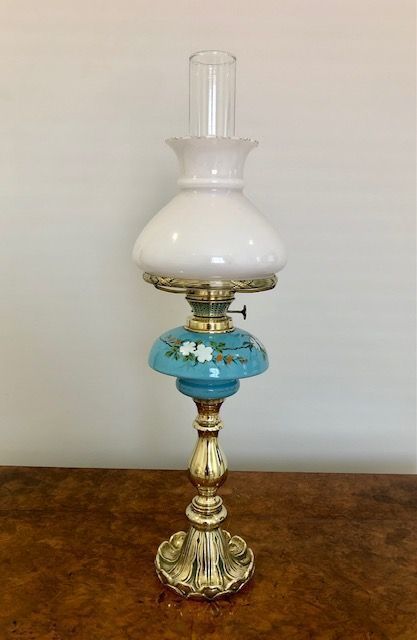
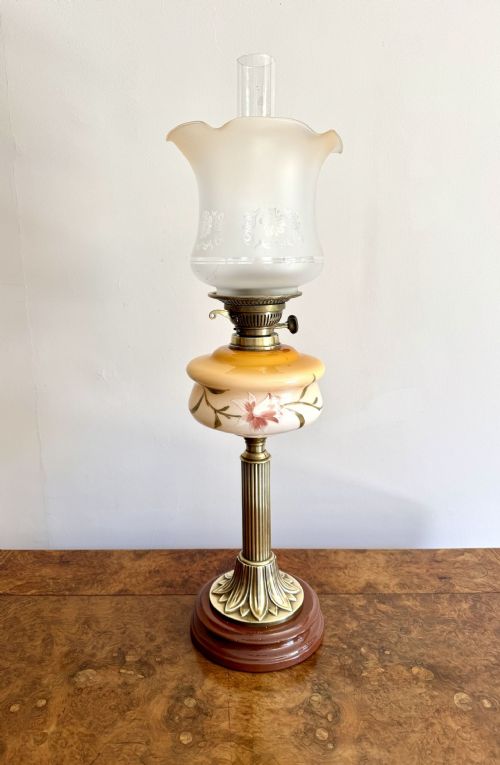
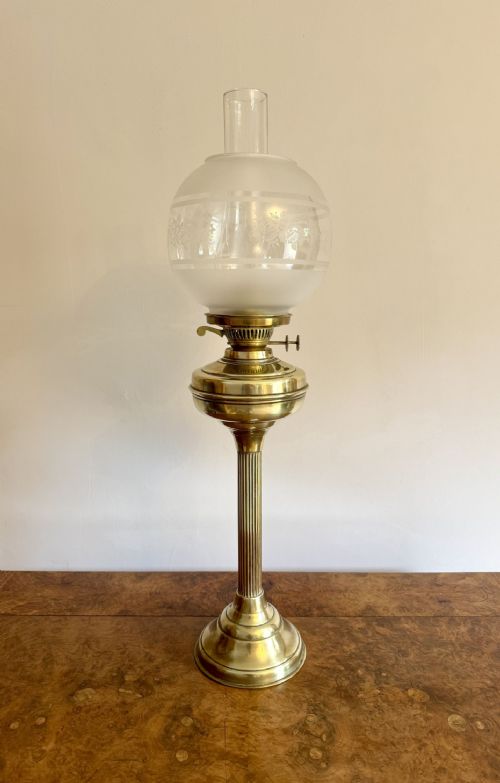
These traditional paraffin table lamp examples bring Victorian and Edwardian warmth to a room, combining brass columns with tinted glass fonts.

Traditional Paraffin Table Lamp
When you search for a traditional paraffin table lamp, you are looking at nineteenth- and early twentieth-century lighting built to burn oil before widespread electrification. The pieces gathered here stem predominantly from the Victorian and Edwardian eras, spanning the 1850s through to the 1930s. Most variants encountered on this page pair a substantial metal base with a decorative glass reservoir and shade.
The most common form uses a gleaming brass column, often styled with Corinthian capitals or neoclassical revival motifs, standing upon a sturdy stepped base. Alongside these metal-stemmed designs, you will find cottage-style models and French repoussé examples featuring ceramic or ebonised wood elements. Many retain their original burners or show thoughtful conversions to modern electric fittings.
How they were made
Makers constructed these lamps by combining heavy-cast or spun brass with blown and moulded glass components. Metal columns were turned and polished, frequently incorporating detailed Corinthian fluting or intricate repoussé relief work. Reservoirs and shades utilised specialised glassmaking techniques, resulting in opaline, cut glass, and striking cranberry hues.
Artisans secured the metal collars and burners directly to the glass fonts using plaster or specialised adhesives. Fabric shades were sometimes added in later iterations or during twentieth-century updates to soften the illumination. The resulting assemblies were weighted at the base to ensure stability on domestic tables.
Some of these heavy brass columns secretly spent a century doubling as sophisticated reading lights for Victorian letter-writers.
What varies in quality
The distinction between ordinary and exceptional examples lies in the heft of the metalwork and the clarity of the glass. Superior pieces employ heavy-gauge brass with crisp, deep casting details rather than thin, pressed sheet metal. Finer glass fonts and tulip shades exhibit sharp wheel-cutting or rich, saturated colour that holds its depth when lit.
Proportion and decorative harmony also separate the ranges. The best examples balance the height of the column precisely with the volume of the font and the span of the shade. Original burner mechanisms stamped with maker details add historical integrity to the finished piece.
Young's Special·Messengers·Harrods
The Traditional Paraffin Table Lamp Glossary
- Corinthian Column
- A classical architectural column style featuring ornate acanthus leaves at the top, frequently emulated in brass lamp stems.
- Duplex Burner
- A double-wick burner mechanism popular in the Victorian era for producing a brighter, steadier flame.
- Opaline Glass
- A translucent white glass developed in the nineteenth century to diffuse light softly without heavy glare.
- Repoussé
- A metalworking technique where an ornate design is hammered into relief from the reverse side.
Traditional Paraffin Table Lamp: Frequently Asked Questions
How do I date a paraffin lamp?
Dating relies on stylistic clues, burner patents, and manufacturing methods. Victorian models often feature heavy brass castings and elaborate cranberry or opaline glass fonts, while later Edwardian versions lean towards simpler cottage forms.
Examining any stamped text on the brass burner thumbwheels can also reveal the operating patent date or the maker's trading name.
Were these lamps converted to electricity?
Many surviving examples have been adapted for modern domestic use by running a flex through the central column. This allows the antique brass and glass body to serve as a functional table lamp without burning fuel.
Such conversions preserve the decorative character of the original Victorian or Edwardian fitting while meeting contemporary electrical standards.
What glass shades originally belonged here?
Original configurations typically paired brass columns with matching tulip, etched, or plain opaline shades. Cranberry glass fonts were frequently matched with complementary tinted chimneys or globes to create a unified colour scheme.
Replacement shades are common, so inspecting the glass weight and fitting size helps determine period consistency.
Where were these lamps used?
These lighting pieces were designed for parlours, dining rooms, and bedrooms before electricity reached domestic homes. Their heavy bases and generous proportions made them stable enough for everyday table placement.
Finer neoclassical and Corinthian models occupied prominent reception rooms, while simpler cottage versions served smaller living spaces.