
Edwardian Paraffin Lamp
When you search for an edwardian paraffin lamp, you find domestic lighting engineered in brass, ceramic, and glass to burn fuel safely in homes before widespread electrification.

Edwardian Paraffin Lamp
An edwardian paraffin lamp is a domestic lighting fixture designed to burn lamp oil or paraffin, originating predominantly from the late nineteenth and early twentieth centuries. These lamps span several eras of production, including Victorian, 19th Century, Edwardian, and periods up to 1910.
Makers and distributors such as Eli Griffiths & Sons, Hinks, Taylor Tunnicliff, Messengers, and Harrods appear across the evidence, showing production ranges from specialised Birmingham manufacturers to prominent English retailers.
How they were made
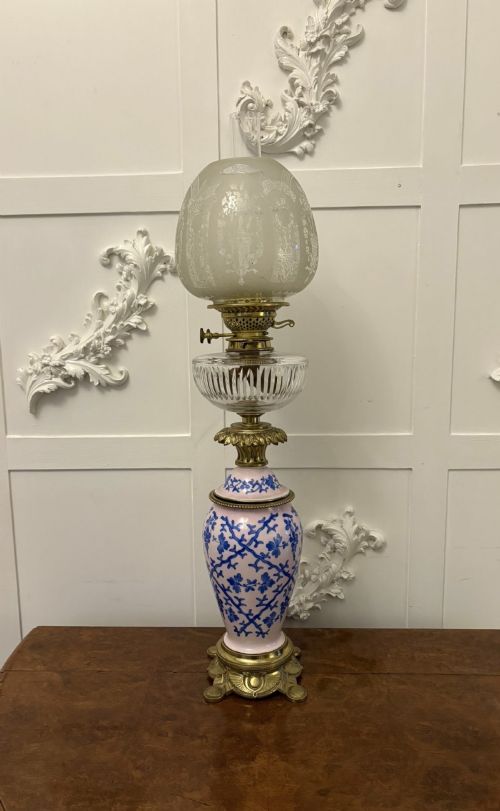
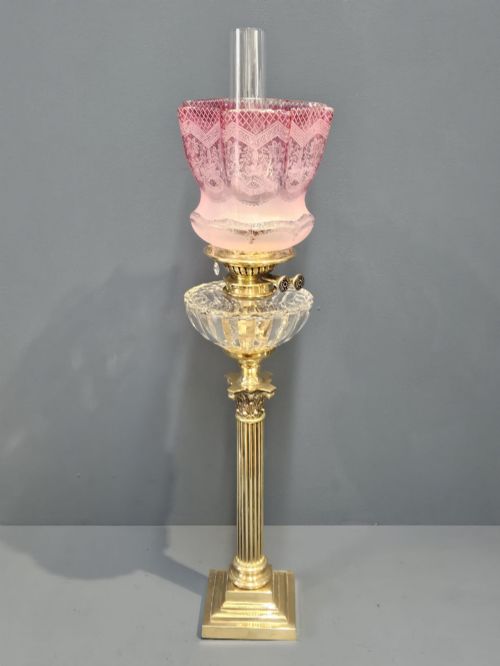
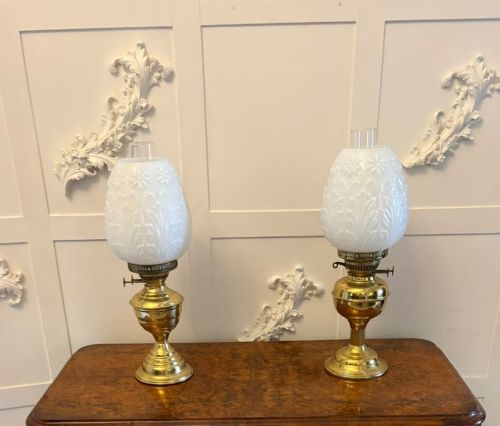
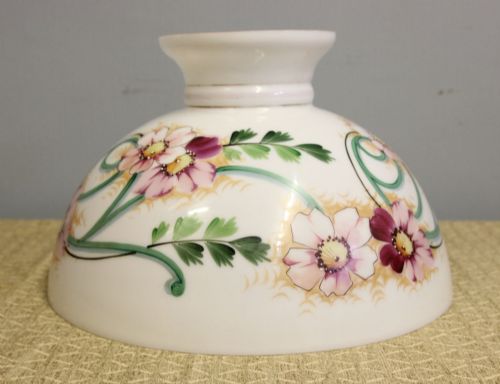
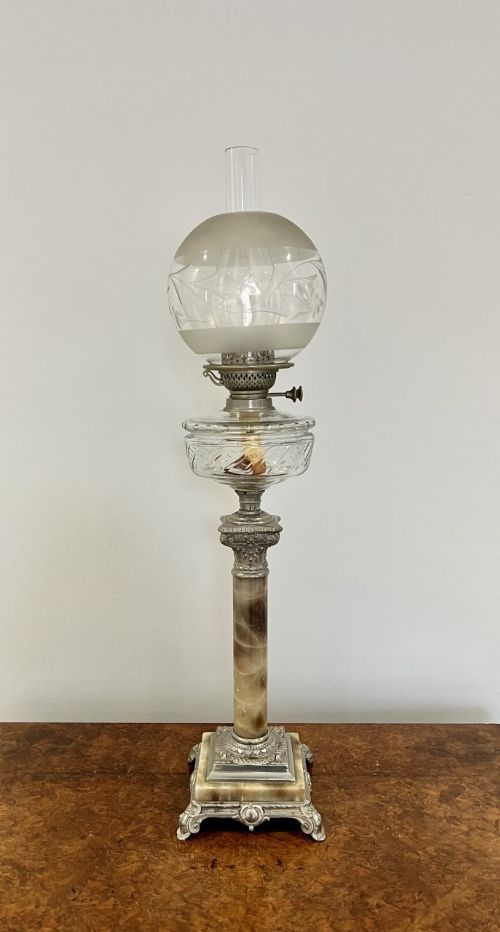
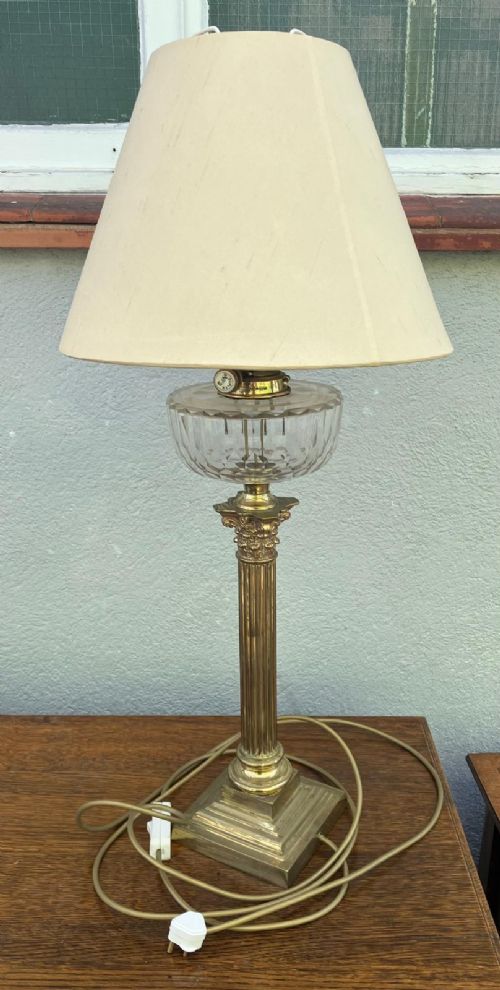
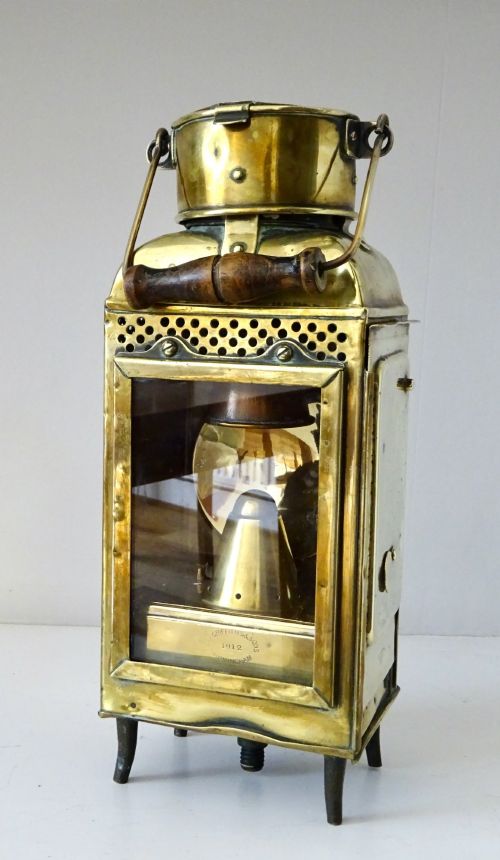
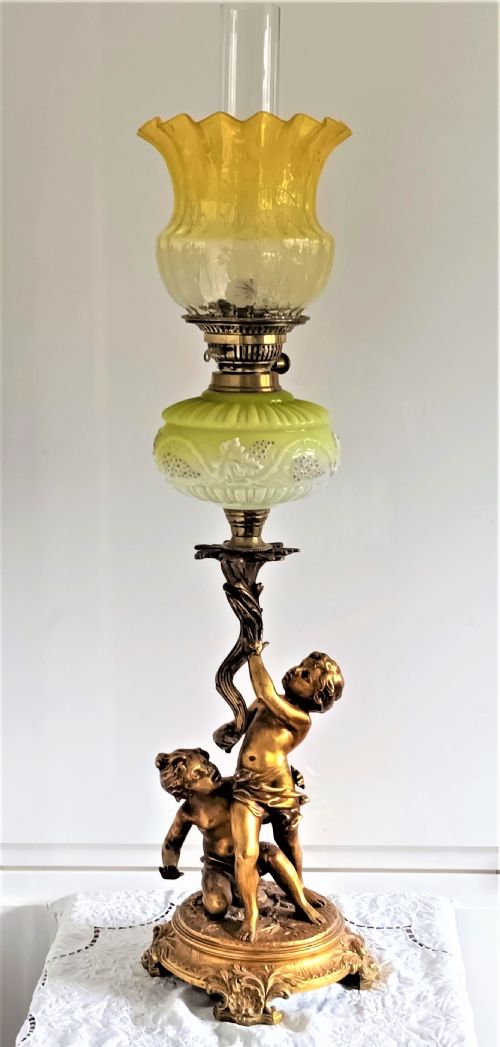
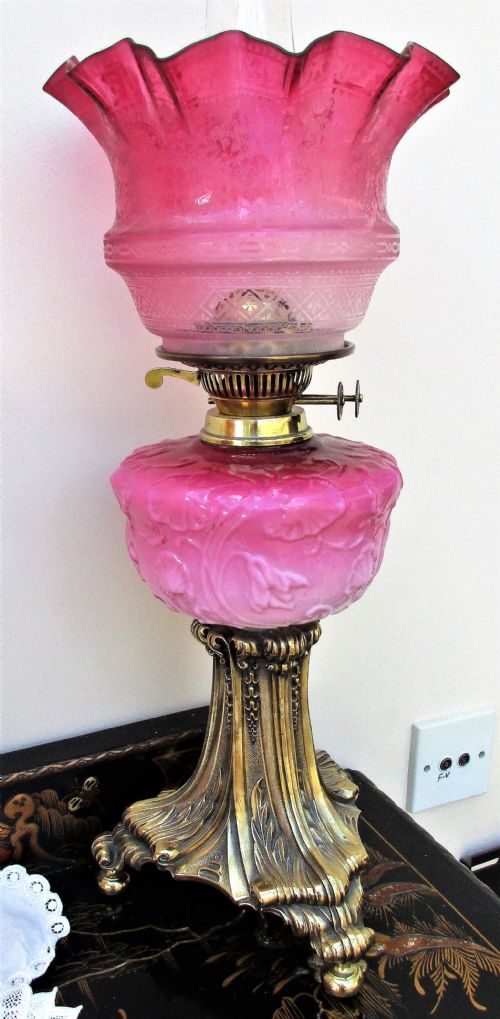
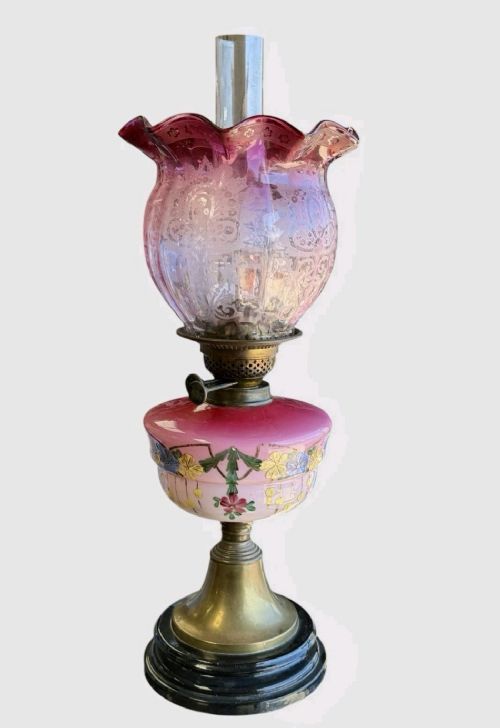
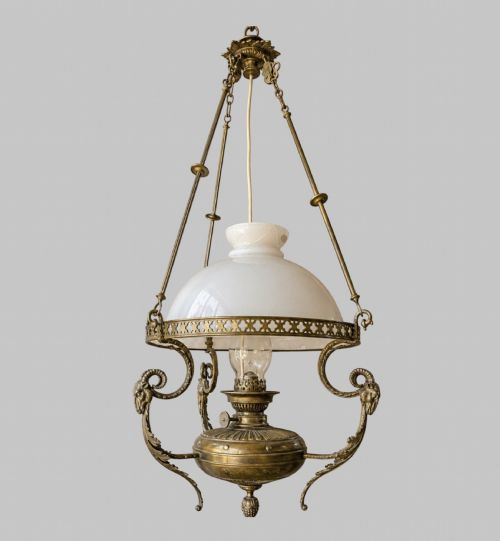
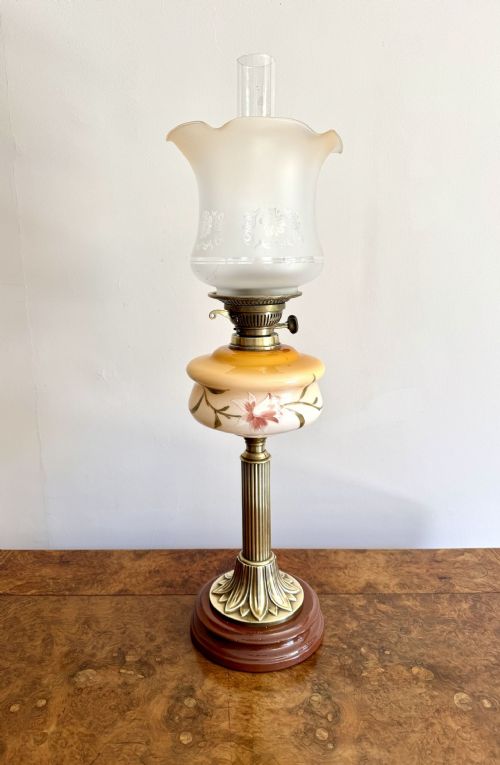
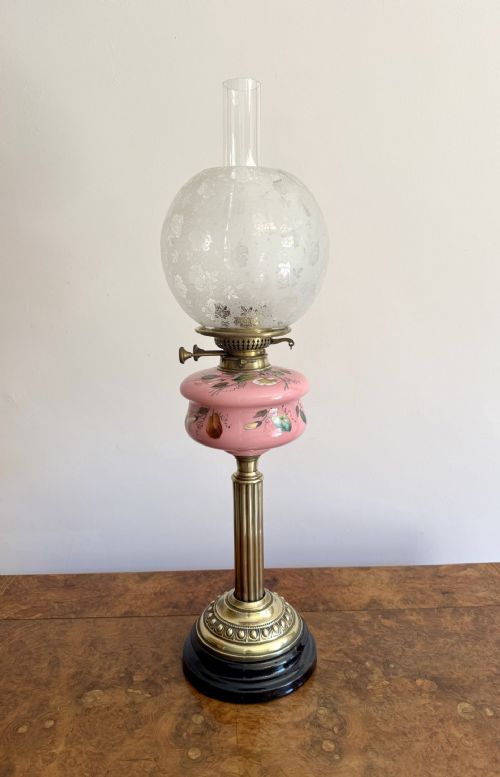
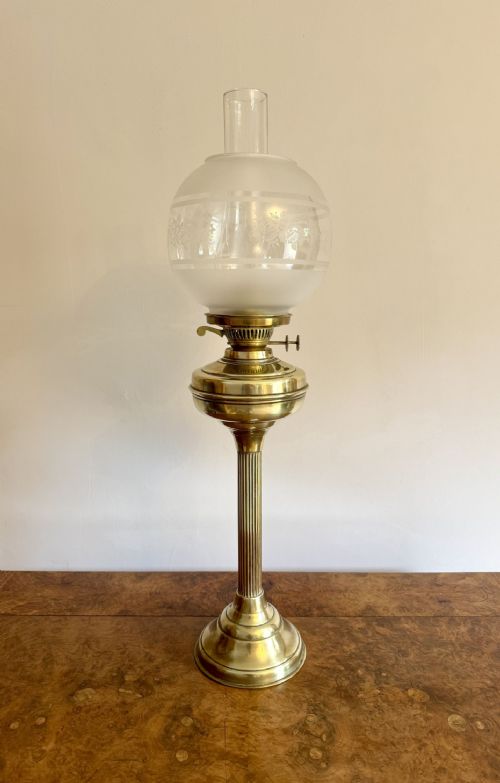
Makers constructed these lamps primarily using brass, copper, and cast metals for the structural columns, heavy bases, and burner mechanisms. Fonts and reservoirs were frequently formed from pressed, cut, opaline, cranberry, or pink glass, sometimes incorporating hand-painted motifs or gilded decoration.
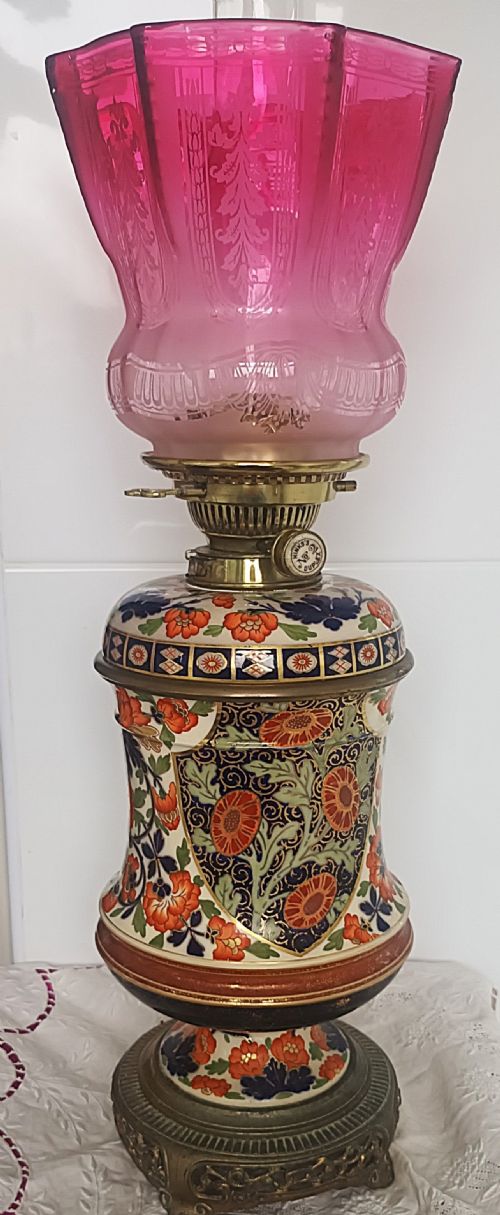
Ceramic bodies and hand-painted enamel elements added colour and texture to the designs, often matching the paired glass shades. Burners integrated complex brass mechanisms, sometimes incorporating proprietary components by makers like Hinks to regulate the flame efficiently.
Edwardian Paraffin Lamp Retail Price Guide 2026
Typical asking prices for edwardian paraffin lamp among the pieces listed under this phrase on Sellingantiques today, from the lower quarter to the upper quarter. They describe what is for sale here now, not the wider market.
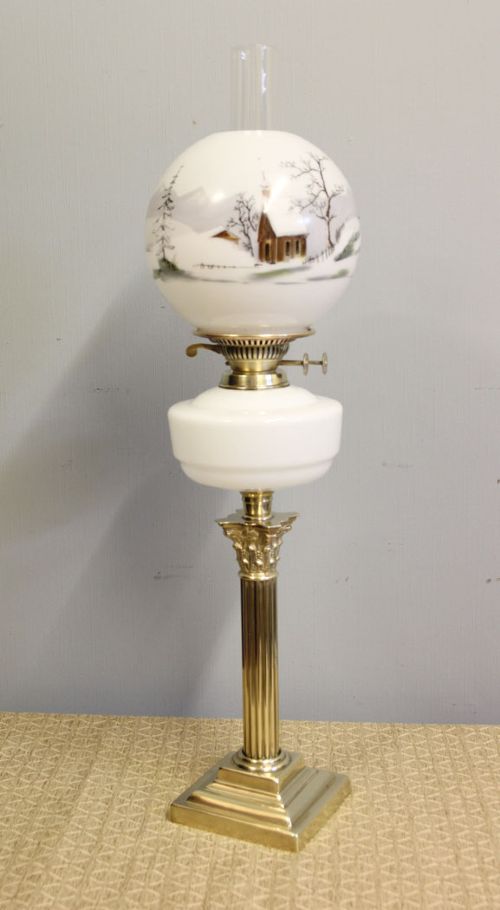
Winter scenes of snow painted onto glass shades kept Victorian parlours feeling suitably chilly while the paraffin flame warmed the room.
What varies in quality
Quality rests on the weight and integrity of the brass casting, the crispness of detailing on Corinthian columns, and the finish of the metalwork. Heavy, solid construction distinguishes superior table and standard lamps from lighter domestic items.
The glass elements create a major distinction between pieces, where hand-painted fonts, layered cranberry glass, and finely etched shades demonstrate higher artisan skill than plain pressed glass. Complete sets retaining their original matching burners and period shades carry greater cohesion than lamps assembled from disparate parts.
Eli Griffiths & Sons·Taylor Tunnicliff·Harrods
The Edwardian Paraffin Lamp Glossary
- Burner
- The metal mechanism screwed to the top of the font that holds the cotton wick and controls the flame. Specific makers patented distinct mechanical designs for better airflow and safety.
- Opaline glass
- An opaque or translucent pale glass used widely for lamp shades and bodies during the nineteenth and twentieth centuries. It diffuses light softly across a room.
- Corinthian column
- A classical architectural column style adapted for lamp standards, featuring ornate acanthus leaf capitals. It became a popular motif for heavy brass table and floor lamps.
Edwardian Paraffin Lamp: Frequently Asked Questions
Can I replace a broken glass shade safely?
Replacing a damaged shade requires matching the fitter size, which is the diameter of the bottom opening that inserts into the brass gallery. Measure the opening precisely to ensure a secure fit.
While period-appropriate opaline and cranberry glass shades can be sourced separately, finding a shade that matches the exact colour and etchings of the original font takes patience.
How do I clean brass and glass parts safely?
Clean brass components gently with a non-abrasive cloth to preserve the aged patina developed over decades. Avoid harsh chemical dips that strip away the historical surface character.
Wash glass shades and fonts in warm soapy water using a soft sponge. Take extra care around hand-painted enamel or gilded decorations to prevent rubbing off the pigments.
How do I tell an Edwardian lamp from a Victorian one?
Victorian lamps often feature heavier, more ornate ornamentation, such as rich cranberry glass, elaborate gilding, and complex Neoclassical Revival or Victorian Art Nouveau motifs. The materials frequently emphasise deep colours and heavy brass castings.
Edwardian examples often lean towards simpler, lighter aesthetics, including plain opaline shades, cleaner brass lines, and early Edwardian Industrial forms. However, stylistic overlap remains common between the turn-of-the-century decades.