


Frilled Glass Shade Lamp
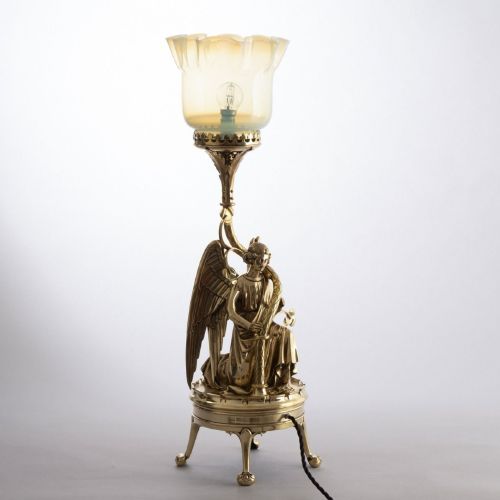
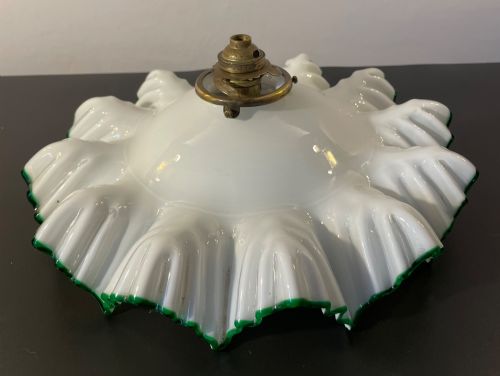
These frilled glass shade lamp pieces combine brass mounts with crimped or ruffled glass shades to provide warm, characterful domestic lighting.
Frilled Glass Shade Lamp
A frilled glass shade lamp typically pairs a metal base with a distinctive glass diffuser, drawing on Victorian and Edwardian domestic lighting traditions. The form spans various domestic uses, including table oil lamps, floor standing variants, wall sconces, and hanging ceiling lights.
Most examples found on this page date from the nineteenth century up through the nineteen-thirties, with styles ranging from plain utility pieces to decorative Art Nouveau and Gothic Revival designs. Brass serves as the primary metal framework, supporting shades formed in cranberry, vaseline, green, yellow, or frosted glass.
How they were made
Makers constructed the structural components predominantly from cast or spun brass, incorporating embossed details, adjustable arms, and copper or silver-plated accents where appropriate. These metal mounts provide the stable foundation required to support heavy glass fonts and burners.
The glass shades owe their characteristic form to hot-working techniques, where artisans shaped the molten rims into ruffled, crimped, or frilled edges. Workshops utilised specialist glass recipes to achieve vibrant hues such as cranberry and vaseline, alongside clear, frosted, and etched finishes.
Frilled Glass Shade Lamp Retail Price Guide 2026
Typical asking prices for frilled glass shade lamp among the pieces listed under this phrase on Sellingantiques today, from the lower quarter to the upper quarter. They describe what is for sale here now, not the wider market.
Object forms range from practical desk lamps and wall sconces to floor lamps, oil lamps, and overhead chandeliers.
What varies in quality
Quality rests upon the crispness of the brass casting and the sophistication of the glasswork, distinguishing standard utility lighting from more ambitious decorative productions. Heavier gauge metalwork and deeply saturated glass colours with cleanly executed crimped borders indicate superior craftsmanship.
The integration of components also separates pieces, seen in the harmony between original shades and their corresponding bases, as well as the finesse of embossed ornamentation. Well-proportioned examples retain a balance of weight and detail that elevates them above basic commercial production.
Farraday and Son·W A Benson·Meissen Porcelain
The Frilled Glass Shade Lamp Glossary
- Cranberry glass
- A red or pink transparent glass created by adding gold chloride to the metal during production. This rich hue proved popular for Victorian and Edwardian lampshades.
- Font
- The oil reservoir of a lamp, typically positioned directly beneath the burner and above the main support. In many examples, it is fashioned from matching or contrasting coloured glass.
- Crimped edge
- A glass shade rim manipulated into wavy or ruffled folds while hot. This technique softens the silhouette and diffuses light in domestic interiors.
Frilled Glass Shade Lamp: Frequently Asked Questions
How do I date a brass and glass lamp?
Dating relies on examining the construction methods of the brass mounts, the style of any embossing, and the manufacturing characteristics of the glass shade.
Earlier nineteenth-century pieces often display heavier cast components and hand-finished details, whereas 1930s examples show sleeker lines and simpler mountings.
Were these lamps originally for oil or electricity?
Many of these pieces began life as oil-burning lamps, utilising a burner mechanism and glass chimney above the fuel reservoir. Over time, a significant proportion have been converted to electricity for modern domestic use.
Original oil lamp components, such as burners and fonts, frequently remain intact even on converted examples.
How do I clean a frilled glass shade?
Cleaning requires gentle washing in lukewarm water with mild soap, taking care around delicate crimped edges. A soft cloth prevents scratching on etched or frosted surfaces.
Harsh chemical cleaners should be avoided to protect the integrity of antique glass and brass patination.
What is the difference between cranberry and vaseline glass?
Cranberry glass achieves its distinct pinkish-red shade through gold content in the glass mixture, producing a warm and rich tone. Vaseline glass relies on uranium content to create a translucent yellow-green appearance.
Both materials were widely employed during the Victorian and Edwardian periods for decorative lighting shades.