




Fluted Column Oil Lamp
These fluted column oil lamps combine heavy brass bases with coloured glass bodies, offering a striking period light source for modern rooms.
Identifying fluted column oil lamps
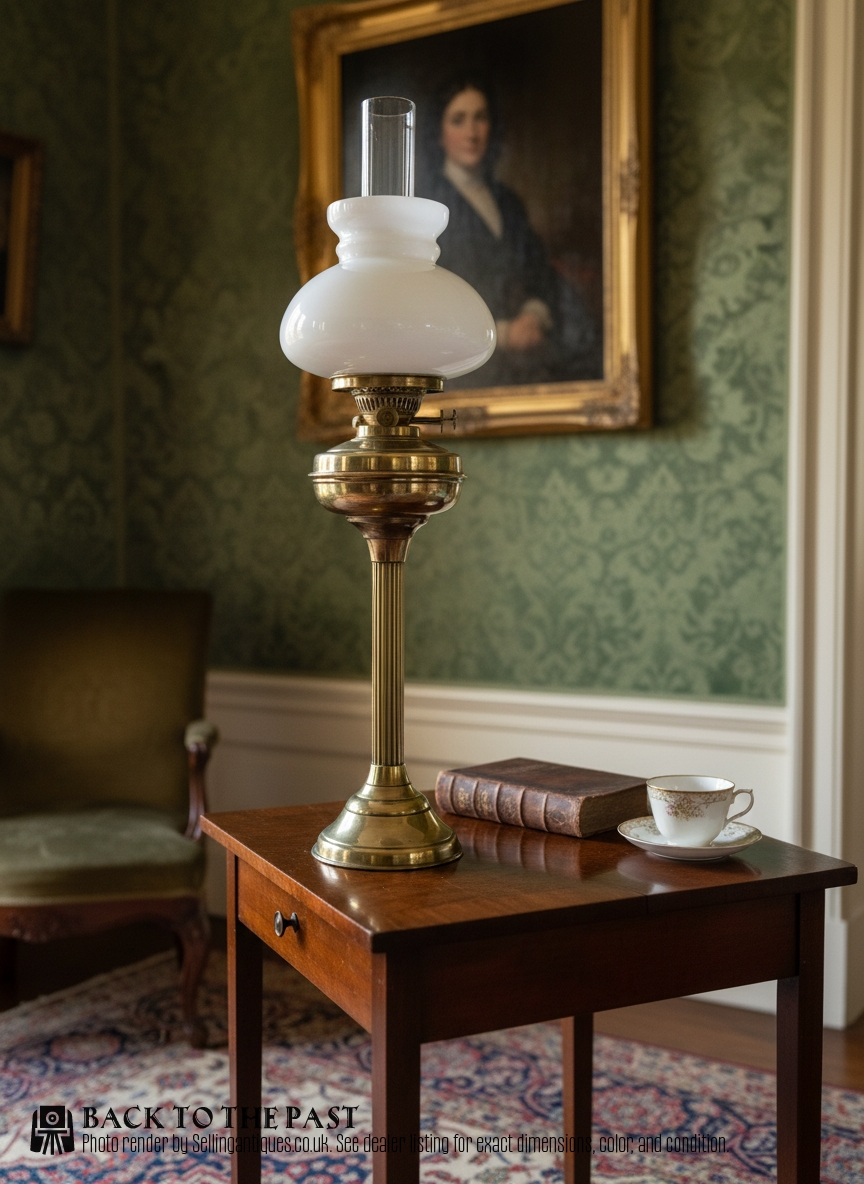
A fluted column oil lamp brings Victorian and Edwardian lighting into domestic spaces through upright metal standards and substantial reservoirs. Most examples on this page date from the late nineteenth century and the year nineteen hundred, spanning the Victorian and Edwardian periods.
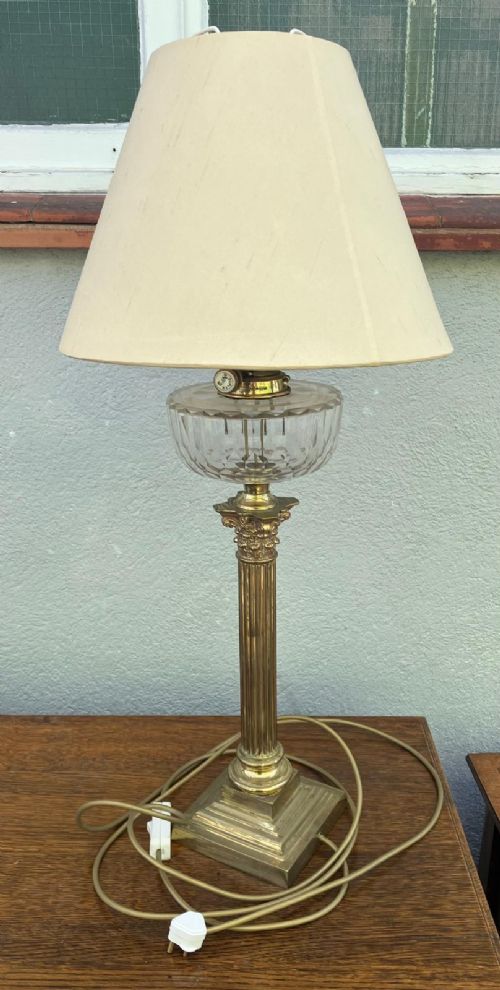
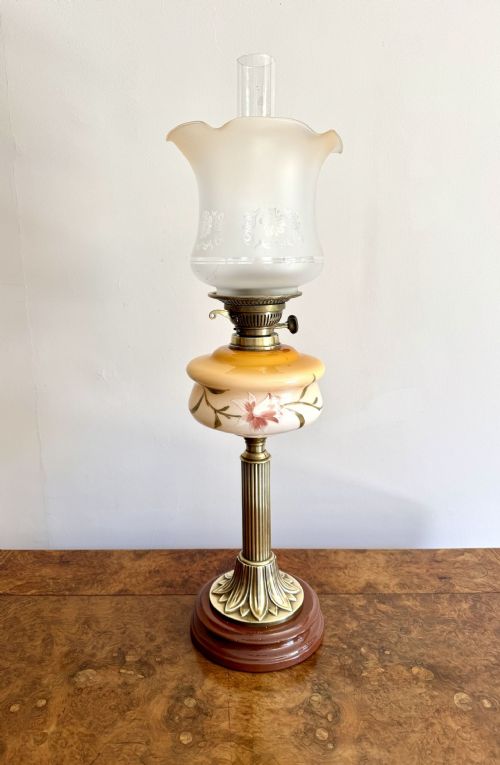
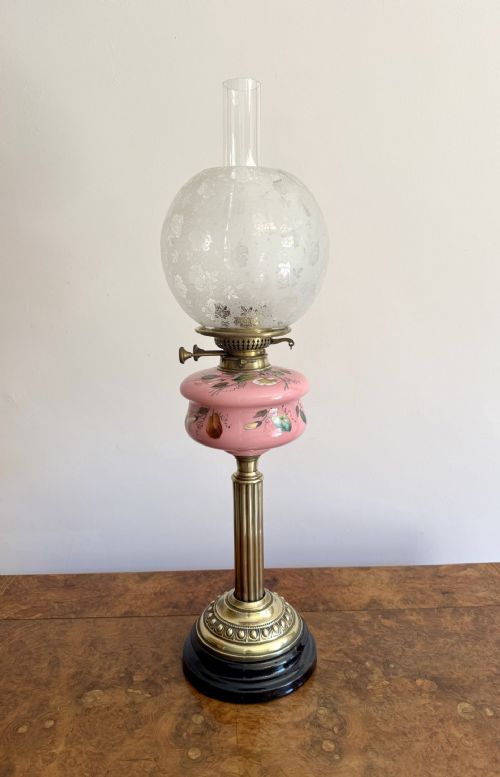
The standard form combines a stepped or square foot, a fluted brass column, and an upper font made of glass, ceramic, or opaline glass. These pieces serve primarily as decorative table lamps today, retaining their original proportions while often adapted for modern electrical use.
Materials and construction
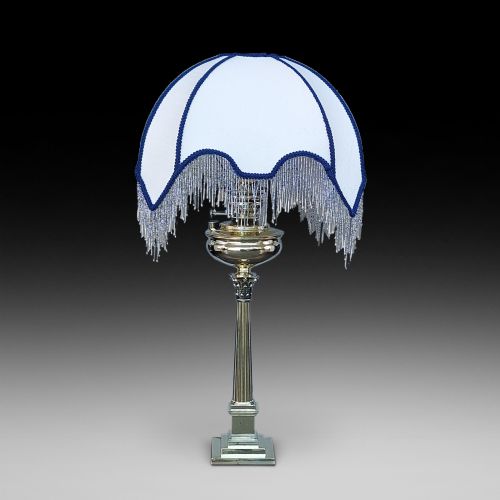
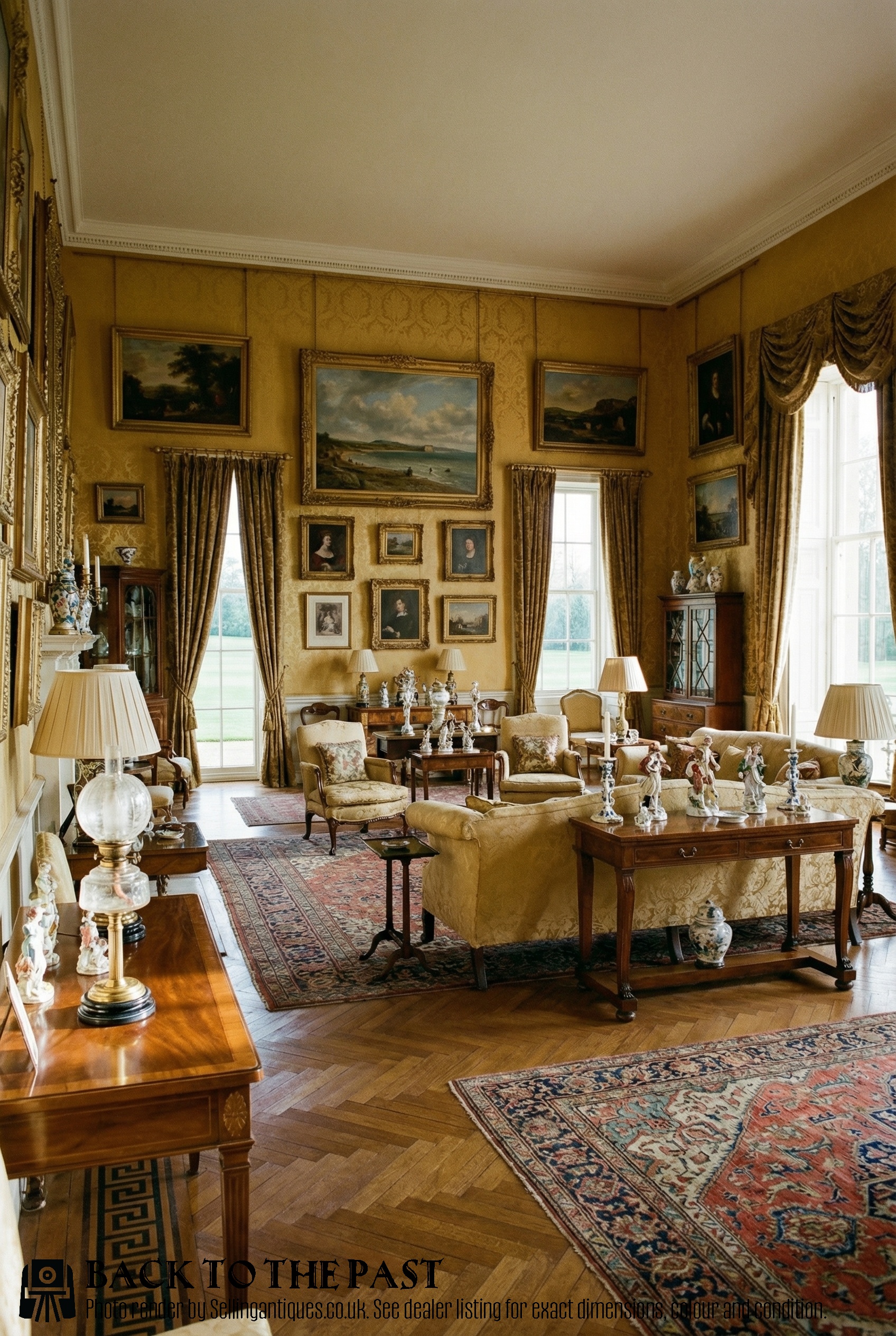
Makers built these pieces using heavy cast and spun brass for the columns and bases, paired with blown glass or ceramic for the oil reservoirs. Some incorporate intricate fabric shades, glass beads, or milk glass elements to soften the light output.
The columns feature precision fluting running down the shaft, often terminating in classical architectural capitals such as Corinthian designs. Metal components were turned on lathes and joined with threaded rods or brazed seams before finishing.
Retail Price Guide 2026
Typical UK retail prices for fluted column oil lamp, calculated from the Sellingantiques database of over a million retail prices indexed since 2003. This retail price guide relies exclusively on Sellingantiques data; no external sources or auction records are used, so the figures do not describe the wider market.
Every listed lamp combines a brass structure with either glass, ceramic, or opaline glass elements dating from the Victorian and Edwardian eras.
Judging the range
Quality in these lamps rests on the crispness of the brass casting and the weight of the base metal. Finer specimens show deep, clean fluting on the column and substantial brass thickness that prevents tipping.
The distinction between ordinary and superior examples also appears in the choice of reservoir materials, where hand-tinted opaline glass or decorated ceramic fonts outclass plain transparent vessels. The refinement of the classical detailing on the capital dictates the overall standing of the piece.
The Fluted Column Oil Lamp Glossary
- Corinthian column
- A classical architectural order featuring an ornate capital decorated with acanthus leaves, frequently utilised on the top of these lamp shafts.
- Opaline glass
- An opaque or translucent pale glass developed during the nineteenth century, prized for its soft diffusion of light.
- Font
- The upper reservoir container designed to hold lamp oil before burners and chimneys were fitted.
- Victorian
- The period spanning the reign of Queen Victoria, encompassing the majority of the brass and glass lamps listed here.
Frequently Asked Questions
How do I date a fluted column oil lamp?
Dating relies upon stylistic markers such as the shape of the stepped base, the form of the Corinthian capital, and the specific composition of the glass font. Pieces from the late nineteenth century often feature heavier brass castings compared to later Edwardian examples.
Examining the construction methods underneath the base provides further clues to the manufacturing decade, helping separate Victorian production from the turn of the twentieth century.
Were these lamps converted to electricity?
Most surviving examples have been adapted for modern electrical wiring to allow safe domestic use on tables and sideboards. This conversion generally routes the cable internally through the central column without altering the exterior brass surface.
Retaining the original burners alongside modern fittings is common, preserving the authentic silhouette while ensuring everyday functionality.
What materials make up the column?
The columns are constructed from solid brass, which was cast and then turned on a lathe to create the vertical flutes. This heavy metal construction gives the lamps considerable weight and stability.
Some examples pair the brass shaft with ceramic or opaline glass sections, introducing contrasting textures and colours to the vertical design.
Where should I place an oil lamp?
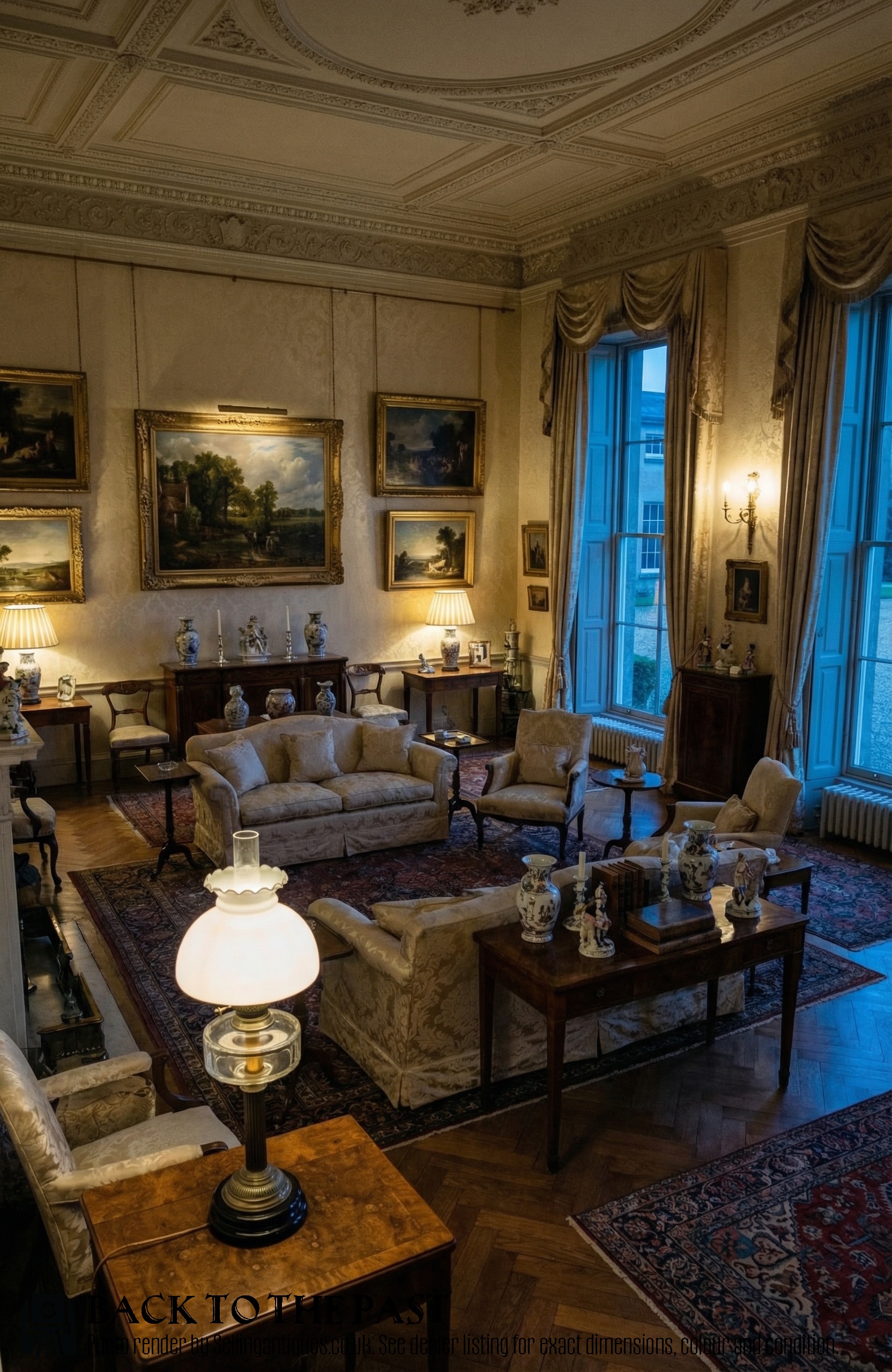
These tall table lamps suit placement on sturdy sideboards, pedestals, or large desks where their height and weight can be safely accommodated. Their polished brass and coloured glass reservoirs create strong focal points in traditional rooms.
Positioning them away from heavy foot traffic protects the delicate fabric shades and glass bead fringes often found on these pieces.