


Green Glass Oil Lamp
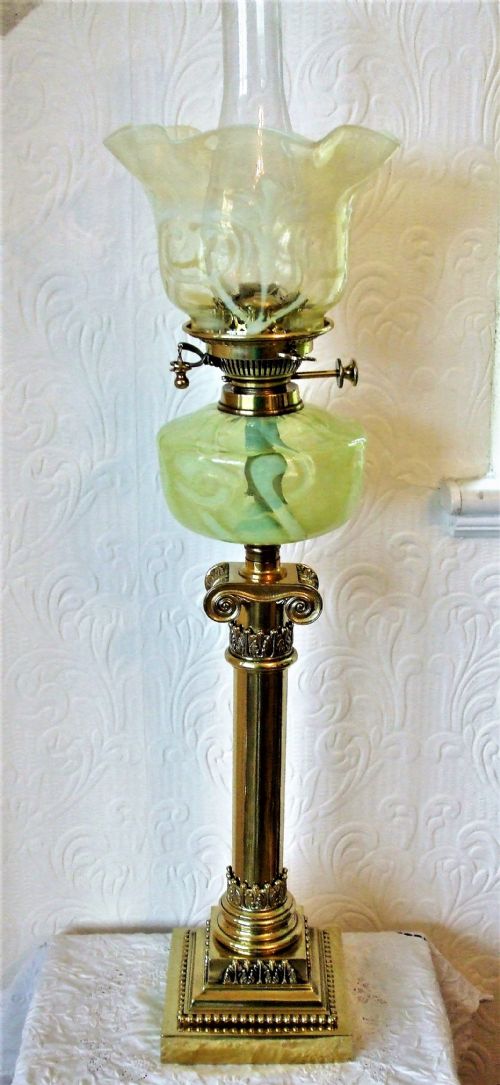
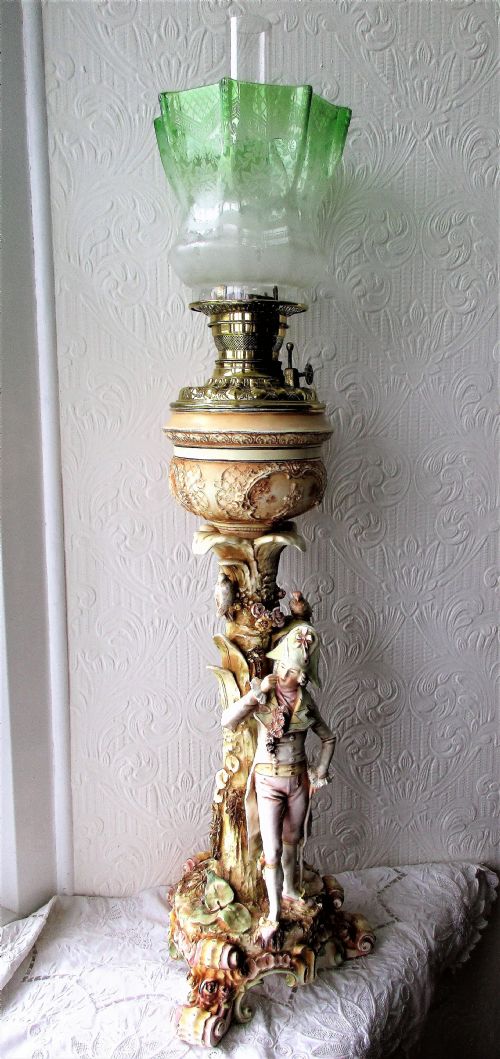
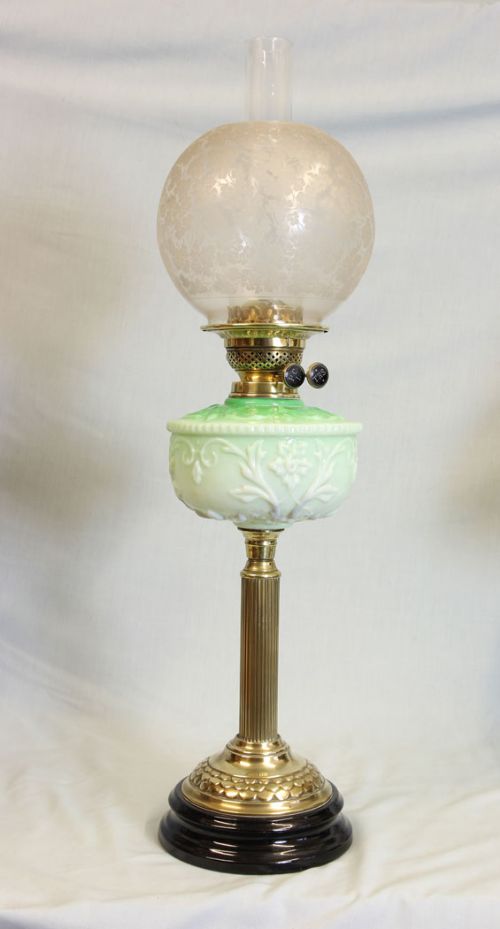
A green glass oil lamp brings a rich pool of coloured light and Victorian craft into a room.
Green Glass Oil Lamp
A green glass oil lamp combines vibrant coloured reservoirs or shades with sturdy metal bases from the Victorian era. These domestic light sources burn paraffin or oil to illuminate nineteenth-century homes before the widespread adoption of electricity.
The green glass oil lamp frequently pairs a green font or shade with brass, cast iron, or silver plate. Buyers encounter complete table lamps alongside replacement tulip and frilled shades designed to fit standard burners.
Most examples date from the nineteenth century, spanning periods around eighteen sixty to nineteen hundred. Makers range from standard British manufacturers to more ornate Victorian classical revival designs.

How they were made
Makers blew or moulded green glass into fonts, globes, and tulip shades, sometimes incorporating frosted surfaces or hand-painted details. These glass elements screw or sit atop heavier metal reservoirs and weighted pedestals.
Green Glass Oil Lamp Retail Price Guide 2026
Typical asking prices for green glass oil lamp among the pieces listed under this phrase on Sellingantiques today, from the lower quarter to the upper quarter. They describe what is for sale here now, not the wider market.
Listings feature nineteen-century pieces using glass, brass, copper, cast iron, and porcelain.
What varies in quality
The distinction between ordinary and superior pieces rests on the weight of the metal and the depth of colour in the glass. Heavier cast iron and solid brass bases offer better balance and durability than lighter plated alternatives.
Artistic execution also separates standard utility items from finer examples, particularly in frilled glass shades or painted floral motifs. Original matching fonts and shades retain greater integrity than later assembled combinations.
Hinks·Messenger
The Green Glass Oil Lamp Glossary
- Peg lamp
- A small oil lamp featuring a tapered lower peg designed to drop directly into a candlestick socket or a dedicated base. These versatile pieces often utilise satin glass or green glass.
- Duplex
- A heavy-duty burner mechanism featuring two parallel wicks that produce a brighter flame. Victorian duplex lamps require wider chimneys to accommodate the increased heat.
- Tulip shade
- An upturned glass shade shaped like an opening flower, frequently seen in green glass on nineteenth-century lighting. These shades diffuse the light while protecting the flame from drafts.
- Ormolu
- Gilded bronze or brass applied to decorative mounts and bases on finer Victorian lamps. This finish adds a bright golden contrast to the dark green glass bodies.
Green Glass Oil Lamp: Frequently Asked Questions
How do I operate an oil lamp?
Fill the glass font with paraffin and allow the cotton wick to soak thoroughly before lighting. Adjust the thumbwheel to raise or lower the flame once the chimney is secured.
Keep the wick trimmed level to prevent smoke and soot accumulation on the glass chimney during extended use.
Are these lamps safe to burn?
These nineteenth-century pieces function mechanically, but original fittings require careful inspection before introducing modern lamp oil or paraffin. Ensure the collar is secure and the glass has no hairline cracks.
Many collectors prefer to wire them for electricity or simply display them as decorative objects rather than burning fuel.
How do I date a green glass lamp?
Examine the burner mechanism stamps, screw threads, and the composition of the base materials for Victorian manufacturing traits. Cast iron and heavy brass point toward the later nineteenth century.
Art Nouveau influences and frilled green shades typically indicate production around eighteen ninety.
Can I find replacement shades?
Replacement tulip and frilled globes appear independently in green glass to match original nineteenth-century dimensions. Matching the fitter size to the burner gallery is essential for a secure fit.
Original matched sets carry more historical consistency than lamps assembled from different periods.