
Victorian Glass Paraffin Lamp
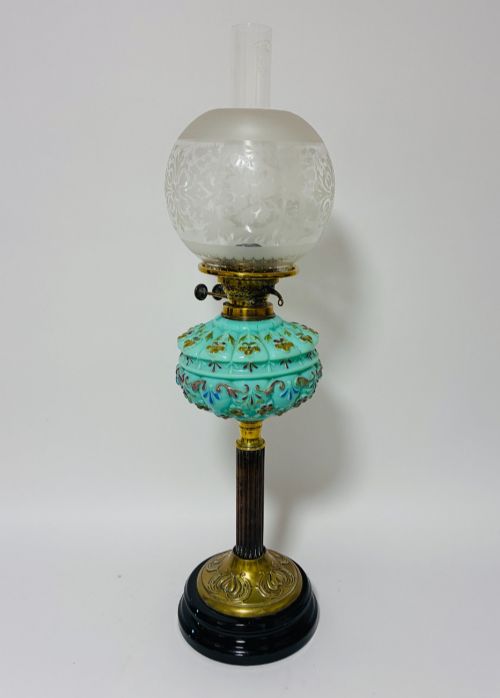
A victorian glass paraffin lamp brings a warm, steady glow to a room through coloured fonts and hand-painted shades.
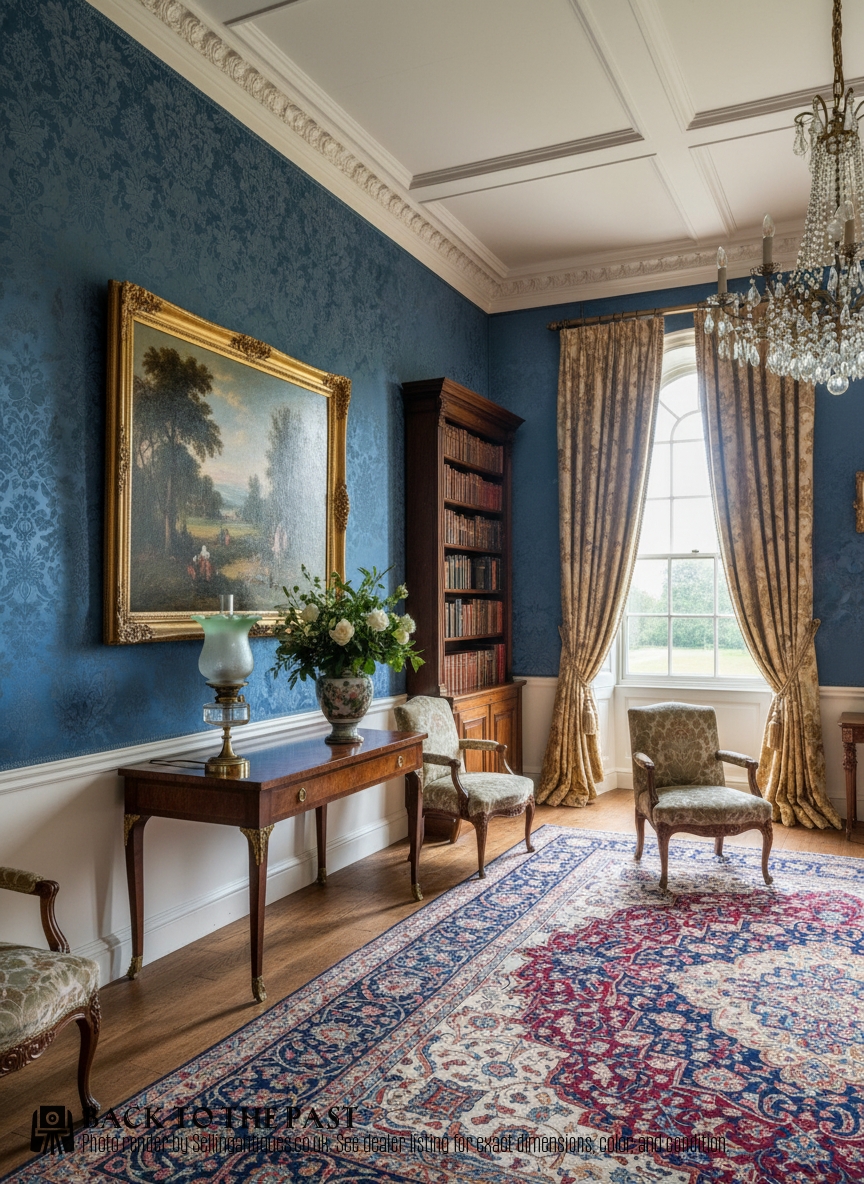
Victorian Glass Paraffin Lamp
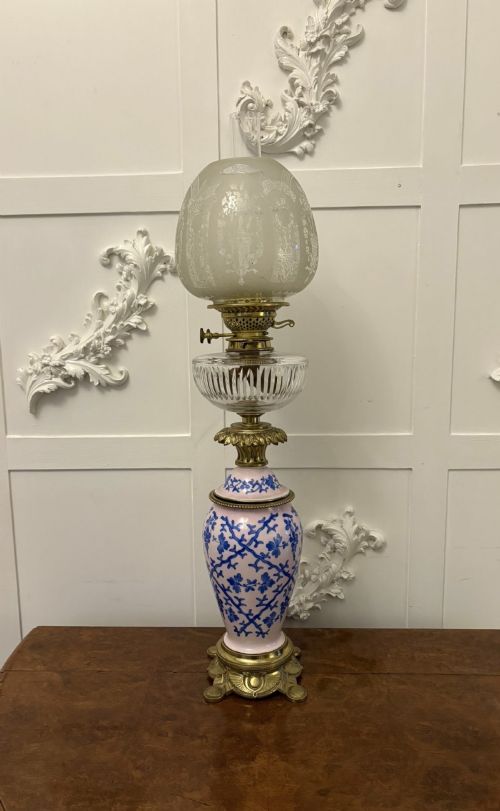
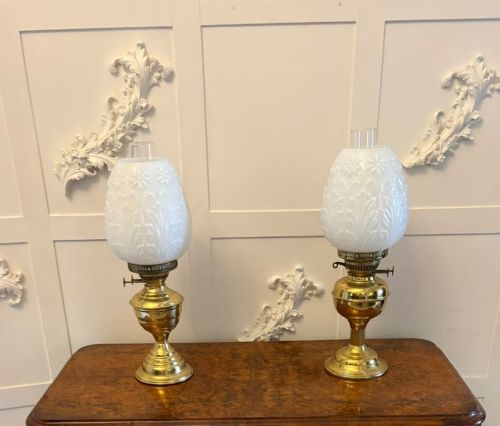
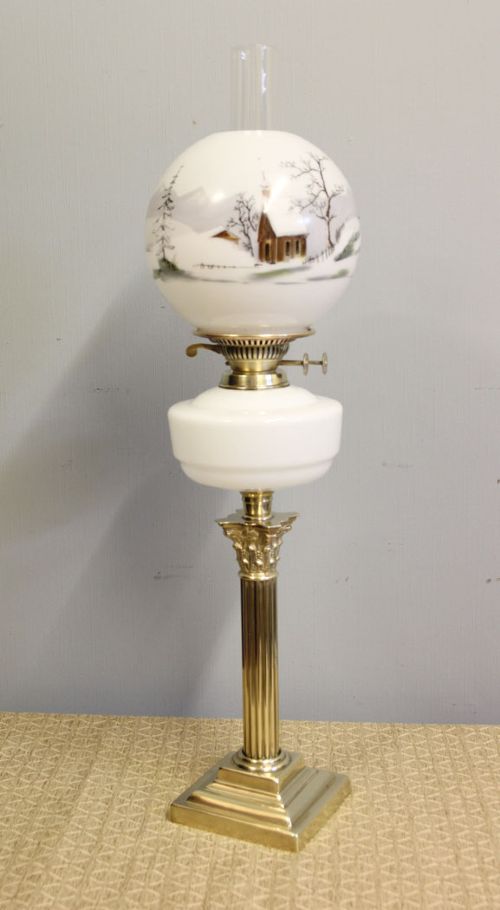
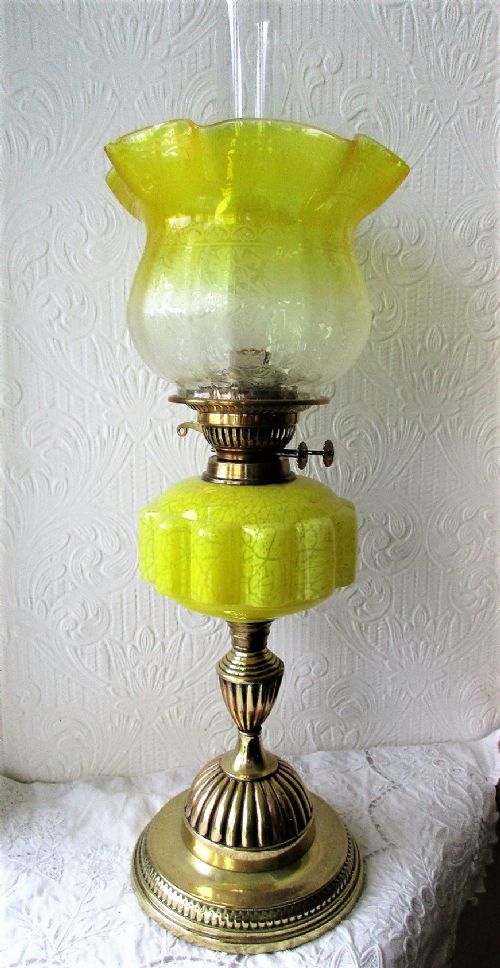
A victorian glass paraffin lamp is primarily found as a table lamp or hanging light designed for domestic illumination during the nineteenth and early twentieth centuries. These domestic objects combine functional metal burners with decorative reservoirs and shades made from various types of glass.
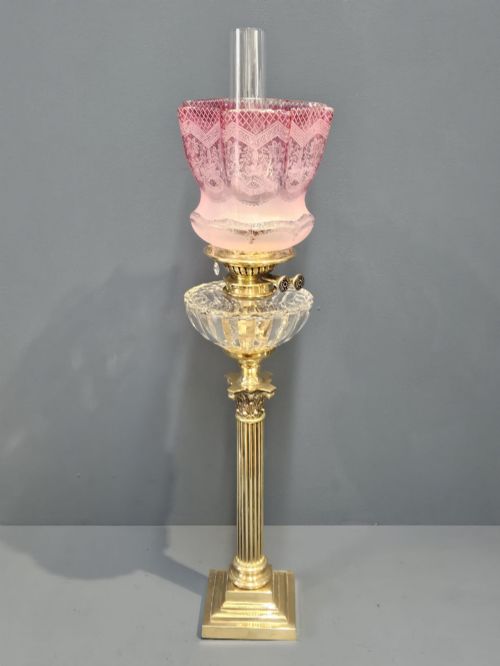
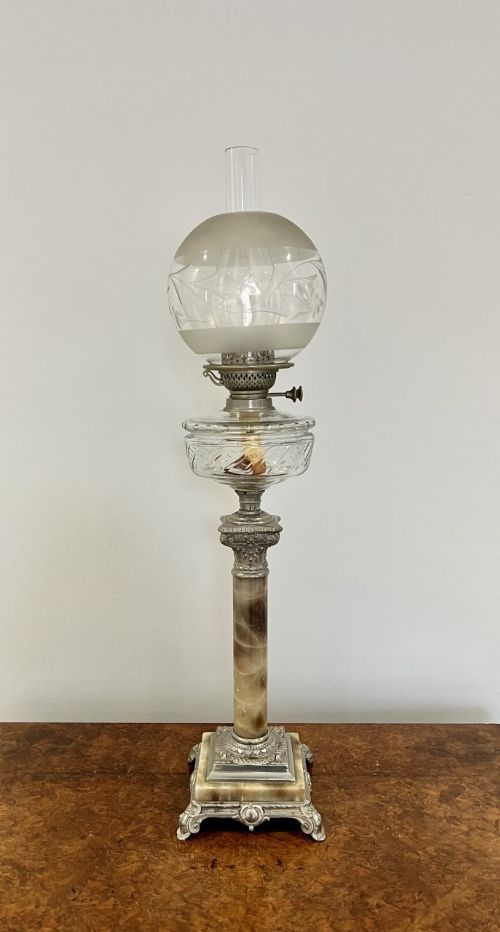
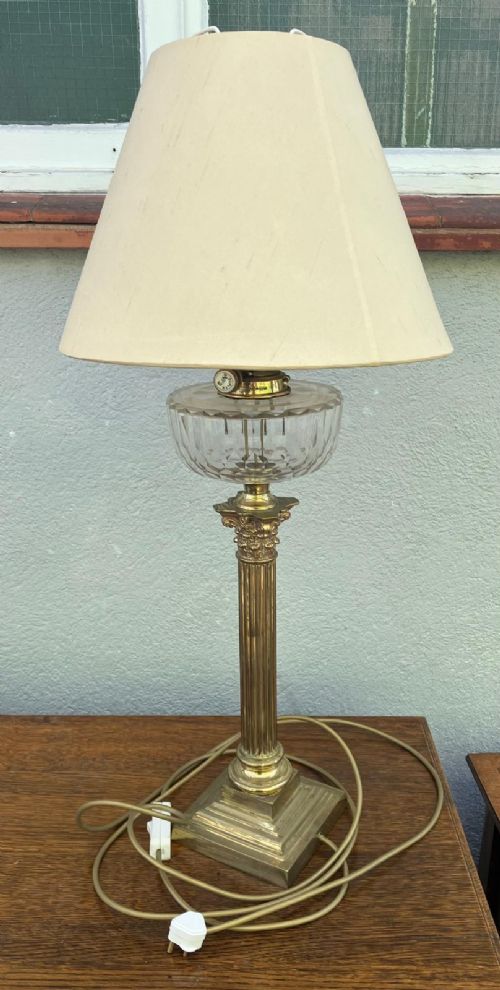
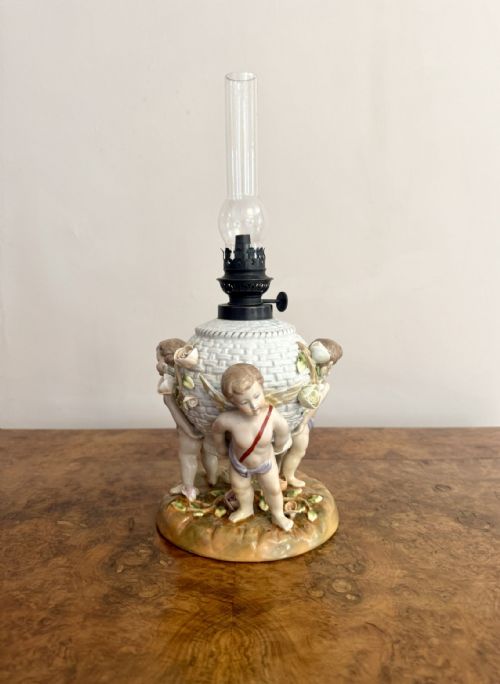
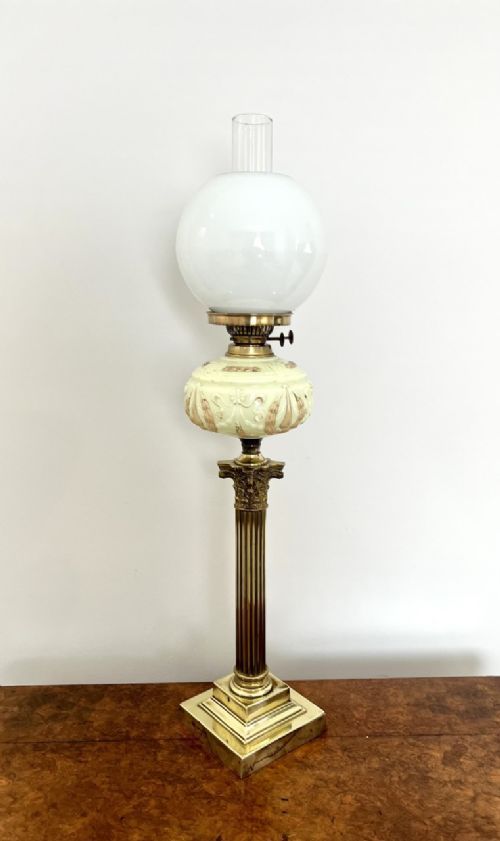
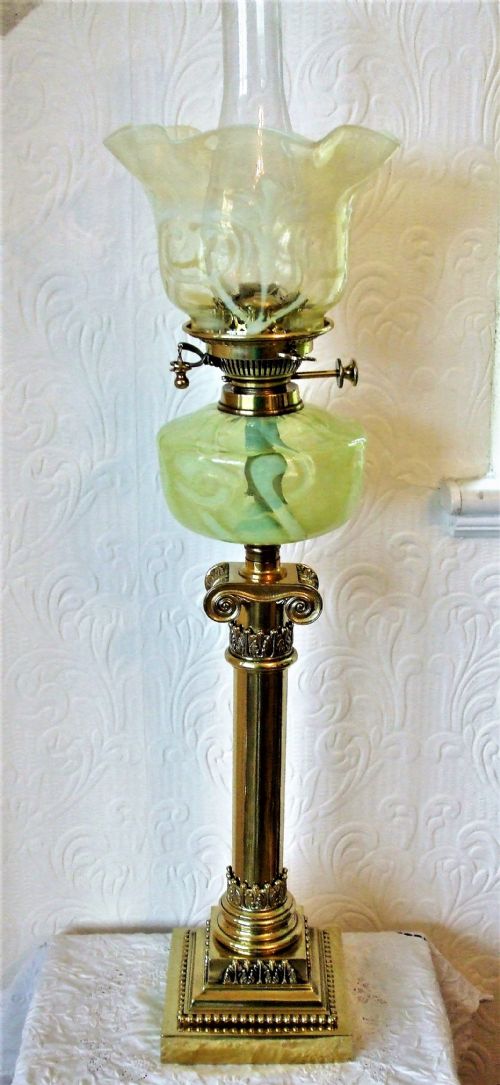
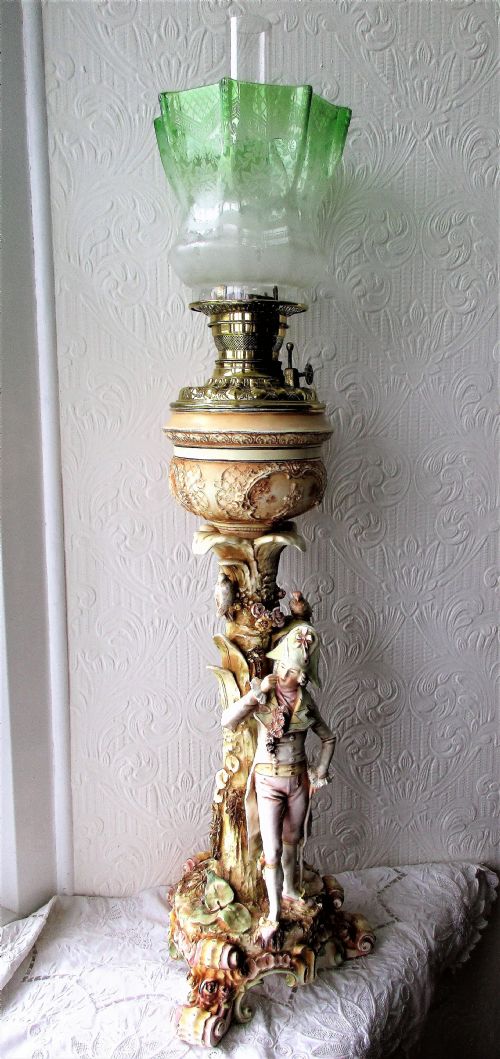
The selections available range from plain vessels to elaborate models featuring Corinthian columns, ceramic bases, and matching glass shades. Most examples originate from the Victorian and Edwardian periods, utilising materials that survived the transition to electric lighting.
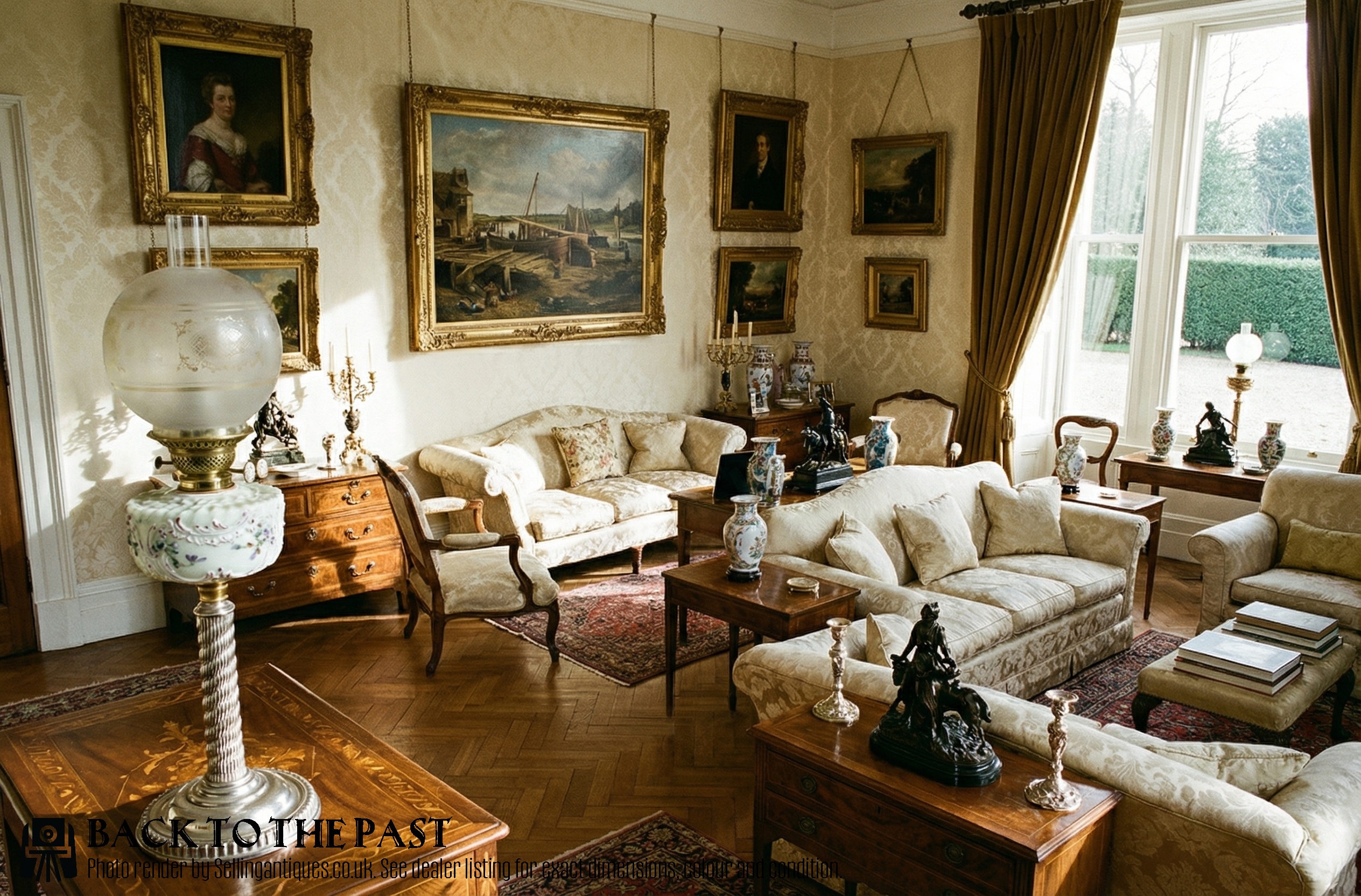
How they were made
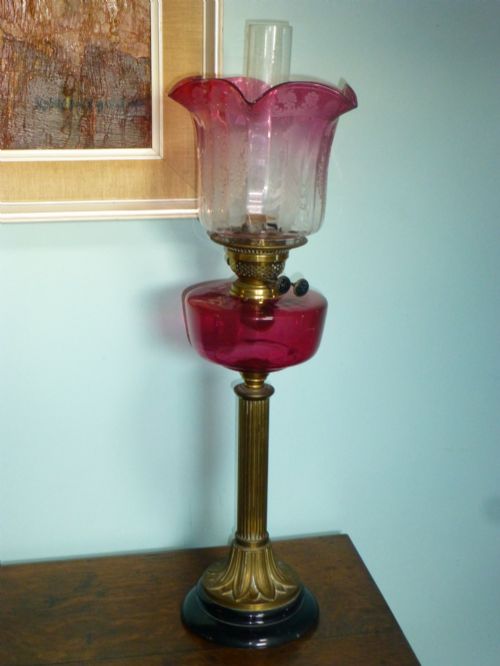
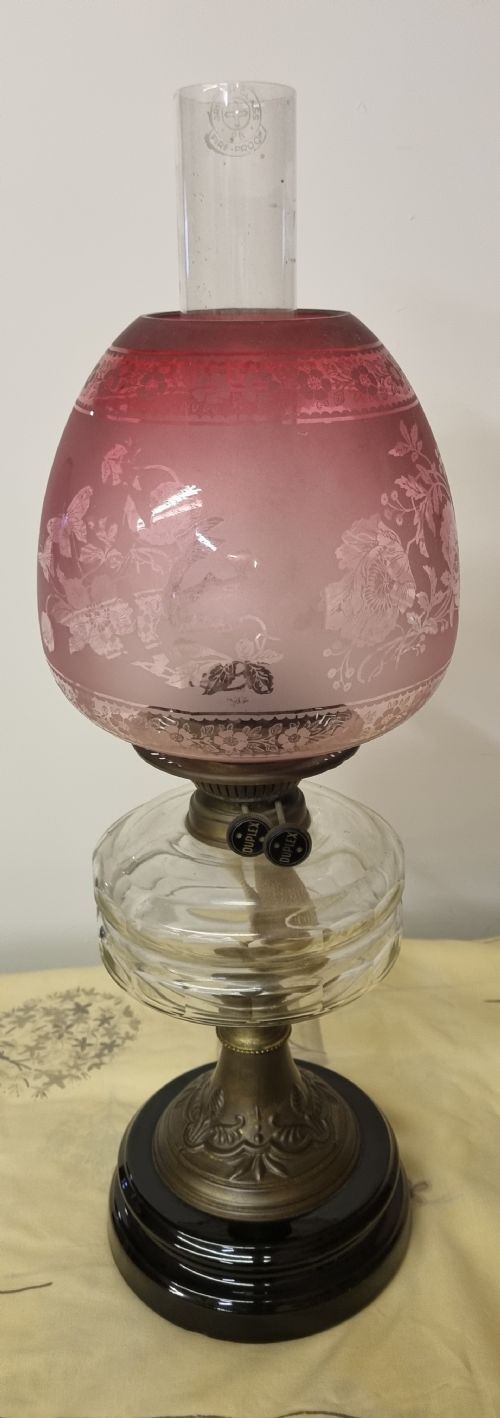
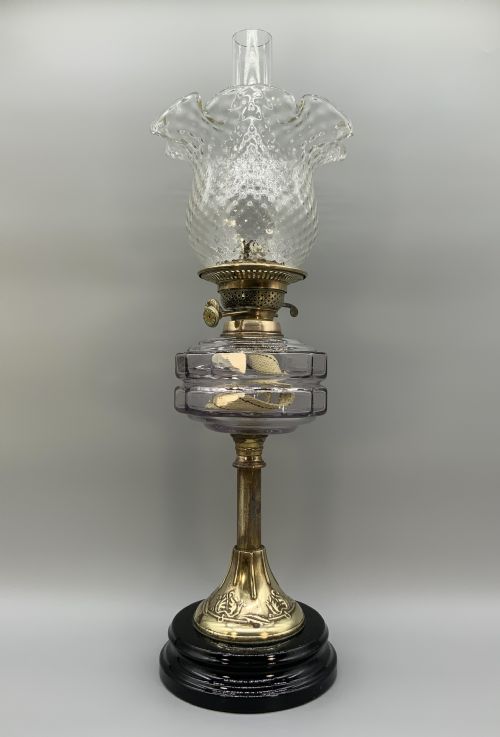
Makers combined cast brass columns or ceramic bases with blown and moulded glass fonts, incorporating enamel painting and etched patterns directly onto the surface. Cranberry glass and opaline glass were shaped while hot, then fitted with metal collars to receive standard burners.
Workshops utilised specialised burners, such as the duplex system, which required twin wicks to produce a brighter light through the glass chimney. Shade production involved hand-blowing and casing layers of coloured glass before applying surface decoration.
Victorian Glass Paraffin Lamp Retail Price Guide 2026
Typical asking prices for victorian glass paraffin lamp among the pieces listed under this phrase on Sellingantiques today, from the lower quarter to the upper quarter. They describe what is for sale here now, not the wider market.
Some nineteenth-century models featured figural owl designs with glass eyes that glowed amber when the burner was lit.
What varies in quality
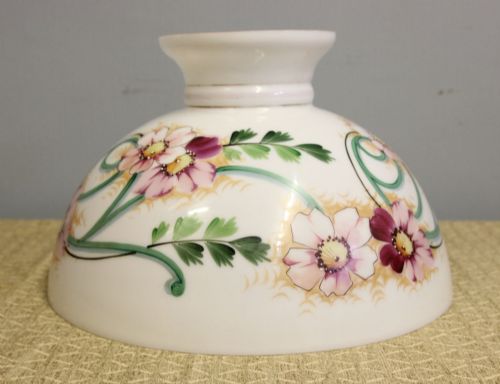
The standard of a victorian glass paraffin lamp rests on the crispness of the brass casting, particularly on column capitals, and the weight and clarity of the glass font. Hand-painted botanical motifs and detailed enamel work distinguish superior examples from plain production pieces.
Proportion and completeness also determine distinction, as matching original shades and fonts carry greater visual harmony. Maker signatures on the metal burner mechanisms further separate standard utilitarian models from finer production.
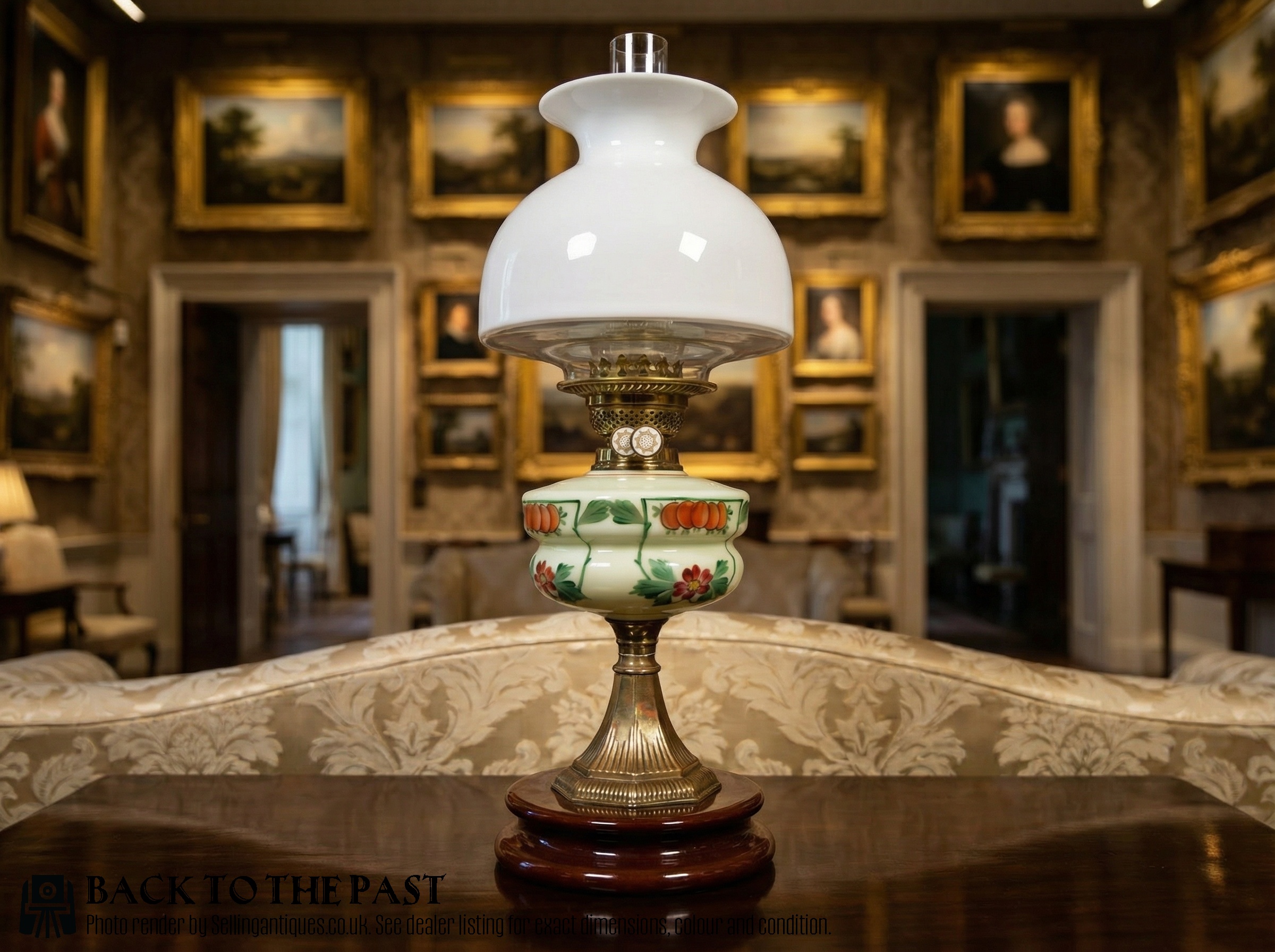
Hinks·Taylor Tunnicliff·Sitzendorf
The Victorian Glass Paraffin Lamp Glossary
- Duplex burner
- A lamp mechanism featuring two parallel wicks that produce a brighter flame. This double system required a wider flat wick arrangement inside the metal collar.
- Cranberry glass
- A rich red-pink transparent glass created by adding gold chloride to the molten batch. It appears frequently in nineteenth-century lamp fonts and shades.
- Opaline glass
- An opaque, pale glass that transmits a soft, milky light when illuminated from within. It was often hand-painted with floral scenes.
- Corinthian column
- An architectural column style adapted for lamp stems, featuring ornate acanthus leaves on the capital. These brass supports provide height and stability.
- Font
- The reservoir container that holds the paraffin oil beneath the burner. It sits atop the main column or base and is frequently coloured glass or porcelain.
Victorian Glass Paraffin Lamp: Frequently Asked Questions
How do I operate the burner?
Lift the glass chimney and tilt the burner gallery to access the flat wicks inside the metal housing. Adjust the thumbwheel to raise or lower the wick before lighting.
Ensure you use clean paraffin oil and allow the wick to absorb the liquid fully before applying a flame to avoid smoke.
How do I clean the glass shade?
Remove the shade from the lamp and wash it gently in warm, soapy water using a soft cloth. Avoid harsh scrubbing on hand-painted or enamelled surfaces.
Rinse the glass thoroughly and dry it completely with a lint-free towel before placing it back onto the brass gallery.
Can I convert the lamp to electricity?
Conversion involves running a cord through the existing central column without altering or damaging the historic metal and glass components. Many owners choose professional rewiring to use modern bulbs safely.
Retaining the original oil reservoir and burner parts ensures the antique character remains intact despite the internal wiring.
Are replacement chimneys easy to find?
Standard glass chimneys are produced in various heights and fitter diameters to match nineteenth-century burner galleries. Measuring the exact gallery opening ensures a secure fit.
Clear glass is standard, though period-appropriate shapes help maintain the correct silhouette of the lamp.