
Brass Kerosene Lamp
A brass kerosene lamp brings steady period warmth to a room, offering functional Victorian engineering paired with decorative metalwork.
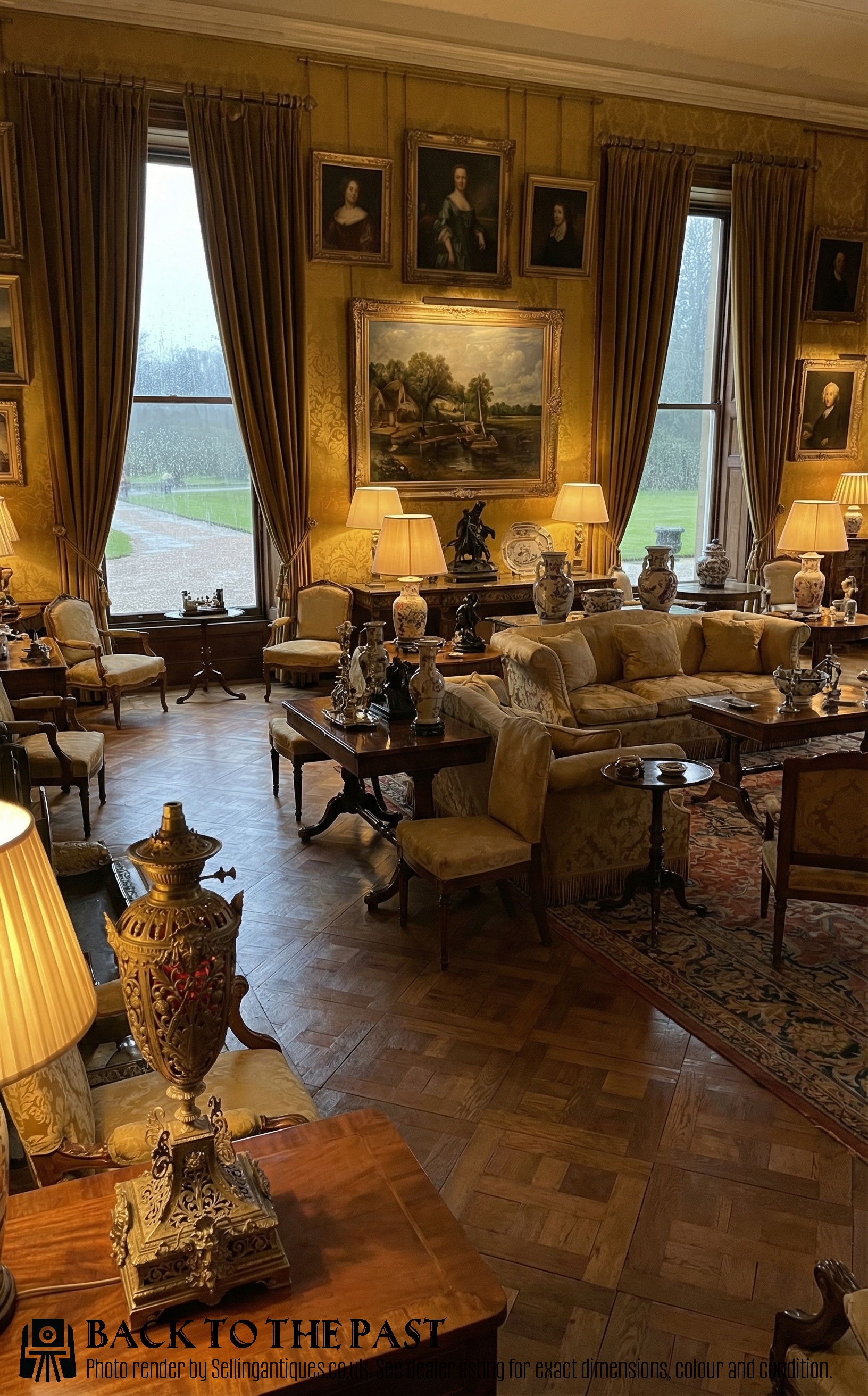
Identifying the brass kerosene lamp
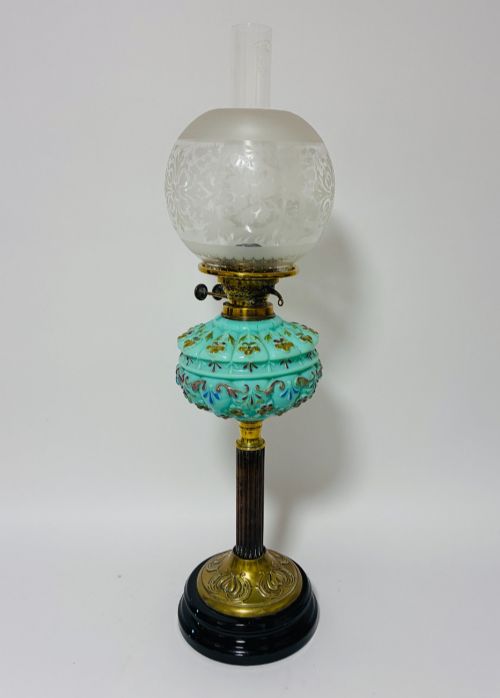
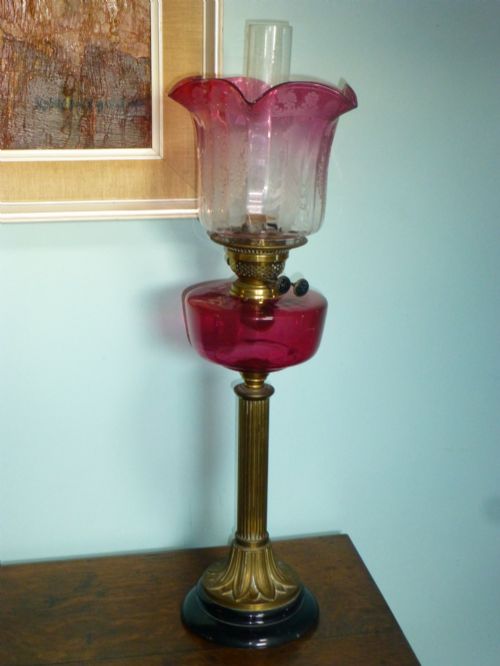
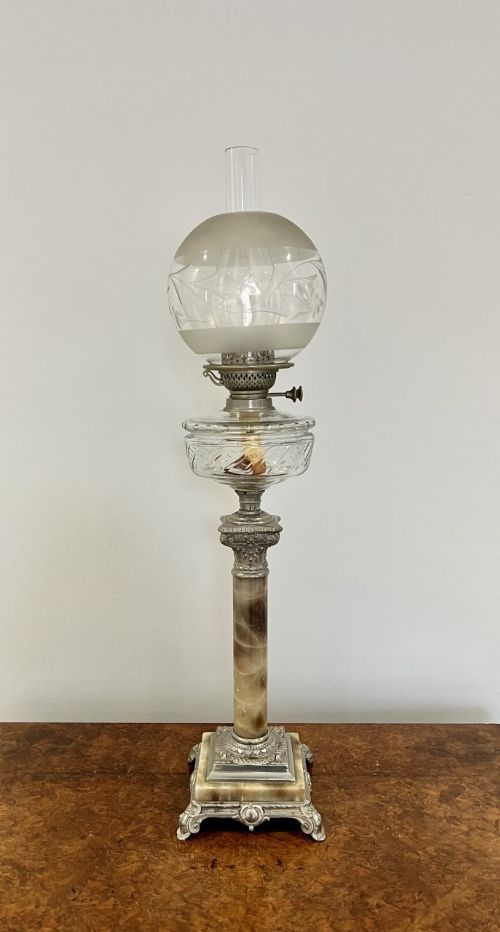
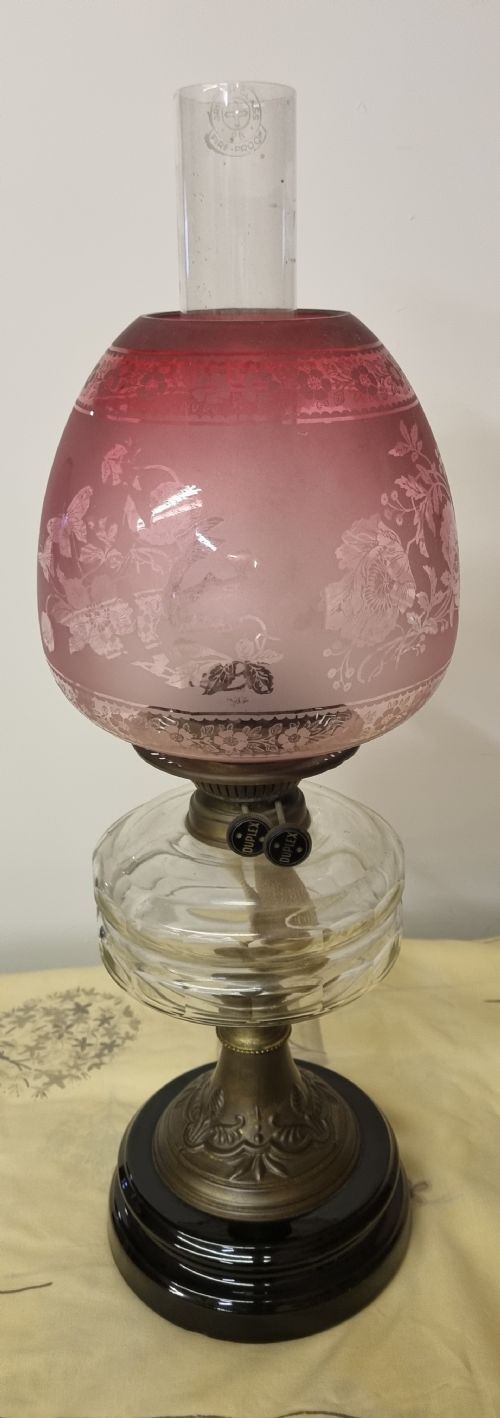
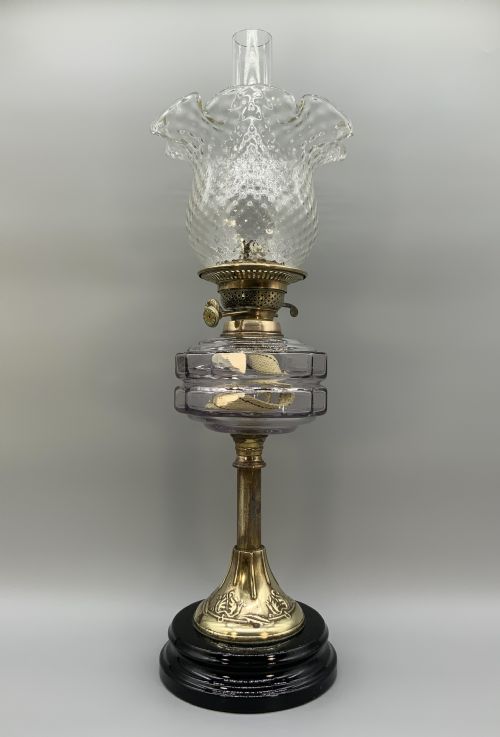
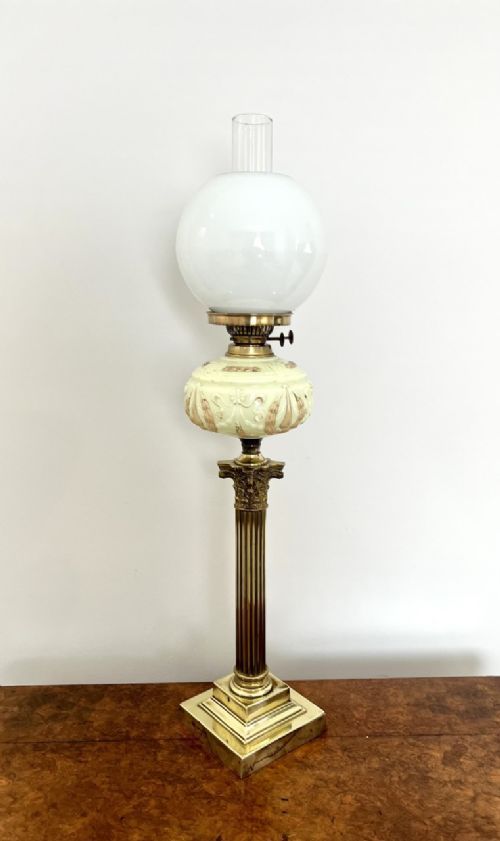
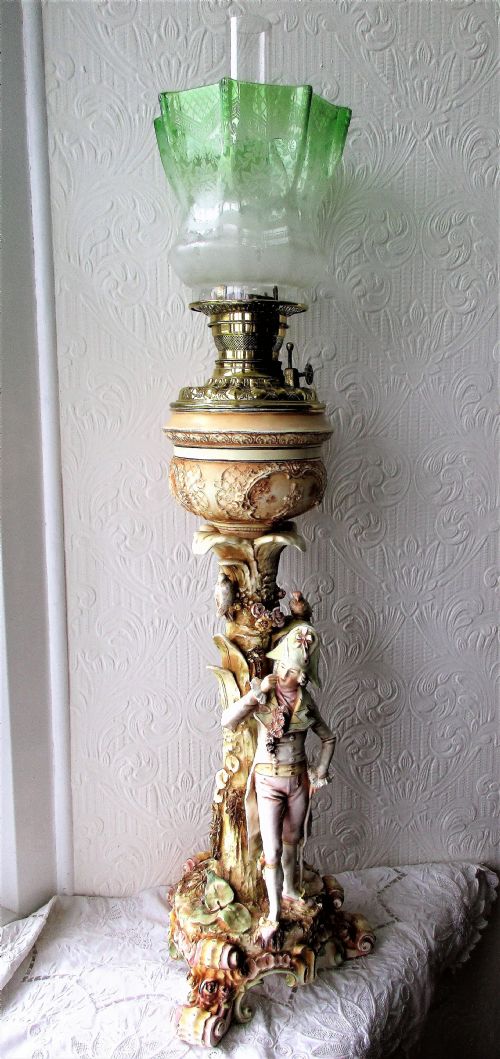
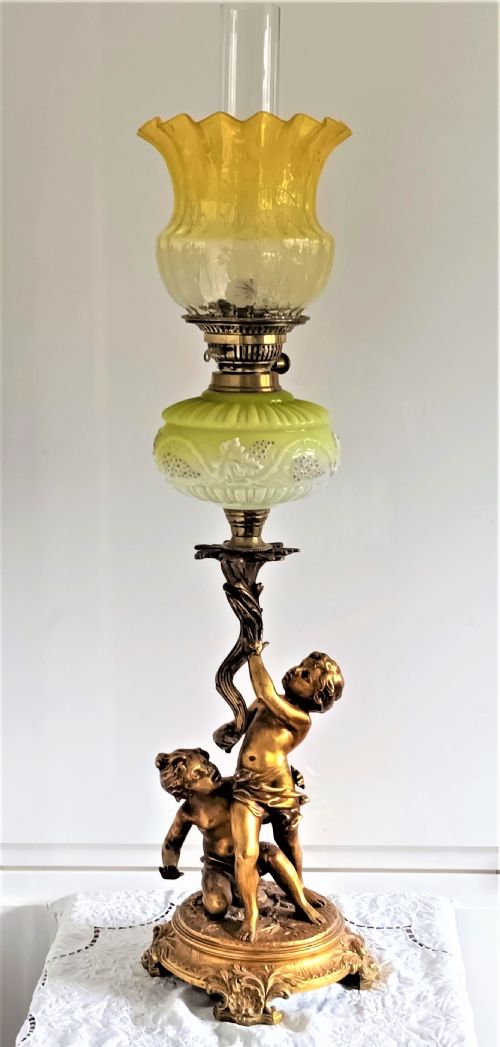
The construction of these items incorporates varied supporting materials alongside the primary metal framework. Listings show bases and bodies formed from glass, black glass, ceramic, porcelain, milk glass, and ormolu. Certain examples carry specific maker attribution, notably through firms such as Young's or manufactories like Sitzendorf, linking the domestic lighting to recognised production houses.

Materials and construction methods
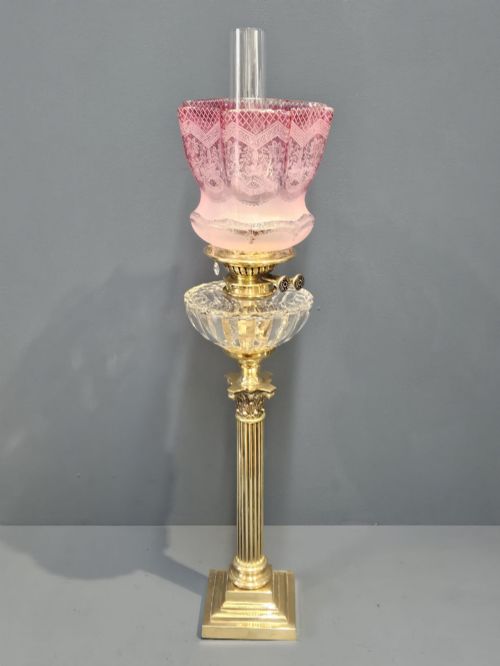
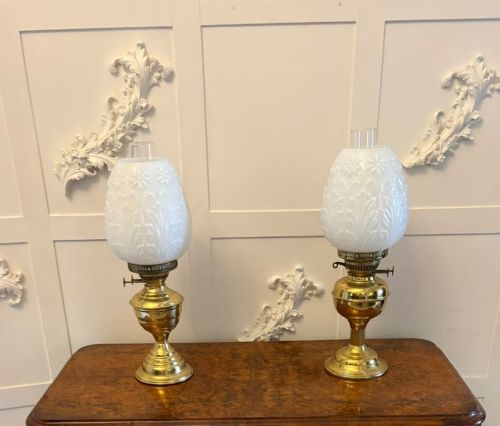
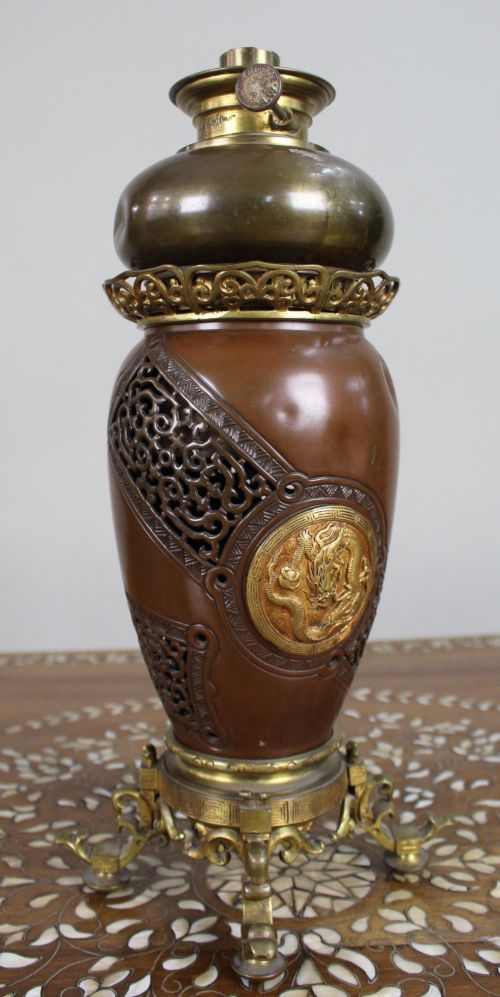
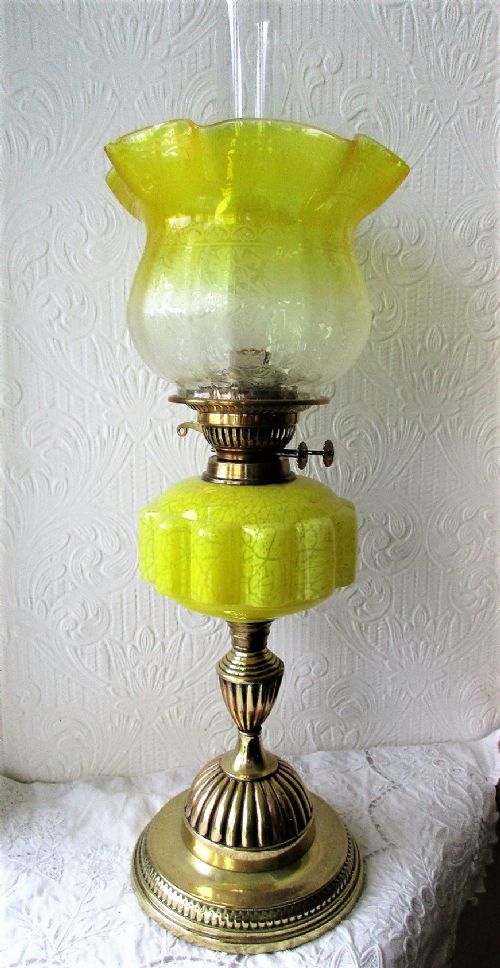
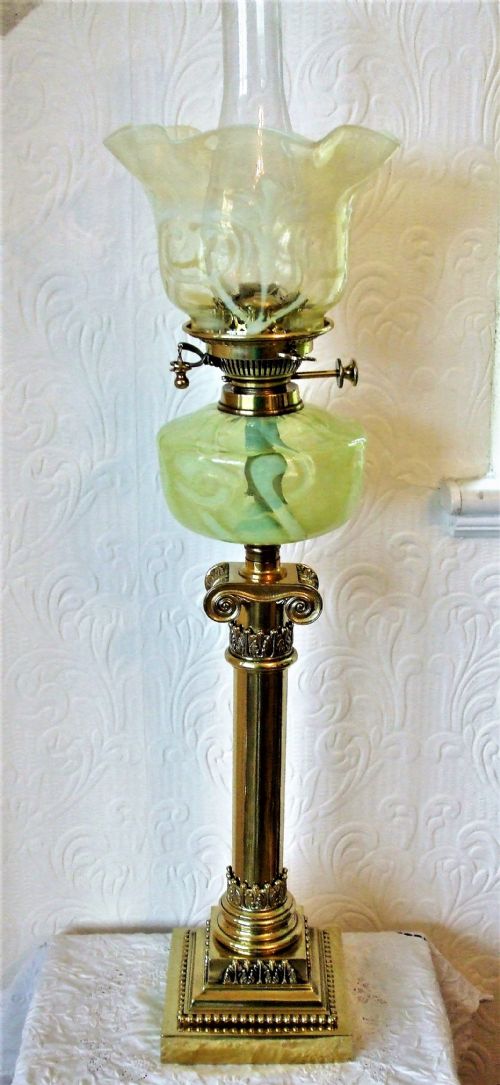
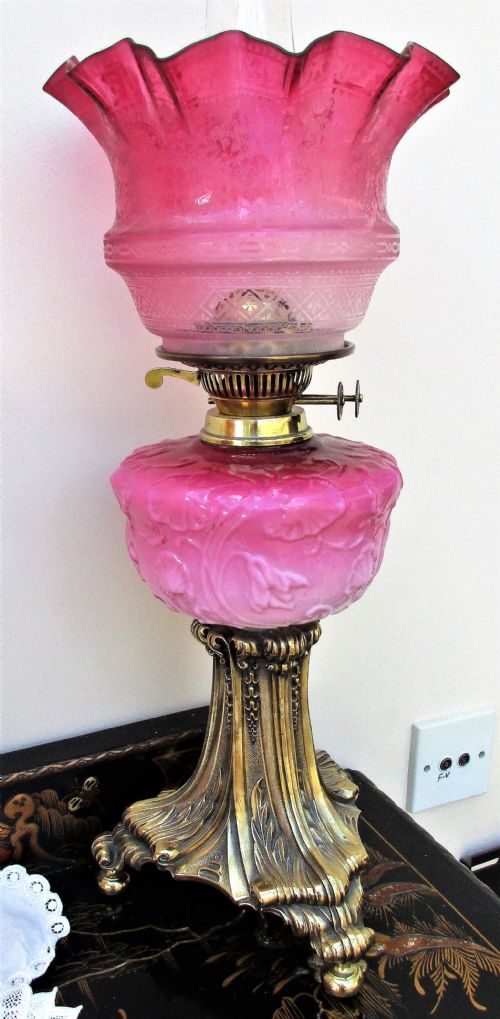
The core structure of each piece utilises shaped and cast brass, forming the fuel reservoir, stem, and burner housing. Metalworking techniques of the Victorian period allowed for intricate ornamentation, particularly evident in the Rococo Revival and Gothic Revival styles where surface detailing is deeply chased or cast in relief.
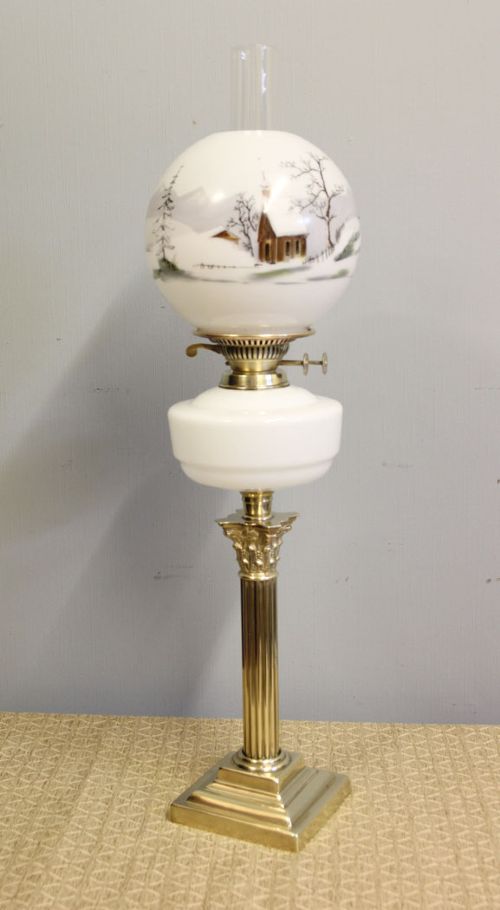
Secondary materials are integrated directly into the metal frame to create contrasting textures and visual weight. Ceramic, porcelain, and milk glass segments form the central column or font, while specialised bases utilise heavy black glass or polished ormolu mounts to anchor the tall brass superstructure safely.
Retail Price Guide 2026
Typical UK retail prices for brass kerosene lamp, calculated from the Sellingantiques database of over a million retail prices indexed since 2003. This retail price guide relies exclusively on Sellingantiques data; no external sources or auction records are used, so the figures do not describe the wider market.
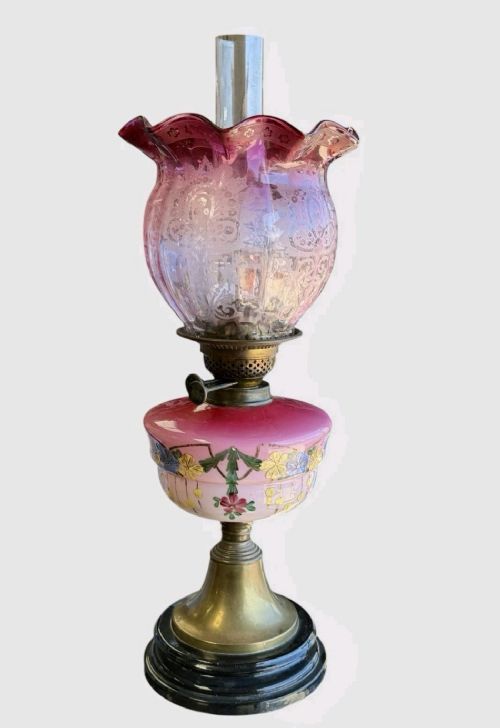
Some Victorian lamps feature ceramic reservoirs painted with delicate flowers, ensuring the room smelled faintly of paraffin and painted porcelain.
Assessing quality in period lighting
The distinction between standard domestic lighting and superior examples lies in the ambition of the design and the refinement of the materials. Outstanding quality pieces integrate delicate Sitzendorf porcelain or rich ormolu mounts, demonstrating a higher standard of artistic collaboration between the metalworker and the ceramicist.
Structural complexity also defines the upper tier of the range, visible in ornate revival styling and substantial proportions. Heavier castings, complex multi-material assemblies on black glass bases, and signed burner mechanisms by makers such as Young's separate mass-produced items from finer salon pieces.
Young's·Sitzendorf
The Brass Kerosene Lamp Glossary
- Kerosene lamp
- A domestic lighting device that burns paraffin or kerosene drawn through a wick from a central fuel reservoir. These items became central to nineteenth-century home illumination before the widespread adoption of electricity.
- Ormolu
- Gilded bronze or brass applied to decorative objects and furniture mounts. This technique provides a rich, gold-coloured finish that contrasts effectively with polished plain brass.
- Milk glass
- An opaque or translucent glassware, white or tinted, used extensively for lamp fonts and bases during the Victorian period. It offers a smooth, porcelain-like surface texture.
- Sitzendorf
- A nineteenth-century German porcelain manufactory known for intricate decorative figures and applied floral elements. Pieces bearing this porcelain appear integrated into high-status oil lamps.
- Rococo Revival
- A mid-nineteenth-century design style characterised by asymmetrical scrolls, naturalistic floral motifs, and curved ornamentation. This aesthetic heavily influenced the casting patterns of Victorian brasswork.
Frequently Asked Questions
How do these lamps work?
These domestic lighting devices draw fuel from a central reservoir up through a woven fabric wick using capillary action. An adjustable burner mechanism controls the flame height beneath a glass chimney.
Air is drawn into the burner to ensure a steady, bright flame without excessive smoke. Regulating the wick allows the user to control the light output safely during operation.
What periods do they date from?
The pieces available date primarily from the Victorian era, spanning specific recorded years such as eighteen-sixty and eighteen-eighty. Design elements reflect the shifting tastes of the nineteenth century.
Late Victorian examples show distinct manufacturing trends compared to mid-century items. Stylistic variations range from simple utilitarian forms to elaborate Gothic and Rococo revivals.
How are different materials combined?
Makers frequently paired polished brass with contrasting elements such as ceramic, porcelain, and milk glass to add colour and texture to the body. Ormolu mounts and black glass bases were also utilised.
These mixed-media constructions required secure mechanical joining methods to support the weight of the fuel reservoir safely atop decorative ceramic columns.
Can I use these for daily lighting?
Most surviving examples serve primarily as decorative objects or historical artefacts rather than active household lighting. Converting them for modern electrical use is a common modification.
Original burners and components require careful handling if retained. Many collectors prefer to preserve the untouched mechanical state of the lamp for display purposes.