



Glass Reservoir Oil Lamp
A glass reservoir oil lamp brings Victorian warmth and period weight to a room, combining solid metal bases with clear, cut, or coloured fonts.

Glass Reservoir Oil Lamp
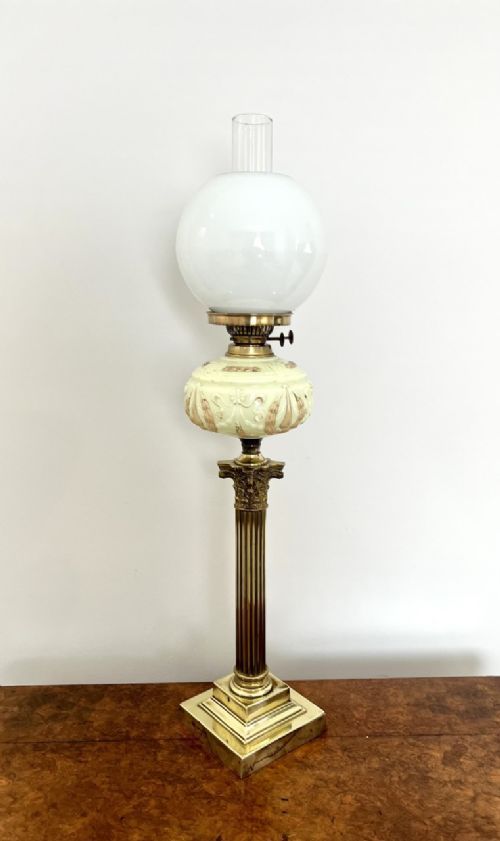
A glass reservoir oil lamp is a functional lighting antique dating primarily from the Victorian and Edwardian periods, designed to burn paraffin or oil using a wick housed in a metal burner.
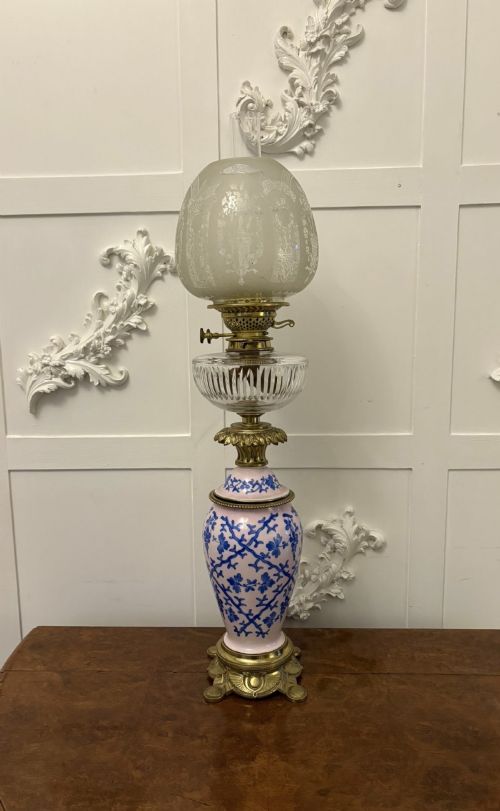
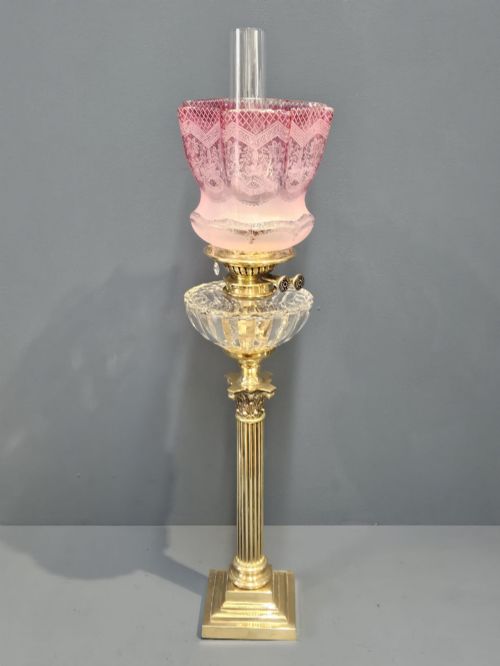
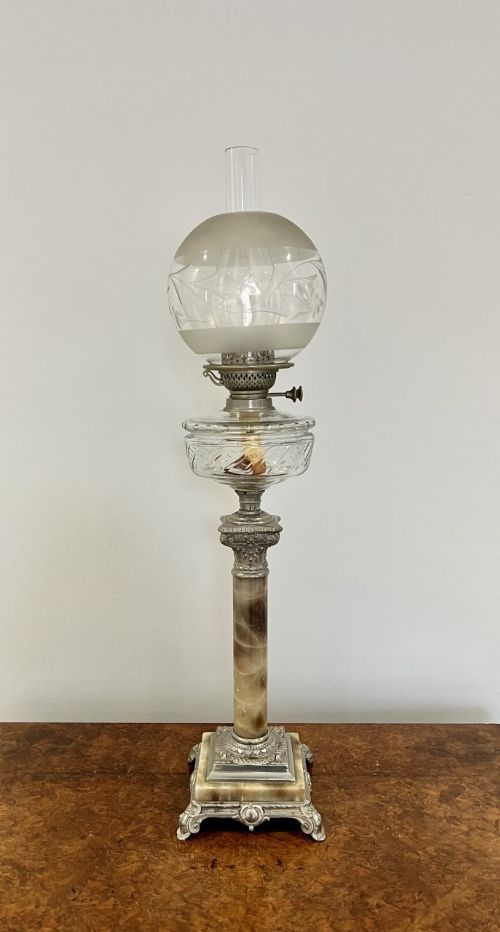
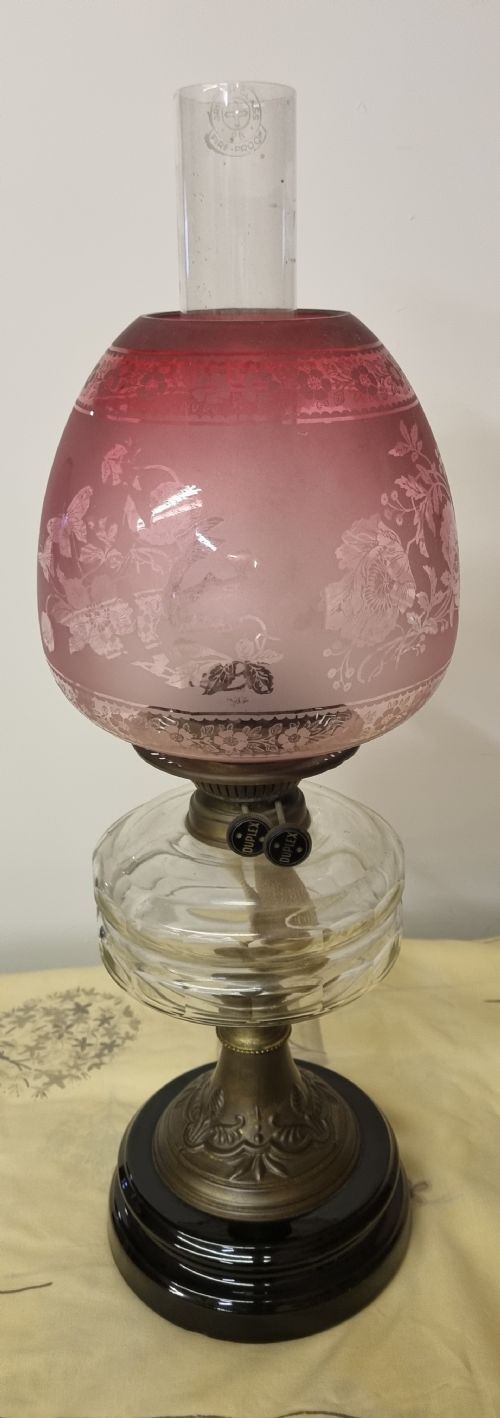
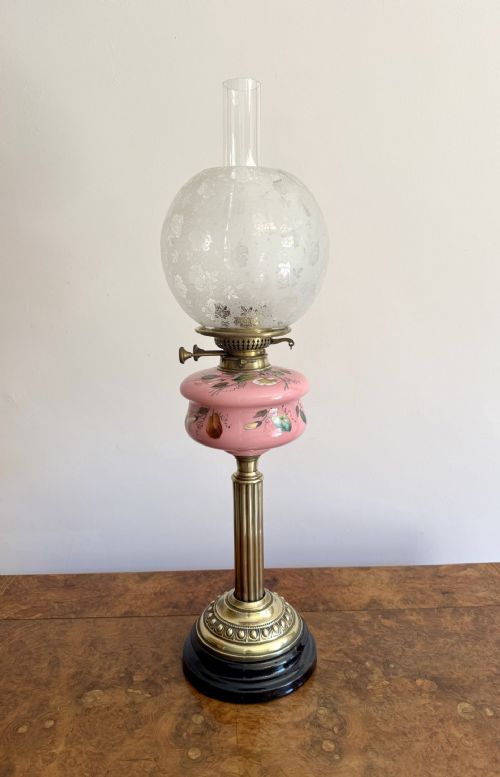
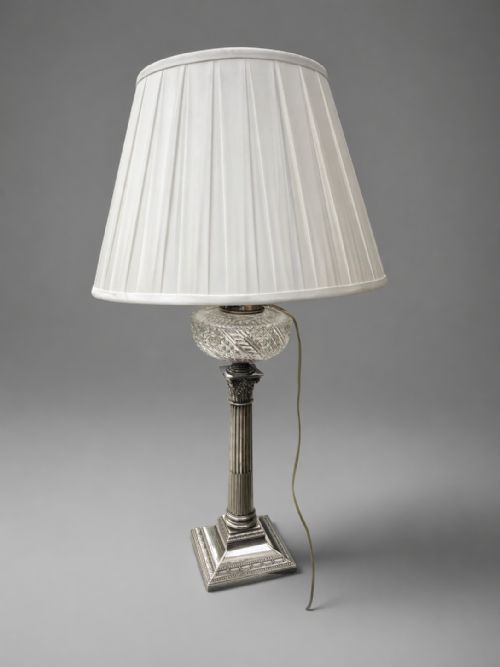
When you search for a glass reservoir oil lamp, you encounter pieces mounted on brass, ceramic, silver plated, or onyx columns, often featuring coloured glass fonts and matching shades.
The selections span table lamps and column forms, including Corinthian column designs and peg lamps made to sit inside existing candlesticks.
How they were made
The construction of these lamps relies on heavy cast brass, bronze, or silver plated metalwork forming the base and column, paired with blown, moulded, or cut glass reservoirs.
Makers integrated ceramic and black glass elements into the foundations for stability, while burner mechanisms in brass were threaded to fit securely atop the glass fonts.
Glass Reservoir Oil Lamp Retail Price Guide 2026
Typical asking prices for glass reservoir oil lamp among the pieces listed under this phrase on Sellingantiques today, from the lower quarter to the upper quarter. They describe what is for sale here now, not the wider market.
Several lamps sport ruby and cranberry glass fonts, ensuring your room glows like a Victorian apothecary.
What varies in quality
Quality rests upon the weight and crispness of the casting in the brass or bronze columns, alongside the depth and clarity of the cutting in the glass reservoirs.
Superior examples incorporate coloured or satin glass fonts paired with matched shades and signed burner mechanisms by makers such as Hinks or Messenger.
Hinks of Birmingham·Messenger·Harrods
The Glass Reservoir Oil Lamp Glossary
- Font
- The oil reservoir itself, usually fashioned from clear, cut, or coloured glass to hold the fuel.
- Peg lamp
- A small oil lamp featuring a tapered lower metal spigot designed to drop straight into a candlestick socket.
- Corinthian column
- A classical architectural column style frequently utilised for the tall brass or bronze stems of Victorian table lamps.
- Duplex burner
- A double-wick mechanical burner assembly commonly fitted to larger nineteenth century lamps to increase illumination.
Glass Reservoir Oil Lamp: Frequently Asked Questions
How do I date an oil lamp?
Dating relies on stylistic clues like classical Corinthian columns or Art Nouveau motifs, combined with the manufacturing methods seen in the brass bases and glass reservoirs.
Most examples date from the Victorian and Edwardian eras, spanning the mid-nineteenth to early twentieth centuries, often corroborated by maker stamps on the brass burner thumbscrews.
Are these lamps still safe to use with oil?
While originally designed to burn paraffin or lamp oil, many owners today choose to display them as decorative objects or have them professionally converted for electricity.
Using them with fuel requires a careful inspection of the glass font for micro-cracks and ensuring the burner mechanism remains sound and clean.
How do I clean a glass oil reservoir?
Cleaning the glass font requires gentle warm water and mild soap, avoiding harsh abrasives that might scratch the surface or damage coloured glass finishes.
Metal components like brass columns and silver plated mounts should be dusted carefully to preserve their natural period patina.