


Hand Painted Paraffin Lamp
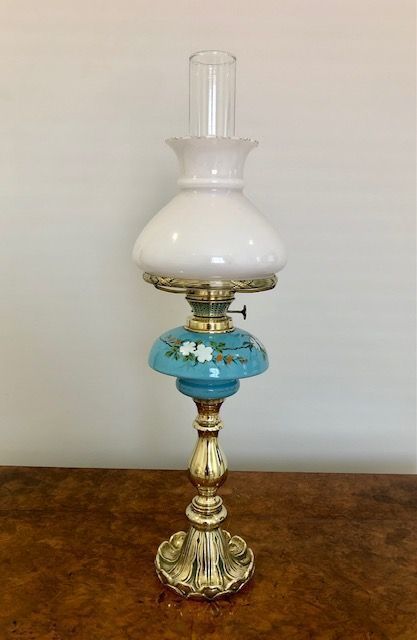
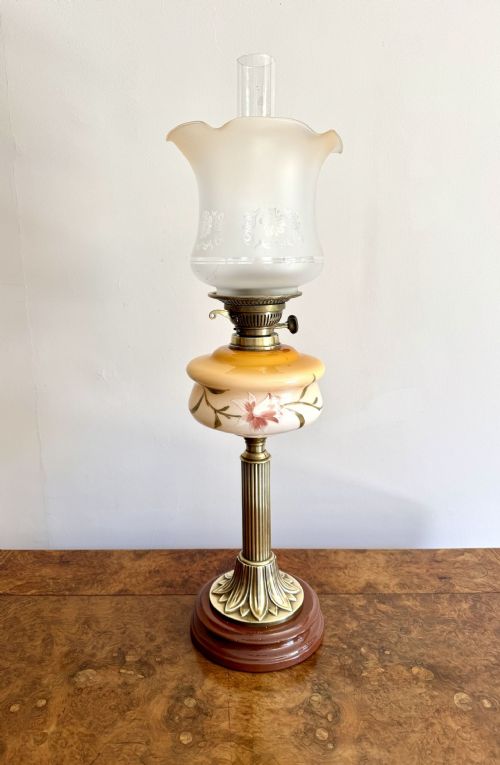
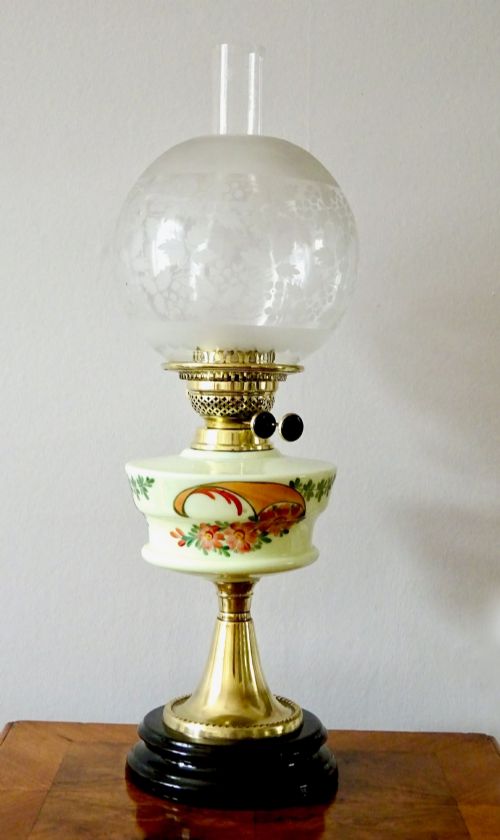
These hand painted paraffin lamp examples bring Victorian warmth and hand-finished colour to a room.
Hand Painted Paraffin Lamp
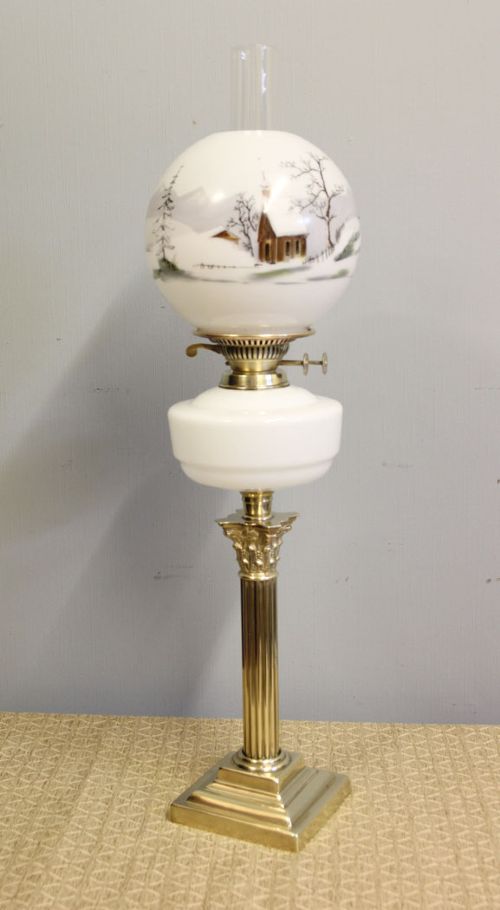
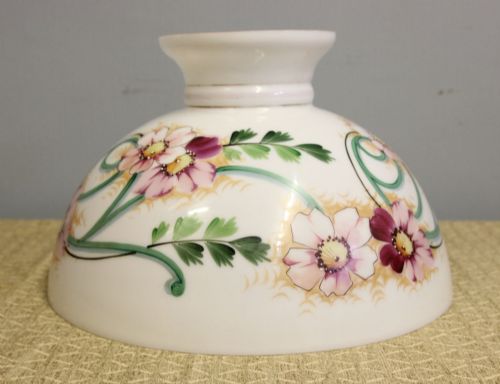
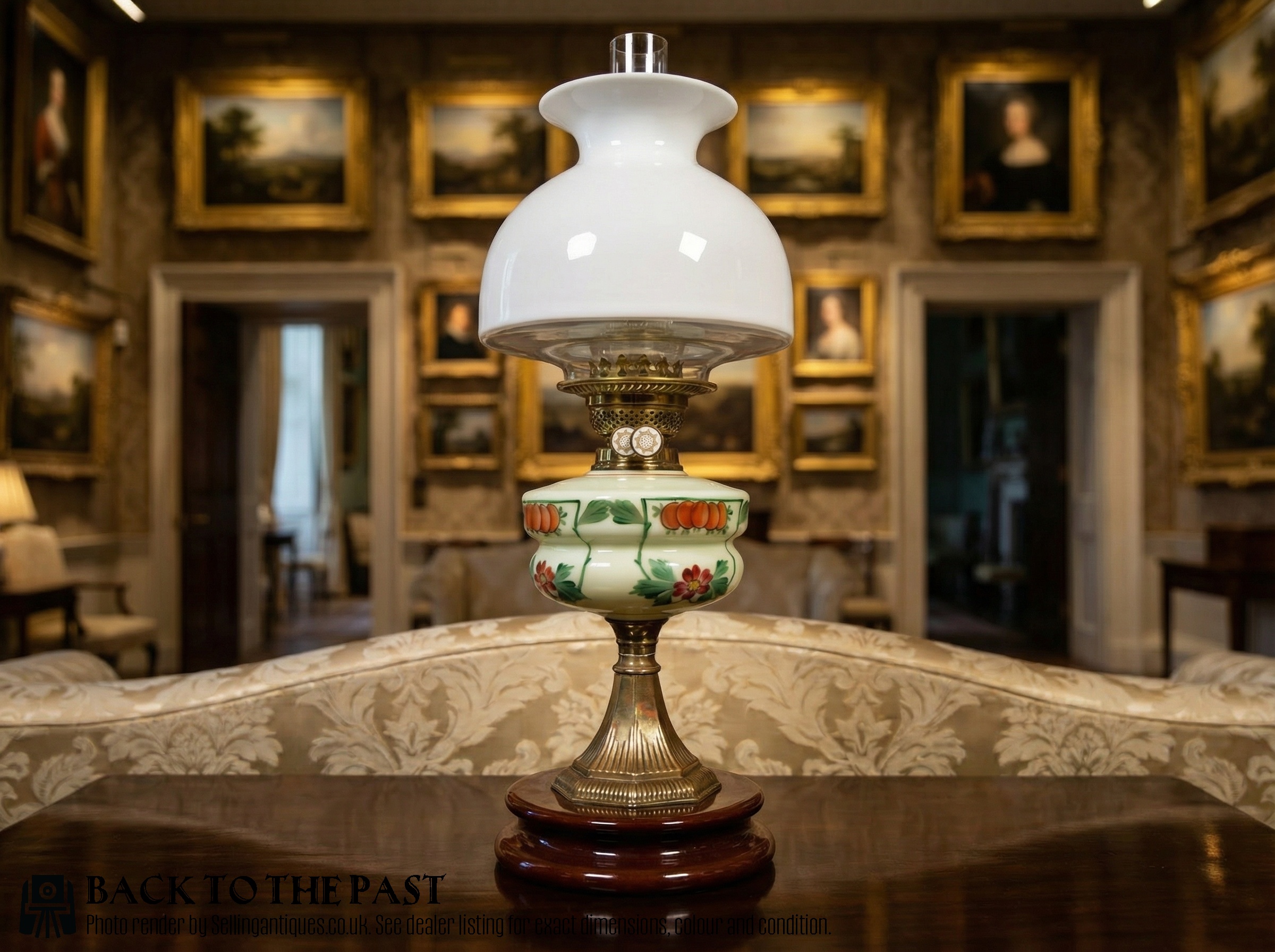
A hand painted paraffin lamp combines functional nineteenth-century lighting with decorative glass and ceramic work. Collectors searching for a hand painted paraffin lamp encounter table models, hanging shades, and column forms dating from the Victorian and Edwardian periods.
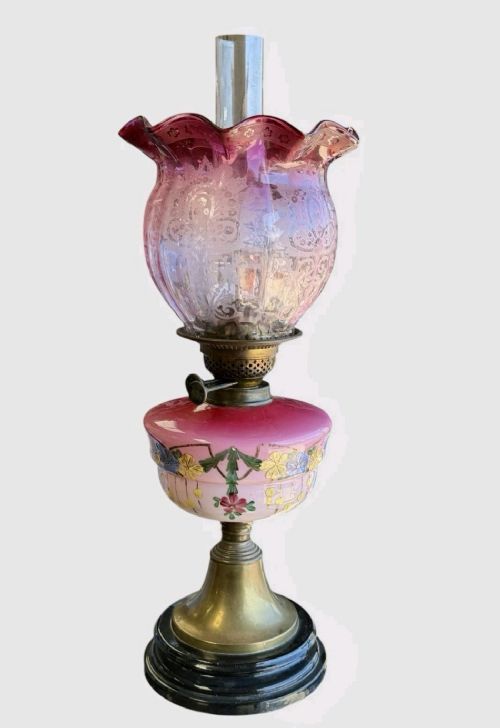
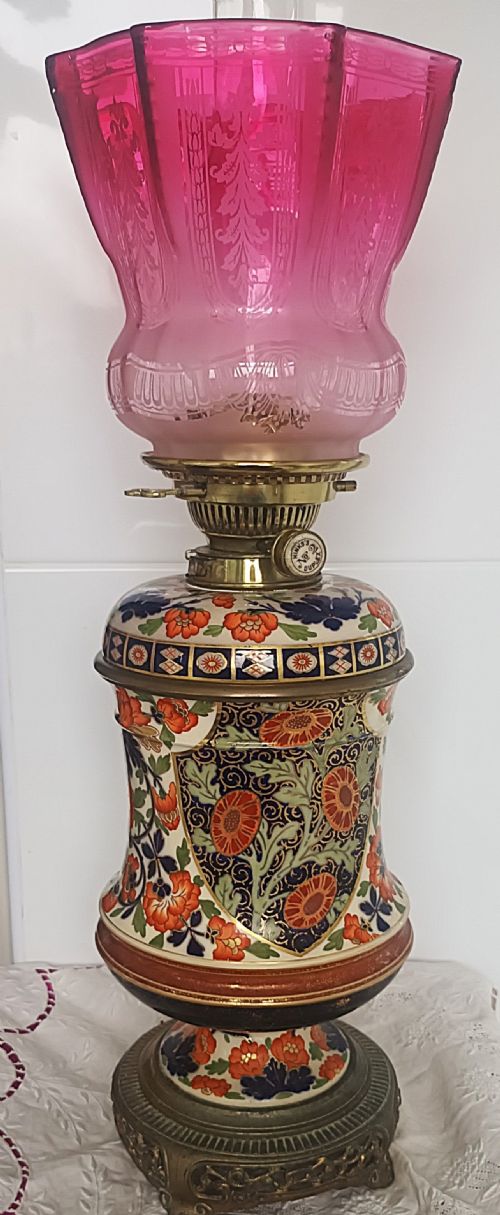
The selection ranges from simple cottage table lights to elaborate Corinthian column designs and French Napoleon III faience pieces. Most examples originate from the Victorian era, utilising coloured glass fonts and hand-applied floral or winter scenes.
Later pieces extend into the early twentieth century, including Art Nouveau enamelled styles and industrial railway lighting. The variety reflects domestic lighting development alongside changing aesthetic tastes across the nineteenth and twentieth centuries.
Judging quality and execution
Quality rests in the crispness of the brass casting, the depth of colour in the cranberry or opaline glass, and the finesse of the hand-painted decoration. Superior pieces feature detailed Corinthian capitals, crisply rendered floral motifs, and substantial weight in the metal bases.
Lamps combining matched original fonts and shades command greater interest than assembled pairings. The precision of the burner mechanism and the integrity of the ceramic or porcelain body further distinguish finer workshop output from standard domestic wares.
Listings feature brass, cranberry glass, and ceramic materials across Victorian, Edwardian, and Art Nouveau styles.
Hinks·Taylor Tunnicliff
The Hand Painted Paraffin Lamp Glossary
- Duplex
- A type of twin-wick burner system that produces a brighter flame than single-wick variants. Victorian lamps frequently utilise this mechanism for increased illumination.
- Corinthian Column
- An architectural column style featuring ornate acanthus leaf capitals, often cast in brass to form the stem of the lamp.
- Opaline Glass
- An opaque, slightly translucent glass developed in pale tints like pink or white, frequently hand-painted with floral scenes.
- Faience
- Tin-glazed earthenware, often French in origin, utilised for the decorative bases of Napoleon III period lamps.
Hand Painted Paraffin Lamp: Frequently Asked Questions
Are these lamps safe to use with paraffin today?
Most antique lamps are sold as decorative objects or have been converted to electricity for modern use. Restoring a fuel-burning lamp requires specialist inspection of the burner and font.
Using historical paraffin lamps for actual lighting involves handling flammable fuel and fragile glass. Many buyers prefer to wire them for electricity or display them unlit.
How do I date a Victorian oil lamp?
Dating relies on stylistic markers, materials, and burner patents stamped into the metalwork. Victorian examples often feature heavy brass castings and cranberry glass.
Later Edwardian and early twentieth-century pieces introduce softer pastel tones and simpler brass stems. Comparing the font material and base style helps narrow the decade of manufacture.
What is the difference between a font and a shade?
The font holds the paraffin fuel and sits in the lower portion of the lamp body. The shade mounts above the burner to diffuse the light.
Matching shades and fonts share similar hand-painted motifs or glass colours. Many surviving lamps retain only one of these original components.
How should I clean a hand-painted glass shade?
Hand-painted glass requires gentle cleaning with lukewarm water and mild soap. Avoid abrasive cloths or chemical solvents that might remove the enamel decoration.
Careful handling prevents damage to delicate gilt highlights and painted floral scenes. Allow all parts to dry completely before reassembly.