
Edwardian Oil Table Lamp
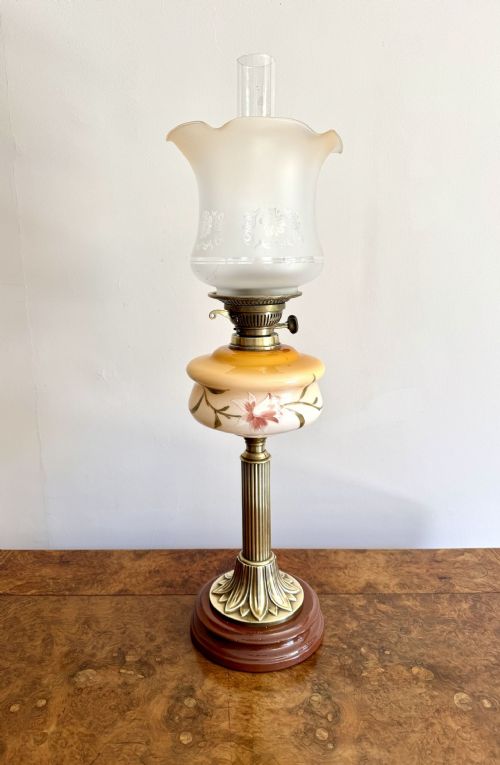
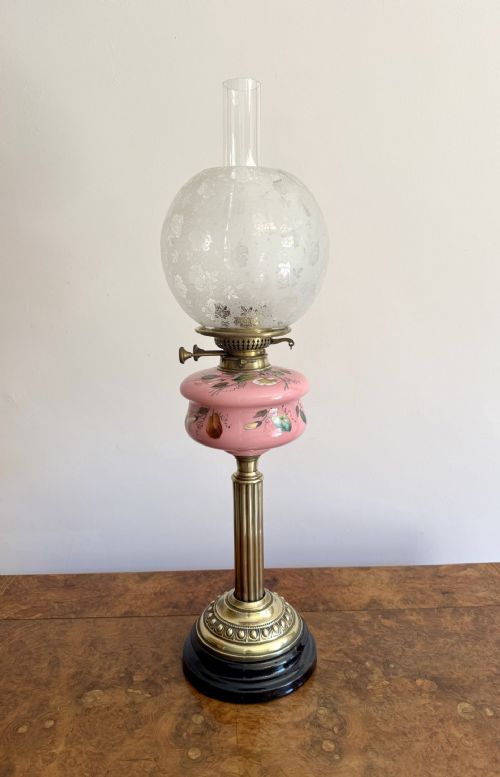
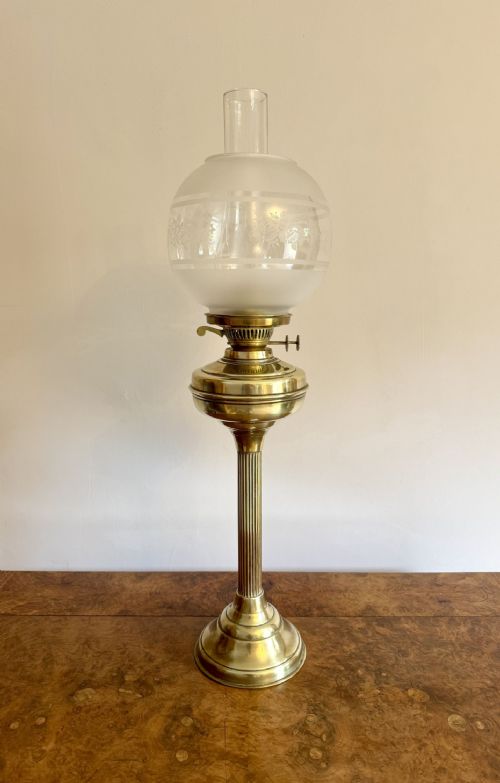
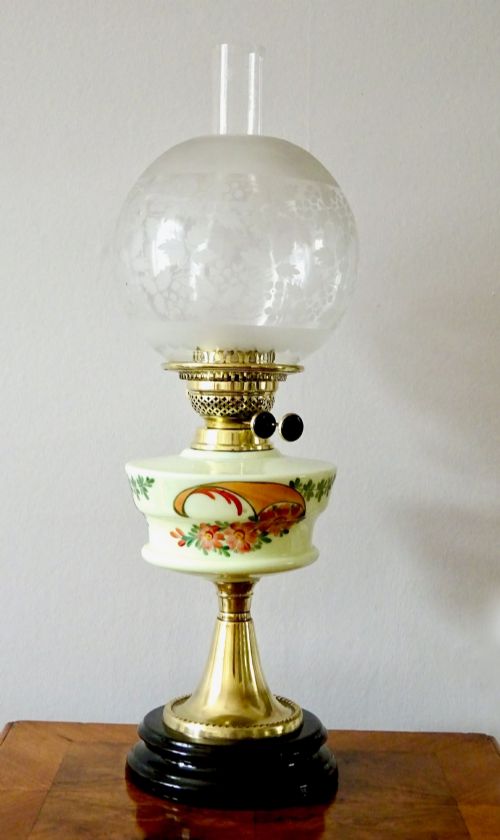
These edwardian oil table lamp examples bring period illumination to a room, combining heavy brass and coloured glass with practical nineteenth-century engineering.
Edwardian Oil Table Lamp
When searching for an edwardian oil table lamp, you encounter items designed for domestic illumination before electric lighting became universal. The pieces found here span the late nineteenth century and the Edwardian era, alongside earlier Victorian examples.
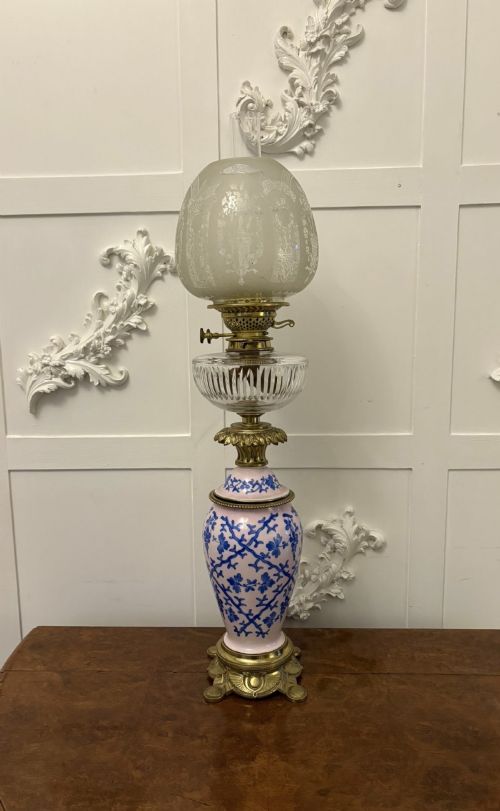
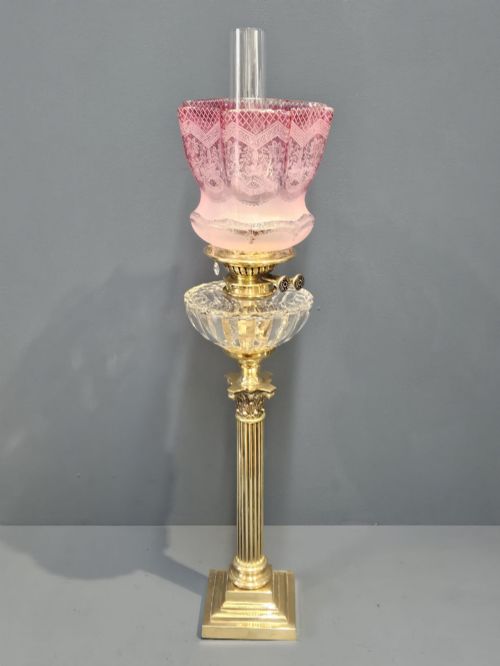
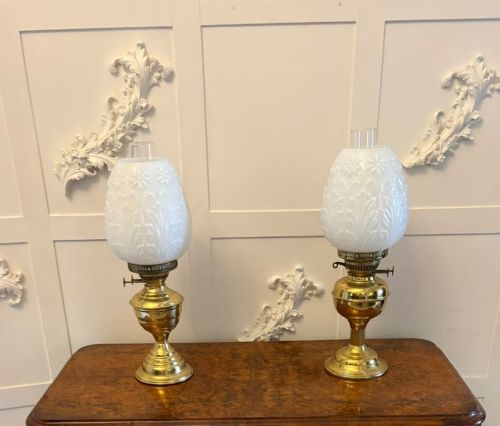
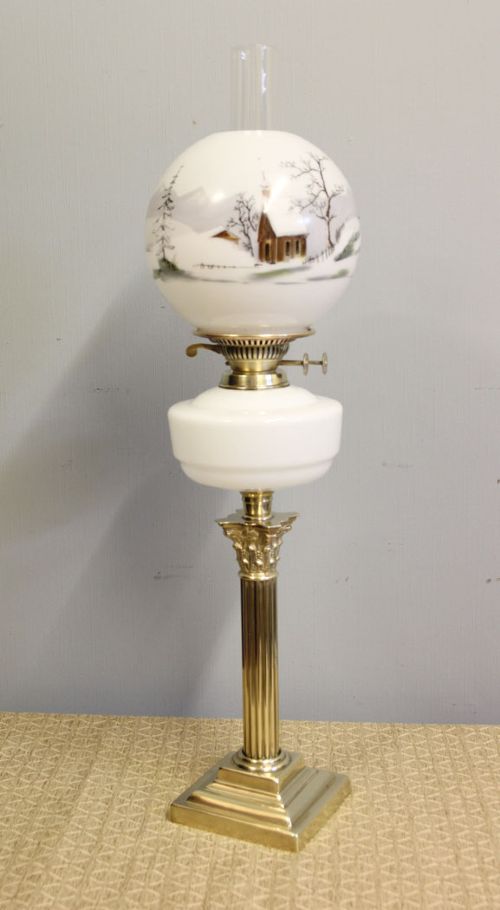
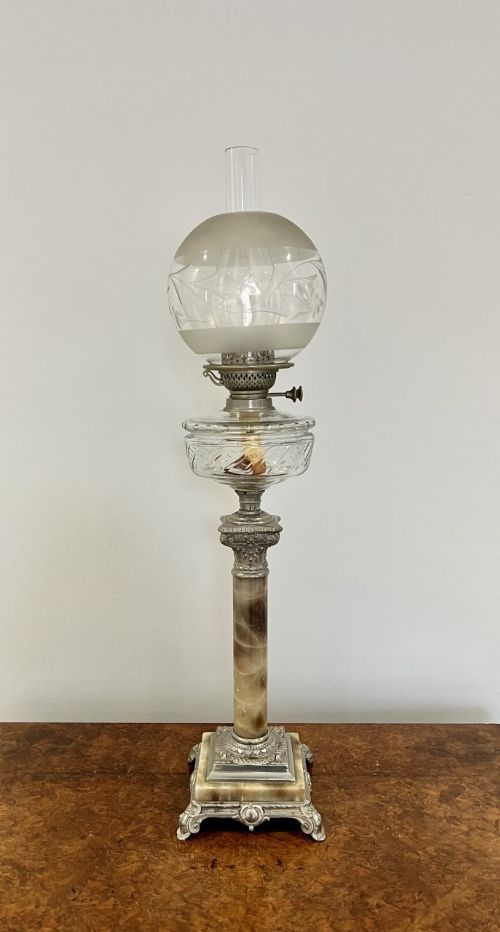
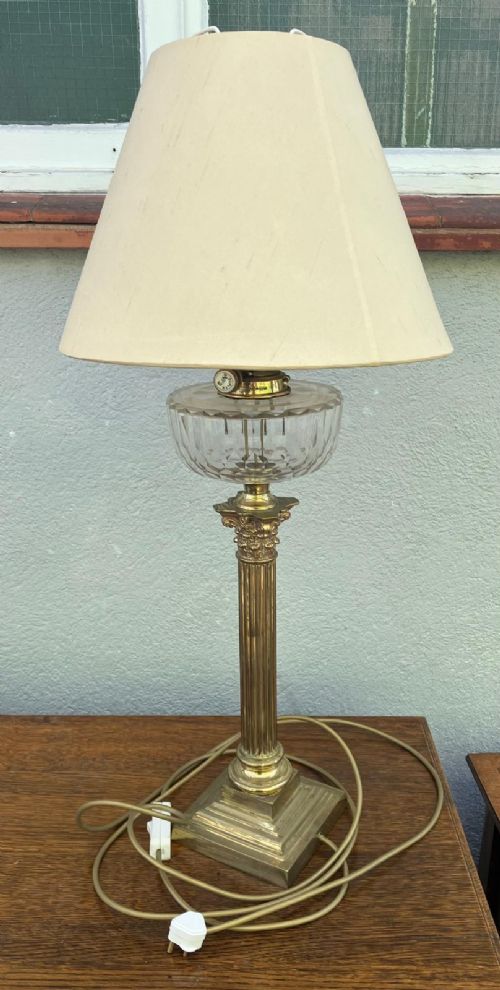
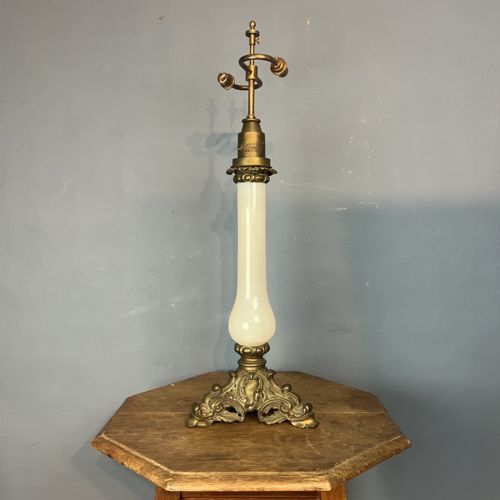
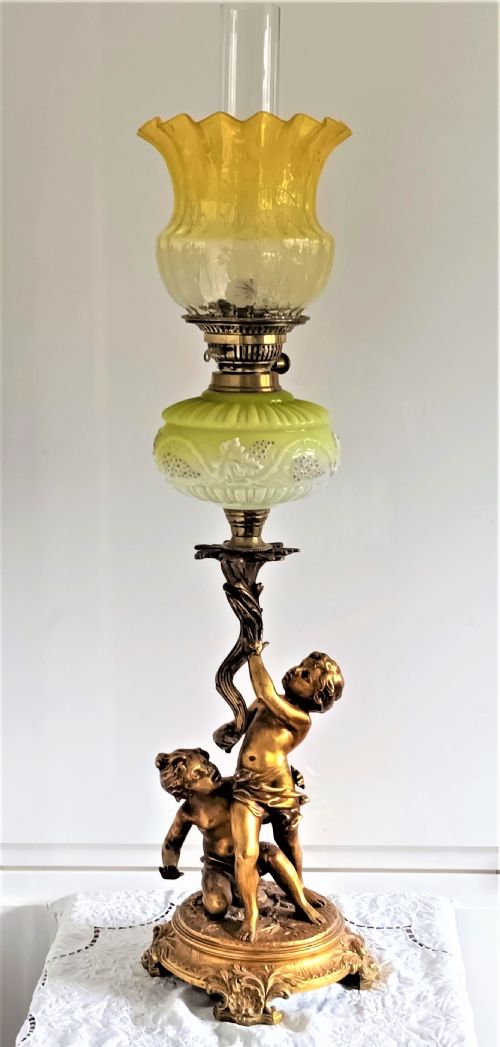
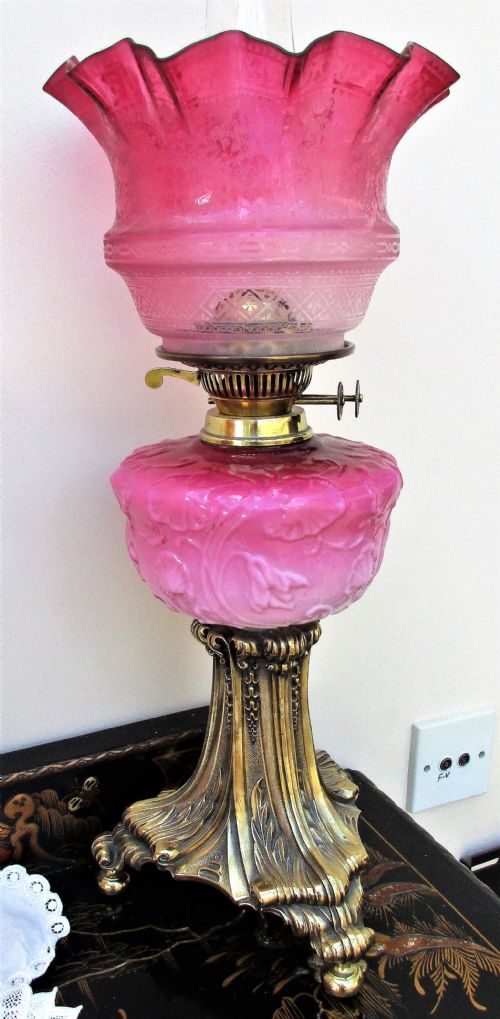
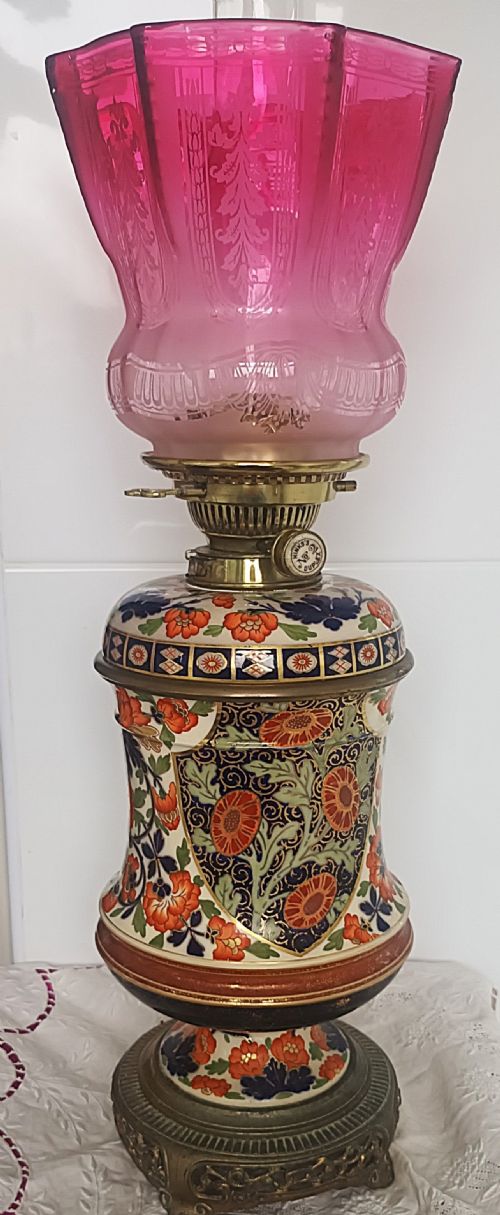
Most items combine a heavy metal or ceramic base with a glass font and shade. Tall Corinthian column forms in brass appear frequently alongside simpler brass and ceramic bodies.
While primarily designed to burn paraffin, many surviving specimens retain their original coloured glass shades, ranging from cranberry to opaline hues.
Materials and construction
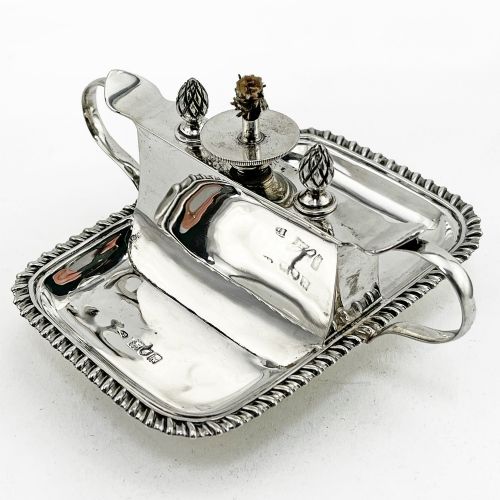
Brass provides the structural foundation for many bases and columns, often paired with copper or cast iron weights to ensure stability. Sterling silver appears in smaller table lighters fashioned in classical revival shapes.
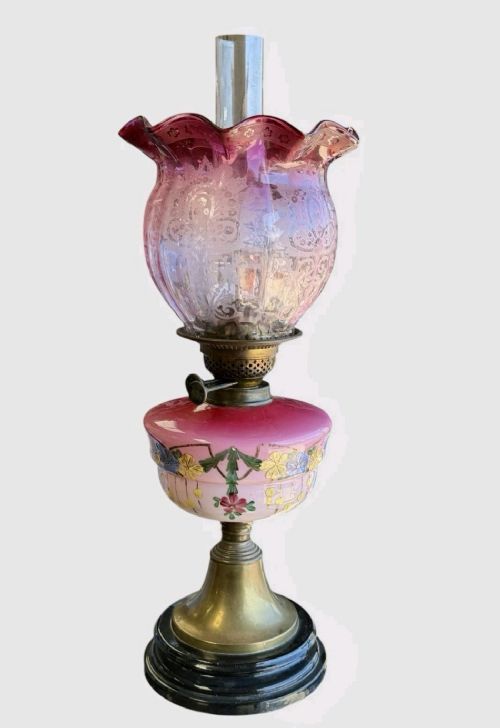
Fonts and shades utilise blown and moulded glass, including clear, cut, and coloured varieties such as cranberry and opaline glass. Hand-painted decoration and gilt detailing frequently adorn the glass components.
Several miniature silver pieces take the exact shape of Aladdin's mythical vessel.
Judging quality and character
The weight and casting definition of the metal elements separate standard production from finer work. Crisp detailing on Corinthian capitals or heavy-gauge brass indicates superior manufacture.
The presence of a matching or original glass shade substantially alters the integrity of a piece. Hand-painted fonts and deep cranberry or layered casing glass elevate the visual appeal of individual examples.
Hinks·Taylor Tunnicliff·Osler
The Edwardian Oil Table Lamp Glossary
- Opaline glass
- An opaque white glass developed in the nineteenth century, frequently used for lamp shades to diffuse light softly.
- Corinthian column
- A classical architectural style featuring acanthus leaves on the capital, heavily utilised for brass lamp standards.
- Cranberry glass
- A rich pinkish-red glass created by adding gold chloride to the molten batch, popular in Victorian and Edwardian lighting.
Edwardian Oil Table Lamp: Frequently Asked Questions
Can I still burn oil in these lamps?
Most buyers choose to wire these lamps for electricity to use them safely as everyday table lighting.
Retaining the original burner mechanism is possible while hiding a modern cord through the central column.
How do I clean a cranberry glass shade?
Warm soapy water and a soft cloth work best for removing dust from delicate coloured glass. Avoid harsh chemical cleaners that might damage hand-painted gilt decoration.
Let every component dry fully before reassembling the lamp structure.
How do I date an oil lamp?
Stylistic clues such as Corinthian revival brass columns point to late Victorian or Edwardian manufacturing periods. Patent marks or maker names stamped on the brass burner wheels offer precise historical reference points.
Comparing the shade style and glass colour to documented production eras helps confirm the timeline.