
Antique Oil Lamps
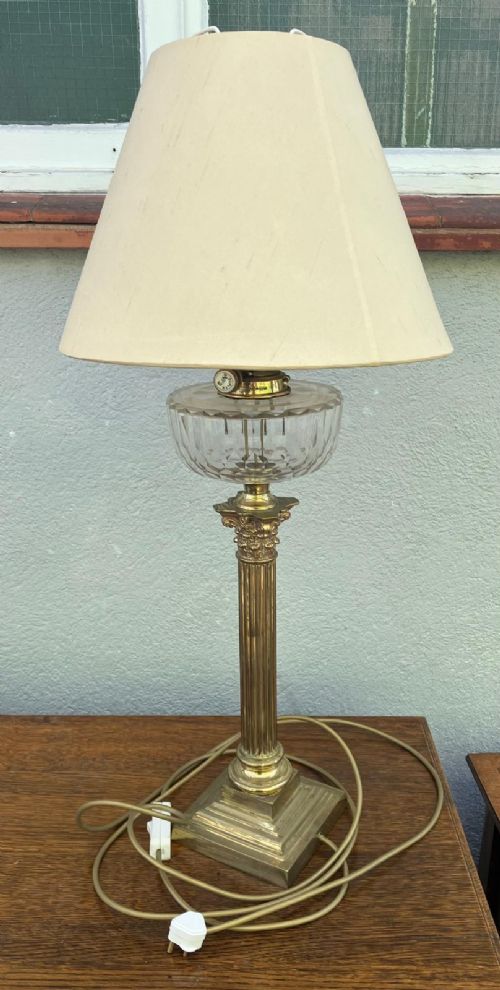
A paraffin-burning domestic lamp, usually a brass column carrying a glass font, burner and shade, made to light ordinary British rooms before electricity arrived.

Antique Oil Lamps
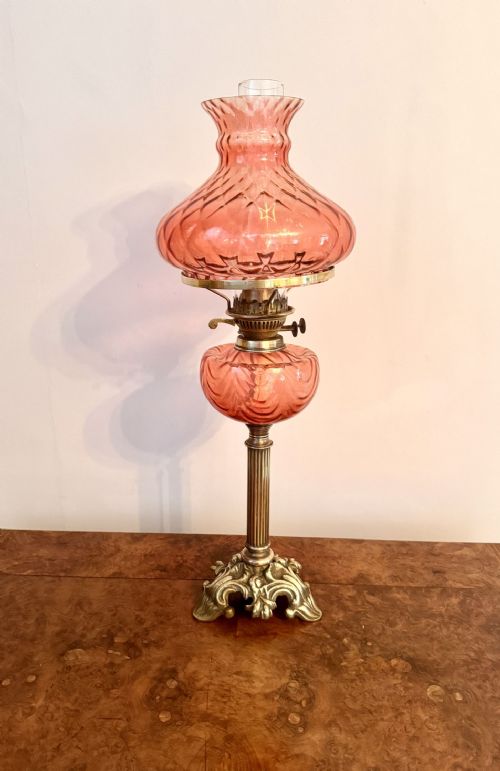
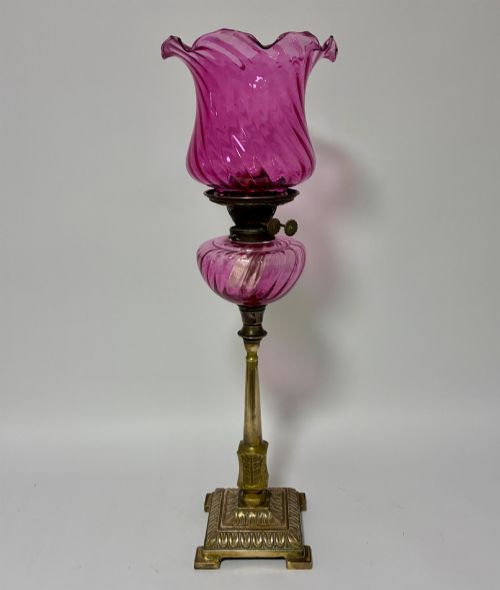
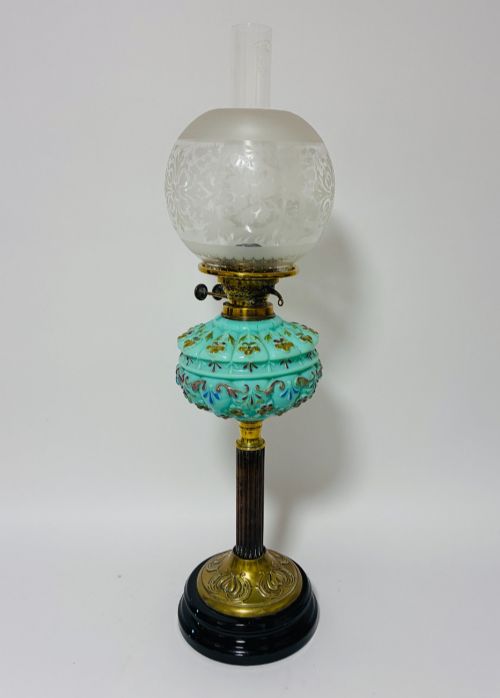
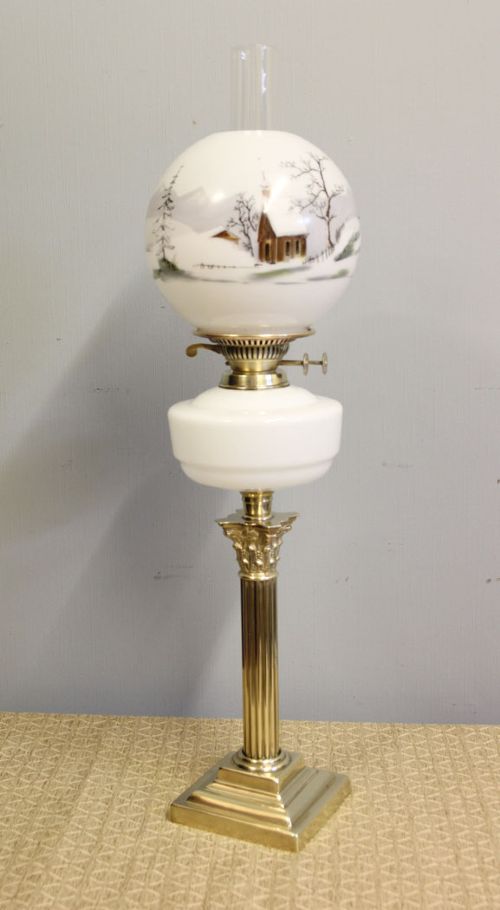
Brass is close to a defining material. It's named in 249 of the 561 titles on Sellingantiques, and in 87 of those alongside the word Victorian. The commonest thing you'll meet is a table lamp built as a brass column on a spreading foot, with a glass or ceramic font, a duplex-type burner and a glass shade above.
Improved burners and cheap mineral paraffin made a bright, controllable flame practical for ordinary rooms in the 19th century, and these lamps were the main domestic light in Britain until electricity displaced them. The dealers' dating runs from 1800 to 1940, though the weight sits late: the 1880s lead the dated listings, then the 1900s and 1890s. Over a third of the dating is given as a bracket rather than a year, so treat Victorian and 19th Century as several decades wide.
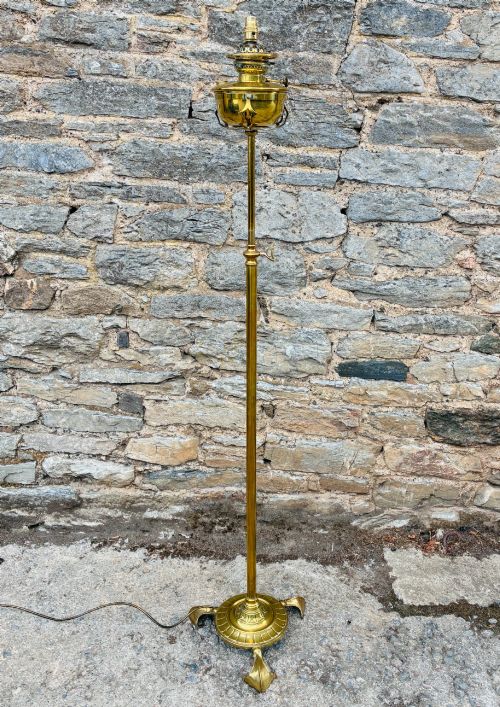
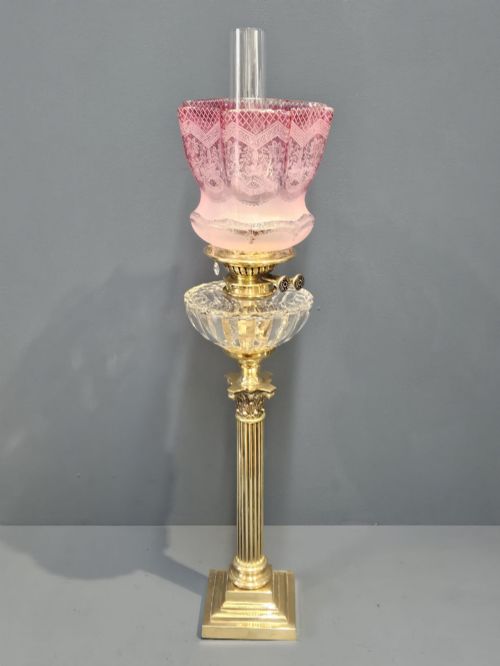
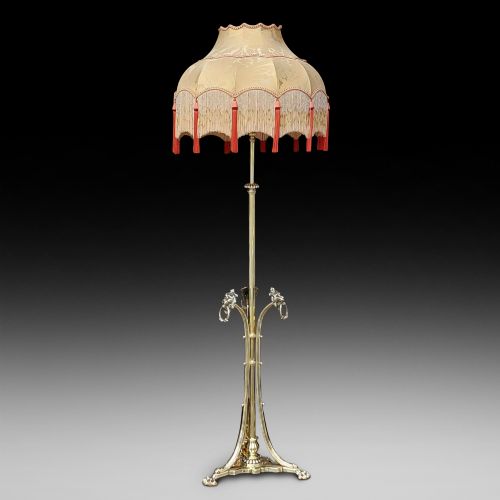
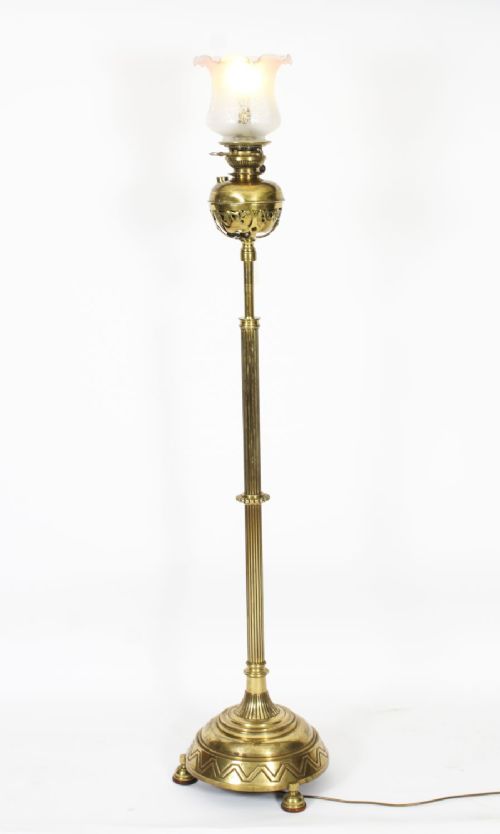
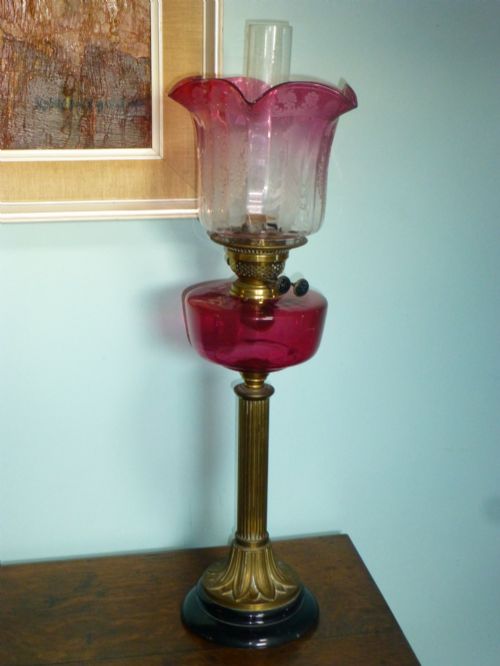
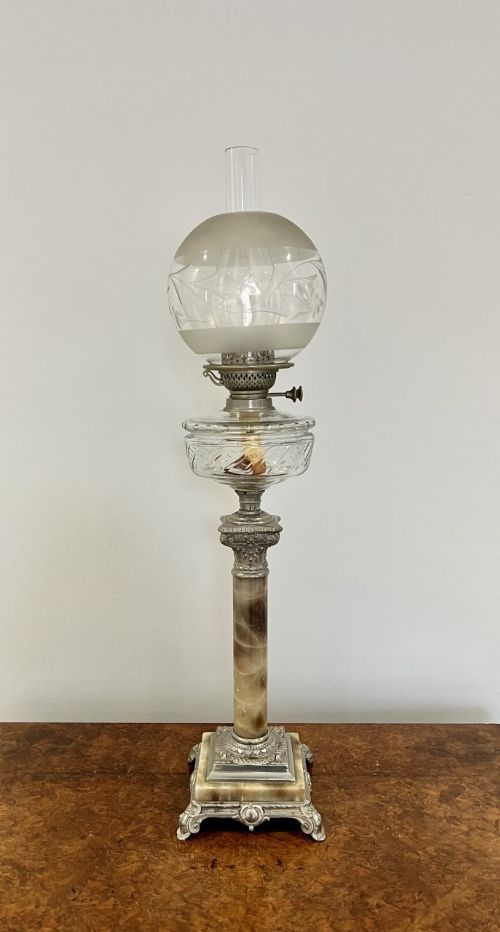
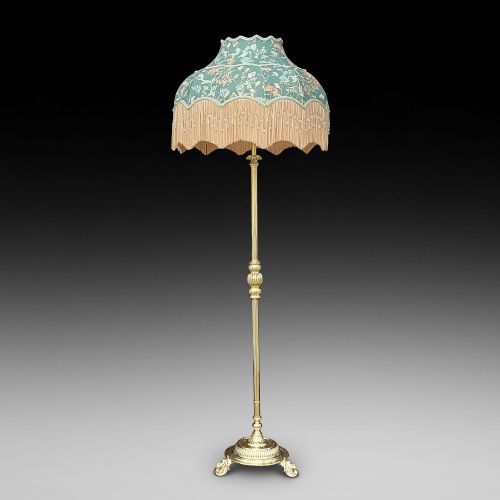
Columns are explicit in 45 titles, 29 of them Corinthian, with Ionic and reeded examples turning up only as one-offs. The same construction scaled up on a telescopic or extending stem gives the floor-standing standard lamp, about a tenth of the titles. Coloured glass accounts for around one in six, cranberry and ruby dominating the named colours ahead of blue and pink.
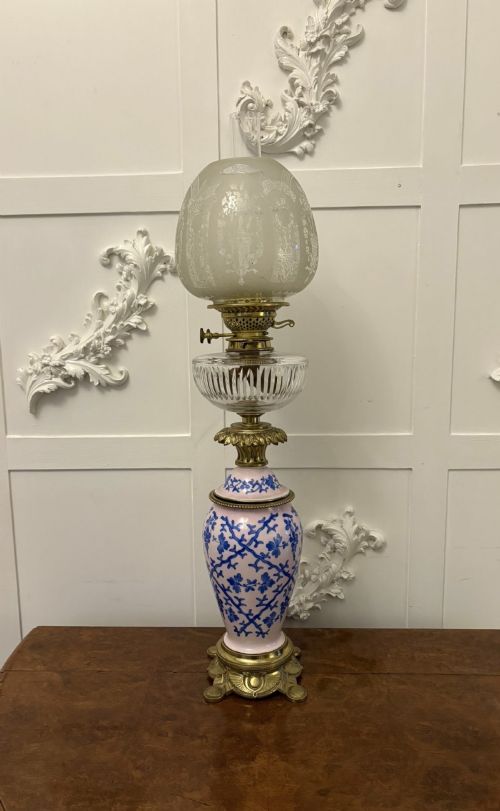
Beyond the brass-and-glass run sit porcelain bases including figural owls, faience, Imari and majolica, peg lamps that drop into a candlestick or wall bracket, and a small side population of railway, ship's and vernacular lamps. Thirty-two titles say outright that the lamp has been converted to electricity.
Where The Range Splits
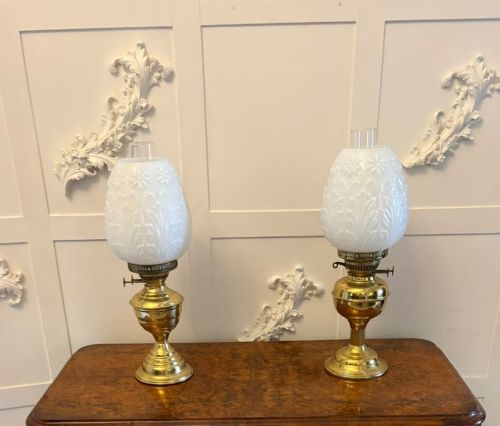
Form does most of the sorting. Floor-standing standard lamps, and the extending and telescopic stems that go with them, cluster in the upper half of the sampled range, several above four figures, while plain brass table lamps with clear glass fill the lower half. Matched pairs push the same way: pair appears in 52 titles, and pairs of peg lamps, cranberry lamps and porcelain lamps take up much of the top, with sets of four and five appearing too.
Colour and casting follow. Cranberry shows at both ends, but ruby glass peg lamps and tall cranberry column lamps sit in the highest bands. Corinthian, Ionic and reeded columns, cloisonné, ormolu, gilt mounts and figural porcelain bases all appear far more often above the middle of the range than below it.
Then there's how much of the lamp is still lamp. Titles that name an original shade, an original chimney or a burner run higher than listings offering a bare font. Shade is in 49 titles, glass shade in 15 of them, and a burner is named in only 11, so the complete optical stack is worth reading for in a description.
Antique Oil Lamps Retail Price Guide 2026
Typical UK retail prices for oil lamps, calculated from the Sellingantiques database of over a million retail prices indexed since 2003. This retail price guide relies exclusively on Sellingantiques data; no external sources or auction records are used, so the figures do not describe the wider market.
Oil lamps have been listed on Sellingantiques since 2008, and more than 300 have passed through in that time.

The Antique Oil Lamps Glossary
- Font
- The bowl holding the oil, glass or ceramic, also called the reservoir or vessel in titles. It sits on top of the column and screws into the burner.
- Burner
- The wick-carrying fitting screwed into the font, named in 11 titles. Duplex is a twin-wick type and appears in nine, sometimes written as duplex twin burner.
- Shade
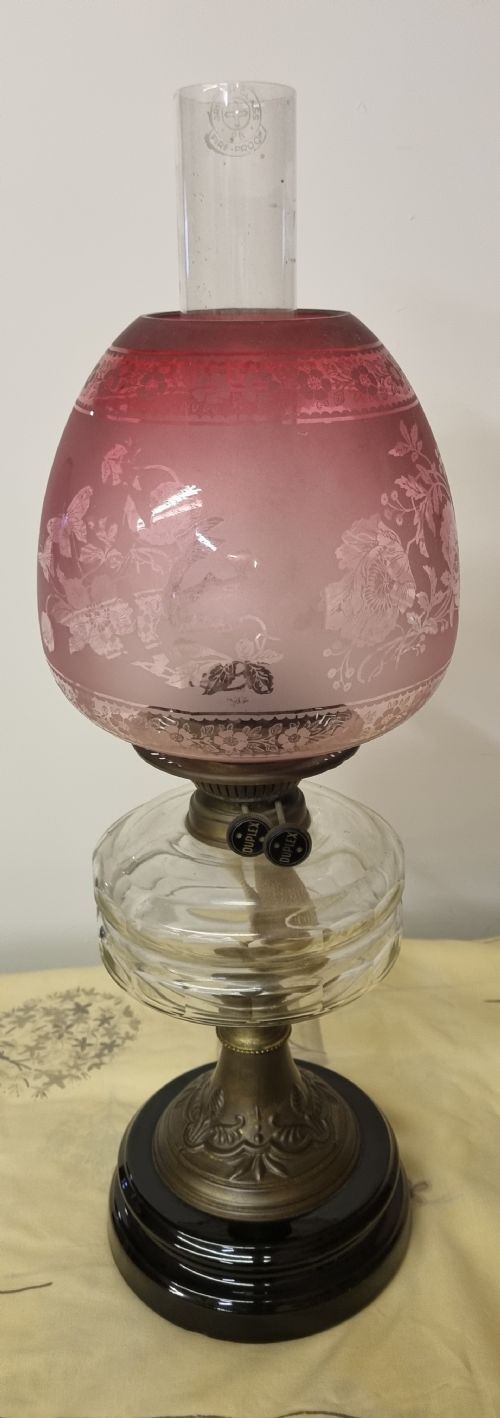
- The glass dome or tulip over the flame, in 49 titles. Separate from the chimney, the tall glass funnel above the burner that draws the flame, noted in a few titles as original.
- Standard lamp
- A floor-standing lamp on a tall stem, 56 titles. Telescopic and extending describe a stem that slides to alter height, with a further 24 lamps called adjustable.
- Corinthian column
- A fluted brass column with an acanthus capital, specified 29 times, the single most common column type named.
- Peg lamp
- A small font with a peg base that drops into a candlestick or wall bracket, 20 titles, often offered as a matching or wall-mounted pair.
- Cranberry glass
- Pink-red glass used for fonts and shades, mentioned in 50 titles. Opaline, vaseline and satin glass are the semi-opaque types recurring alongside it.
Antique Oil Lamps: Frequently Asked Questions
How many oil lamps are listed each year?
About 59 a year on Sellingantiques, and 122 different dealers have offered them. That makes it one of the more widely stocked lighting categories.
The archive behind those figures runs to 561 listings, so there's a broad picture of what the category actually holds.
Are these lamps usually still oil burners?
Thirty-two titles state outright that the lamp has been converted to electricity, so an electrified example turns up roughly one time in seventeen.
The rest are described without that note. Conversion is common enough to be a standing feature of the category rather than an exception, and dealers tend to say so in the title when it applies.
What does Victorian mean in these titles?
It's a bracket, not a date. Victorian is used 131 times and 19th Century a further 83, which means over a third of the dating covers several decades rather than a year.
Where a clean year is given, the 1880s lead with 75 listings, then the 1900s at 65 and the 1890s at 56. The 1860s and 1870s sit behind them, and the 1910s, 1920s and Edwardian labels are thin.
Which colours of glass turn up most?
Pink-red, by a distance. Cranberry appears in 50 titles and ruby in 16, well ahead of blue at 12 and pink at 11.
Vaseline, amber, green, opaline and satin glass all recur too, used for fonts and shades alike.
What is a standard lamp in this category?
A floor-standing lamp on a tall stem, built the same way as the table version but scaled up. Standard appears in 56 titles, with extending in 18 and telescopic in 14.
They're only about a tenth of the category but occupy most of the top of the range, several of them as matched pairs.
Do unusual forms come up at all?
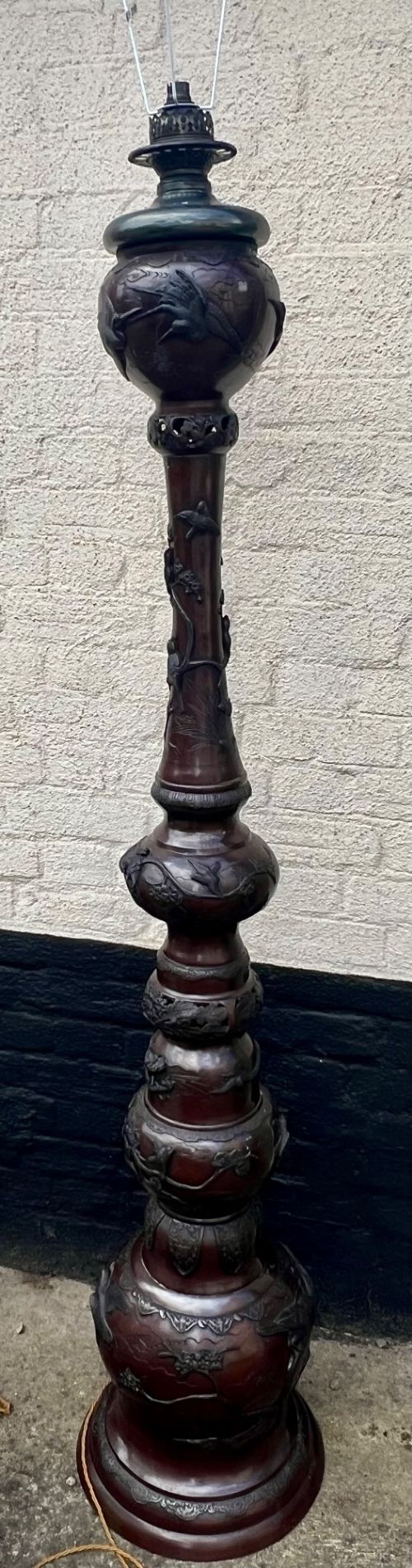
They do, mostly once each. A Scottish iron cruisie, a Judenstern Sabbath lamp, an Anglo-Burmese padouk and brass adjustable lamp, a South Indian temple bronze, a photographer's lamp, and two lamps fitted with terrestrial globe shades.
Railway, ship's and signalling lamps form a small side population, with GWR, LNER and South Eastern Railway examples and port and starboard ship's lamps appearing individually.
Genuinely early pieces are marginal: 18th-century whale-oil and crusie lamps appear three or four times in the whole sample.