

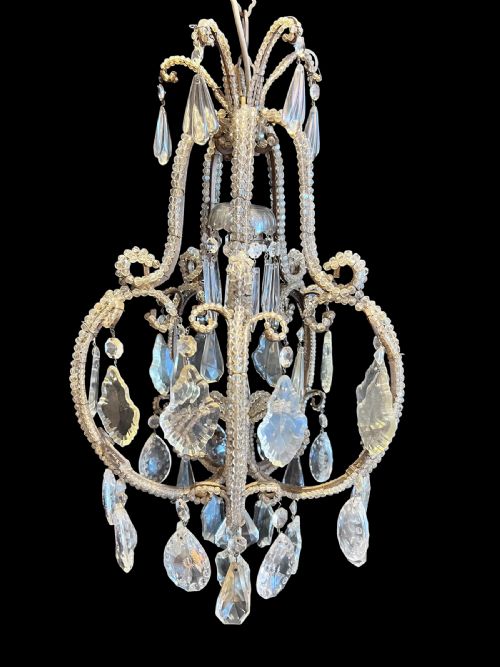
Antique Chandelier
A hanging multi-light ceiling fitting, made to lift a group of lights above a room and, once glass drops were added, to multiply that light by refraction.
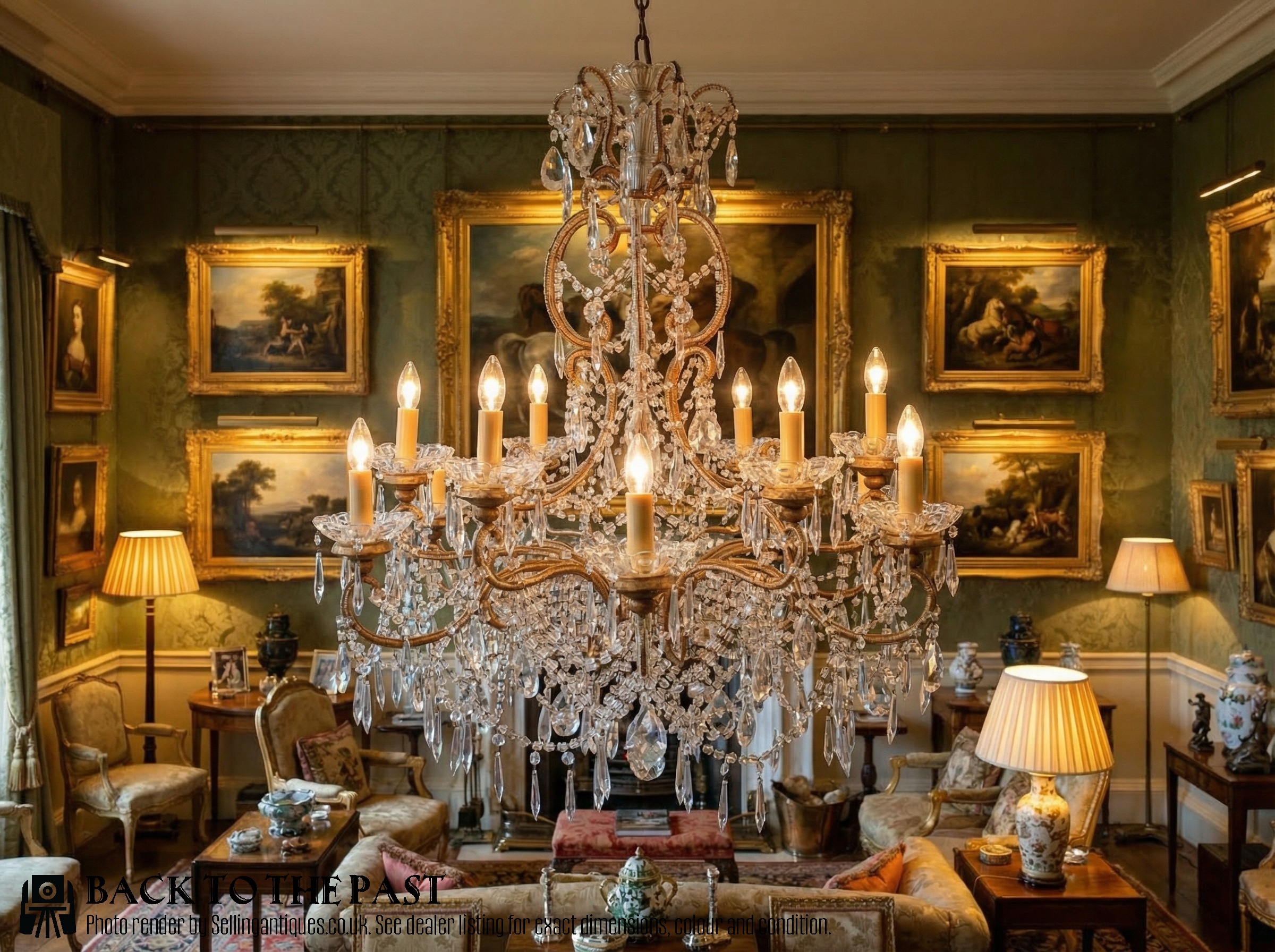
Antique Chandelier
The branched hanging light began as a candle form, became the glass-drop chandelier of the eighteenth century, then the gas and electric fitting of the nineteenth and twentieth. What comes to market on Sellingantiques sits at the electric end of that story. Dealer dates run from 1800 to 1960, but the 1920s and 1930s together account for 2,584 of the 3,204 dated listings.
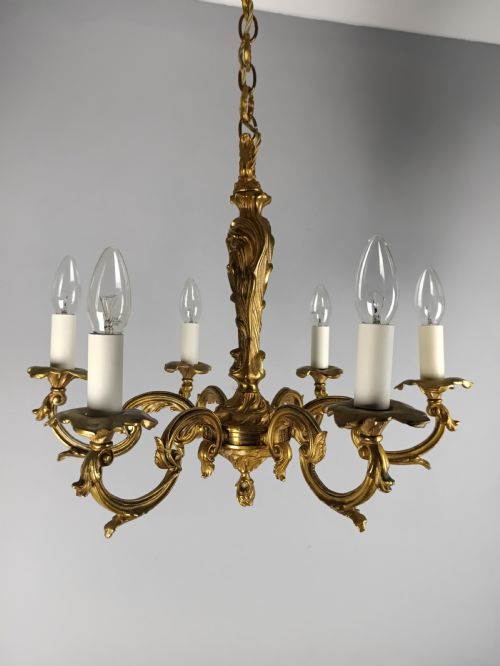
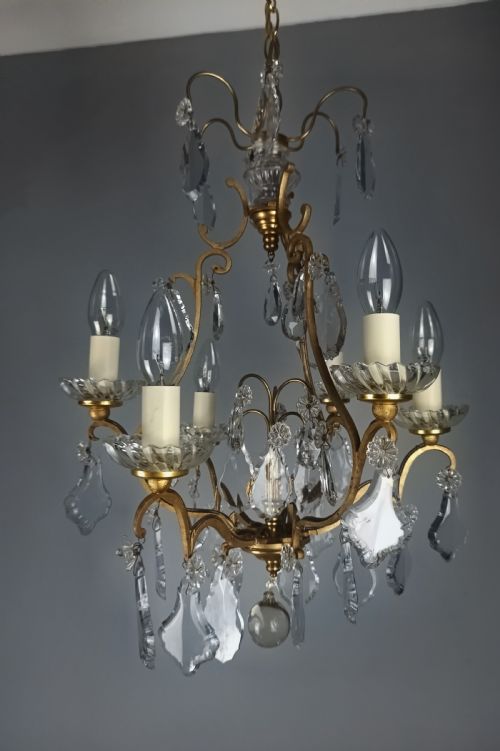
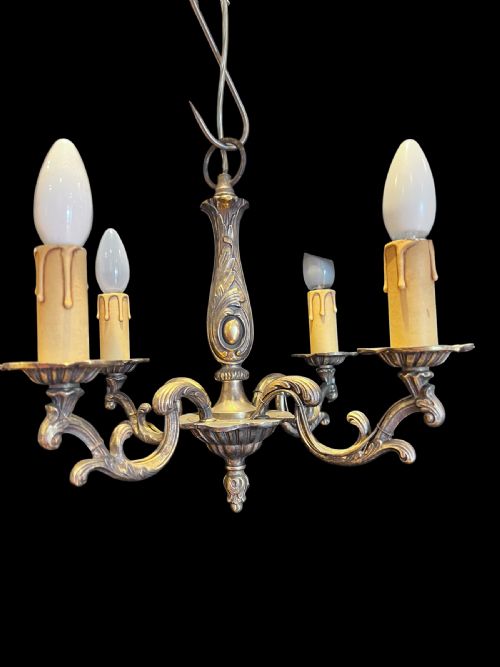
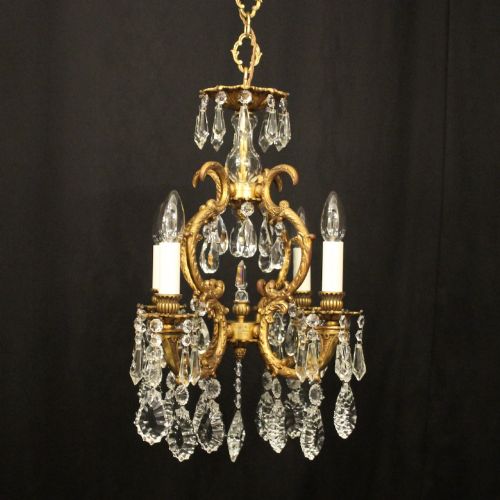
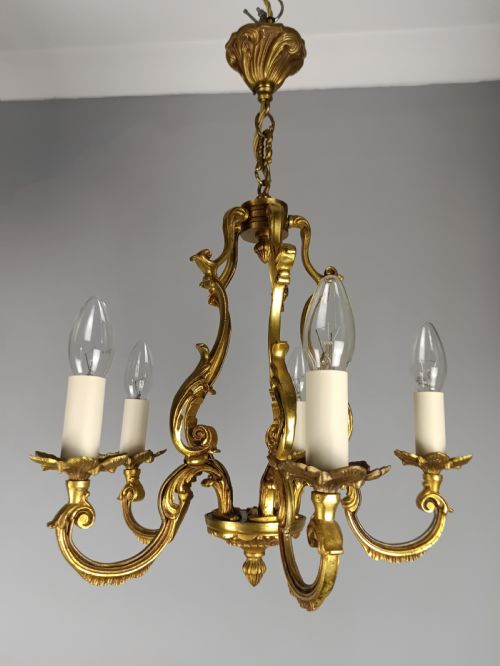
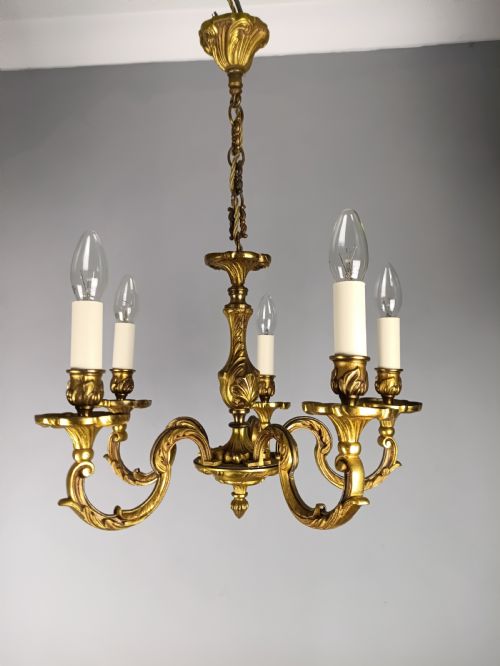
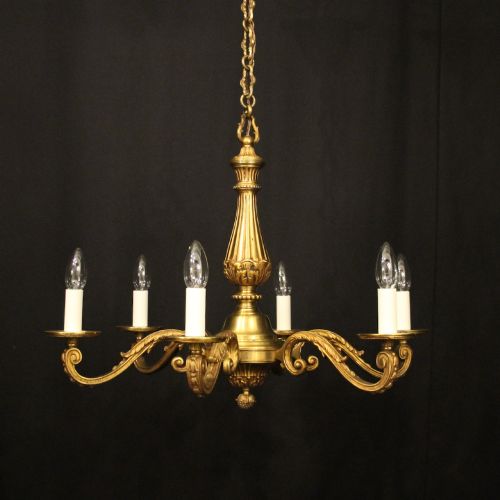
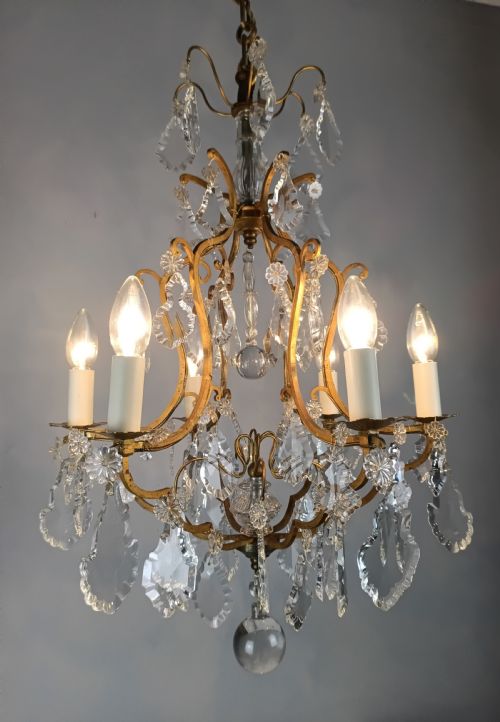
The archetype is a French gilded-metal frame of four to eight lights, often hung with crystal. French appears in 1,805 titles, gilded in 1,485, crystal in 1,015, and the word light in 2,202, nearly always as a count. Five, six and eight lights recur constantly. A title like "French Gilded Bronze 6 Light Antique Chandelier" tells you most of what the category does.
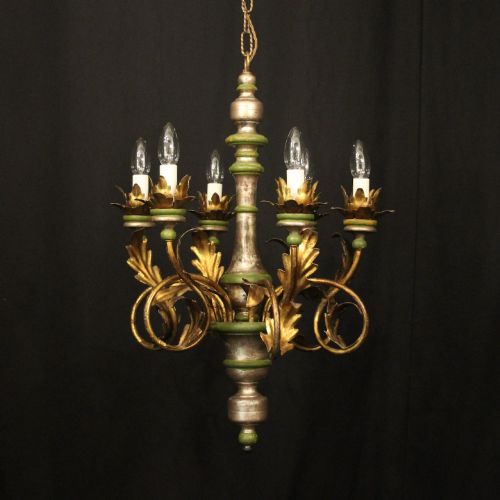
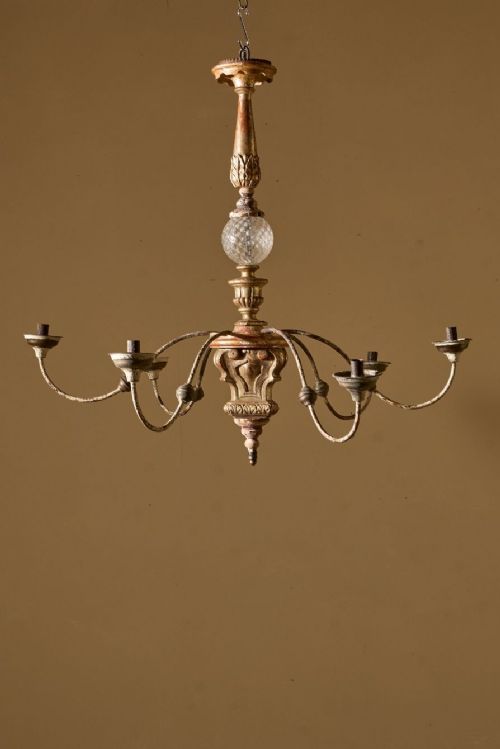
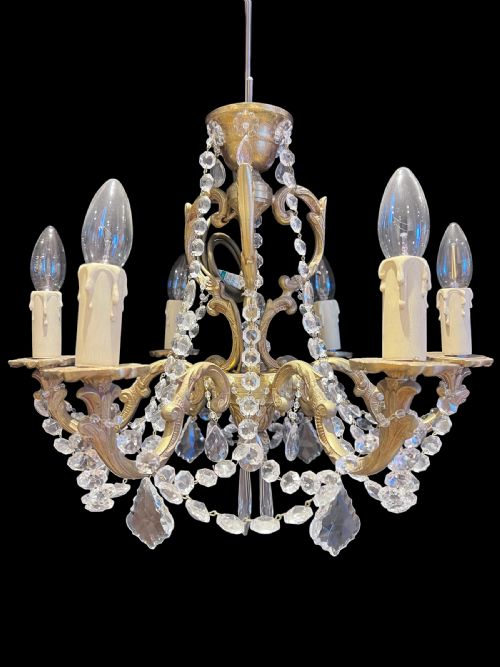
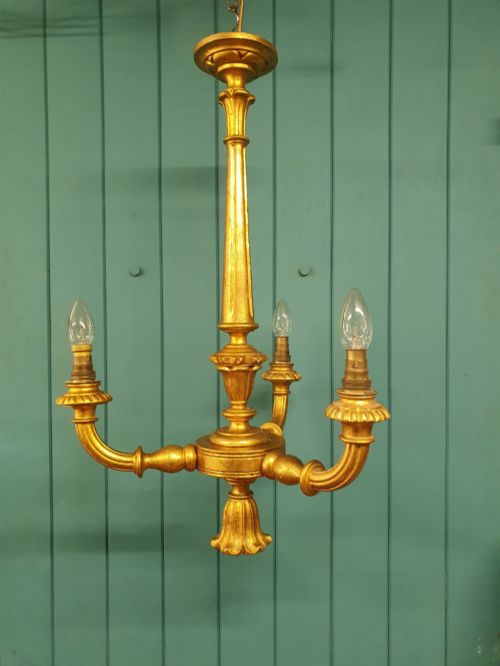
Alongside the metal frames sits a body of glass-hung forms: bag, spike, tent and waterfall, tier. These overlap with the metal group as often as they stand alone, and they carry the category's odder vocabulary - drip, swag, purse, coffin prism, dome top. Italian stock is the next largest national group, with 615 titles, including a pocket of Florentine polychrome and giltwood frames painted rather than gilded all over.
Scale runs a long way. Small bag and spike fittings measure a few inches across; at the other end are double-tiered pieces of twenty or more lights, and pairs, which appear in 335 titles. Around 392 chandeliers are listed each year, handled by 149 separate dealers.
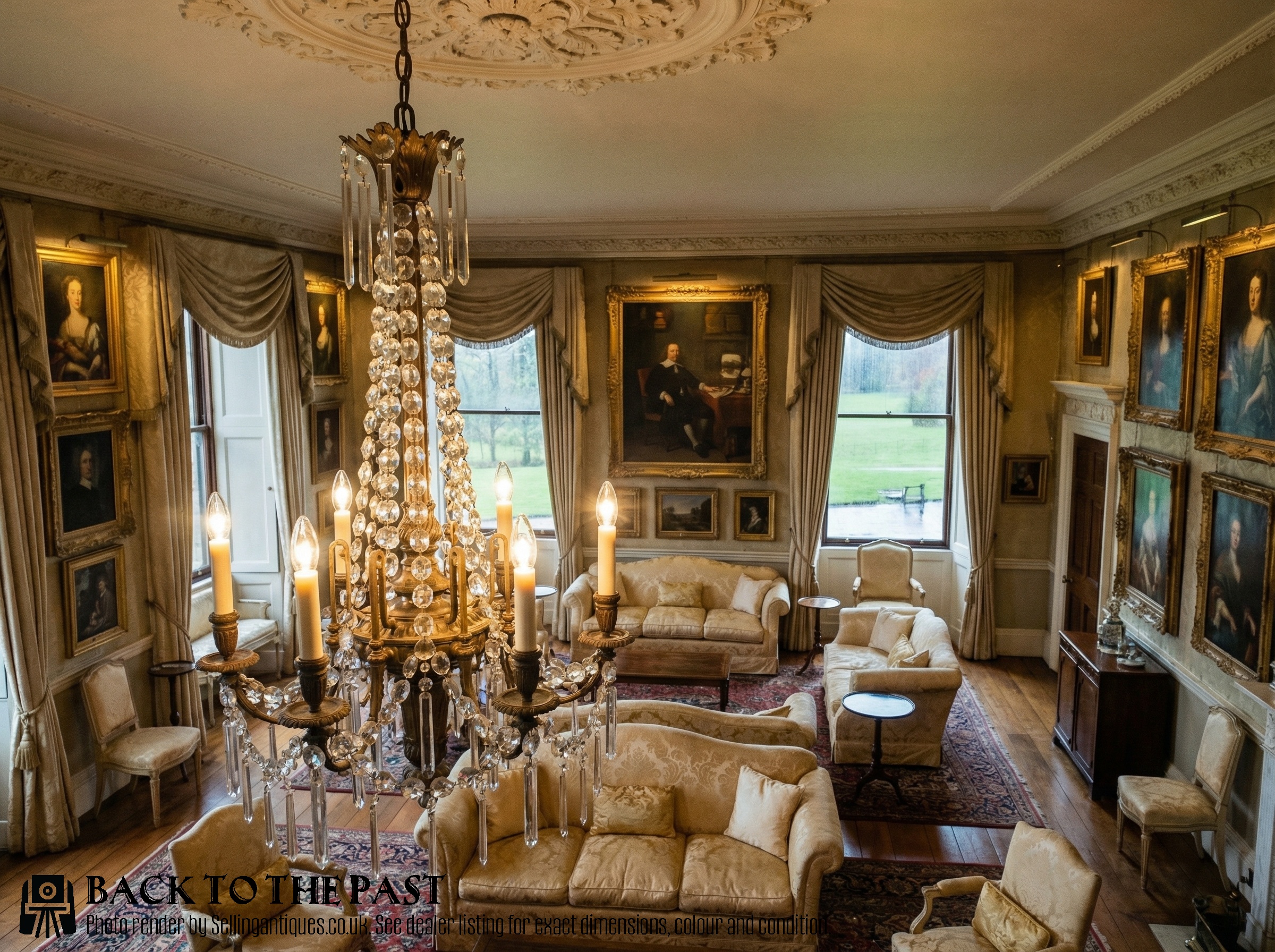
Where The Range Splits
Light count does more work than anything else. Single- and three-light bag and spike fittings sit at the bottom; twelve, fifteen, eighteen, twenty and twenty-four lights, and anything described as double tiered, cluster at the top. Size follows the same line - sampled drops run from six and seven inches up to forty-three, and large appears in three times as many titles as small.
Frame material separates the range again. Cast gilded bronze dominates the highest-priced samples, while the cheapest are undescribed glass tiers, chrome pendants and small bag chandeliers. A named origin or style lifts a piece too: Empire, Florentine, Genoese, Flemish, Dutch and Swedish all turn up, against bare titles reading only "Chandelier" or "Brass Chandelier" in the middle of the range.
Then there are pairs. They sit well above singles, and the top sampled entries are repeatedly "French Pair Of...", with one set of six matching ballroom chandeliers among them. Symmetry across a room is worth more than the sum of two fittings.
Antique Chandelier Retail Price Guide 2026
Typical UK retail prices for chandelier, calculated from the Sellingantiques database of over a million retail prices indexed since 2003. This retail price guide relies exclusively on Sellingantiques data; no external sources or auction records are used, so the figures do not describe the wider market.
The 1930s is the period label used most on Sellingantiques for chandeliers, with the 1920s close behind and the 1910s third.
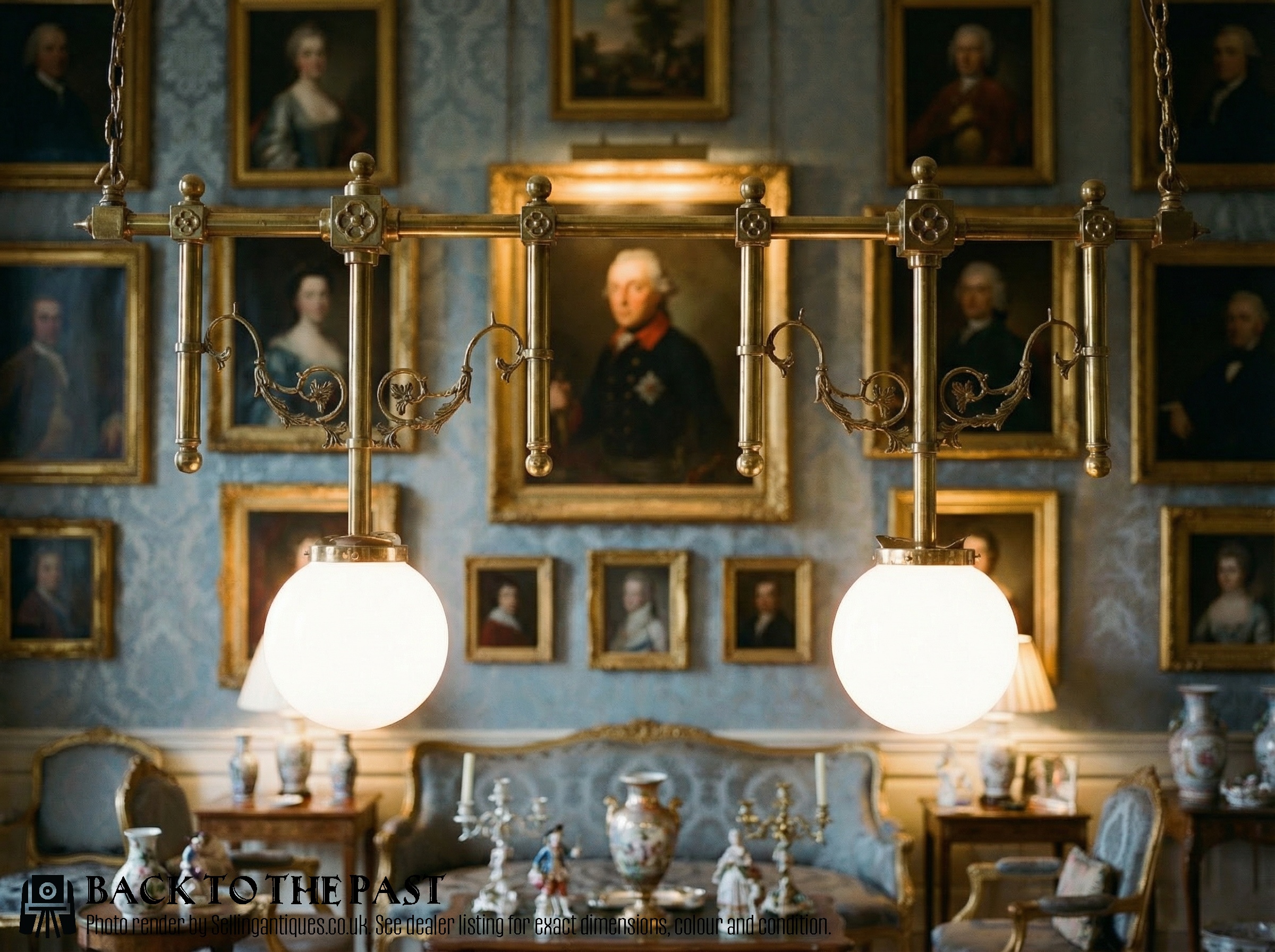
The Antique Chandelier Glossary
- Light, arm, branch
- The number of bulb-holders, and the commonest way a title gives you the size of a chandelier. Arm appears in 230 titles, branch in 132.
- Gilded bronze, gilt brass
- A gilt-finished metal frame, and the single most frequent frame description in the category, with 712 titles saying gilded bronze.
- Bag chandelier
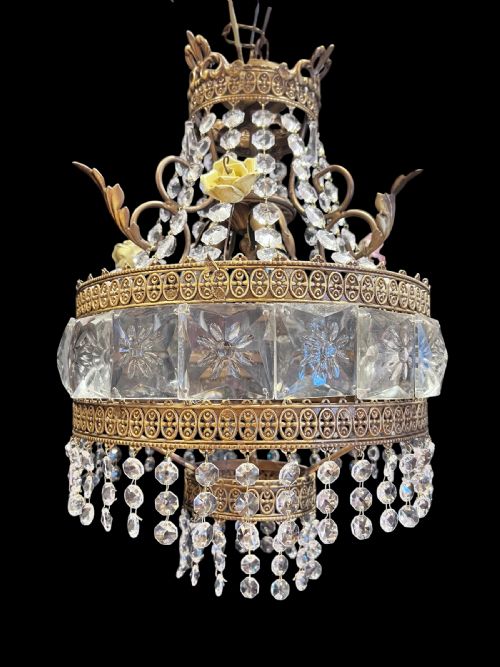
- A bag-shaped fall of glass chains hung beneath a ring, named in 126 titles and usually at the smaller end of the range.
- Tent and waterfall
- Chains rising to a tented crown above a cascading skirt of drops, one of several glass-form terms the category uses.
- Birdcage
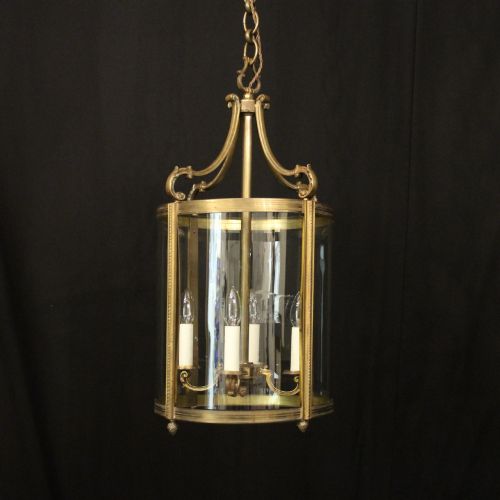
- An open bowed frame enclosing the light, found in 156 listings across both French and Italian stock.
- Plafonnier
- A flush or near-flush ceiling fitting rather than a hanging drop. The Italian spelling plafoniere turns up as well.
Antique Chandelier: Frequently Asked Questions
What period are most antique chandeliers from?
The interwar decades. Of the 3,204 dated archive listings, the 1930s account for 1,338 and the 1920s 1,246, so the two together carry the bulk of the category.
Earlier material is thin: 334 from the 1910s, 181 from the 1900s, and small numbers labelled Victorian or given an 1880s or 1890s decade. A further 322 listings say only "19th Century", which carries no decade at all.
Why do so many listings say French?
Nationality does most of the descriptive work in chandelier titles. French appears in 1,805 of them, close to half, and Italian in 615.
English shows up in a small fraction by comparison, and Dutch, Flemish, Swedish, Belgian and Genoese appear as one-offs. The standard shorthand for a chandelier here is a country plus a finish plus a light count.
What is a bag or spike chandelier?
Both are glass-hung forms rather than metal-framed ones. A bag chandelier has a bag-shaped fall of glass chains beneath a ring; a spike chandelier is hung with pointed glass spikes instead of flat drops.
Bag appears in 126 titles and spike in 93. They tend to be the smaller fittings in the category, some only a few inches across.
Are chandeliers usually sold in pairs?
Singles dominate, but pairs are a real habit of the category, with 335 titles saying pair.
One sampled entry goes further, a set of six matching ballroom chandeliers. Pairs and sets sit well above single fittings in the range.
How often is rewiring mentioned?
Rarely. Only 67 titles say rewired.
The electrical state is almost never something a chandelier title reports either way.
What makes Florentine chandeliers different?
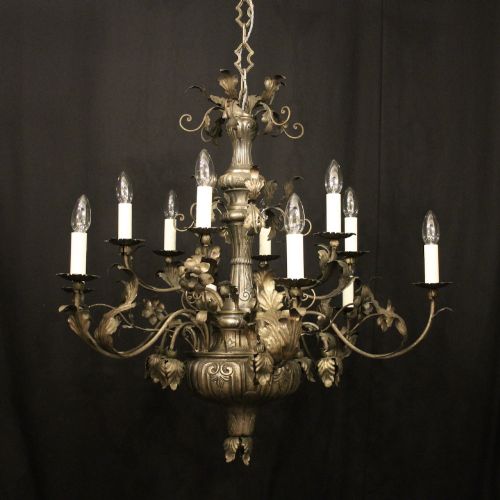
They are the painted end of the Italian stock. Florentine appears in 137 titles and polychrome in 87, describing giltwood or gilt-metal frames coloured rather than gilded all over, often with flowers or leaves.
They date to the same interwar decades as the rest of the category.