

Antique Floor Lamps
A free-standing lamp tall enough to light a room or a chair from floor level, listed on Sellingantiques as both a floor lamp and, in two titles out of five, a standard lamp.
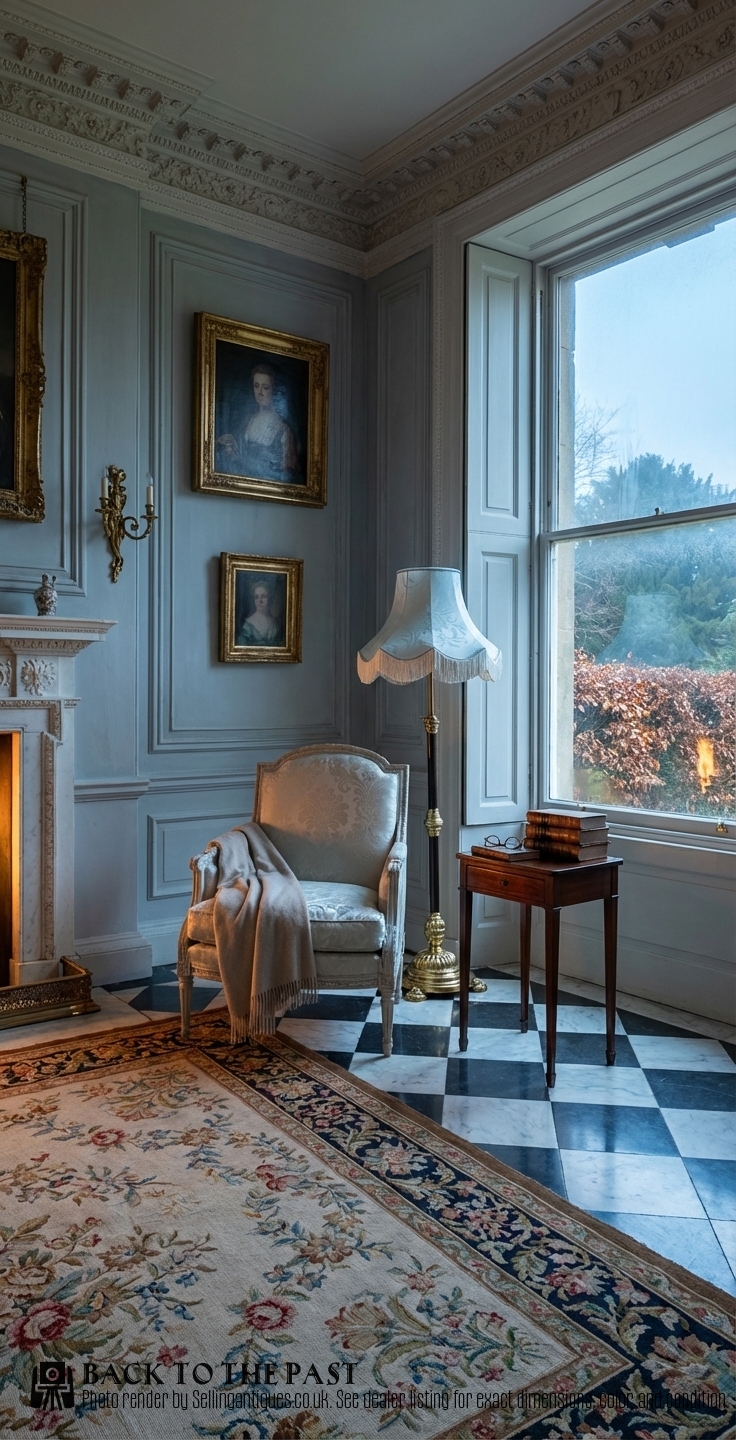
Antique Floor Lamps
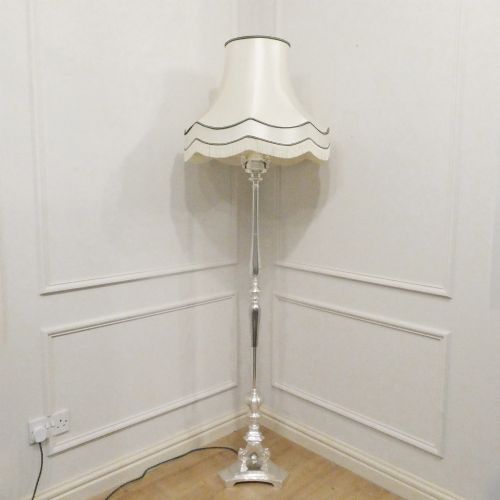
Tall floor-standing lamps grew out of nineteenth-century oil-lamp stands and candle torchères, giving a reading light beside a chair without needing a table. The electric standard lamp then became a normal drawing-room fitting from the late nineteenth century on, and plenty of earlier oil lamps were converted to run off the mains.
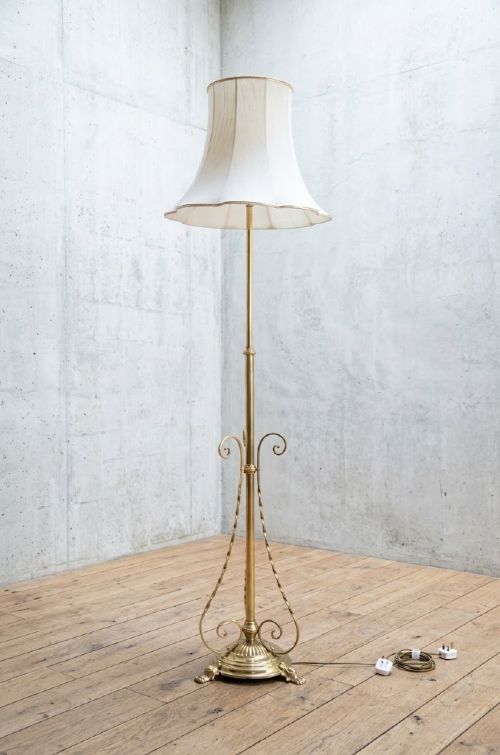
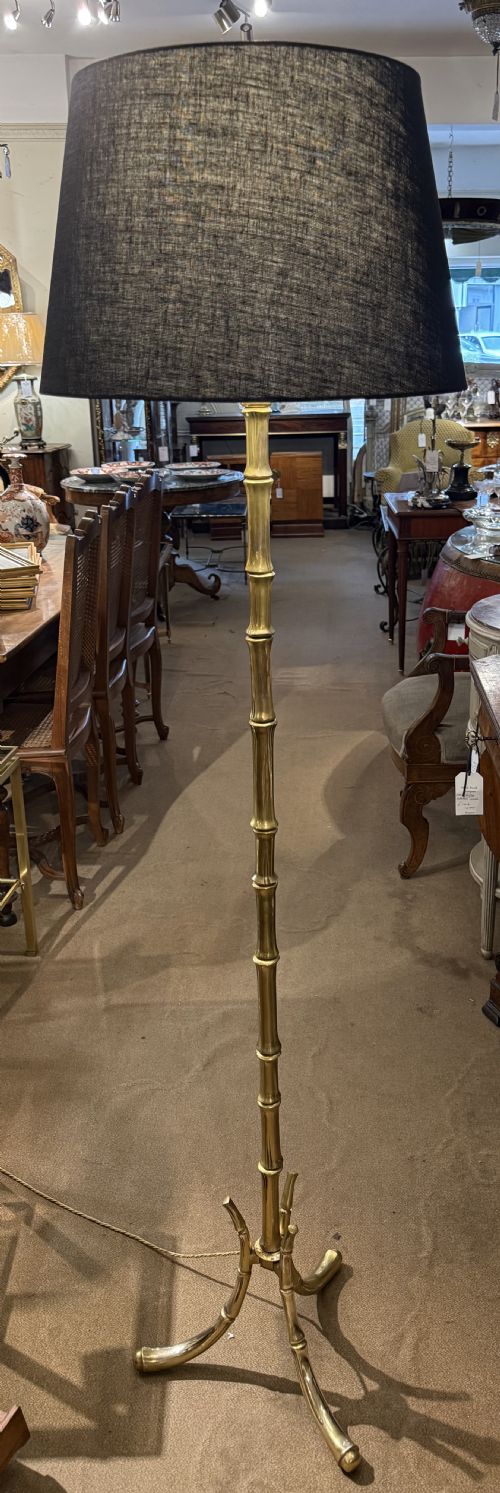
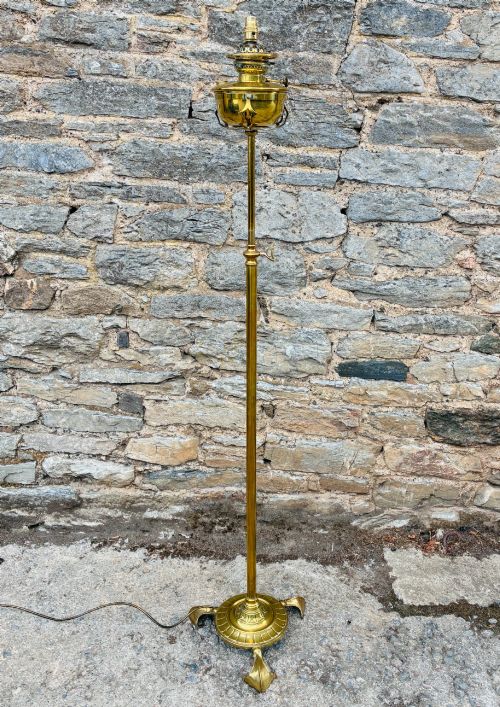
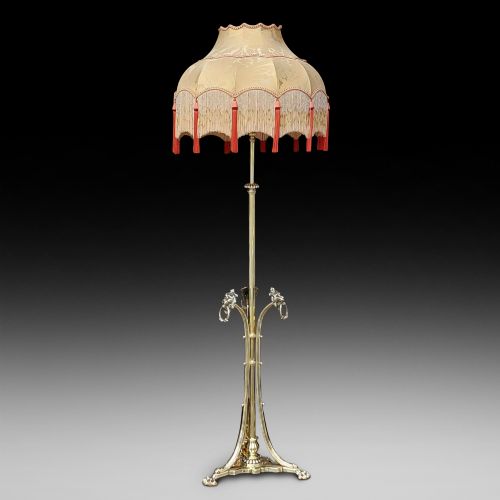
Two words cover a great deal of the category: "standard" appears in 233 titles and "brass" in 208, with 41 using both. The lamp you're most likely to meet is a brass-columned standard of the 1900s to 1920s, frequently height-adjustable. Titles say adjustable 48 times, telescopic 25, extending 16, and rise-and-fall turns up besides, so the mechanism is a normal feature rather than an extra.
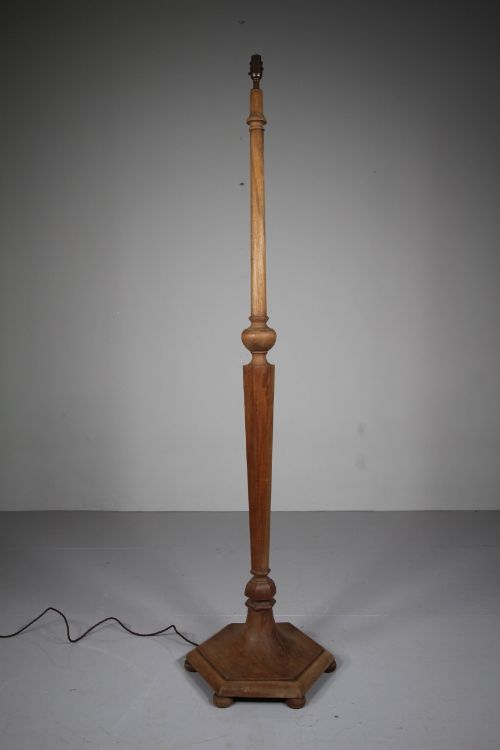
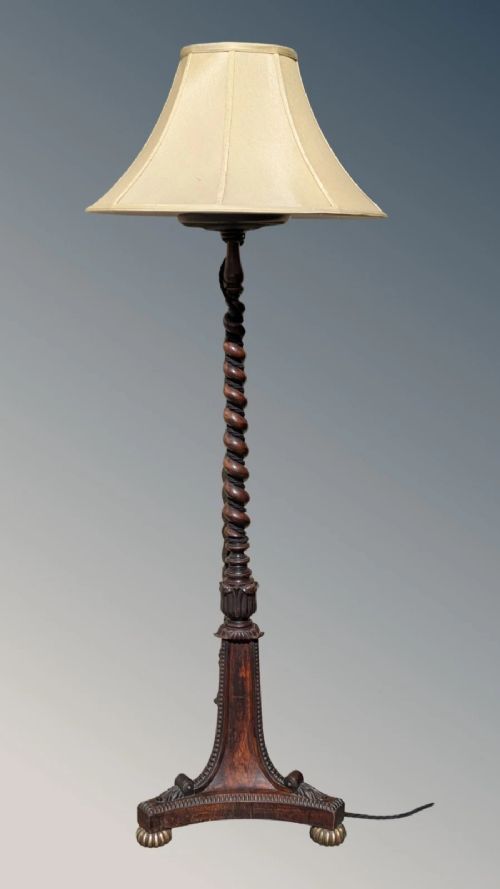
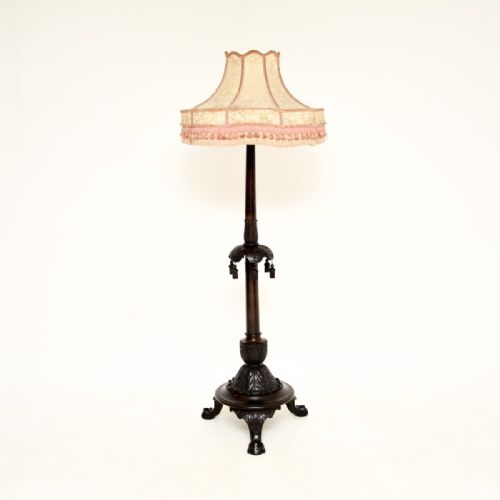
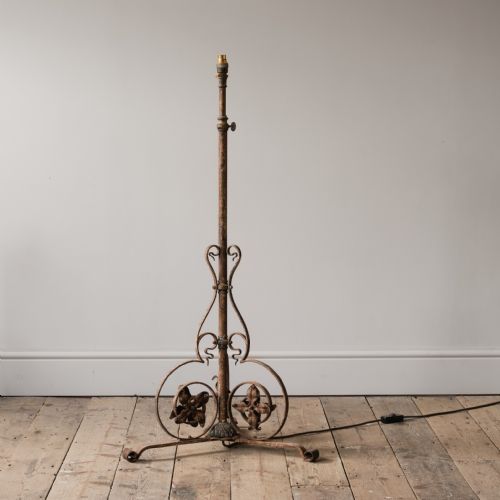
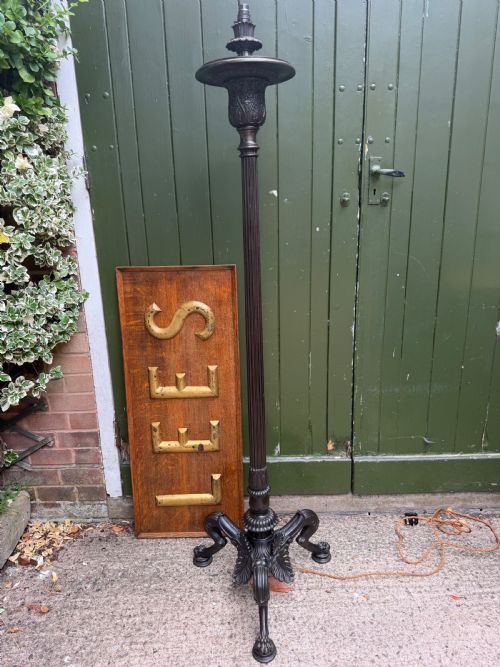
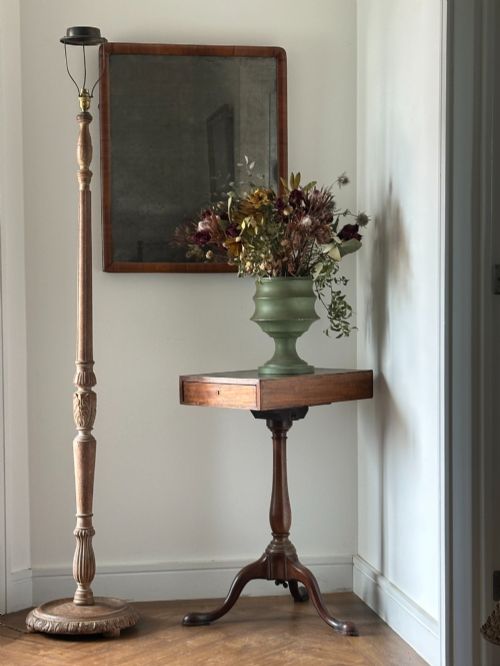
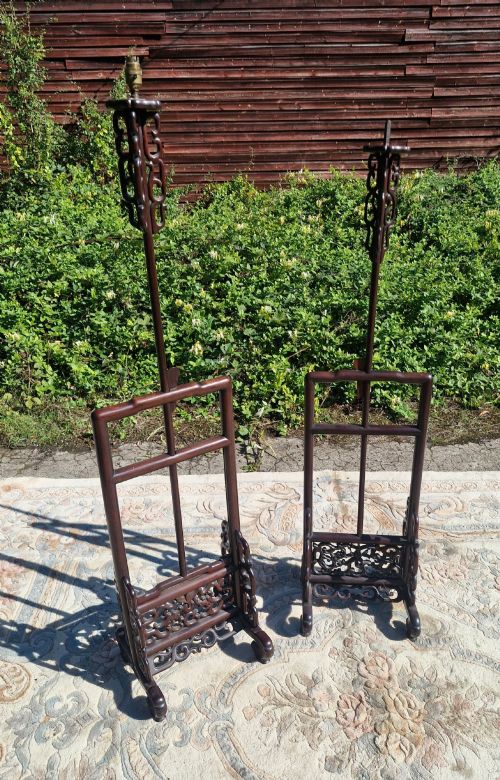
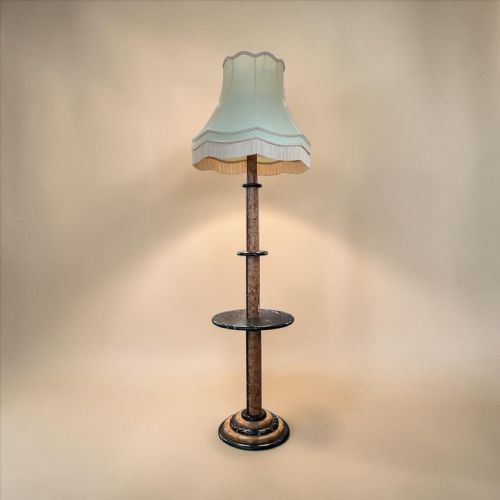
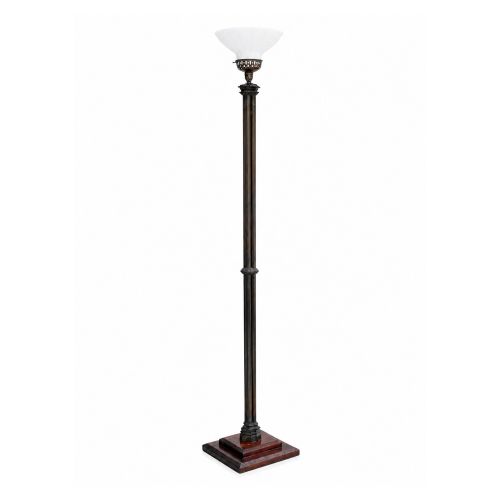
The wooden side of the archive runs walnut, mahogany and oak in close company, on turned or carved columns over tripod or platform bases, with barley twist and Corinthian forms recurring. Chinoiserie is a sub-population of its own at 46 titles, lacquered in black, green, red and blue. Art Deco and Odeon-style chrome uplighters, Arts and Crafts and Art Nouveau metalwork, and standing oil lamps make up the rest.
Dealer dates run from 1820 to 1960, but the weight sits in the early twentieth century: the 1920s alone account for 144 listings. Edwardian and Victorian labels overlap those decades, and 48 listings say only "19th Century", which is a bracket rather than a year. Read a reign name in a title as style and era, not a precise date.
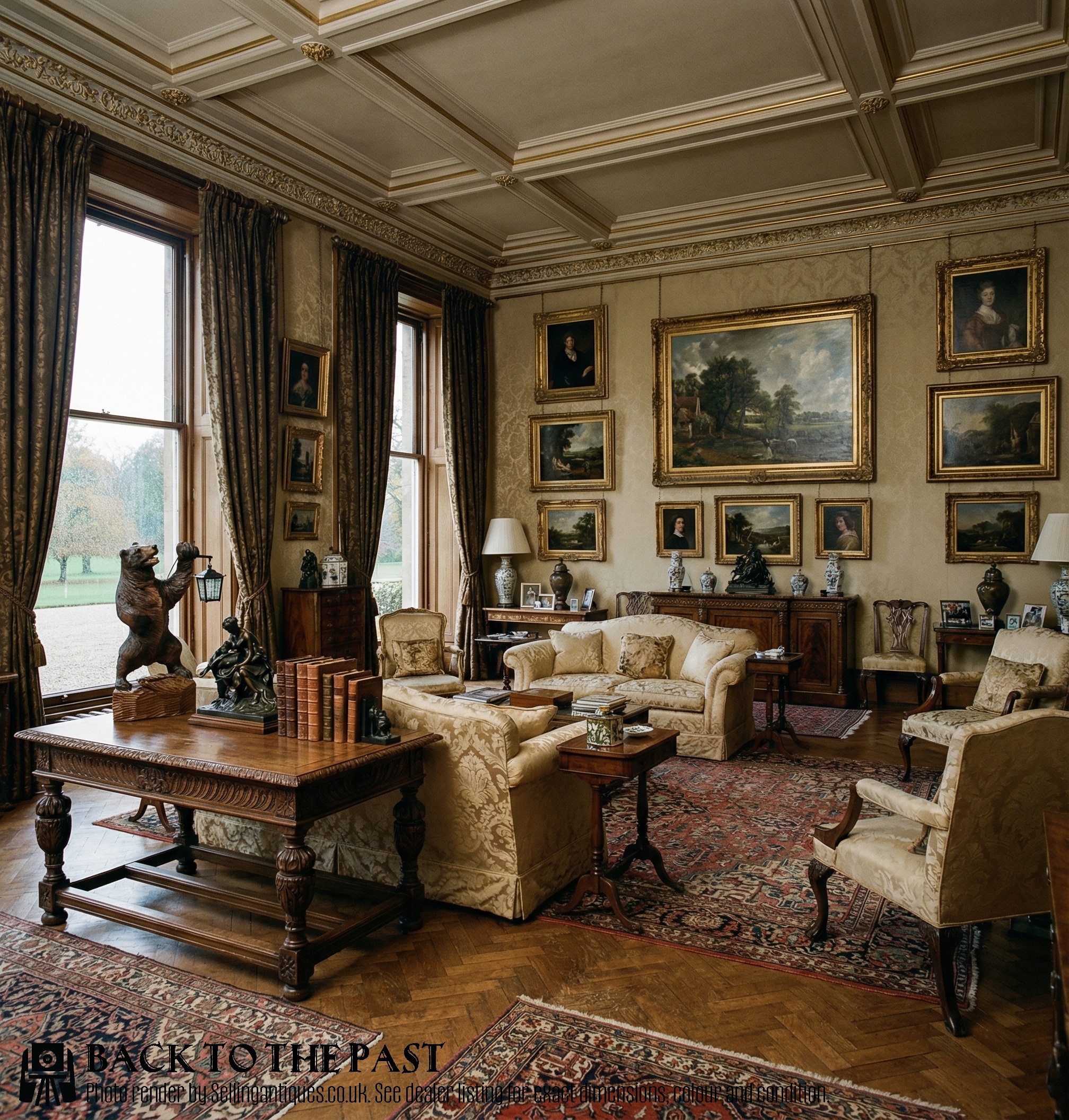
Top And Bottom
Material and modelling separate the range. Figural work sits at the top: a signed bronze torchère, a pair of seven-foot bronze figural torchères, a Venetian carved wood and gesso figural lamp, a blackamoor, an alabaster figural lamp. Bronze, ormolu, onyx, marble and alabaster cluster well above plain turned wood, and "heavy", "solid brass" and "cast brass" recur at the upper end. Small gilt and painted wooden lamps of the 1930s sit at the bottom.
Mechanism carries weight through the middle and upper range. Adjustable, telescopic, extending, rise-and-fall and swing-arm stems sit above the fixed plain column, which is where the simplest examples land. A matched pair does the same work: 54 titles offer two, and one offers a set of three patinated brass lamps.
Original glass and shades matter where they've stayed with the lamp. Titles specify vaseline, cranberry and ruby glass, original tole shades, needlepoint and velum. Named workshops are the last axis, and they are thin on the ground rather than routine.
Antique Floor Lamps Retail Price Guide 2026
Typical UK retail prices for floor lamps, calculated from the Sellingantiques database of over a million retail prices indexed since 2003. This retail price guide relies exclusively on Sellingantiques data; no external sources or auction records are used, so the figures do not describe the wider market.
The top sale of the last year on Sellingantiques was a stamped pair of rise-and-fall floor lamps, in January 2026.
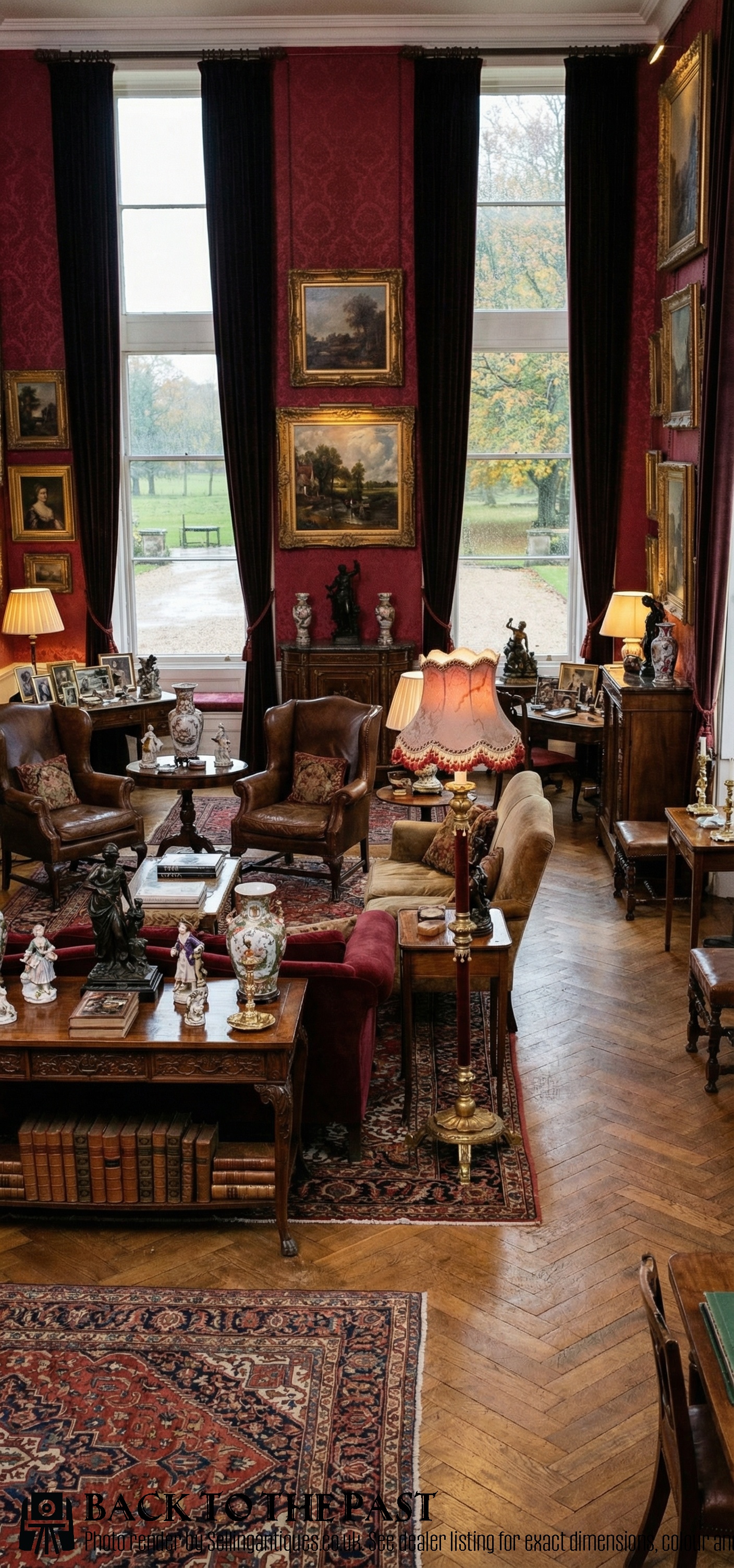
Hinks
The Antique Floor Lamps Glossary
- Standard lamp
- The British term for a floor lamp, used in 233 of the titles and often interchangeably with "floor lamp" by the same dealer.
- Rise and fall
- A height-adjusting mechanism, usually found on the brass columns, and one that recurs right across the archive.
- Telescopic
- A stem that slides within itself to change height; 25 titles describe one, with adjustable and extending saying much the same thing.
- Rewired
- The electrical work has been renewed. Twenty-two titles say so outright.
- Barley twist
- A spiral-turned wooden column, most often oak in this category.
- Corinthian column
- A fluted column with an acanthus capital, usually brass here, and a recognisable stock type at 14 titles.
Antique Floor Lamps: Frequently Asked Questions
What is the difference between a floor lamp and a standard lamp?
Nothing, in practice. "Standard lamp" is the British term, and it appears in 233 of the titles on Sellingantiques, often used interchangeably with "floor lamp" in the same description.
Both mean a free-standing lamp tall enough to light a room or a chair from the floor.
Which period do most of these come from?
The early twentieth century. Dealer dates span 1820 to 1960, with 373 listings carrying a clean year, and the 1920s alone account for 144 of them, followed by the 1930s, 1900s and 1910s.
The nineteenth-century tail is thin: 1890s, 1880s and a handful from the 1860s. Where a title says only "19th Century", that's a bracket rather than a date.
Are brass ones the commonest type?
Brass dominates the metal side, with 208 titles naming it and 41 pairing it with "standard" outright. Copper, iron, wrought iron and bronze follow well behind.
The wooden alternative runs walnut, mahogany and oak in close numbers, on turned or carved columns. Beech, pine and giltwood turn up too.
Can the height be adjusted on these lamps?
On a good many, yes. Adjustable appears in 48 titles, telescopic in 25 and extending in 16, and rise-and-fall recurs besides, usually on brass columns.
Swing-arm stems show up as well. Fixed plain columns are the simpler end of the category.
Do chinoiserie floor lamps turn up often?
Often enough to count as a group in their own right: 46 titles, with lacquer recorded in black, green, red and blue, and gilt decoration over it.
They sit alongside the brass and the turned wood as a recognisable third strand.
How unusual do these lamps get?
Beyond the standard types, the archive holds a nineteenth-century Tibetan ceremonial copper horn converted to a standard lamp, an early twentieth-century Bleriot searchlight, and a carved Black Forest bear.
There's also a pair of French lamps modelled as palm trees, a Cairoware Mamluk-revival pierced brass lamp and an inlaid Hoshiarpur standard.
National origins named in titles run past France and England to Italian, Spanish, Swedish, Danish, Chinese, Japanese Meiji, Indian, Kashmiri, Anglo-Burmese and Syrian pieces.